 Back to Blogs
Bringing Shakespeare to Life: One Teacher’s Journey from Page to Stage
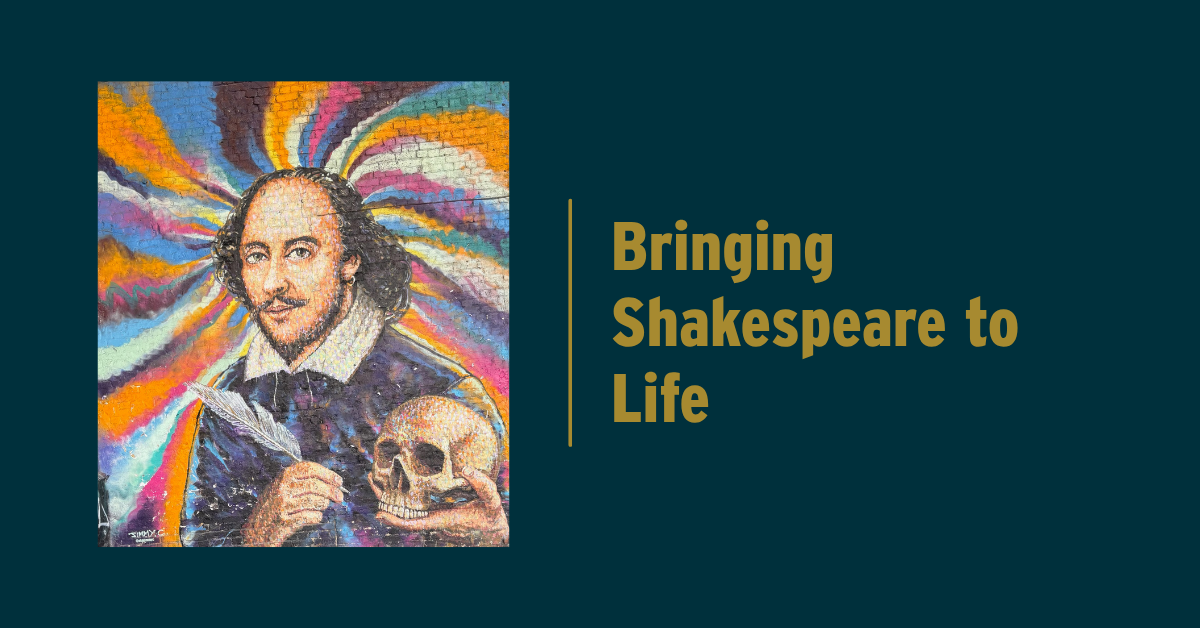
How does a teacher take Shakespeare from something “removed from lived experience, reduced to passive reading, and disconnected from collaboration or creativity” and transform it into “a living text—meant to be spoken, embodied, and collaboratively interpreted”?
That was the challenge facing Melissa Ewing, an English teacher at East Hartford High School. Her answer was to go straight to the source—to experience the Bard among peers in the city where he lived, wrote, and worked.
The bridge was a Fund for Teachers fellowship.
This summer, Melissa used a $5,000 grant to participate in Teaching Shakespeare Through Performance, a three-week course in London designed to help educators move Shakespeare beyond a purely academic exercise and toward a dynamic, student-centered experience. Through performance, collaboration, and creative exploration, the fellowship focused on strategies to increase student engagement, confidence, and literacy skills while fostering inclusion and voice in the English classroom.
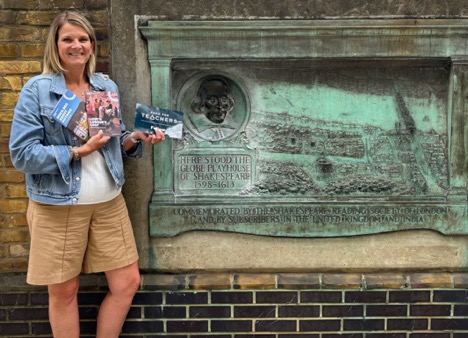
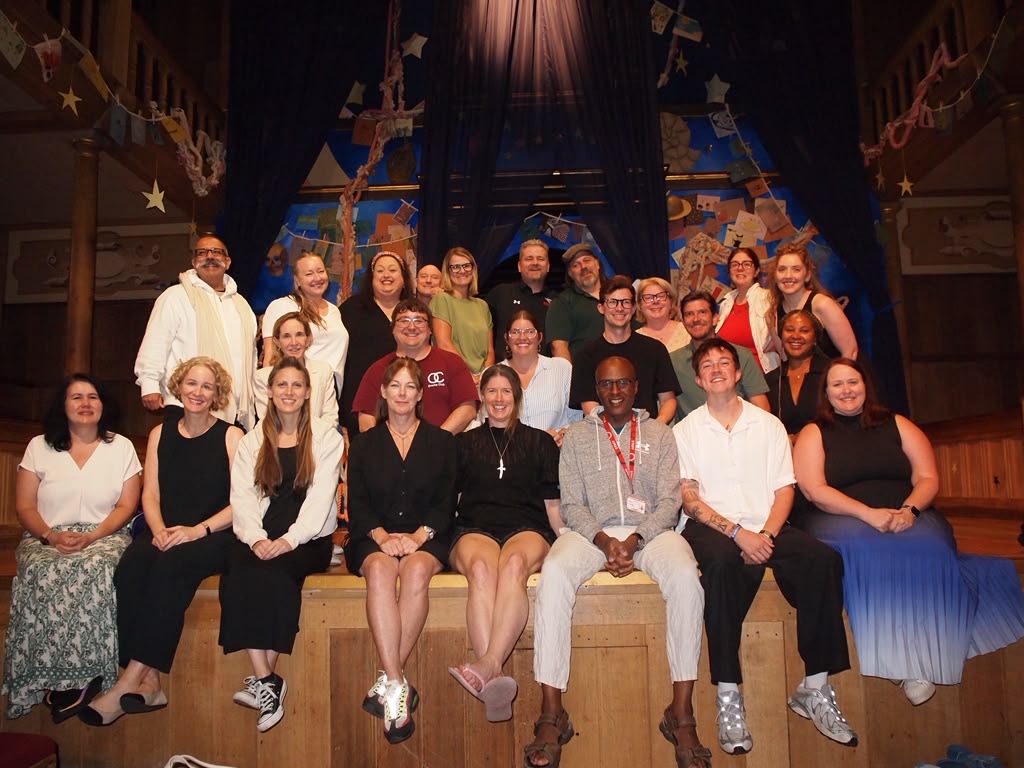
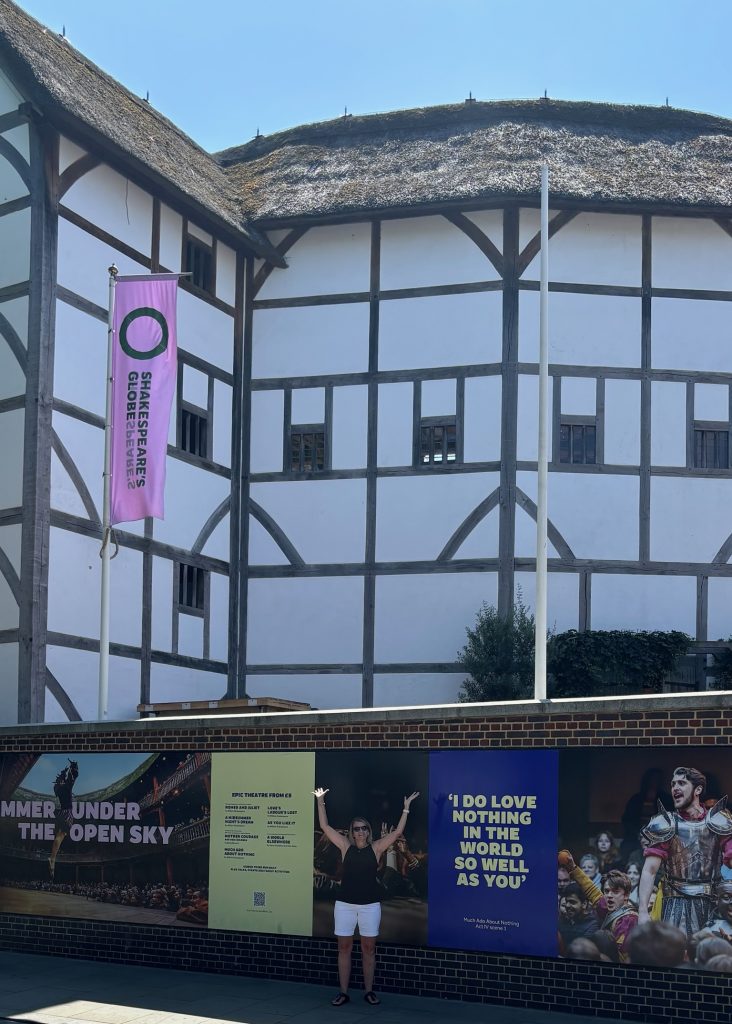
At Shakespeare’s Globe Theatre, Melissa experienced Shakespeare not simply as literature to be studied, but as a participatory and communal art form.
Her days were filled with seminars led by experts on placing Shakespeare in socially conscious contexts, observations of rehearsals and performances on the Globe stage, and hands-on practice performing Shakespearean texts under the guidance of scene directors and voice and movement specialists.
“This fellowship changed not only how I teach Shakespeare, but how I understand learning itself,” Melissa said.
Before the fellowship, Melissa often felt a disconnect between her students’ potential and their ability to access complex texts like Shakespeare. Many of her ninth graders—particularly multilingual learners and students who struggle with traditional reading and writing—would disengage, she said, not because they lacked insight, but because traditional approaches did not always meet their needs.
“Working alongside Globe practitioners and fellow educators, I experienced firsthand what it means to learn through movement, voice, collaboration, and risk-taking,” she said. “I began to see how Shakespeare comes alive not on the page alone, but through the body, through shared space, and through collective interpretation.”
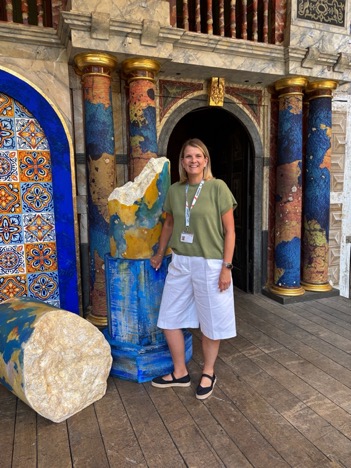

Becoming the Student
In an unexpected plot twist, becoming a student herself proved just as instructive as learning new teaching strategies.
“One of the most unexpected outcomes of my fellowship was how much it transformed my own confidence and identity as both a learner and an educator,” Melissa said.
She arrived in London focused on gathering new tools for her students. What she didn’t anticipate was how much the experience would challenge her personally.
“Participating in rehearsal, performing, and taking creative risks alongside other educators reminded me what it feels like to be vulnerable in the learning process,” she said.
That vulnerability gave Melissa a new perspective on what she asks of her own students. By stepping outside her comfort zone, she experienced firsthand the uncertainty—and ultimately the confidence—that comes from learning through experimentation, collaboration, movement, and performance.
Now, she plans to bring that experience home.
Shakespeare Comes Alive
This fall, Melissa’s students will take part in a new “Shakespeare Comes Alive” unit built around performance-based learning and creative exploration. Rather than encountering Shakespeare solely through close reading and written analysis, students will have opportunities to speak, move, perform, interpret, and collaborate as they make meaning of the text.
Melissa will also share performance-based strategies with colleagues. And parents and community members will be invited to experience the students’ work as audience members during performances and a culminating Final Sharing.
To paraphrase the Bard himself, the world is ultimately her students’ stage and now she has new tools—and a renewed sense of purpose—to help prepare them to step onto it with confidence.
“Students will now have more ways to access meaning, build confidence, and see themselves as capable participants in the learning process,” Melissa said. “I believe they will become more engaged, more willing to participate, and more invested in their own learning.”