 Back to Blogs
Reflections on Our Founding
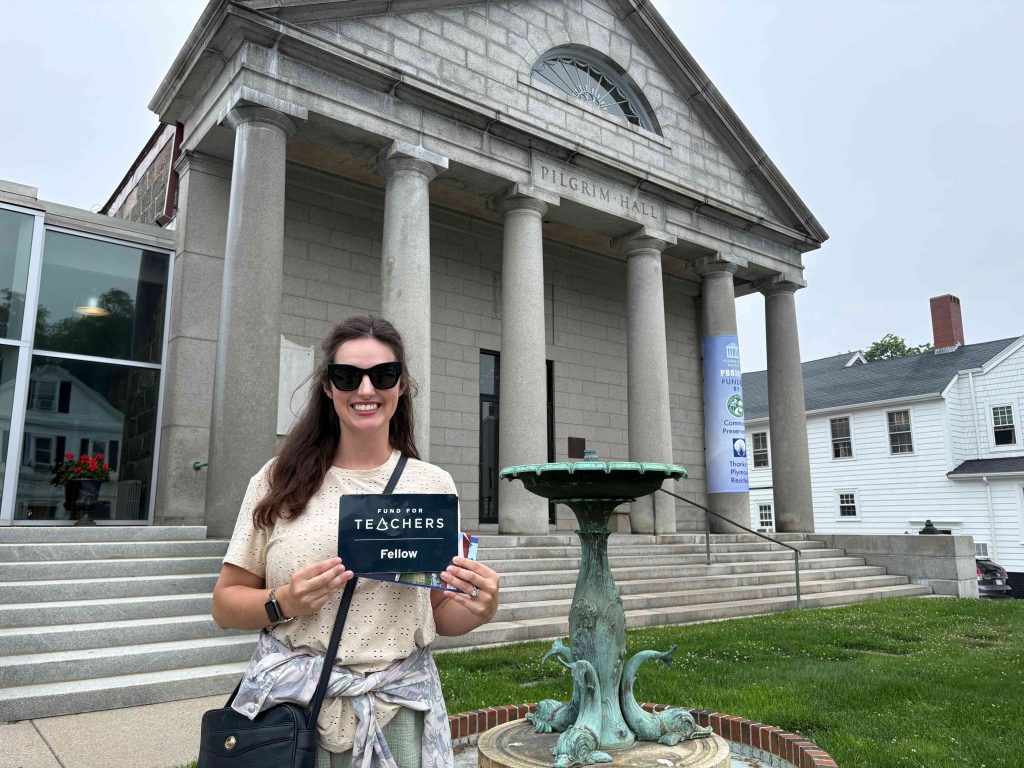
Cassidy Swinney (Jackson Academy – Jackson, MS) is currently on her fellowship studying American Transcendentalism in Concord and Boston–– Walden Pond, Emerson House, Thoreau archives, historical societies. This fall she plans to redesign an American Literature curriculum connecting Thoreau’s civil disobedience and Transcendentalist philosophy to modern social justice activism through primary sources, photographs, and authentic materials. But we are grateful that she took a moment to reflect upon – and share with us – her experiences so far in light of the upcoming 250th anniversary of our country…
I had the opportunity to visit the birthplace of America during the year of our 250th anniversary to explore a question central to my American Literature curriculum: what does it mean to be American?
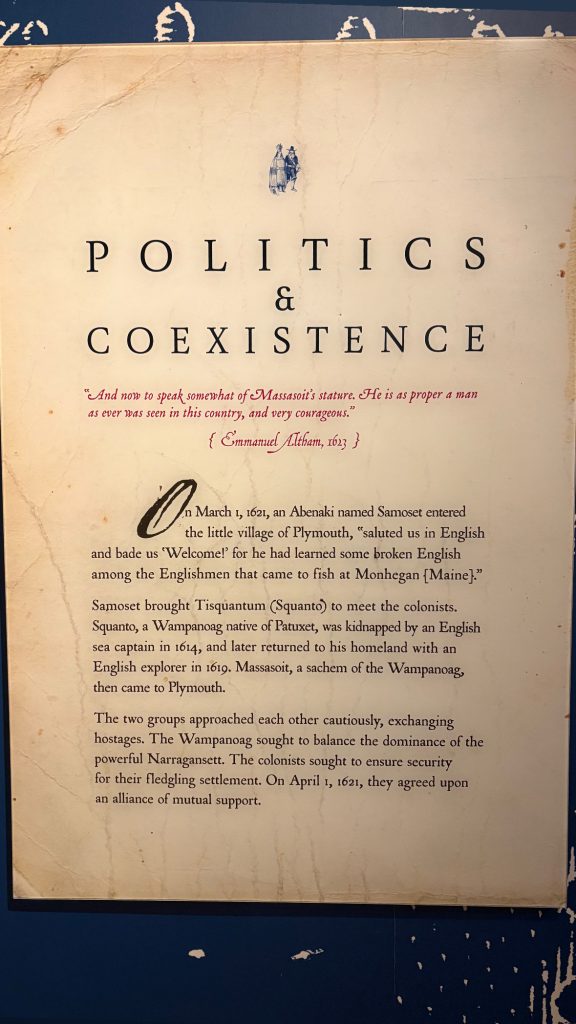
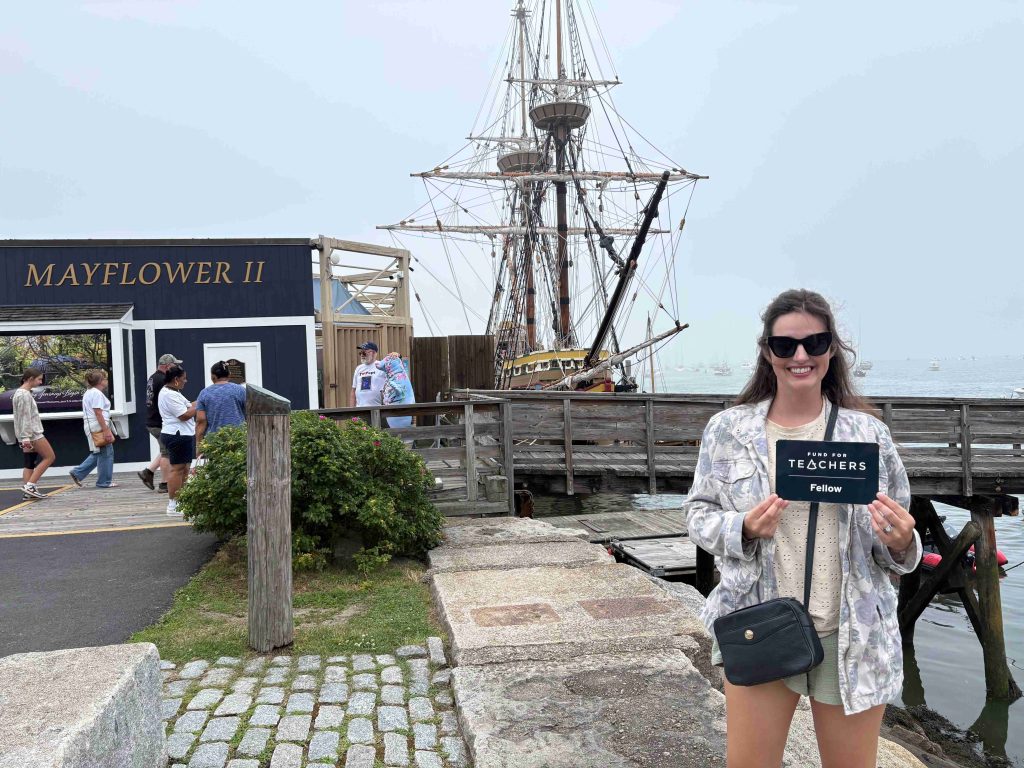
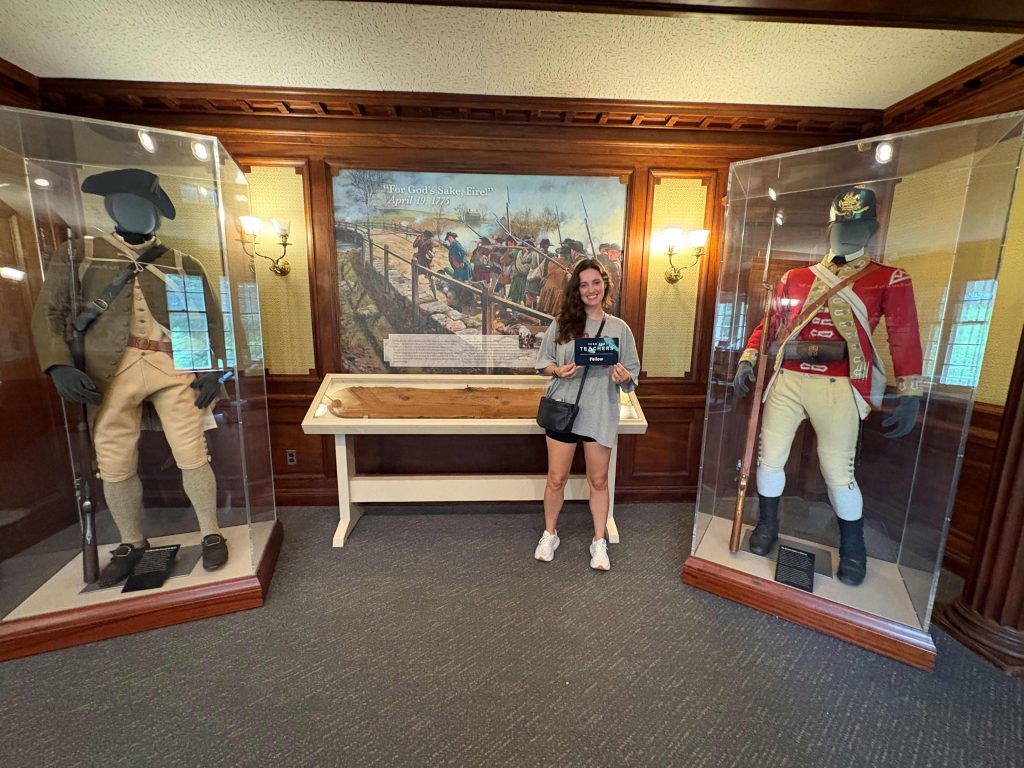
This summer, I stood in places that are older than the country itself. I walked the fog-covered waterfront in Plymouth where the Mayflower II sits in the harbor, a reminder that the story of America begins with people who crossed an ocean for the right to worship freely. I stood at the Old North Bridge in Concord where 400 ordinary people decided that the moment required something of them and marched down that hill for the right to govern themselves. I sat in the pews of the African Meeting House where Frederick Douglass and Sojourner Truth urged listeners to demand equality for all: the right to vote, the right to be heard, the right to be fully human. In the summer of 2026, with 250th anniversary banners hanging from every lamppost and the country actively celebrating itself and its history, I found myself coming to the same conclusion: To be American is to fight.
Not against each other, though we’ve done plenty of that, but for something. For the idea that freedom is real and that it belongs to everyone. That fight didn’t end in 1776. It didn’t end with the Constitution. If anything, those moments just named the terms of an argument that every generation since has had the right and the privilege to take up for themselves.
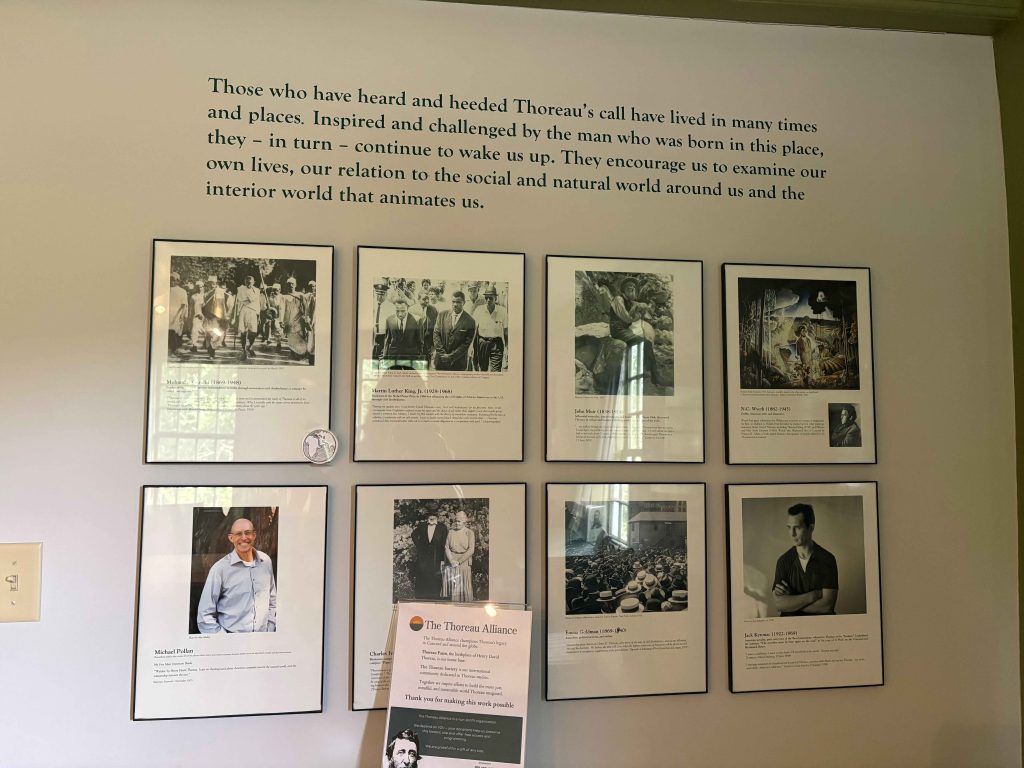
I came to New England this summer to research Transcendentalism and social justice, and what I found was the thread of the fight running through everything. At Walden Pond, a panel documents how Thoreau’s essay on civil disobedience traveled from Concord to Gandhi to Martin Luther King Jr., who wrote that reading it convinced him that refusing to cooperate with an evil system wasn’t just a right but a moral obligation. That’s not a detour from the American story. That’s the American story doing what it’s always done: asking the next generation what they’re willing to do about it.
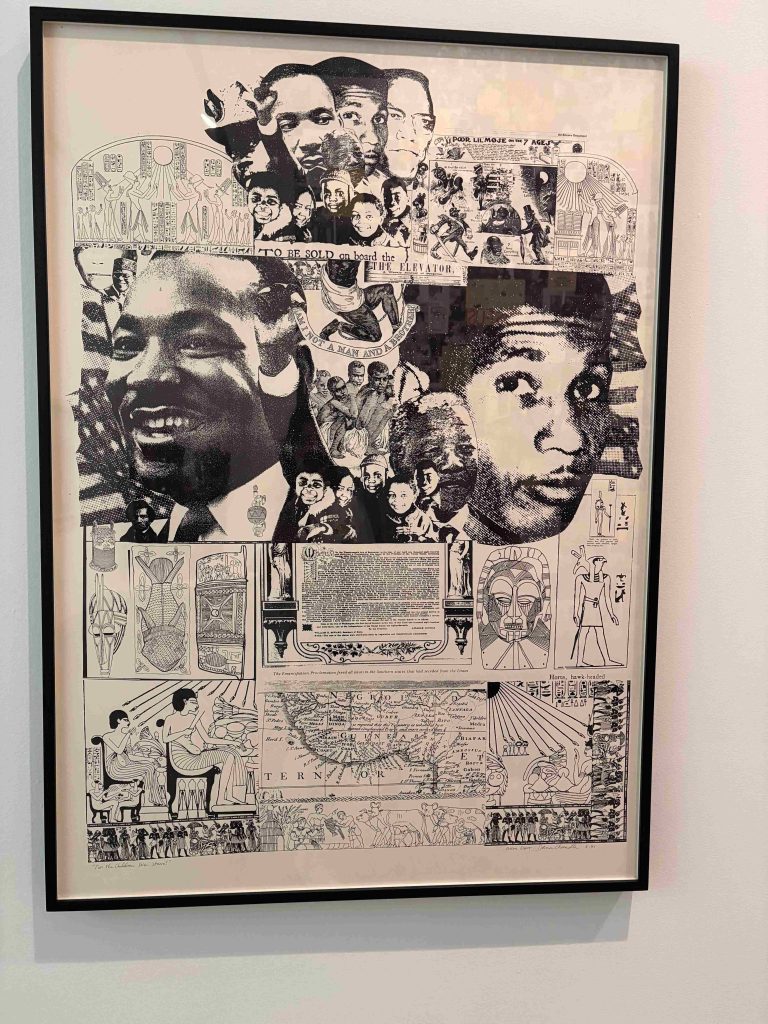
That question showed up everywhere I went. At the Robbins House in Concord, a marker outside a farmhouse where the first free generation of a Black family built their lives asks plainly: “What does independence look like?” At the Institute of Contemporary Art in Boston, artist Shea Justice painted Frederick Douglass and Ida B. Wells over the words “We the People,” layered with today’s headlines, still asking. Two hundred and fifty years in, and we still have the right and the privilege to fight.