 Back to Blogs
Ramadan Mubarak
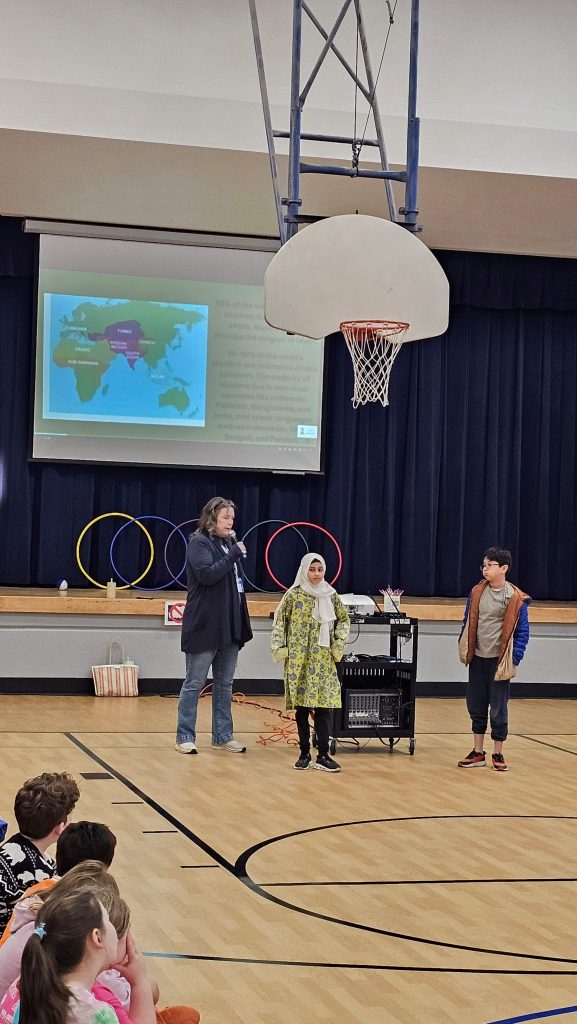
As 1.8 billion people across the globe are celebrating Ramadan, students at Lincoln Elementary in Norman, OK recently learned about the celebration from their fellow students who also are Muslim. Their teacher, Diane Wood, informed and inspired their presentation using experiences from her Fund for Teachers fellowship last summer.
“My fellowship to Spain and Morocco helped me to develop an approach to education that recognizes, respects, and uses students’ backgrounds as meaningful sources for learning,” said Diane. “Culturally responsive teaching fosters a sense of belonging, strengthens confidence, and honors different perspectives. I believe it is essential for creating equitable and effective classrooms and ensuring that every student has the opportunity to thrive.”
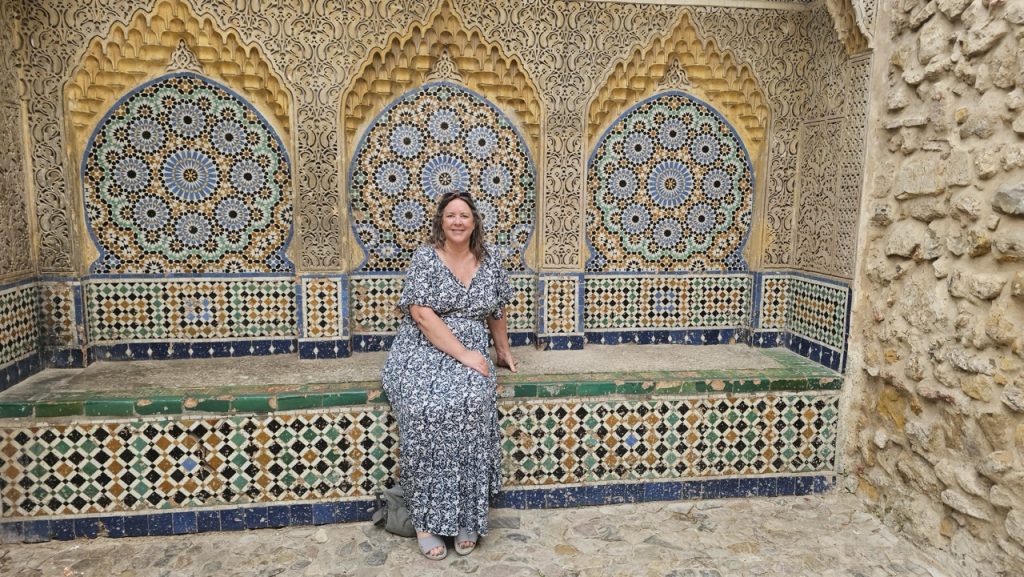
Diane serves as the Gifted Resource Coordinator for school with 270 students – six percent of whom are from North African or Middle Eastern countries. Because one of her responsibilities is enhancing the mandated curriculum with multi-disciplinary content, Diane seized the opportunity to design a fellowship that helped students affirm and appreciate their culture of origin while also developing fluency in other cultures.
“This fellowship has helped me develop a deeper understanding of how art and architecture are not just aesthetic choices, but also powerful expressions of identity, religion, and social values,” Diane said. “Understanding this shared history of cultural synthesis has been transformative, helping me appreciate the importance of cross-cultural collaboration and the ways in which traditions can enrich one another. I’ve learned to think more critically about cultural appropriation and heritage conservation.”
So have her students.
Diane is using Islamic patterns she studied in Spain and Morocco to teach symmetry and tessellations to fifth graders during a geometry unit. Students are analyzing Diane’s photographs of the intricate designs of historic sites such as the Alhambra in Granada to identify lines of symmetry, rotational symmetry, and repeating shapes that form tessellations. They are using rulers, compasses, and grid paper to design their own tessellating geometric tiles. By connecting geometry to real-world art rooted in Islamic tradition, she’s striving to make abstract concepts more concrete and visual, while honoring the mathematical contributions of diverse cultures.
“Ultimately, my experiences in Spain and Morocco transformed cultural responsiveness from an abstract educational concept into a lived commitment, said Diane. “By immersing myself in different cultural contexts, I developed greater empathy, curiosity, and humility. My classroom is stronger because I have seen the world more broadly, and I strive each day to ensure that my students feel seen, valued, and understood.”
In the Ramadan presentation to their peers, a student explained, “One of the things I love most about being Muslim is that God says in the Quran, I honor all children of Adam. That makes all humans my brothers and sisters who deserve respect, love, and kindness. That makes me want to be the kindest friend to everyone.”