Interactive map at the Woody Guthrie Museum
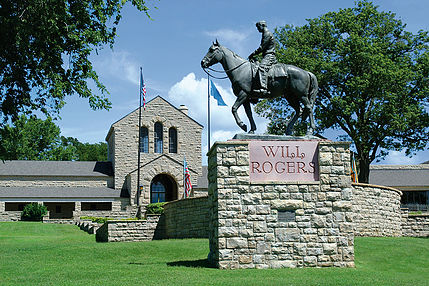
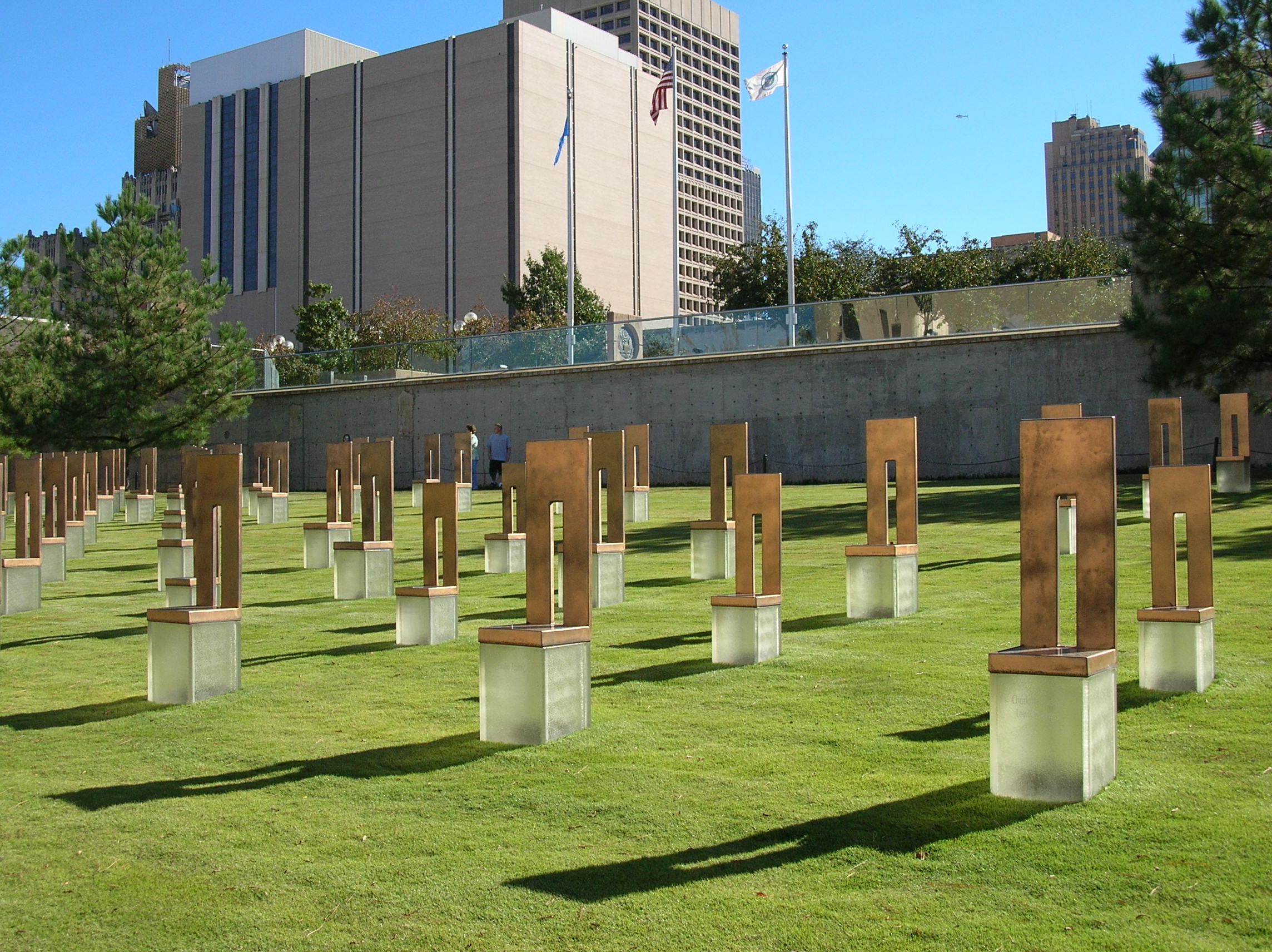
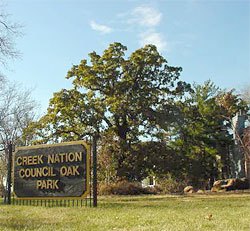
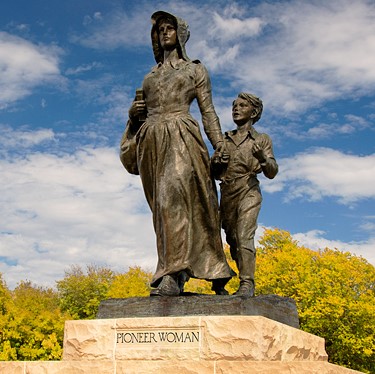
The primary distinction of Fund for Teachers grants is the freedom we give teachers to design fellowships THEY consider most vital to students’ learning. That can be across the world or across the state, which is the case for Nathalie Lee and Janet DeMarco, teachers at Cedar Ridge Elementary School in Tulsa, OK. They are currently embarking on day trips (collecting video, pictures, and artifacts at historic and cultural sites) to re-prioritize the intellectual art of social studies and help students understand and analyze the state’s history and government. We checked in with them on the road…
Social Studies provides a context in which to fit all other learning, but we believe the intellectual art of social studies has been de-prioritized in the wake of No Child Left Behind and its great emphasis on reading and math. Because Social Studies isn’t an academic priority, teachers don’t receive
as much professional development on the subject — so we used a Fund for Teachers grant to create our own.
Together, we represent generations of native Oklahomans, and one of us is a member of two Native American tribes. We are proud of the people and the history of Oklahoma and want our students to be as well. For two weeks, we’re acquiring resources and insight that will give students a chance to identify with their history as Oklahomans and also provide opportunities to analyze what good citizenship looks like.
The Oklahoma Standards direct us to “Describe the connection between the historic significance of past events and people and the symbols of Oklahoma’s history” and “Describe relationships between people and events of the past.” To do that, we’re experiencing:

Nathalie and Janet at the Philbrook Museum
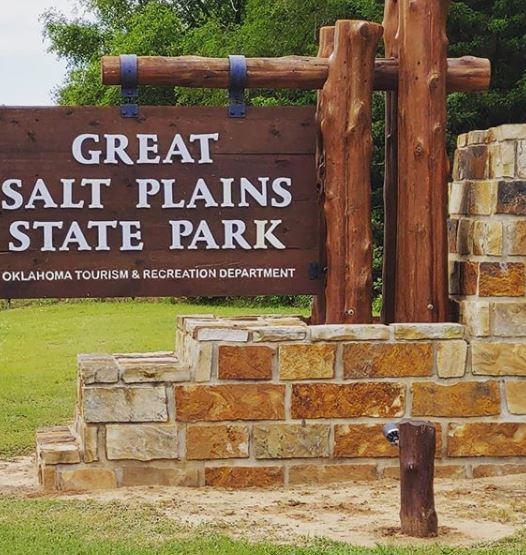
While the Great Salt Plains used to be an ocean millions of years ago, it’s now a five-mile, sandy ocean bed in the middle of Oklahoma. Except when it rains! The area received 10 inches of rain in the past 30 days, making one of the state’s most valuable natural resources unreachable by car. After learning to maneuver a drone, we captured footage of the area that historically was an important asset — not only for salt’s preservation purposes, but also as a hunting ground for animals. We also learned that the salt bed is the only place in the world where selenite crystals with an embedded hourglass formation are found.”
“I know we’re not pursuing fellowships in Italy or France, but we love Oklahoma and our educational standards are based here,” Janet and Nathalie said during their phone call. “We really get excited about teaching our students who our people are! We are all Oklahomans — with wonders of nature, the beauty of architecture, and profound culture history and heritage all around us. We want students to realize they don’t have to travel across an ocean or even across the country to learn rich history about the people and places that came before us. It’s right under our feet in what we Okies like to call ‘our stomping grounds.'”
[minti_divider style=”3″ icon=”” margin=”20px 0px 20px 0px”]
You can follow the remainder of Nathalie and Janet’s fellowship on Instagram @okiesteachfft.
Today marks the 76th anniversary of D-Day, when 156,000 American, British and Canadian forces landed on five beaches along a 50-mile stretch of the heavily fortified coast of France’s Normandy region. We share below the remarkable experience of FFT Fellow Dan Lundak. He designed an experience to retrace the steps of the US soldiers (specifically his grandfather’s) from England to the shores of France during the invasion to lead students’ debate of the essential question, “At what point does the United States become involved in another country’s affairs?” The American History teacher planned to use his research to help eighth graders at Chicago’s Sauganash Elementary School personally connect with World War II. The pilgrimage grew more personal than expected, however, upon discovering his grandfather’s photograph hanging in a wartime museum.
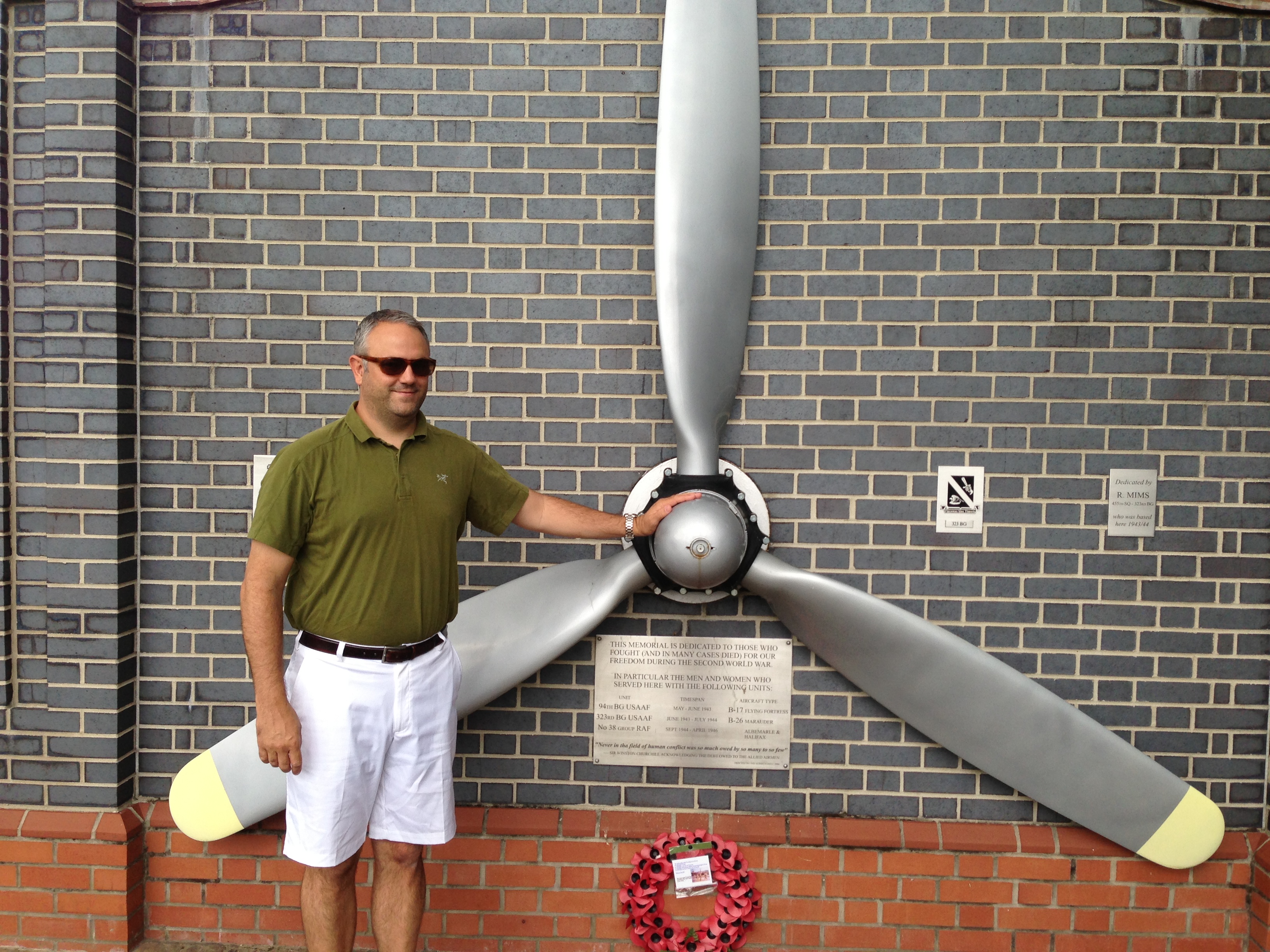
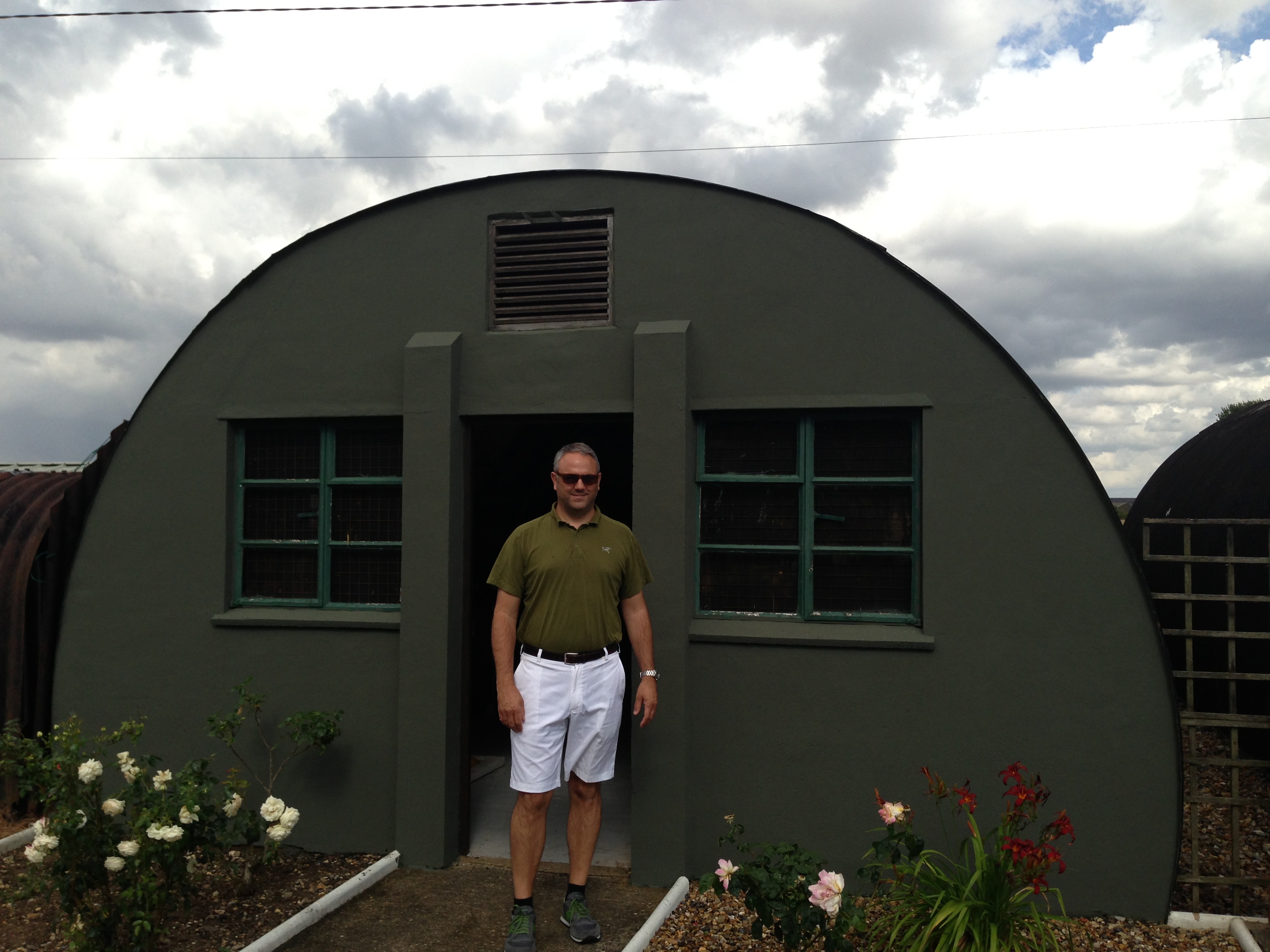
“When applying for the Fund for Teachers grant, I researched my grandfather’s military service and his path from Nebraska to Normandy,” said Dan. “On D-Day, he flew the Boeing B-17 with the USAF 94th squadron from the RAF base in Bury St. Edmonds, England — so that was my first stop. Townspeople converted his squadron’s control tower into a museum, which was dark and locked when I arrived.

A museum volunteer repairing the roof saw me walking away and offered to let me in. As I made my way around the artifacts, I suddenly came face-to-face with a framed, yellowed photograph of Lt. Col. E.E. Lundak – my grandfather.”
The volunteer explained that displays included “random photos of pilots” found when creating the museum. He could offer no definitive explanation why the photo of Dan’s grandfather, never seen by his family, hung there to greet Dan 70 years after the war.
Lt. Col. Lundak flew 47 missions while stationed at Bury St. Edmonds. He crash landed twice (once, the only surviving crew member) and again escaped death after trading places with a co-pilot subsequently shot by enemy fire. The night before D-Day, Lundak bombed the beaches of Normandy; the day after the invasion, he delivered gasoline to Allied forces and returned US casualties to England. Lundak remained in the Air Force for years before becoming a US diplomat in China and the US liaison with President Chiang Kai-shek. Upon retirement, he returned to Nebraska to teach school, serve as a superintendent and, eventually, Dean of Admissions for the University of Nebraska.
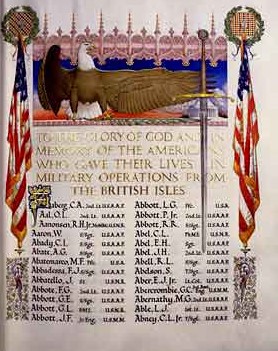
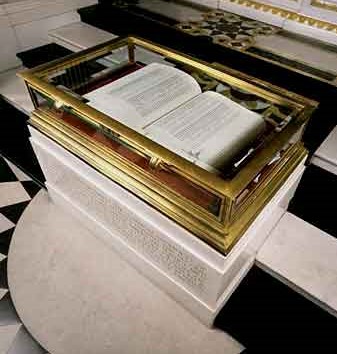
Inspired by the discovery, Dan continued his WWII odyssey at London’s St. Paul’s Cathedral and American Memorial Chapel, seeing the honor roll of more than 28,000 Americans who died in WWII while stationed in England. He also followed the London Blitz Bomb Site Interactive Map to visit areas affected by bombings and, afterwards, the Imperial War Museum. Before taking a ferry across the English Channel, Dan stopped at General Eisenhower’s headquarters in Porstmouth to research the planning and preparation of Operation Overlord, the final meeting that resulted in the D-Day command, “Let’s go!”
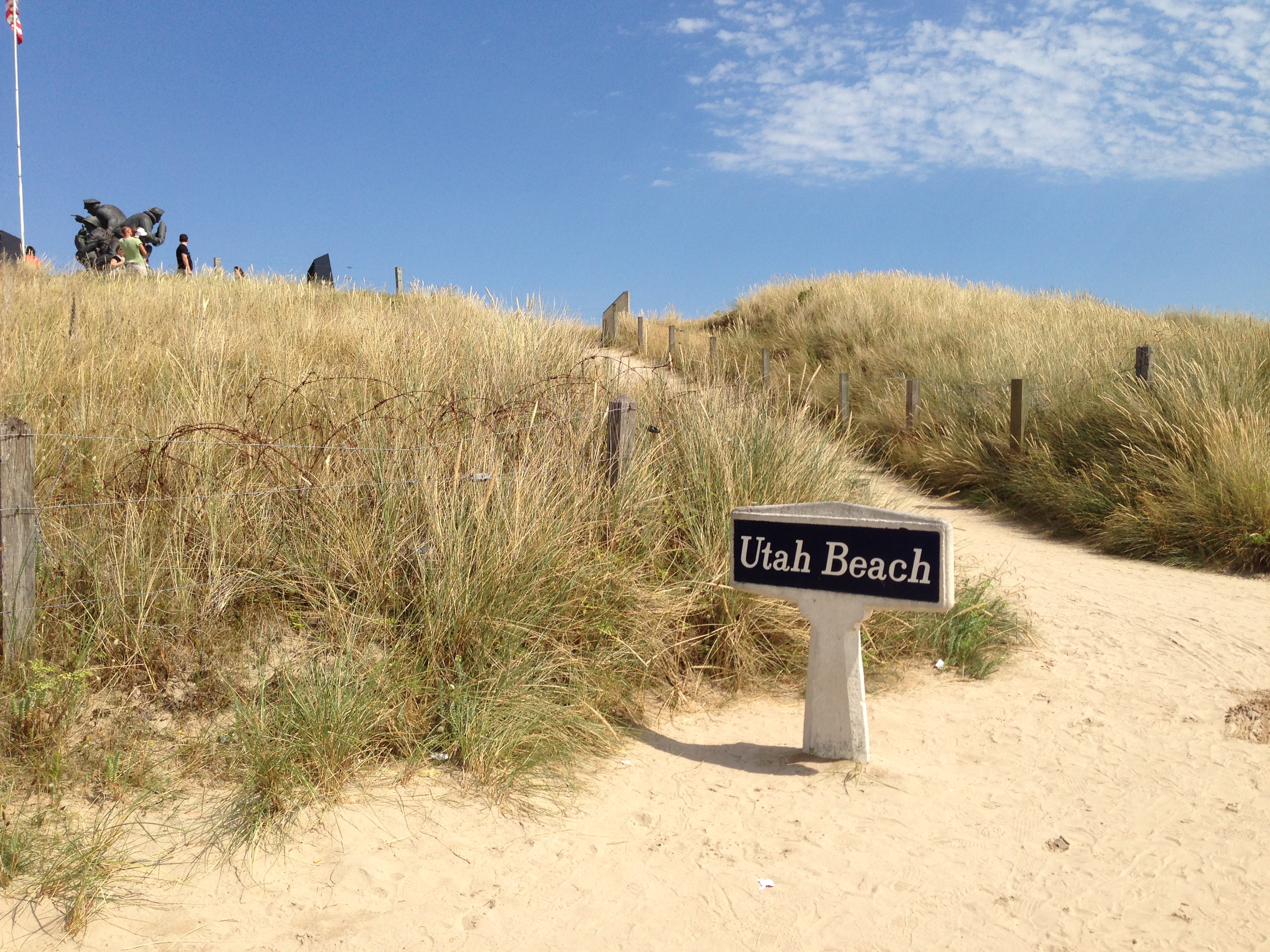
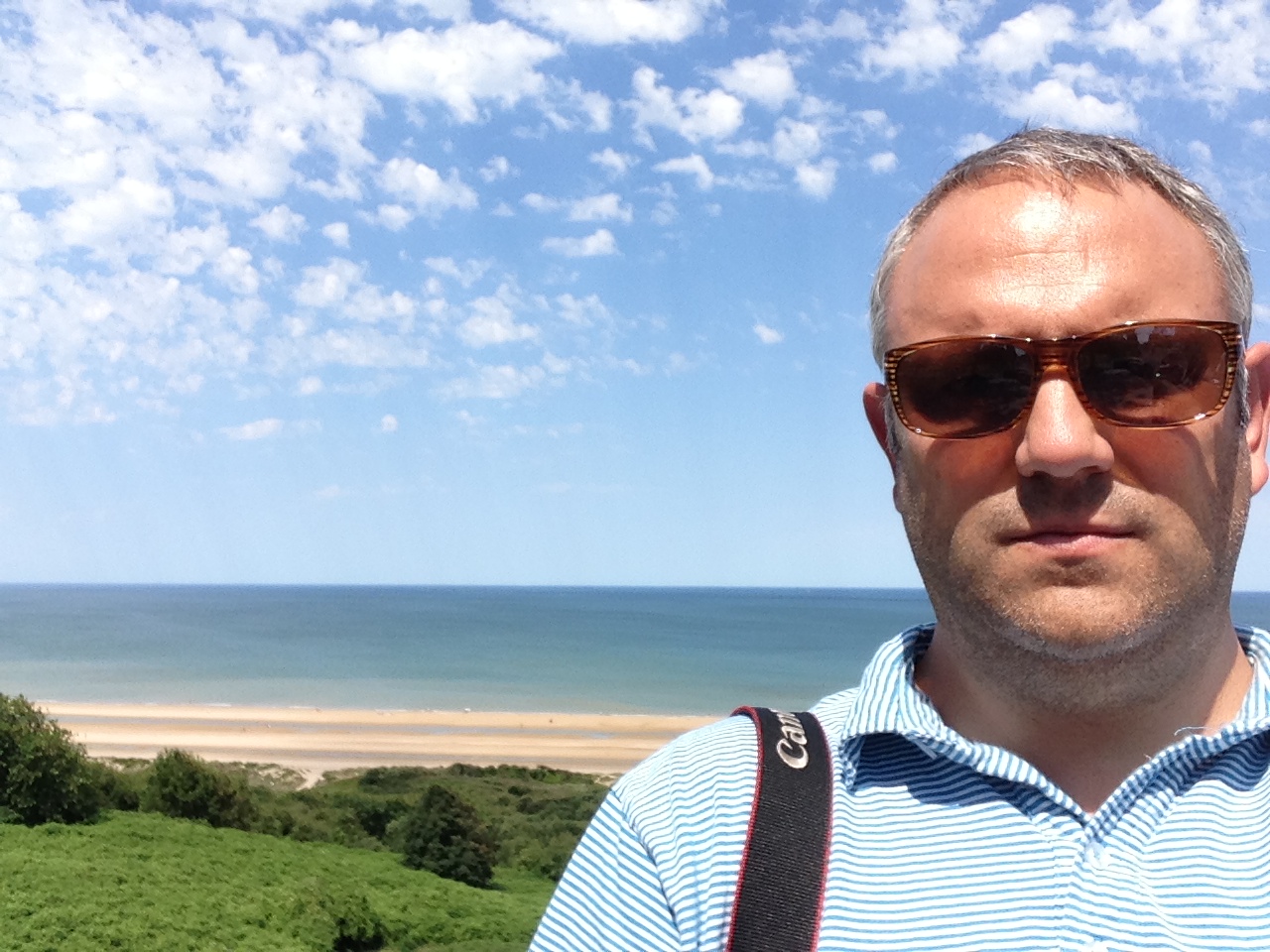
Bayeux served as home base for Lundak in France, where Dan toured Omaha and Utah beaches, visited the D-Day Museum and experienced the flag lowering ceremony at the American Cemetery. His ten-day fellowship concluded in Paris, where he followed the movement of General Patton’s Third Army and its role in the Liberation of Paris.
Armed with fellowship experiences and research, Dan now encourages his students to “dive deeper” in their study of World War II – a requirement of the new Common Core State Standards. Lt. Col. Lundak serves as a case study for students’ exploration of the questions, “At what point do people get involved with the affairs of others?” and “What makes someone brave?” Dan believes these questions are particularly relevant as students prepare to face diverse socio-economics, cultures and traditions represented in a large public high school. Students also write letters of appreciation to veterans, which Dan delivers to the local American Legion post.
“Retracing my grandfather’s service during the D-Day invasion gave me personal insight into what each person has to ask themselves in a time a crisis; the experience also gives my students a personal story they can relate to when facing similar decisions about personal sacrifice,” said Dan. “Understanding history through the close examination of my grandfather’s service – rather than a textbook – interjects real-life perspective into the curriculum and helps students arrive at their own conclusions.”
[minti_divider style=”1″ icon=”” margin=”20px 0px 20px 0px”]
Two 2020 Fellows will pursue experiential learning around the European theatre of World War II:
Patrick McCarney (Stonington High School – Stonington, CT) will experience World War II landmarks, museums, and monuments, gathering the stories of those on the battlefront and home front–young soldiers, women and minorities–to make the diversity of the American war experience more visible for students; and,
Bret Godfrey (American Indian Magnet – Saint Paul, MN) will research and document in France, Belgium and Luxembourg contributions made by American Indians during World War II to create engaging lessons that incorporate these contributions for preK-8 students sharing this heritage.
Each Friday, we highlight one of our 2019 Fellows — their inspiration, itinerary, and plan for transforming student learning going forward. Today, however, we celebrate the completion of our first fellowship of the year!
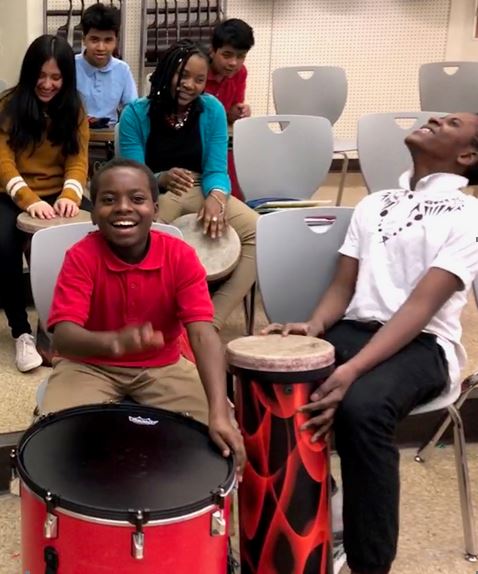
Kristin Gladish (Newcomer Program – Indianapolis) obtained permission from her administration to embark on her fellowship during the first week of May — the only time UCLArts & Healing offers facilitator training for Beat the Odds, a trauma-informed program that integrates activities from group drumming and counseling to build core strengths such as team building, leadership, stress management, empathy and gratitude.
“In short, my fellowship was amazing!” said Kristin. “As a student, then practicing as the facilitator, I learned how to mix in drum circle facilitation with affirmations, rhythm games, and activities to increase students’ focus, listening, self-awareness, and self-expression. The goal behind all of this is to incorporate counseling techniques into drum circles and help students who have experienced trauma.”
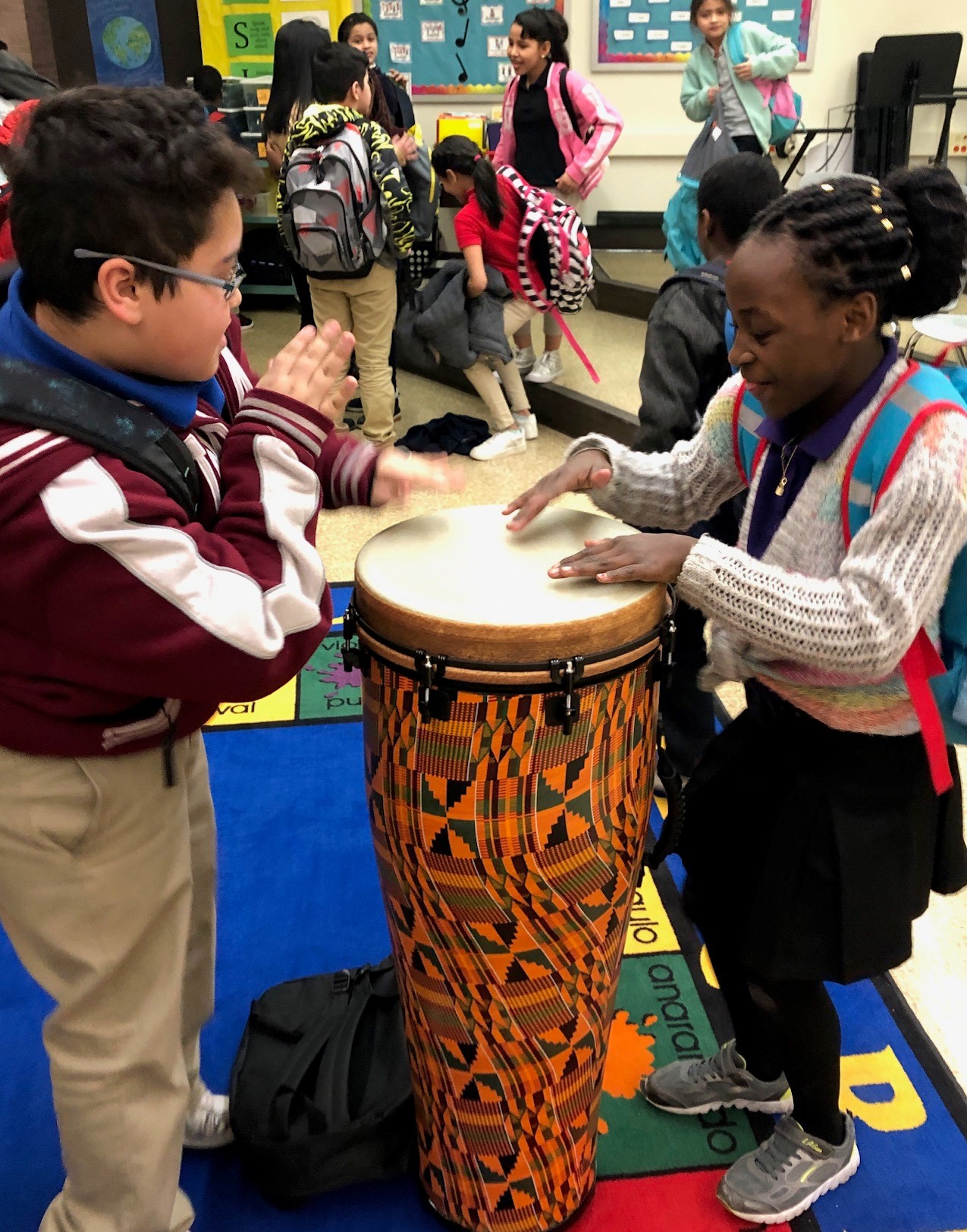
For Kristin, that includes all of her students — refugees or newly arrived immigrants hailing from 15 countries and speaking 21 languages. Of her 257 music students in grades 2-10, 100 percent are minorities and qualify for free and reduced lunch.
An extension of her fellowship includes working with a local “Beat the Odds” trainer, which will help Kristin build local partnerships and community collaborations. In addition to the musical implications of her fellowship, she is also learning how to measure the results of the program through documented observations, pre- and post- student surveys, video evidence of musical/rhythm/social improvements, and attendance and grade data.
Kristin, who holds a bachelor and Master’s degree in Vocal Music, wasted no time implementing her fellowship. For the final three weeks of school, she is introducing the new drumming curriculum on instruments she also purchased with FFT grant money.
“Every country has some sort of drumming, and each student, no matter what language they speak, can learn to play a rhythmic pattern together and to keep a beat together,” said Kristin. “Beyond that, students will learn methods to relieve stress and to express their
feelings through drumming and words — valuable coping methods for students who experienced trauma and violence in their home countries and come to school struggling with inattention, depression, PTSD and anxiety.”

[minti_divider style=”3″ icon=”” margin=”20px 0px 20px 0px”]
Kristin has taught music for 11 years in Lousiana, Texas, and now Indiana. She was the 2019 Teacher of the Year, and was a Top 10 Finalist for the Indianapolis Public Schools District Teacher of the Year. Kristin has completed her Level 1 Orff Training, and enjoys sewing and hiking in her free time.
Back in the ’80s, when Saturday Night Live was funny, Jon Lovitz did a skit called “Get to Know Me!” espousing how people (i.e. Steve Martin) benefited from knowing him. We believe the same is true of our 2019 Fellows and are, therefore, continuing a blog series throughout the summer to introduce you to many of our grant recipients.
Today, in celebration of Ramadan, we highlight a teacher pursuing learning about the Arabic language and Muslim culture. Karina Escajeda (Cony Middle and High School – Augusta, ME) will complete Arabic language & cultural immersion at The Arabic Language School in Dahab, Egypt, to improve family partnerships and refugee student engagement; create community workshops; and increase student understanding of the value peers emigrating from Iraq and Syria add to the school culture.
[minti_divider style=”3″ icon=”” margin=”20px 0px 20px 0px”]
Two years ago, in the midst of a national debate regarding refugees, I resigned from my teaching position at a nearby private boarding school in order to take a position in my hometown, at my former high school. I was deeply aware that my English teaching skills and interest in community development were needed here. In the past seven years, Arabic speakers have become our community’s second-largest demographic, numbering over 1000 residents and making up 5% of the population. With this shift, there has been some divisive rhetoric in our community about refugees.
Our students need to develop an understanding of how to best honor differences. It is imperative that we connect with our new residents and educate our long-term residents about Arabic culture and language to grow stronger as a blended community. I am dedicated to showing our students from Iraq and Syria that we in our small town value who they are and where they come from.

St. Catherine’s Monastery on Mt. Sinai
At The Arabic Language School in Dahab, Egypt, I will be placed in a class that is appropriate to my level of Arabic. There are no in-person Arabic classes within 72 miles of my community, so I have begun formal Arabic study online; however, this particular school focuses on one-on-one attention. The include ten hours a week of individualized; one-on-one lessons in the afternoons; and cultural outings in the town so that students are exposed to spoken Arabic. On one weekend, I will go to Mt. Sinai and St. Catherine’s Monastery (included by the Islamic Educational, Scientific, and Cultural Organization in its world heritage and culture list). I’ll also embark on a desert hike and overnight at a Bedouin camp to understand the rural, conservative experience of many of our district’s language learners. When the course ends, I will fly from Sharm to Cairo to join a four-day cultural and historical tour of Cairo, Luxor, and Giza.
My students and their parents are so excited about my immersion experience. They know that I will have a Weebly site for them to follow, and they are excited for my videos, interviews, and pictures that I will post. All of my Arabic-speaking students are from Syria and Iraq. Their spoken Arabic dialects are mutually understandable, but very different from each other. Syrians speak the Shaami dialect and some Iraqis, my students included, speak the Gulf dialect. I will be learning the Egyptian dialect, which they think is wonderfully hilarious. It’s a bit like American, Australian, and British English. They can’t wait until I come back and start talking.
[minti_divider style=”3″ icon=”” margin=”20px 0px 20px 0px”]
Karina is a K-12 English Language Learner Specialist and the only teacher in the district who has begun to dedicate time to the study of Arabic language and culture. For more than 20 years, she has lived, taught, and administrated programs at public and private schools in California, Maine, Honduras, Mexico, and Japan. She believes in collaboration, authentic tasks, and honoring the achievements of each individual language learner. She has been awarded a 2020 Fulbright DA Teacher Fellowship in Greece, studying refugee integration and teacher training.
[minti_dropcap style=”circle”]B[/minti_dropcap]ack in the ’80s, when Saturday Night Live was funny, Jon Lovitz did a skit called “Get to Know Me!” espousing how people (i.e. Steve Martin) benefited from knowing him. We believe the same is true of our 2019 Fellows and are, therefore, continuing a blog series throughout the summer to introduce you to many of our grant recipients.
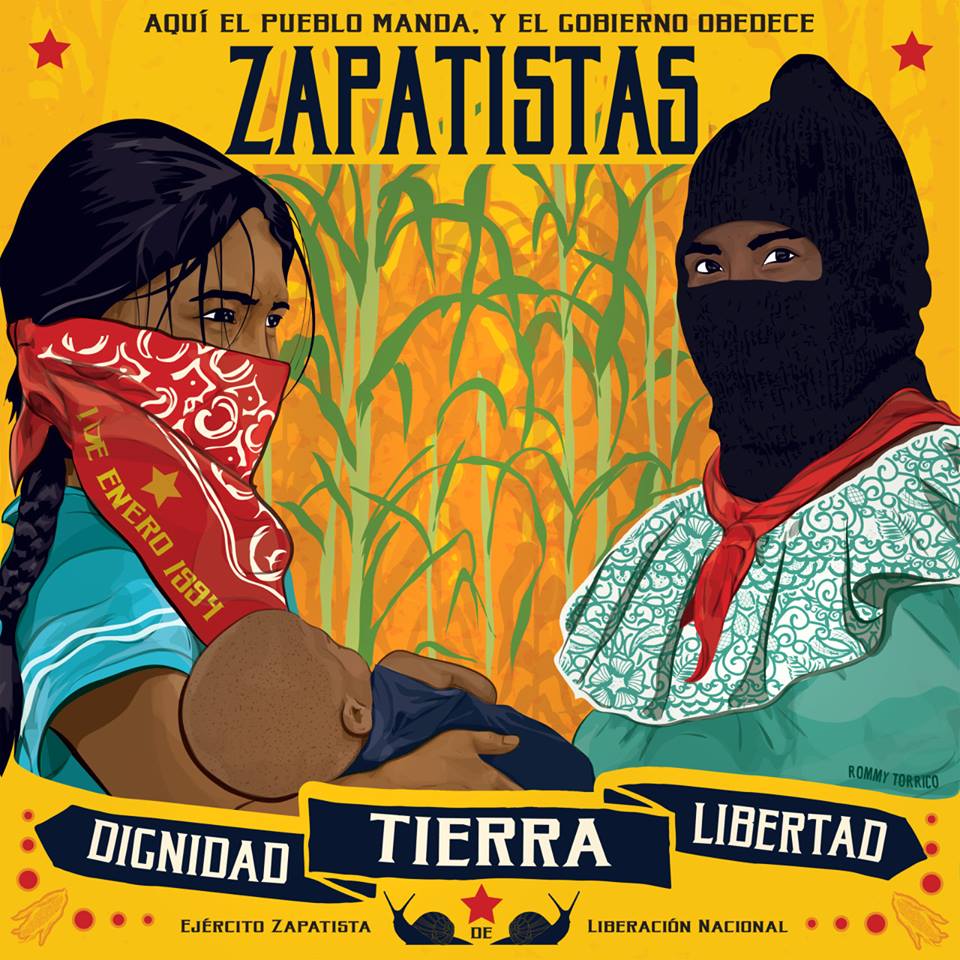
Today, we meet the teaching team of Kaellagh Cassidy and Katie Hollerbach, teachers at Chicago’s Robert Lindblom Math and Science Academy High School. FFT fellowships designed around language/cultural immersion are a favorite among our grant recipients; this particular one, however, has an interesting component: collaborating with indigenous communities in Mexico to inspire our own civic action projects.
[minti_divider style=”3″ icon=”” margin=”20px 0px 20px 0px”]
Our student population is predominantly African American (70%), but the Latnix population is rapidly growing. Our school actively works to foster an inclusive environment that celebrates all cultures and backgrounds: we provide mirrors for students to see themselves in historic and academic texts; we do case students on racial inequality in Brazil; and address trauma in Haiti and youth homelessness in Morocco. However, we wanted to expand and diversity the examples we include from Latin America.
Thus, we designed this fellowship to study Mexico’s indigenous cultures and establish a partnership with a community school in Chiapas to design a unit on the fight for land and education rights.
We believe that a unit on indigenous activism and historical memory of indigenous contributions will affirm to our Latinx students that their history matters.

We plan to travel through central and southern Mexico, exploring museums and cultural sites that highlight indigenous culture and speaking to local experts to better understand the relationship between national identity, indigenous history and culture. Our itinerary includes:
The Zapatista mentality (emphasis on direct democracy, valuing all voices, and inclusivity) will be an engaging topic to begin the school year with, and will also create an opportunity for students to structure our own classroom community and goals. Throughout the fall, we will more effectively validate our Latinx students through new learning, as well as connections with other courses and organizations at school, including the Latino Culture Club, Black Student Union and the Step Team. Additionally:
As white teachers instructing on indigenous cultures, we want to ensure we’re not simply relaying the simplistic narrative often found in textbooks, but allowing the experts in the field to inform our instruction. Rather than be instructors with a monopoly on knowledge and information, we want to build a unit that authentically connects students with the course content in a way that puts students in the position of power.
[minti_divider style=”3″ icon=”” margin=”20px 0px 20px 0px”]
Kaellagh Cassidy has taught history and civics in Chicago for eight years. She aims to put her students in the shoes of historians and activists by re-examining historical truths through documents and simulations and student-driven civic action projects. Kaellagh is also a coach of Cross Country and Track and believes that high school should be a community that fosters student curiosity and empowerment.
Katie Hollerbach has taught high school social science at Lindblom Math
and Science Academy in Chicago for the past eight years. She is passionate about including a global mindset into each of her classes, which currently include Global Civics and Gender & Ethnic Studies. In 2017, she traveled to Morocco as part of the Koldyke Global Teacher Program. She also is a teaching assistant in the MSEd Program at Northwestern University.
[minti_dropcap style=”circle”]B[/minti_dropcap]ack in the ’80s, when Saturday Night Live was funny, Jon Lovitz did a skit called “Get to Know Me!” espousing how the lives of people (i.e. Steve Martin) benefited from knowing him. We believe the same is true of our 2019 Fellows and are, therefore, beginning a blog series to introduce many of our grant recipients throughout the summer.
For our first installment, we introduce you to a Fellow whose fellowship ranks among the most unique we’ve funded in almost twenty years. Get to know Mick Posner of Conrad High School in West Hartford, CT.
[minti_divider style=”3″ icon=”” margin=”20px 0px 20px 0px”]
On why he designed this fellowship…I am now in my 10th year of teaching American Sign Language (ASL), which was actually the first language I learned as a child because I was born deaf. As a faculty member of my high school’s World Languages department, I work with students in 9th through 12th grade. Students take my class to fulfill their World Language credit and to learn about the deaf community. More than 90% of my students have not been exposed to a sign language system until they take my class. I believe that students enjoy my class because they are being introduced to an entirely different culture that, in a sense, intertwined globally and for many of them, the challenge of communicating in different environments and situations is mutual.
Many people do not know that there are 200+ sign language systems around the world, each with their own grammar, vocabulary, influences and origins. Twice a year, my students complete a survey in order to share their feedback about my ASL classes. Consistently I receive the same inquiries — students have a strong interest in learning about unique deaf communities in other countries, particularly those shaped by linguistic and geographical barriers (such as the fact that deaf people in Cuba who are not allowed to drive and work full-time, among other government imposed restrictions.

(photo courtesy of Nunatsiaq News)
After conducting extensive research, I found very little exists regarding the Greenland Deaf Community (and deaf Inuits), thus leading me to the following learning experience that I wish to pursue: understanding how such an unique population survive in such a remote part of the world, despite their deafness, by becoming a student of Inuit Sign Language (ISL), which is the official sign language system of the Greenland Deaf Community. This fellowshipwill deepen students’ understanding of the human spirit’s resiliency and the importance of continuing learning and pursuing knowledge in sign language systems.
ISL is a dialect that is centralized around vocations (a large percentage of their vocabulary is focused on being able to communicate related to hunting and fishing) and survival skills. It is a language based purely on livelihood and survival in a very remote section of the world and would be a strong evidence of sign language’s relevance to a community that depends so much on a particular dialect to survive. There’s not many other languages like this, particularly in the form of a sign language system.

Celebrating the news with Principal Julio Duarte (left) and Superintendent of Schools Tom Moore
From this FFT experience I will have my students actively involved in the creation of online resources regarding different deaf communities around the world. In this project, students will include locations of community, what makes them unique, how they interact with the rest of their community at large, and the identification of unique signs necessary for survival.
When I first found out I was an FFT Fellow, I was overcome with an extraordinary sense of relief. The grant was something I had worked diligently on for four months, stemming from an idea I had from over a year ago based on articles I read the previous summer — quickly, that feeling turned into so much joy. My students were really excited for me — after it was announced, I asked if I could have a few minutes to call my wife. My 5th period class (that was when it was announced) voiced their support and understanding.
The impact on students already exists — I received several congratulatory and well-wishes emails from parents who shared that their students came home and told them about the FFT award. Along with a few additional parents who contacted me via social media, some of my seniors shared that they wish they could stay in high school for another year so they could hear about the experience (of course, I will see if I can extend an invitation to them when the time comes.)
[minti_divider style=”1″ icon=”” margin=”20px 0px 20px 0px”]
Mick is the only member of his family who was deaf, yet his parents believed in having ASL as his first language, which he learned before English. You can learn more about his life experiences and his own family from the A&E documentary “Born this Way Presents: Deaf Out Loud.” He and his wife also own Posner Inclusion, a consulting firm that creates bridges between businesses and unique markets, such as the deaf population.

On Tuesday, we shared on article on our Facebook related to resources for helping students celebrate Chinese New Year. FFT Fellow Liz Kleinrock (also the 2018 Teaching Tolerance Award Winner) brought to our attention that many Asian countries celebrate Lunar New Year during this time period, not just China.
Indeed, from January to the middle of February, China, Korea, Vietnam, Laos, Singapore and many Asian countries celebrate the Lunar New Year as national holidays. According to Voice of America, all celebrations have one common feature: family reunions. Many go back home to spend time with family, even if they live far away, and have New Year’s Eve dinner – the most important holiday dinner in China and many other Asian countries.
To clarify the broad scope of the holiday, Liz suggested using the picture book New Clothes for New Year’s Day by Hyun-Joo Bae with younger students. “I think it could also be beneficial to use Lunar New Year as a lens to explore how different Asian countries celebrate (China, South Korea, Vietnam, etc.) including food, clothing, and traditions,” she said.
We chose to highlight some different countries that celebrate Lunar New Year by sharing images of our Fellows who designed fellowships to learn directly from those who live there. Enjoy the video above and this Year of the Pig!
A common misconception about Fund for Teachers fellowships has to do with their destinations. While many of Fellows choose to pursue learning abroad, the majority stay stateside. Furthermore, a fellowship’s “wow factor” has nothing to do with its funding potential or potential impact (i.e. repopulating coral in the Caribbean vs. taking a seminar in Seattle). Case in point: the fellowship of Cynde Ciesla, Erika Gilbert and Monica Fitzgerald who last summer attended the Model Schools Conference in Orlando, FL.
“The whole process of applying for our grant changed my professional and personal perspectives,” wrote Cynde. “Writing the grant brought my team members and me closer as we worked to write and revise the grant; the conference changed the way we look at our school and the relationships we have as teachers to our students and to each other.”
Last week, the team checked in to update us on their impact so far…
[minti_divider style=”1″ icon=”” margin=”20px 0px 20px 0px”]
As you may recall, our fellowship was to attend the Model Schools Conference in Orlando, Florida. After four days at the most amazing educational conference, our heads were filled with so many things we wanted to implement! We wrote an action plan and narrowed our focus to one specific area, Social-Emotional Learning. We wanted to purposely build relationships with our most vulnerable students.
After much conversation, we started a mentoring program for our kids. Our program is very organic and our purpose is to foster positive relationships to increase attendance, decrease disciplinary issues, and boost performance. We have a lot of evaluating and reflecting to do. Currently there are 12 staff members that are mentoring 27 students.
The most exciting take away from the Model Schools Conference has been the connections we made while there. Those connections have helped us to continue our learning, which will continue to impact our students.
Many of the leaders at the International Center of Leadership in Education (ICLE) were quite impressed with our story – our desire and perseverance to get to their conference, and they truly treated us like “rockstars” while we were there. Our connections with them have also grown! Since returning from the conference, we have been asked to write blogs as part of the Into the Classroom Series, including this piece titled Interactive Read-Alouds: Build Strong Student-Teacher Relationships.
We are going to Model Schools again in June and are currently working with the host, International Center for Leadership Education, to do a presentation that shares our experience and how we started our school’s mentoring program.
Being awarded our fellowship last year provided learning experiences beyond what we imagined. Most importantly, it transformed into student learning and building relationships with all students. We will be forever grateful for your support in our learning.
Warm Regards,
Cynde Ciesla, Erika Gilbert, and Monica Fitzgerald
This self-titled “Sparks of Change” team teaches at Gillette Road Middle School in Cicero, NY. Read more about their fellowship on their Facebook page Our Model Schools Conference Experience.

Tarah and Dan meet the individuals responsible for creating Chattanooga’s VW Akadmie
In addition to building Passats in its Chattanooga plant, Volkswagen builds a workforce through its onsite academy. That’s because job applicants arrive unprepared for technical careers, deficient in STEM skills and critical thinking capabilities. Daniel DeScalzo and Tarah Kemp also prepare a pipeline of qualified employees, they just happen to be doing it at nearby Dupont Elementary School.
“As we reflected on the impact of Volkswagen in our county, we grew curious about the influence of European branches of the company in educational communities abroad,” said Daniel. “We designed a Fund for Teachers fellowship to explore how assembly plants in Barcelona, Brussels, Ingolstadt and Wolfsburg, Germany, partner with schools to create an interdependency that produces gainfully-employed high school graduates.”

Volkswagen’s Chattanooga plant
With help from Volkswagen’s senior vice president of human resources, the teachers researched real-world skills modeled in European plants and discovered that most of the employees on assembly lines were 17- or 18-year-olds who left work in nice cars and drove to comfortable homes. Technical and vocational training during primary school years positioned these students for careers and often fully-paid graduate degrees with the company.
Exposure to the inner-workings of the automobile plants helped Daniel and Tarah realize that the missing link between their students’ knowledge and future STEM professions was a deficiency in engineering design. In response, Tarah established a network among local business executives to increase students’ exposure to job opportunities close to home. She also pitched an idea to Public Education Foundation’s Teacherpreneur program to obtain funding for a 3-5 year initiative that promotes hands-on, project-based learning through a culinary unit. Daniel applied funds saved from the FFT grant toward the purchase of robotic kits and invited mechanical engineers from a local pump manufacturer to partner with students on prototypes.
“If you ask our students about career goals, they would list being a YouTube personality, sports star, video gamer or fashion designer,” said Daniel. “Through exposure to industry opportunities and engineers, we want students to say, ‘I want to make things, design things, do this for a living.’ We want them to know there’s so much opportunity out there and empower them to make a life for themselves and the world awaiting them.”
(pictured above touring Volkswagen’s Wolfsburg plant, the largest automotive factory in Europe.)
This annual look back represents what can happen when teachers chart their course to keep content relevant and students engaged. We hope they inspire you to dream big about what 2019 could bring for you and your students!
For extra inspiration, enjoy these videos of our 2017 and 2016 FFT Fellows. To be part of next year’s recap, start your 2019 grant application today at fft.fundforteachers.org.
On Pearl Harbor Day, we remember the 2,403 people killed in the surprise attack by the Imperial Japanese Navy Air Service. The “date which will live in infamy” launched America’s entry into World War II; the bombings also resulted in the internment of 7,000 Japanese American citizens in relocation centers by order of President Franklin D. Roosevelt. Teaching the complexities of this time is complex in and of itself for Tim Barry. His students at Nathan Hale Middle School in Coventry, CT, fall within a wide range of ability levels.
“This drastic range creates difficulty when choosing and providing engaging and appropriate text for students of all abilities,” explained Tim. “Fortunately, with the broad scope of our World War II unit, we are able to provide high interest and appropriately leveled options so that all students may contribute and draw connections to classroom discussion and produce work that they can be proud of.”
But that unit lacked dialogue about the domestic impact of the war. Tim designed a Fund for Teachers fellowship fill that gap and, last summer, examined life in and around Japanese Relocation Camps in Utah and Colorado to help students:
We are grateful that Tim shared his experiences and insights from his fellowship below.
[minti_divider style=”3″ icon=”” margin=”10px 0px 10px 0px”]

Last summer, I was fortunate to travel to Colorado and Utah to study Japanese Internment Camps as part of my Fund For Teachers fellowship. My intention was to supplement our current World War II unit with experiences from the home front to allow students to draw parallels in today’s climate of cultural bias. I want my students to draw inspiration my own curiosity and go out and explore the world. I want them to challenge what they know or think they know and I want them to be acutely aware of how history has a tendency to repeat itself.

Granada Relocation Center memorial
Trip Details: I spent nine days traveling from the Topaz Camp in Delta, Utah to the Moab Isolation Center in Moab, Utah and finally to Granada Relocation Center (Amache) in Granada, Colorado. In Delta, I was struck by the beautifully curated Topaz Museum which highlighted the blending of traditional Japanese culture with the easily recognizable American identity of the time. High school yearbooks, recounts of baseball games, and a letterman’s jackets sat side-by-side with instruments of the Japanese tea ceremony and watercolor paintings. Despite the dramatic civil rights violations perpetrated by the United States government, these proud people still created a sense of normalcy and everyday life. The message of their resilience is one that I hope will resonate with my students.

Pictured with Mr. Kitajima and Dr. Clark
The highlight of my trip was being able to connect with Denver University at their biennial open house at the Amache site in Colorado. There, I was introduced to Dr. Bonnie Clark who is the Project Director of the DU Amache Research Project. I was able to meet several former internees of the camp, including 87 year old, Mr. Ken Kitajima who was a resident of the camp from ages 12-15. My hope is that I can provide my students with a first hand account of what it was like to be of middle school age in a Relocation Camp. I plan to connect with Mr. Kitajima virtually to conduct interviews and provide insight into his experience. Perspective is one of the most important things I can offer to my students.
Middle school is a trying time and although the experiences of my students will be different than those of the past, the challenges will not be unique. My hope is that my journey will foster a sense of intellectual curiosity as my students create their own world view and tackle the test of growing up in an increasingly demanding world. The digital world in which we live in allows people to instantly access information and make snap decisions based on their own experiences and biases, yet we don’t often slow down to assess all sides of a story. Ultimately, I want my students to be willing to challenge what is accepted by society and greet people from all walks of life with an open mind.
[minti_divider style=”1″ icon=”” margin=”10px 0px 10px 0px”]
For more than a decade, Tim has empowered his students to take ownership over their education and to become independent learners while focusing on character and integrity. Throughout his teaching career, he has coached athletics at both the middle and high school levels and views the competition field as an extension of the classroom where students can push themselves.
Pixar’s Coco familiarized many with the tradition of Dia de los Muertos, or “Day of the Dead.” And before Nancy MacBride‘s fellowship to Oaxaca, Mexico, the annual holiday inspired Voluntown Elementary’s singular art project honoring Latin American history and culture. Now, the celebration honoring life and death is just one in a series of year-long art opportunities linked with Latin culture in a preK-8 school that only offers 60 hours of social studies instruction annually.
“Voluntown, CT, is a rural, homogenous community with only one school (ours) where only 1% of students have other languages spoken at home,” explained Nancy. “The insular culture creates challenges for children to learn about different cultures and accept the differences in others. I felt our students needed cultures, not walls, so I designed a fellowship to make it happen.”

Usually Fellows’ implementation of their summer grants begins upon their return to the classroom, but Nancy started the learning when she applied for her FFT grant in the fall of 2017.
The “pre-learning” culminated in a community Noche Mexicana last spring, attended by students, their families and government dignitaries.

This summer, students followed Nancy (a working artist herself) via Instagram as she lived out the learning they shared the year before. Nancy spent a month in Oaxaca, staying in a community that caters to local artisans, taking language classes, sketching World Heritage Sites and experiencing Pre-Columbian and folk art in surrounding museums and cultural centers. She practiced weaving through the Weaving Oaxaca initiative alongside a twelve-year-old teacher whose family has dyed natural wools and created art for generations; she also worked with Zapotec ceramist Adrian Martinez for a week. The highlight was visiting the artist studio of Magdalena Pedro Martinez, whom students came to know through the “Craft in America” series.

This fall, Nancy’s experiences in Mexico continue to inspire projects and discussions with students. Fifth graders are preparing to create wooden assembled animals inspired by Mexican alebrijes. Sixth graders are creating their own versions of sculptures modeled after artifacts Nancy brought back from Josefina’s Oaxacan workshop. And beginning this week, students of all ages will have the opportunity to join a new Spanish Club Nancy initiated as an elective.
Perhaps more importantly, students have a new appreciation for “our neighbors to the south,” according to Nancy. As a volunteer with the Voluntown Peace Trust, she collaborates with the Hartford Catholic Worker to bring urban minority children out of the city to enjoy the surrounding nature. Nancy’s leadership as a role model through this effort, combined with the cross-disciplinary learning she provides, is creating a new culture in the school community.

“My admiration of artists from other cultures helps break down the walls and build bridges to other cultures for students,” she said. “My Fund for Teachers fellowship wasn’t just about the place visited, or knowledge, skills and capabilities I gained; it also moved appreciation of Mexican culture from my head to my heart and that passion is now spreading to my students.”
[minti_divider style=”1″ icon=”” margin=”10px 0px 10px 0px”]
Nancy (pictured with a state selectman and superintendent at Noche Mexicana) has taught art for 31 years, a career that has included teaching sculpture to widows and orphans in Zambia and earned her Connecticut’s Outstanding Elementary Art Teacher award. She frequently exhibits her own work in galleries and museums, which you can see on her website. (Top picture of students dressed as Frida and her fawn at the Noche Mexicana.)
The name of our 49th state derives from the Aleut word alyeska, or “great land.” Many FFT Fellows would agree after experiencing the culture and ecology of the land that – 151 years ago today – was acquired from Russia for $7.2 million. In celebration of Alaska Day, enjoy the following images, insights and impact of grant recipients’ learning in “The Last Frontier.”
[minti_divider style=”1″ icon=”” margin=”20px 0px 20px 0px”]

Panning for gold in Mineral Creek.
Robin Barboza-Josephson & Catherine Gardner (New Milford High School – New Milford, CT) joined an expedition through the Kenai National Wildlife Refuge and Denali National Park to demonstrate the work of scientists and move ecology education to a model supporting Next Generation Science Standards. (Featured in clip above.)
“We hope to trigger a need for changes in human behavior to try and combat global warming before it is too late. I hope that by sharing my photos and experiences with them, they will realize that their behavior here (4000 miles away) still has an impact on environments they have never seen before.”

Listening to a lecture by Sheeren on Glacier Bay.
Jill Hanley (Journeys Secondary School – Saint Paul, MN) boarded Steve Spangler Science at Sea expedition to the inland passage of South East Alaska to strengthen approaches to Next Generation Science Standards and support student learning surrounding geology, geography, animal science and life cycles.
“I didn’t see Alaska, I experienced it. I went places I had only read about and connected information that I was receiving to the places that I was seeing. The amount of information that Naturalist John Scheeren share with us was amazing. I feel grateful that he shared his knowledge and I can pass his knowledge on to my students.”
Rose Abbey, Sarah Henry-Pratt, LeAnn Olsen & (Oakland Elementary School – Oakland, OR) join the Steve Spangler Science at Sea expedition to the inland passage of South East Alaska to strengthen approaches to Next Generation Science Standards and support student learning surrounding geology, geography, animal science and life cycles. (Featured in clip below.)
“This grant has allowed us as educators to revitalize our way of thinking about instruction in the area of science. We come away from it knowing that science needs to be in every part of our day, not just in science time but also in reading and writing. We know that students need to be engaged to learn. Exposing students to phenomena in science begins the scientific process, and unlocks their interests for the future.”

Christine Dunbar and Charles FitzGibbons (Metropolitan Expeditionary Learning School – Forest Hills, NY) used photo journalism and oral interviews to examine the immediate effects of climate change on coastal Alaskan natives to convey to students the interaction between individuals, communities, government policy and the climate.
“This grant allowed my colleague and me the opportunity to enter into a community and explore the multiple sides of a current event. The content can be examined through both a scientific and political lens, allowing us to create an interdisciplinary case study that can be grounded in both of our classes. Through this process, my horizons have been broadened regarding interdisciplinary content creation through teacher collaboration.”
Beverly Brotton (Soddy Daisy Middle School – Soddy Daisy, TN) explored Alaska’s landscapes, examining how humans adapt to challenges caused by humanity and nature, to provide students a first-hand account of climate change.
“There is no way to compare reading about a place and visiting that area. These amazing experiences are a part of me. I can now say I have walked on a glacier, watched a sow play with her cubs in Denali, and ran down a highway to catch a glimpse of a moose drinking from a stream. When you experience it, your arsenal of teachable moments grow.”
Rebecca Cutkomp (East Hartford High School – East Hartford, CT) explored Washington’s Spokane Indian Reservation and Alaska’s Denali National Park to enrich student learning in thematic units on identity and aid in students’ deeper insight into rhetorical analysis.
“My time camping in Alaska looms large in my reflections on my trip. I spent 3 days orienteering through a trail-less section of Denali National Park to mirror the some of the events in John Krakauer’s Into the Wild. I faced some of the obstacles detailed in the book, and while these experiences gave me valuable background knowledge on the text, it also strengthened my understanding of how identity is shaped by our experiences and encounters, a major focus of my fellowship.”

Brandon Hubbard-Heitz and Frank Mangam (The Howard School – Chattanooga, TN) assessed the past and present effects of people’s interaction with the Alaskan wilderness to empower students to embark upon future conservation work in their contexts. (Read more about their learning here.)
“I have a much more nuanced view of the ways in which humans interact with and treat the land on which they live. I believe I am less self-righteous and more able to ask students probing questions, rather than simply argue a point. I believe I am more capable of leading students into the difficult, muddy waters of the debate about climate change and how humans ought to respond to imminent changes to the environment.”
In honor of Mahatma Gandhi’s birthday today, we share the thoughts of teachers who analyzed his practice of ahimsa, or non-violence on their 2015 FFT fellowship. Katie Seltzer and Eric Berge spent five weeks in India learning about the teaching of non-harm present in Jainism, Hinduism, and Buddhism. They share some of their experiences and insights below:
[minti_dropcap style=”circle”]Q[/minti_dropcap] Can you briefly describe your fellowship — where you went and why?
[minti_dropcap style=”circle”]A[/minti_dropcap] We were truly immersed in the culture of non-violence during our participation in the International School for Jain Studies Teaching for Peace Program by living, (even eating!) and studying nonviolence. Additionally, with our side trip to Varanasi, we explored the Buddhist roots of nonviolence in India by visiting Sarnath, the site of the Buddha’s first sermon, where he taught the origins of suffering and the method for overcoming suffering. In Varanasi, we explored the Hindu practice of cremation on the sacred Ganges River—a returning of body and soul to the earth in a non-violent burial practice. From these experiences, we deepened our understanding of ahimsa through the study of Gandhi’s writing and visiting his home in Mumbai, his home in New Delhi and site of his assassination, and the site of his cremation. We were impressed with Gandhi’s commitment to simple living, exemplified by the exhibit on his few possessions. The inspiration for our learning was to determine how schools and students can be agents of peace in the midst of diverse cultures and religious illiteracy.

On the Ganges River in Varanasi.
[minti_dropcap style=”circle”]Q[/minti_dropcap] How did your fellowship translate to the classroom?
[minti_dropcap style=”circle”]A[/minti_dropcap]
Eric: I incorporated the religion of Jainism into my teaching of World Religions. In India, we had the opportunity to learn about the Jain teaching of nonviolence directly by spending a month living in Jain communities. Students were fascinated to learn about how the Jain teaching of nonviolence extends to animal and plant life. I shared with students the strictures of the Jain vegetarian diet—eating no meat, leafy green vegetables, and root vegetables. I had the students read the story of the Mango Tree, which we learned about in India, to teach about why Jains follow this diet. Students read the story, which talks about a group of friends walking through the forest and encountering a mango tree. In order to get the mangos, one friend suggests cutting down the tree, another cutting down a branch, and another picking the mangos off the tree. However, the final friend tells them that if they look around, there are enough mangos on the ground to feed all of them. This friend illustrates ahimsa by limiting his harm of the natural world, and ensuring that there will be enough for everyone to go around. We also learned about the Jain commitment to nonviolence by learning about the lives of Jain monks. After watching an Indian cartoon about Mahavir, the founder of Jainism, and his commitment to nonviolence, students looked at photos of Jain monks and nuns that I took in India. I shared stories of the Jain monks that we met, and we watched a short video I filmed of a woman taking the vows to become a Jain nun. Students then reflected on what Jainism can teach them about nonviolence. Students realize that nonviolence can include what we eat, how we interact with others, and living simply. These Jain truths are relevant to all students regardless of religious traditions.
Katie: I incorporated my experience of Gandhi into my teaching of Religion and Social Justice. We begin by studying the life of Gandhi through images of him, a brief documentary on his movement, and primary source documents, including his own writings. Students explore how nonviolence is an active, not a passive, method of working for social change. A new student project has students find their own injustice in society and create the idea for a nonviolent movement to address the problem, using the methods of Gandhi. Additionally, students look at how Gandhi’s methods can help them resolve conflicts in their own lives. We watch a Bollywood movie, Lage Raho Munna Bhai, about Gandhi coming back to life to teach a mobster about how ahimsa is more powerful than physical force. The humorous movie builds on the concepts of Gandhi that students explore earlier in the unit. The students then work on applying Gandhi’s techniques in case studies of interpersonal conflicts and then to conflicts in their own life. The goal is to make Gandhi’s teachings of ahimsa relevant, and have his movement educate a new generation of students.

Katie and Eric pictured with FFT Fellow Monica Shah (Chevy Chase, MD) who participated in the same nonviolence immersion program at the Mahaveer Public School in Jaipur.
[minti_dropcap style=”circle”]Q[/minti_dropcap] What do you consider the lasting impact of your learning in India?
[minti_dropcap style=”circle”]A[/minti_dropcap]In a sense, words fail to describe how fully we were able to deepen our study of ahimsa by experiencing it in our daily life. We maintained a strict vegetarian diet, which may not sound life-altering, but the impetus behind it (that non-violence starts with how you sustain your life at the most basic level) is a completely different world view from an American one. Participating in the ISJS Teaching for Peace Program enabled us to live as and among Jains who are firmly committed in all that they do to reducing violence in the world. While we won’t be testing our students on how to be vegetarian, we will be better equipped to answer questions about belief-systems that are so radically different from mainstream American views. Our fellowship enabled us to meet and with students, teachers, monks and lay people daily striving for ahimsa. Their example became an example to us—ahimsa made visible in their welcoming of us and their daily practices. So our main take away from the fellowship really came from those whom we met as living examples of Gandhi’s quote: “There is no path to peace, peace is the path.”
[minti_divider style=”1″ icon=”” margin=”30px 0px 30px 0px”]
At the time of their fellowship, Eric and Katie both taught at Cristo Rey New York High School in Harlem, but have since moved to Portland Oregon and teach at Valley Catholic High School and Oregon Episcopal High School, respectively. They are proud that that their fellowship is affecting three schools on two coasts. Eric received his BA in Religious Studies from Gonzaga University and an MS in Conflict Resolution from Portland State University. Katie is a graduate of the College of the Holy Cross and Harvard Divinity School.
[minti_dropcap style=”normal”]A[/minti_dropcap]s part of the “follow up” portion of an FFT fellowship, grant recipients complete a Passport that documents their learning and where they plan to go from here. Teachers answer brief questions in three categories:
During the month of August, we’ll share some of our Fellows’ Passports to get us all in the “Back to School” mode. Today, we’re proud to share the reflections of Amber Neal, teacher at Almeda Elementary School in Houston, TX. In her grant proposal, she shared the inspiration behind her fellowship:
As a Black little girl, I grew up learning about Africa in school, but exclusively through the lens of the Transatlantic Slave Trade. The curriculum and textbooks only reinforced stereotypes of Africans as remote village dwellers with spears and shields and co-existing with wild animals. Years later as an educator, I noted the elementary curriculum was greatly restricted by academic expectations and statewide annual assessments, completely lacking creative, culturally responsive texts or materials. In fact, our state’s education system actually came under fire for producing textbooks and curriculum that romanticized slavery, misinforming students that slaves were actually immigrants that made the decision to travel to the New World.
As a Black educator, I felt deeply offended that across the state, teachers were essentially educating students on historical half-truths. This trip will serve as a reminder that I am obligated to not only teach the standards of the course, but to recognize what’s not included and ask why. It is vital in our roles as educators to check our own perceptions and beliefs to become more cognizant of how important our part is in perpetuating stereotypes in the malleable minds of our students.
[minti_divider style=”1″ icon=”” margin=”30px 0px 30px 0px”]
Fellowship Description
Experience Tanzania’s history, language, culture and educational climate to deepen understanding of African refugee students and develop learning experiences that enhance global awareness, celebrate cultural differences and enrich classroom discourse.
Personal & Professional Growth

With Masai women sharing cultural & historical significance of bead work.
This fellowship expanded my worldview and enhanced my knowledge and understanding of East African cultures, languages and history. I’ve already utilized the acquired knowledge, skills and resources from Tanzania to develop instructional materials that will enrich authentic student learning experiences. Lastly, it has provided me a springboard to critically analyze what we teach, the methods in which we teach and the efficacy of the curriculum taught.
Observing Tanzanian teachers instruct and lead with upwards of 100 students per class was awe-inspiring! Tanzanian teachers are not always afforded the modern technological advances that are so prevalent in American schools; instead they use innovation, passion, inspiration and creativity to bring their lessons to life. I plan to incorporate various Tanzanian folktales, oral histories, and cultural artifacts in my ESL Reading classes to celebrate cultural diversity and improve global competence.
My greatest personal accomplishment was my ability to be completely immersed in the culture. Through this fellowship, I reaffirmed my identity as a Black educator by drawing connections between African-American and traditional African cultures, which will prove invaluable in my instruction of predominately Black students. I am also proud of the Swahili language skills that I acquired and plan not only to utilize them in the classroom setting, but will continue my study of the language.
Impact on Your Students, School & Community

While the current social studies curriculum mandates that 3rd-5th grade students learn both state and U.S. history, much of the curriculum lacks examination through a global lens. My fellowship experience will expose students to the beauty of the African diaspora by honoring history, celebrating cultures and recognizing the continent’s global impact. Students will develop their critical thinking skills by participating in activities that require critique and collaboration on real world issues.
I also believe that by sharing my experiences, curiosity among my colleagues will grow, inspiring them to seek out non-traditional professional development opportunities and challenge them to critically examine the curriculum and their own biases when working with students of color and students of historically under-served backgrounds. I want to be a role model for teaching a global citizenship curriculum, balancing critical literacy instruction and providing culturally responsive instruction.
Imagining the Future
Students will celebrate their new learning by reading the book Africa is Not a Country, which orients students to Africa as a continent through the exploration of the traditions and cultures of kids from 25 countries, including Tanzania. This interactive lesson will help students recognize country names, locations and regions while the mini-narratives in the book illuminates the immense cultural, linguistic and ethnic diversity of the diaspora and dispels the myth of it being a country.
There is a large push in Tanzanian education reform for students to be a part of a global economy through their learning of the English language. However, in many public schools, the access to literature has been a challenge. I want to inspire my students to donate some of their favorite books to some of the primary schools, and include book reviews to inspire Tanzania students to read, in English. Through this experience, students will develop a sense of empathy for other students’ experiences.
This fellowship provided me the opportunity to explore the African diaspora, which was life changing, on a professional and personal level. The warmth of the people and my overall experiences felt like a pilgrimage back home. Through my journey, I have become more invested in my career as an educator and reaffirmed my passions as a lifelong learner. I will now bring my global experiences to the classroom and expose students to the world outside of the four walls of their communities.
[minti_divider style=”1″ icon=”” margin=”30px 0px 30px 0px”]
Amber (pictured picking up her FFT grant check) utilizes her social work background to improve students’ social, emotional and behavioral outcomes. She infuses culturally responsive materials to foster social justice, global awareness and civic engagement. A 2018 HEB Excellence in Education statewide finalist and 2017 Fulbright scholar, she also uses her global experiences to bring experiential, hands-on learning to her urban classroom.
The title photo of Amber was taken at Olduvai Gorge, considered the birthplace of humanity.
More than 100 families entered the Meriden Public School District in Connecticut last year from Puerto Rico after Hurricane Maria. Consequently, Mariah Abatan and Marjorie Eager quickly became more than teachers at Hanover Elementary — they became a lifeline for displaced, confused and scared English Language Learners (fifty percent of whom also presented with speech and language impairments and learning disabilities). Scrambling for strategies to best help these children, they discovered a U.S. News and World Report ranking of “The Best Countries to Be an Immigrant” with Sweden at the top of the list. That’s where they find themselves today, World Refugee Day 2018, on their FFT fellowship.
“We are committed and passionate to empower and inspire our students to dream and achieve their dreams by becoming resilient, lifelong learners despite the challenges they are facing,” wrote the teachers in their grant proposal. “This is a difficult task due to our limited understanding and knowledge of educating immigrant students, lack of resources and minimal training from the district.”

They crafted a fellowship to bridge that gap and are debriefing with educators at two Swedish schools where refugee students first register, as well as participating in a conference at Stockholm University titled “Exploring Language Education: Global and Local Perspectives.”
“We are inspired by the resilience, kindness and courage of the immigrant and refugee families we have met – both here in Sweden and our classroom in the US,” said Mariah. “It is encouraging to witness united voices of a community committed to helping and empowering each other in the midst of traumatic, life-altering events. We urge you to take advantage of the opportunity to make a positive impact in your community by supporting immigrant and refuge families.”
Watch this video of 2017 FFT Fellows’ journey documenting the refugee crisis in Western Europe and the student impact that followed.
“We want our students to feel and know that they are important and helpful to others, as well
as they can add value to their lives by learning from others,” added Marjorie. “In order to have a better community, we have to build tolerance, trust, empathy, and mutual understanding. It is essential/critical to us, that students value their background history and understand the richest of their contributions and contributions of their peers in Sweden.”
Educating refugee and immigrant students is a growing trend in Fund for Teachers fellowships. This summer, five teachers are pursuing this topic in various and unique ways, including:
“We know that we would have been able to teach our immigration unit without this opportunity, but we know we will do a much better job after this experience,” said Maribeth. “Through many of the poignant experiences we had in Vietnam and Cambodia we can empathize with why a family would feel the need to uproot their entire life in search of a life that does not include war and oppression. It is a decision that we in the States are very lucky that we do not need to make.”

Starting her tour in Brazoria County with the Father of Texas, Stephen F. Austin.
The majority of Lori Lyn’s students at Hicks Elementary in Houston are new to America and, thus, new to Texas. Therefore, in addition to providing the fundamentals of an education, she’s also tasked with teaching state history in accordance with state standards. This responsibility inspired her to assume the role of tour guide AND teacher this summer as an FFT Fellow. In a Toyota Sienna minivan, Lori is logging 3,000+ miles driving across the Lone Star State to help her second graders students not only “Remember the Alamo,” but also master complex academic content and become active participants in their own learning.
The four-week itinerary includes:
“My students are curious about their community’s history, eager to explore their world, and enjoy learning about every place that is new to them,” said Lori. “This fellowship is helping me help students understand how landmarks, monuments, and historical buildings represent and influence current events, as well as the people, places, and ideas that are important to the society in which they now live.”
This fall, her new curriculum will address state symbols, mapping skills, and state celebrations, landmarks, monuments, museums and government buildings. Geography units will also help students to begin developing an understanding of where they are located in the state and nation.
You can follow Lori’s progress on Twitter at @_MrsLyn and enjoy Lyle Lovett’s snappy anthem to Texas and its newest residents!