So That Others May Learn

Last summer with a Fund for Teaches grant, Dr. Shelina Warren and four peers from Dunbar High School in Washington DC embarked on a journey across five states in the Deep South to more effectively teach complex and accurate historical narratives about race, civil rights, and the African American experience. In advance of Martin Luther King Day, we reached out to Shelina to learn more about their experiences and how students are learning differently as a result… 

You saw/experienced/internalized so much history on your fellowship. Is there one moment that stands out above the others? 

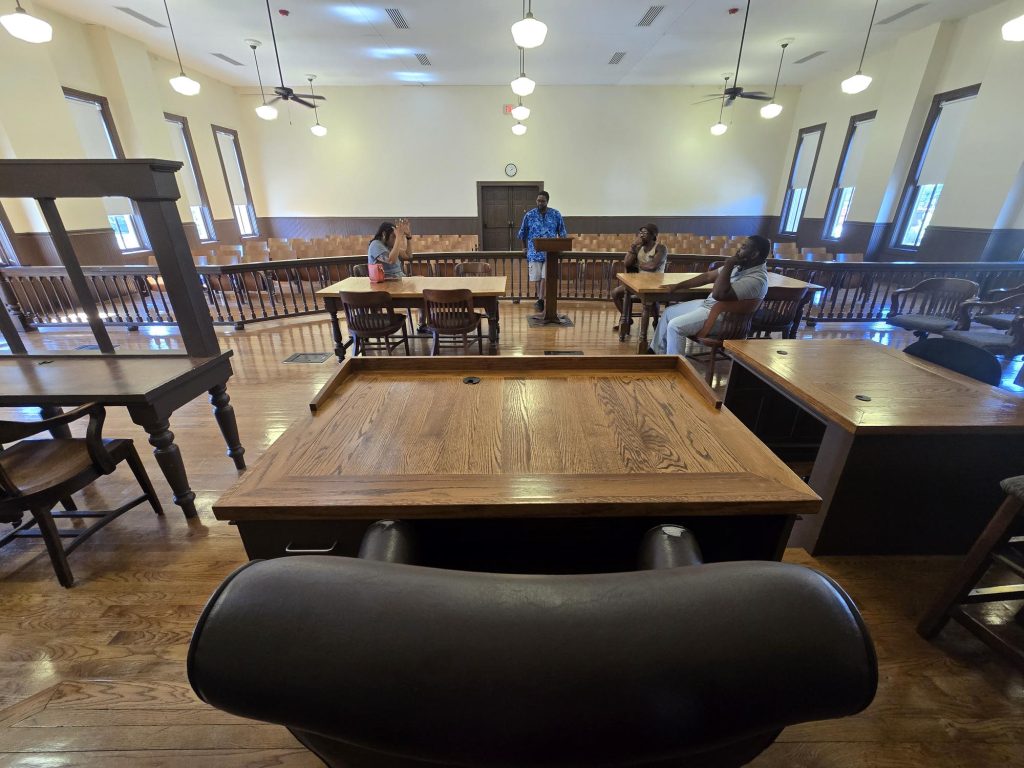
One of the most profound moments of the fellowship was standing inside the National Civil Rights Museum in Memphis, at the exact site where Dr. Martin Luther King, Jr. gave his life. The emotional weight of being in that space was unexpectedly similar to what I felt days later in Mississippi—standing in the courthouse where Emmett Till’s killers were acquitted and near the river where his body was found. 

In both places, I felt the same question pressing in on me: 
How do we teach students not only what happened, but how people responded—and what those responses demand of us today? 

That question is at the heart of what I was trying to solve through writing and receiving this fellowship. 

And what were you trying to solve? 

Before the fellowship, my students could name incidents of racial violence—Martin Luther King, Jr., George Floyd, Breonna Taylor—but they struggled to articulate: 

  • How people responded in those moments; 
  • Why those responses mattered; and, 
  • What choices they themselves are inheriting today 

A pre-survey I administered at the start of my Emmett Till unit confirmed this gap: 

  • While students expressed strong emotional reactions to racial violence, many lacked confidence in explaining historical responses beyond protests or anger. 
  • More than 80% of students indicated that primary sources, real locations, and personal narratives helped them understand people’s choices more than textbooks alone. 
  • Nearly all students said they believe their responsibility today is to speak up when we see injustice, but many were unsure how to do so meaningfully. 

The fellowship helped me realize that place-based learning—standing where history happened—is essential to bridging that gap. 
How is your fellowship’s place-based learning informing students in the various classes you teach? 

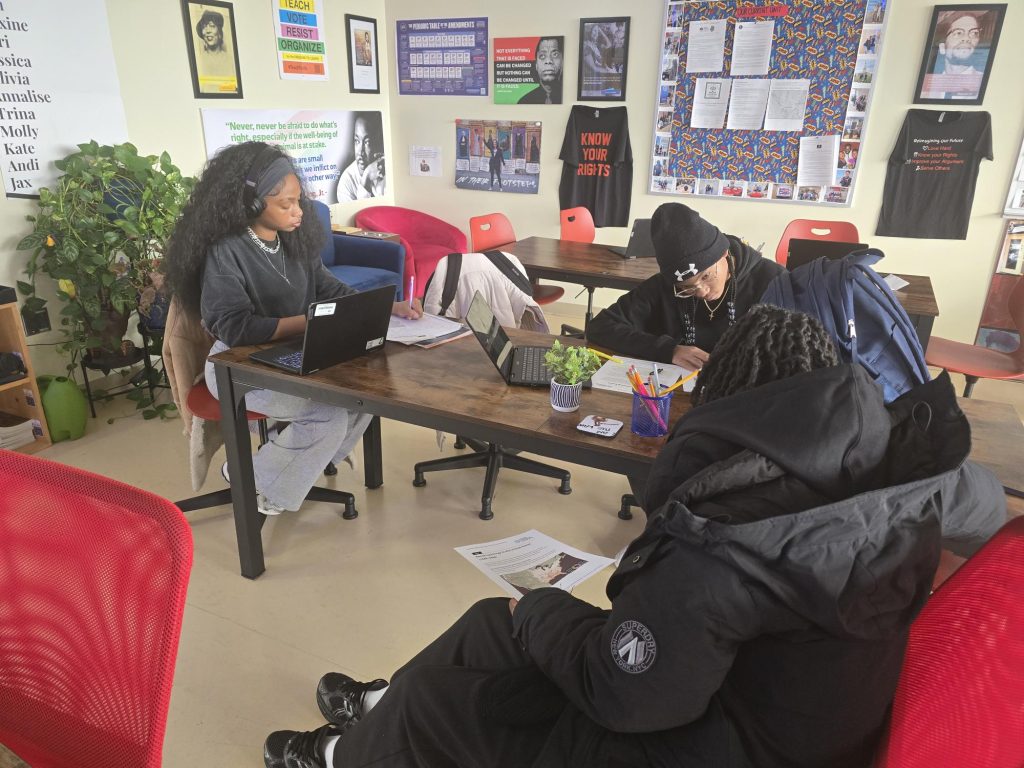
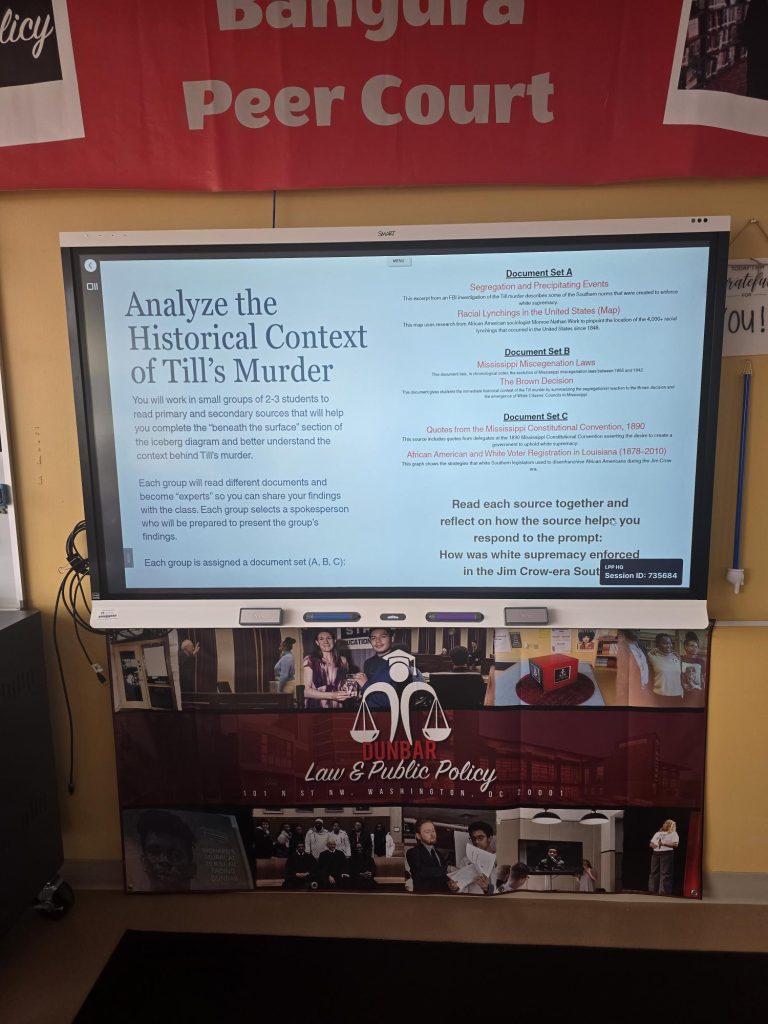
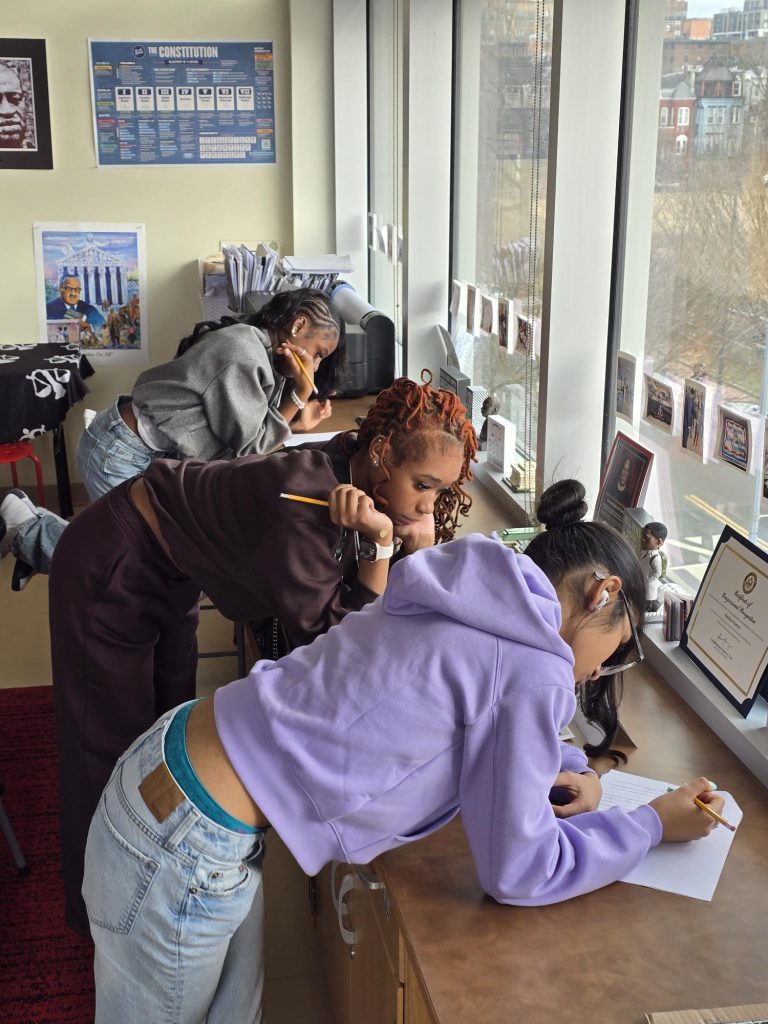
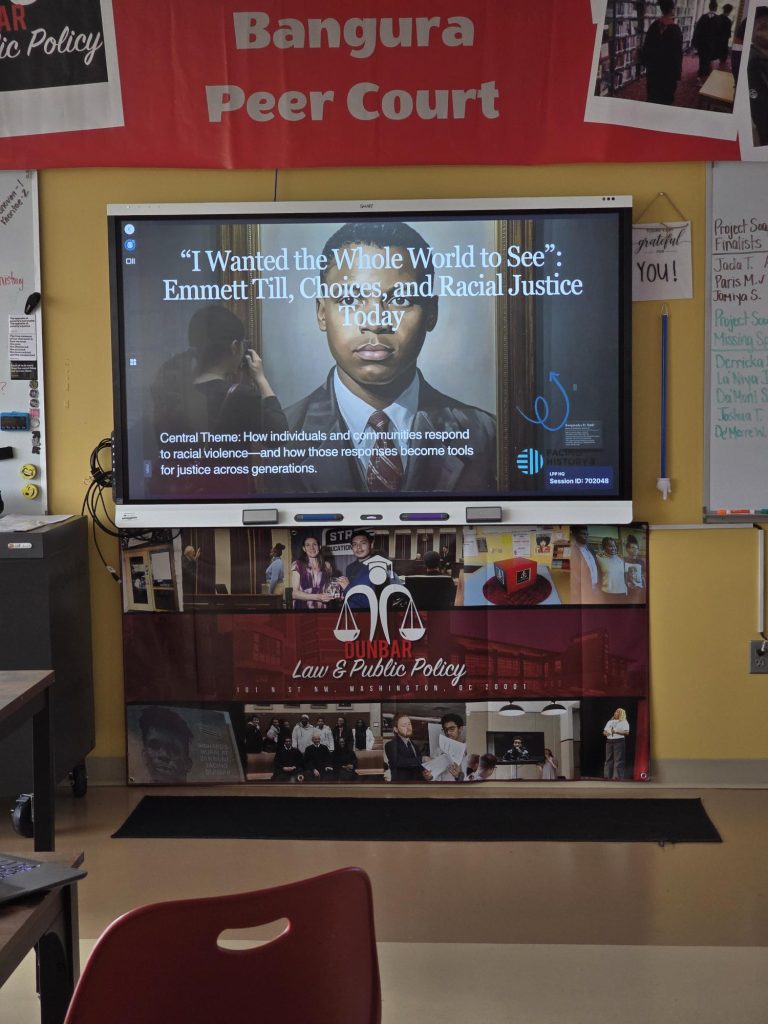
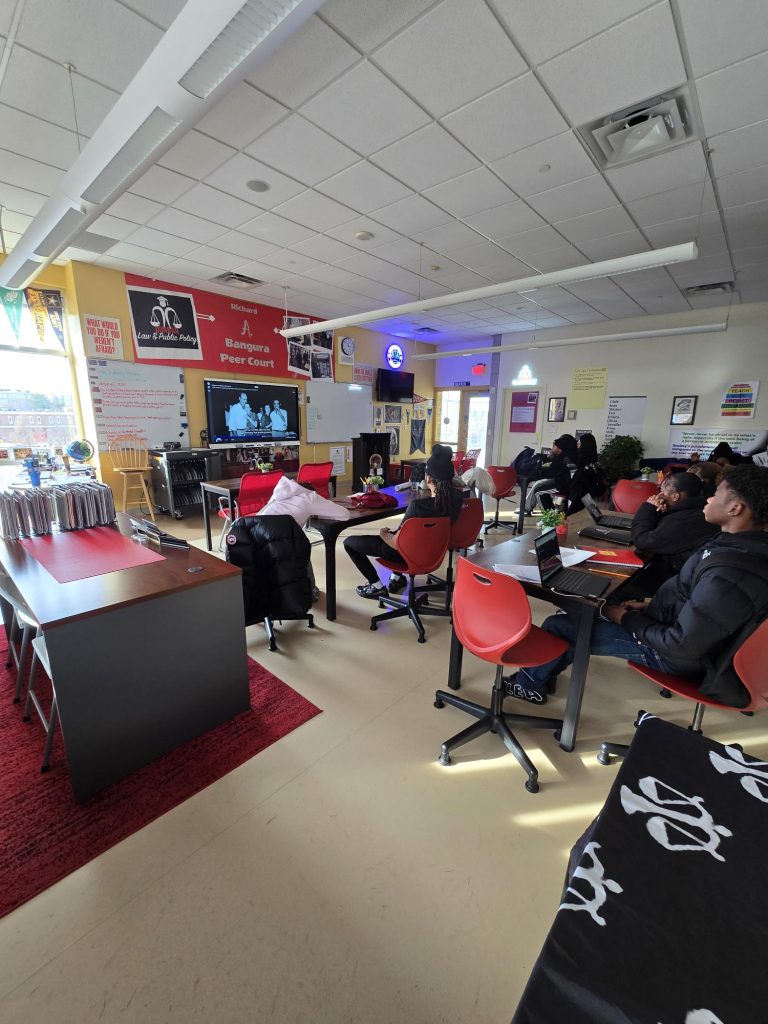
I am currently teaching a mini-unit on Emmett Till grounded directly in the fellowship experience, which specifically features high school curriculum activities and resources I received from the Emmett Till Interpretive Center and Facing History & Ourselves. Students are engaging with: 

  • Photos and videos I captured at the Emmett Till Interpretive Center, courthouse, barn, and river as primary sources; 
  • Comparative inquiry connecting Emmett Till’s murder to Dr. King’s assassination and contemporary racial violence; and, 
  • Structured discussions centered on the essential question: 
    As we pursue racial justice today, what can be learned from the choices people have made in response to racial violence in the past? 

“Seeing the real places where Emmett Till’s story happened made it feel real in a way textbooks never did. It made me think about what I would have done then—and what I should do now.” — Dunbar High School Law & Public Policy student 

Alongside this unit, I am developing: 

  • A student-created video project modeled after the National Civil Rights Museum introductory film, highlighting the legacy of our Law & Public Policy Academy 
  • Podcast episodes that weave together fellowship sites, including an on-location sound bite recorded outside Dooky Chase’s Restaurant—a historic civil rights strategy space 
  • A classroom Matter of Law panel series inspired by the Mississippi Civil Rights Museum, where students examine court cases and consider legal vs. moral justice 

With two decades of teaching and a Ph.D. in Urban Leadership, is there anything new that you learned on this fellowship? 

Visiting Dr. King’s childhood home, final resting place, and the King Center in Atlanta helped me more fully understand the arc of his life—not just his death. Seeing where he was raised, where his ideas were nurtured, and where his legacy is preserved allowed me to teach him not only as a martyr, but as a strategist, organizer, and human being. 

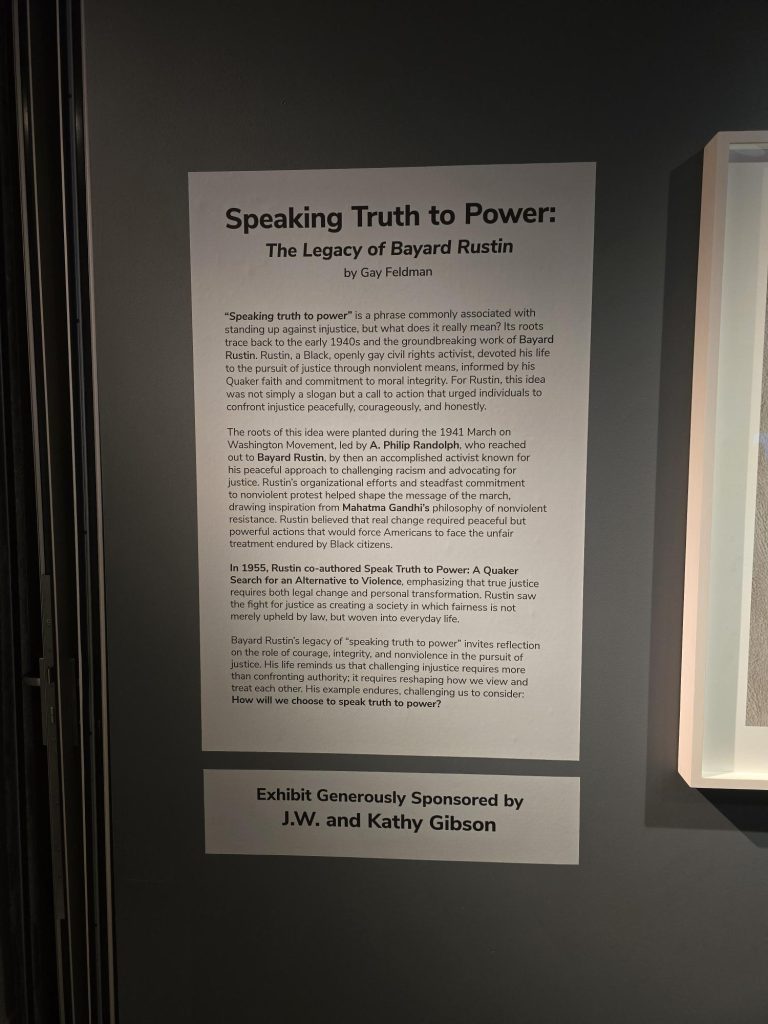
At the National Civil Rights Museum, I also learned the origins of the phrase Speaking Truth to Power through Bayard Rustin’s work. That learning reshaped how I frame activism for students—helping them see that justice requires both legal change and personal transformation

One quote from Studio BE in New Orleans captured this tension perfectly: 
“How do you look terror in the face and still muster the courage to love?” 

That question now anchors my classroom. Love, I tell my students, is not passive—it is a deliberate act of resistance, one Dr. King embodied fully. 

I’m extending our fellowship’s beyond my students and me through: 

  • Podcast episodes shared with families and the community 
  • Ongoing conversations with colleagues about replicating place-based learning locally 
  • An upcoming Humanities Circle presentation where I will share my Emmett Till unit and fellowship-based strategies 

The recent CBS Sunday Morning update about preserving the Emmett Till barn—and Shonda Rhimes’ continued support—only reaffirmed why access to these sites matters. Memory is fragile. Place helps protect it. 

At the heart of this fellowship is the belief that guides my work: So that others may learn. This experience strengthened my commitment to teaching truthfully, lovingly, and courageously, and to helping students understand that their responses to injustice matter. 
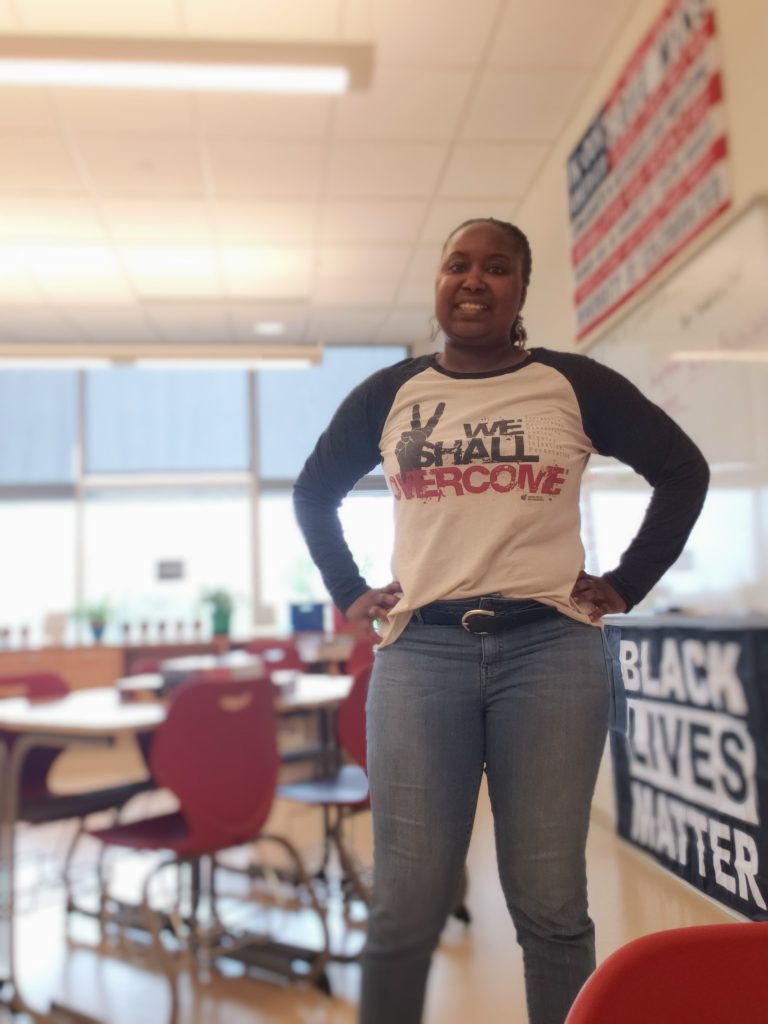
Dr. Shelina Warren is the Law and Public Policy Academy director at Paul Laurence Dunbar High School in Washington, DC, where she teaches multiple courses, including Constitutional Law and Youth Justice. She is an Arkansas native, Army veteran, and National Board Certified social studies teacher/leader, finishing her 22nd year in education. She has a doctorate in Urban Leadership from Johns Hopkins University, which focused on civic empowerment for African American students. 

Seeing Ourselves in Others | Black History Month

This February, Fund for Teachers is celebrating Black History Month by highlighting some of our Fellows’ journeys to bring a better understanding of the African American experience to all students. In this four-part blog series, we’ll be diving into everything from the Transatlantic Trade to student advocacy. Our Fellows explored how Black history is taught in our last blog. This week, we are taking a deeper look at how Fellows Merle Rumble, Melissa Petropoulos and James Petropoulos are reframing black history to help students identify with their heritage and with others. Read on to learn more about their experiences in the classroom and how they are honoring Black History Month in their schools.

At the International Civil Rights Center & Museum with the Greensboro Four who staged a sit-in at Woolworth in 1960.

Although African American herself, Dr. Merle Rumble realized her knowledge of civil rights pioneers lacked a breadth and depth she wanted to share with third graders at Fox Run Elementary in Norwalk, CT. The ephemeral Martin Luther King Day left untapped the vast legacies of those who came before and after the progressive leader. She decided to embark on an independent tour of civil rights sites across nine southern cities with her Fund for Teachers grant to increase her understanding and inspire students to see themselves in the achievements of African Americans.

“I wanted to help my students not only to dismantle the false assumptions of African Americans being relegated to slaves and protestors, but also develop their appreciation for the positive impact and contributions of those whose struggled and persevered,” said Merle.

Fund for Teachers Black History

Merle’s students deliver presentations on their African American heroes.

Through guided tours and impromptu interviews, she gathered materials to inform four new units: Africa to slavery, Rosa to Martin, The Civil Rights Movement and African American Heroes. Students are now researching African American heroes and learning songs and poems from the Civil Rights era, inspiring them to identify with those leaders’ achievements.

Looking more deeply into the lives of enslaved Africans during the Colonial Period led Melissa and James Petropoulos‘ students to reconsider how unique they all are. After learning about the unique contributions made by African Americans whom Melissa and James researched on their fellowship, their fourth graders organized a school-wide Unity Day assembly.

“Focusing on humanizing the slave as a person instead of the person as a slave helped students respect what slaves endured,” said Melissa. “Their response was increased empathy for each other.”

In this celebration of kindness, acceptance and inclusion, student pieced together their individual identities to form this Unity Wall. Each description, together, represents the diverse community that Roywaton Elementary strives to be.

While the name of our organization is Fund for Teachers, students are equal beneficiaries of the $27 million in grants awarded since 2001. These teachers crafted fellowships around what they felt would most impact their students. Consequently, students – for years to come – will see themselves and their ancestors in a whole new light.

We thank Merle, Melissa and James for sharing their experiences and their students’ learning. Make sure to check our Black History Month feed on our blog here. Next week, we’ll be exploring how FFT Fellows are assessing the past and present in terms of black history. Stay connected and find out when it’s live by following us on Facebook, Instagram and Twitter.

Read our first installment in this series here.

Little Rock Nine Still Impacting Education

by, Jessica Mascle, Anthony Riccio, Nate Streicher & Eric Levine – Amherst, NY

Fund for Teachers Civil Rights

At the Central High School National Historic Site Museum

On an early Sunday morning in July the Tapestry Charter School Civil Rights team traveled to Little Rock, AR for a truly unique experience. We designed our Fund for Teachers fellowship to attend an educators’ Civil Rights Institute to help students make important connections between historic events and challenges of modern society in a way that engages the question, “How can I make a difference?” Little did we know that casual conversations had with fellow educators, hotel workers, shop keepers and cab drivers would be engraved in our minds and retold in our stories of the battle for civil rights.

During the course of the week, we were students engaged in the investigation of primary sources, fieldwork, experts and assessment tools.  Our group traveled to several historic sights including the Arkansas State Capital and Little Rock Central High School.  During these experiences, participants read excerpts from Warriors Don’t Cry by Melba Pattillo Beals, which fostered a visual understanding of the author’s writing and therefore created an emotional connection that reading the text in a classroom would not foster.

The importance of the Little Rock Nine is incalculable. Perhaps the most compelling discovery was the idea of personal narratives of the students themselves and the community at large. During our time in Little Rock, we were surprised by the impromptu “narratives” we were told by cab drivers as we were given informal sight seeing tours of the city. We were inspired by working with other educators, learning how different schools teach social justice issues, learning from the people who were living in Little Rock during the school integration crisis, learning new ways to use protocols for writing and processing fieldwork, and gaining new ideas for writing projects and final products.

The zenith of the week was sitting down and speaking with our interview subjects. Our conversations turned into our product:personal narratives telling the story of our subjects – their struggles, hardships
and ultimate ability to succeed in the South.


Far north of the Mason-Dixon Line we returned with the reality that although the fight for Civil Rights has come a long way, we still have a long way to go. From conversations with other Institute participants, informal conversations with cab drivers and shop keepers, and the interview sessions, all those involved painted a vivid picture of how America is still not equal.

Our experiences during the Institute allowed us to reevaluate our teaching plans to focus on connections from the Civil Rights Movement to modern day civil rights efforts, including those in our own school community, and what they hope to achieve. Western New York is a very diverse place and being so lends itself to the stories, struggles and tribulations of those who live here. By examining Western New York and our own school, we will be able to create a personal connection with our students, making the content more meaningful.

Experiences on our fellowship taught us is that history is better told by listening to a story than simply reading it out of a textbook. We now teach our students interview and oral history recording techniques that we learned and send them out into the Western New York community to obtain first hand stories of community members that have encountered hardships and struggles trying to achieve equality and respect so that future generations will be able to read and partake in the local civil rights movement. Additionally, we:

  • Revised and implemented a successful 11th grade curriculum to narrow the focus from the evolution of the American Ideals to the application of the ideals of Democracy in Buffalo, NY;
  • Created a personal narrative project for his 12th grade Economics and Government students that is influenced by the techniques learned at the Civil Rights Institute. Students interview local business leaders, politicians,and activists to explore the meaning of “heroism.” They then write personal narratives based on their interviews, which are presented to the subjects in person;
  • Created a 10th grade curriculum with a fellow teacher to broaden the focus from the tension between government oversight and individual liberties to a deep look at the importance of human rights and the violations of this basic idea. This includes the case study of the Little Rock Nine as a point of departure for rest of the expedition; and,
  • Wrote a series of lessons to explore the ties between the search for civil rights and the use of restorative justice to create a strong community.

The most memorable experience of our fellowship was a conversation we had with a cab driver named Owen. We asked him to reflect on his 60 years living in Little Rock and if life has changed for the better. He told us “you are naive to think that discrimination has ended. It has simply just changed its shape, color and stripes.“

Our job as educators is to make sure our society does not become complacent with injustices, and to make sure our students and children know that issues can not be changed if others do not know about them. Through case studies in classes and activities in crew, students will deepen their understanding of civil right and the importance of community.

MLK Jr, Mandela & Me

2018 Update: Since submitting this story, Diego shared this story:


“FFT was transformative, probably the best PD I have done as an educator. My fellowship in South Africa included a visit with Christo Brand, one of Mandela’s former prison wardens who eventually became Mandela’s friend, confidant and served with him when he became president. It worked out beautifully, as Mr. Brand visited my school in Fall of 2015 and FFT allowed me to travel for my fellowship in December of that year, so we stayed in touch and I had the chance to learn first hand about what it was like to be next to Mandela. This picture of Christo and me is right after visiting Robben Island on a beautiful crisp morning in Cape Town.


I’ve continued to use what I learned in my fellowship with my classes. All of my students read a chapter from Mandela’s Robben Island: The Dark Years, his memoir of his imprisonment, in a class called LeadServe, where we think about citizenship and civics. 


Teaching this class led me to be selected as one of 20 national fellows working with Citizen University, based out of Seattle, to think of new ways of bringing citizens together and engaging the through public “Civic Seminaries.” I trace this work directly to my learning as an FFT Fellow.”

by, Diego Duran-Medina – Estes Park, CO

For most of my social studies students at Eagle Rock High School, social justice is perceived as very US centric, mostly revolving around American historical figures like Martin Luther King, Jr. and Rosa Parks. I designed my Fund for Teachers fellowship to expand students’ knowledge base to an international context by researching social justice in South Africa. For two weeks, I explored the history, impact and legacy of apartheid and Nelson Mandela to gather lessons for students as they begin defining their own path within our progressive, restorative-justice based alternative school. In doing so, I’m facilitating students’ understanding of issues around social justice movements by comparing and contrasting the Civil Rights Movement with apartheid and reconciliation.

Fund for Teachers Mandela

Standing outside Mandela’s cell on Robben Island.

My passion for this fellowship comes from having spent over a decade developing my own curricula around issues involving access, social justice, civil rights, definitions of citizenship and exploring what it means to belong and exclude in different contexts. I have never been a traditional teacher relying on textbooks; instead, I prefer to create learning experiences around current events, historical narratives and issues that my students are interested in. This has to do with my own development as a student who always enjoyed history, but found it to be a subject that can often be reduced to static dates, rote memorization and mythology of “great (white) men.” My passion is driven by the fact I want students to know I continue to expand my knowledge and to actively seek new answers with new questions by traveling to a country and culture that I have never visited, but has always fascinated me – South Africa.


I chose to spend my fellowship observing and researching the Mandela Museum in Mthatha, the Apartheid Museum in Johannesburg, Mandela Square and the Mandela House in Soweto, because I believe that these places offer a perspective that can only be experienced by visiting and have become part of Nelson Mandela’s myth and legacy. By visiting sites over multiple days, I gathered detailed and thorough information to supplement my teaching and curriculum. I also interacted with educators and museum personnel to connect with those who were able to provide personal insight into Mandela’s life and legacy. As a result, I added an important layer of an international focus with an in-depth study of a historical figure beyond the usual pantheon of Civil Rights figures from the US context. My curricula will deepen with a specific example of social justice and a comparative model with apartheid for looking at slavery, oppression and freedom.

On January 6, I started a class called LeadServe, taking a hard look at what it means to work for democracy in different contexts: the two primary examples we will use are Martin Luther King, Jr. and Nelson Mandela. Students will learn though readings, historical context, connected facts and artifacts collected from my fellowship. They will develop a notion of history that moves beyond facts and moves from the impersonal to the personal (i.e.“What does this history mean for my own life?”) They will also develop skills in comparing and contrasting cultures, movements, societies and historical figures, specifically the U.S. and South Africa.


Being awarded this fellowship solidified for me that I can be a teacher who focuses on social justice and that my work has real meaning and substance. These stories need to be told to students in a way that goes beyond the classroom or the textbook, and the example I am setting by
traveling to South Africa is much more powerful than just a lecture on apartheid.

There’s a certain inspiration and renewal of the spirit that happens when I pursue these personal passion projects and it helps inject my career with new energy and
focus
. Also, as I advance in my career, I am committed to making sure that younger teachers understand the power of experiential learning for their practice and are able to implement similar experiences in their classrooms and curricula.

Learning through travel is the most powerful combination for connecting the classroom and community, the learning with the doing, and the present with the past. Therefore, I am extremely grateful for this opportunity and treasure the days I spent in South Africa, both learning and reflecting on my practice. I consider it an honor to have been selected as a Fund for Teachers Fellow and entrusted with representing myself, my school and my country.

Eagle Rock School is a full-scholarship high school for 72 adolescents who are not thriving in their current situations, for whom few positive options exist and who are interested in taking control of their lives and learning. Eagle Rock is also a Professional Development Center where educators from across the country learn how to re-engage, retain and graduate students. Diego plans to use his fellowship learning in both settings.