This summer, Danielle Woodard and Emma Sneed (Chattanooga, TN), embarked on a literary tour across Scotland and England, visiting sites students read about in various fictional works, to promote book to world connections and cultivate young writers who understand how imagination is shaped by place and experience. Upon their return, they shared some of their experience with us:
“We are so incredibly thankful for the opportunity you and Fund for Teachers gave us to go on this fellowship together. Our trip was highly enjoyable and we learned and saw many things to take back to the classroom. Scotland was filled with magic, inspiring us through scenery and history, and England was full of exemplars for how to engage audiences with stories. Our understanding of how narratives are created, developed, and sustained over time has truly been expanded through this experience, and we are so grateful.
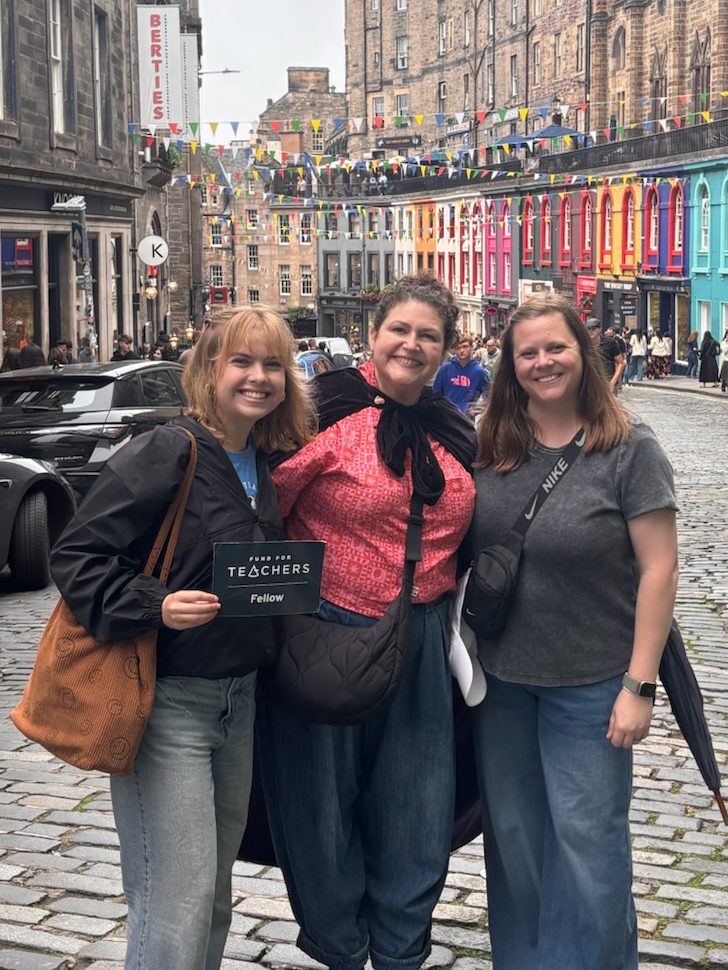
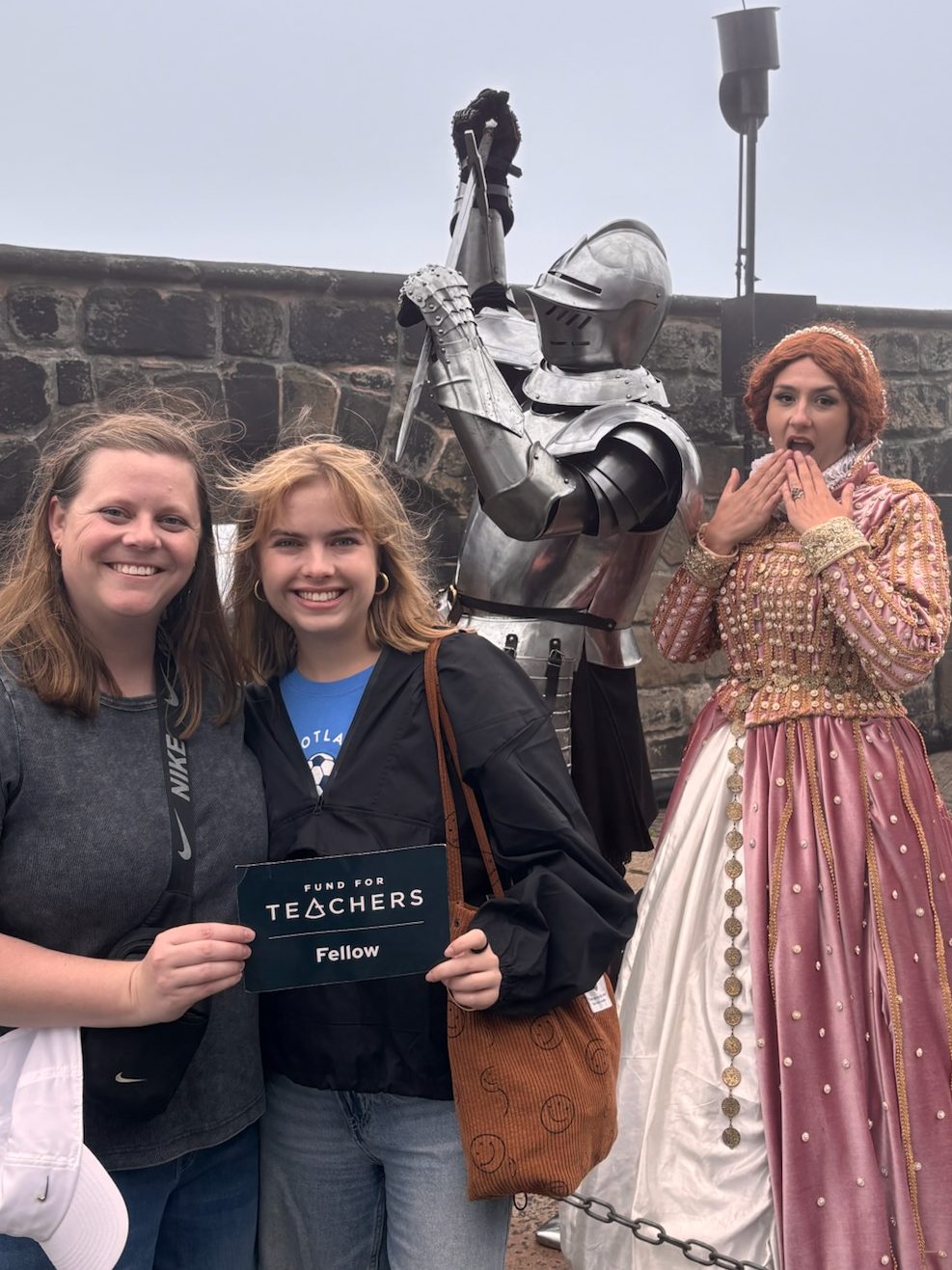
In Edinburgh, Scotland, one of our favorite moments was taking a Harry Potter Walking Tour led by an experienced and engaging guide named Caroline. She brought the city to life by telling stories of Edinburgh’s streets and buildings inspiring those who have come into the city, including J.K. Rowling, author of Harry Potter. We traced Rowling’s steps, seeing the school that inspired Hogwarts, the gravestones that inspired character names, and the shops where she sat to write each novel. Caroline described the creation of this series with new details unknown to either of us Fellows, including a description of Rowling first having the idea for Harry Potter while on a train ride and then using multiple different places she traveled to mold the rest of her world-building including Portugal, England, and Edinburgh. She gave information like this throughout the tour, but also engaged us with a house sorting ceremony, spells to reveal different parts of the city, and impressions of characters from the films. She also shared how love for the themes in the series about love, friendship, and hope keep her doing the job despite concerns over the inclusivity of the novels. This tour and information have inspired us to teach interactively and find new experiences for our students to give them ideas they can create and shape themselves.
Our trip to the Writer’s Museum in Edinburgh also inspired us by seeing modern artistic creations still being made in response to classic pieces of literature. A miniature diorama was made out of a book of Dr. Jekyll and Mr. Hyde of one of the scenes and left anonymously for the museum to display. This gave us many ideas for student-led projects that could be created in response to pieces of literature we read in class next year. As we learned, often creativity creates creativity.
Outside of Edinburgh, in a town called Stirling, Danielle also got to see the exact place where her ancestors used to live! Through research, she was able to find their old address and we traveled to the buildings together for an emotional experience of personal significance.
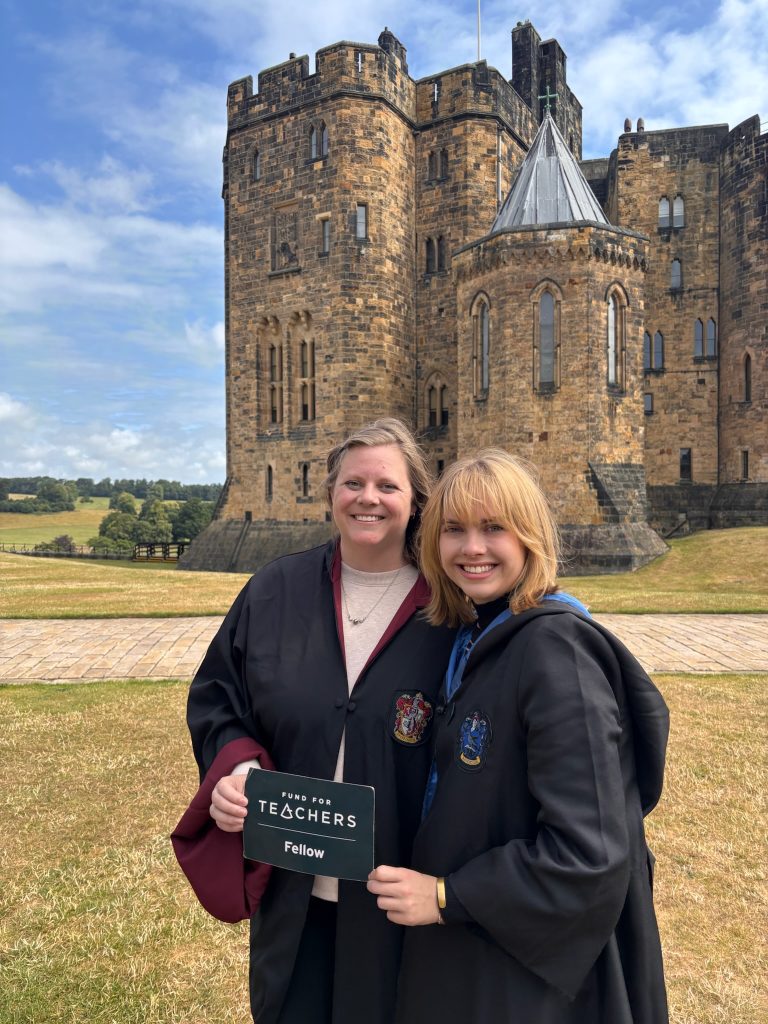
Our trip into the highlands of Scotland brought some of our favorite stories to life as we drove through mountainous landscapes that often appear as the setting behind the most fantastical of stories. The immersion did not stop there! In a small city on the border of Scotland and England called Alnwick, we participated in a broomstick training session on the exact same castle grounds where the first Harry Potter film conducted their own flying lessons. By practicing our childlike wonder and touring the castle grounds, we were able to see how setting truly impacts tone and emotional depth. We even had a little bit of fun recreating and recording a scene from the movie together in our Hogwarts robes, displaying a passion for the storytelling that we hope our students will come to emulate themselves.
In Oxford, England, surrounded by centuries of stories, we toured the famous Bodleian Library. Our tour guide regaled us with history about the original library collection that only consisted of 20 manuscripts kept inside of a trunk in the university. Today, the library consists of over 14 million books, all thanks to one man’s belief in the power of the perseveration of stories and the city’s commitment to supporting that dream. Oxford also led us to many places where famous authors met to discuss and collaborate on their own works throughout the years, including C.S. Lewis and J.R.R Tolkien. Our experience in the city led us to a deeper understanding of how important community and support can really be in the creation and life of a written work, which is something we hope to bring back to our students.
London was our final stop, and it brought us amazing examples of adaptation and attention to detail in narratives. The world-building of J.K. Rowling’s Harry Potter series was enhanced ten-fold through our experiences touring the Warner Brothers Harry Potter Studio and attending the theatre production of Harry Potter and the Cursed Child. We learned specific descriptions of the setting and characters from both the novel and films that will help guide our questions to the students as they create their own worlds. We studied how adaptations keep and change different elements as culture and time shifts as well. This will guide us to specific activities students can participate in while they reflect on stories in our classroom.
Overall, this experience was the opportunity of a lifetime for us. Our love for stories and Harry Potter has only grown from our travels, and we are so excited to use our new insights and ideas in the classroom together to help students feel the same passion. Thank you so much for this fellowship and believing in us as educators. We are looking forward to sharing many more photos and stories!”
Danielle and Emma’s grant was made possible through our partnership with The Maxwell/Hanrahan Foundation.
A Journey of Heritage, Resilience, and Belonging
Each summer, during what we affectionately call “Fellow Season,” we have the privilege of following Fund for Teachers Fellows as they immerse themselves in self-designed learning experiences around the world. Their journeys are rooted in a simple belief: when teachers are trusted to pursue the learning they need most, students reap the benefits.
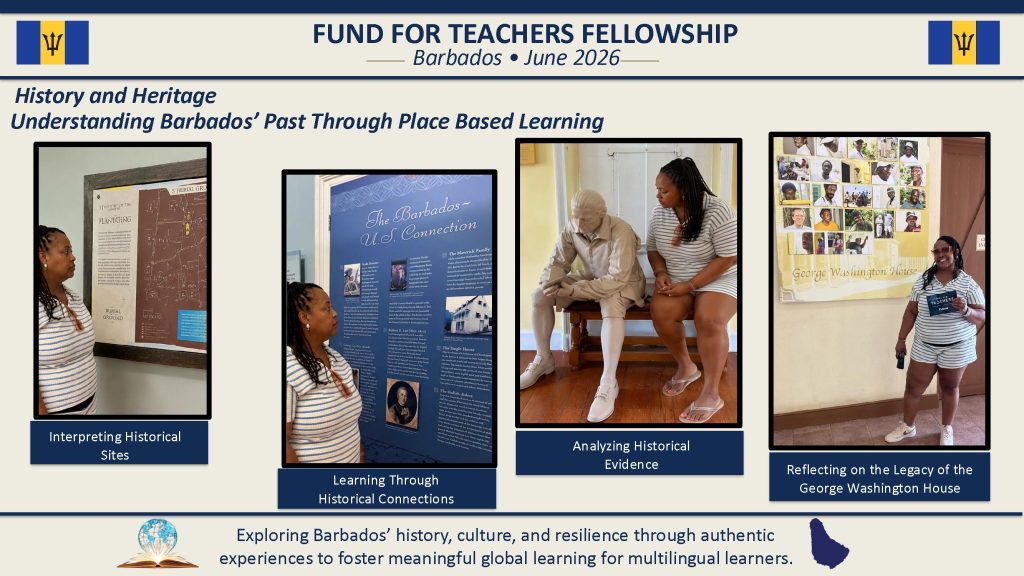
This week, we’re highlighting 2026 Fund for Teachers Fellow Kim Shockley, who traveled to Bridgetown, Barbados, to research African Diaspora history at significant heritage sites. Her fellowship centered on themes of resilience, freedom, and cultural identity—knowledge she will transform into meaningful learning experiences for her multilingual students.
Kim’s journey took her beyond textbooks and into the places where history unfolded. At sites including the George Washington House, she examined historical evidence, interpreted exhibits, and reflected on Barbados’ unique connections to colonial history and the African Diaspora. By experiencing these places firsthand, she gained a richer understanding of how place-based learning can help students make meaningful connections between the past and the present.
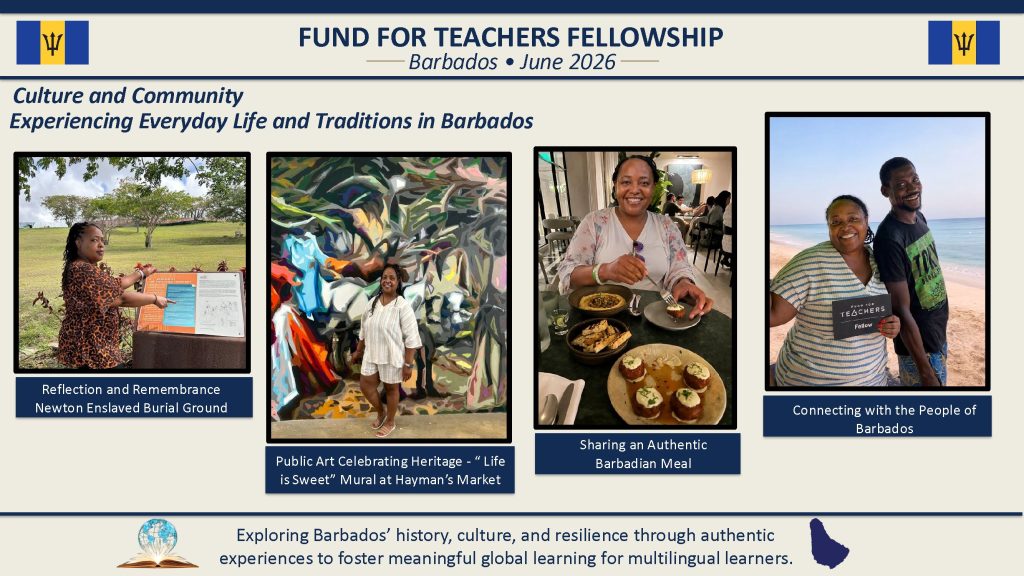
Her fellowship also focused on the people and traditions that continue to shape Barbadian identity today. Kim explored local culture by sharing authentic meals, engaging with community members, viewing public art such as the “Life is Sweet” mural at Hayman’s Market, and visiting the Newton Enslaved Burial Ground, where she reflected on the enduring legacy of those whose lives and stories continue to influence the island’s identity. These experiences deepened her understanding of resilience, remembrance, and community—perspectives she hopes to bring into her classroom.
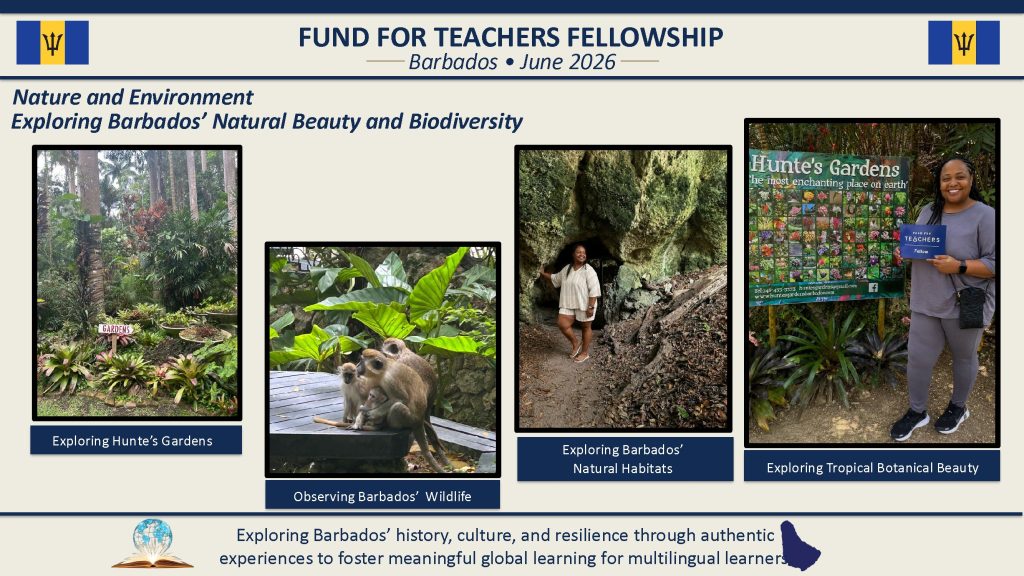
Beyond history and culture, Kim also explored Barbados’ remarkable natural environment. Visits to tropical gardens and natural habitats provided opportunities to learn about the island’s biodiversity and the relationship between people and place. Together, these experiences paint a more complete picture of Barbados—one that extends beyond historical landmarks to include the landscapes and ecosystems that continue to shape life on the island.
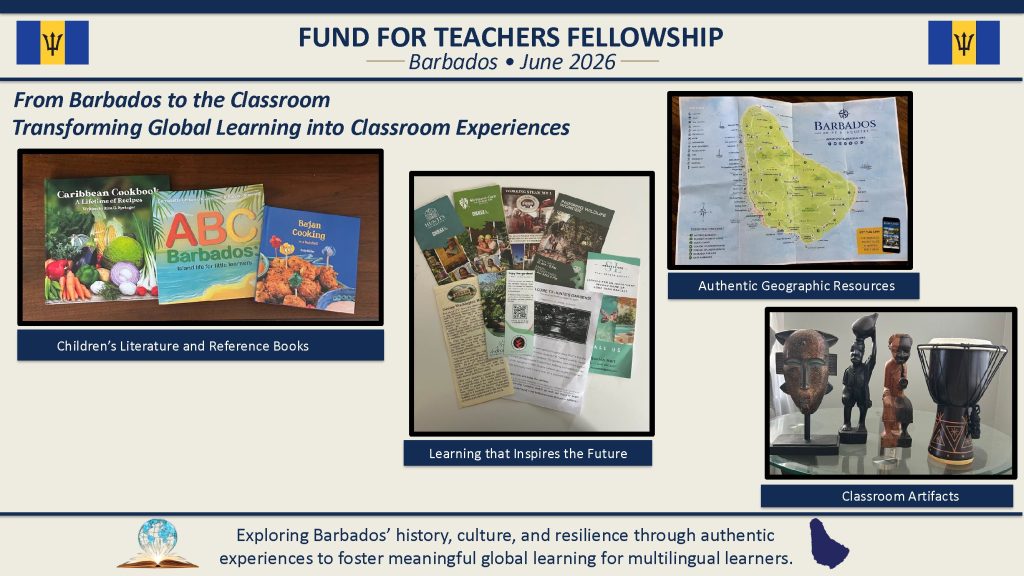
As with every Fund for Teachers fellowship, the journey doesn’t end when the plane lands back home. Kim returned with children’s literature, authentic classroom artifacts, geographic resources, and countless stories that will help bring Barbados into her classroom. More importantly, she returned with fresh perspectives and firsthand experiences that will empower her multilingual learners to celebrate their own heritage, think critically about justice and equality, and recognize the power of their own voices to make a difference.
Kim’s fellowship is a powerful reminder that professional learning is most transformative when it is authentic, immersive, and teacher-driven. By investing in educators’ curiosity, Fund for Teachers helps create classrooms where students don’t just learn about the world—they develop the knowledge, empathy, and confidence to help shape it.
Finding Her Roots
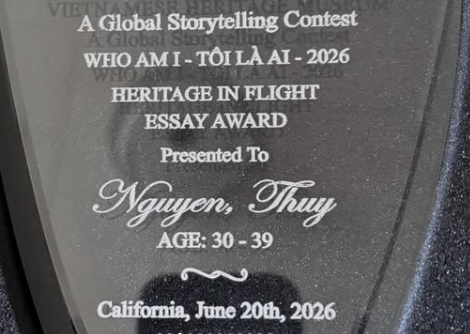
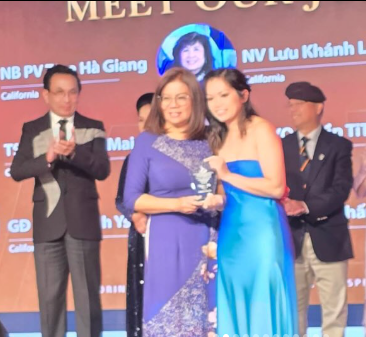
Last summer, Thuy Nguyen and teammate Thu-Hang Tran-Peou (Mather Elementary School – Dorchester, MA) used a $10,000 Fund for Teachers grant to navigate across Vietnam’s three regions—Ha Noi in the North, Hoi An and Hue in the Central, and Ho Chi Minh City in the South — to commemorate the 50th Anniversary of Saigon’s fall. The inspiration behind this fellowship was to enrich Boston Public School’s only Vietnamese Dual Language Program by bridging generational gaps, celebrating linguistic diversity, and empowering students to honor their heritage while excelling in a multilingual academic community. Along the way, Thuy was inspired to reflect on her learning (and life) and enter the “Who Am I” essay contest for the Vietnamese Heritage Museum. We were so honored that Thuy chose to reach out and share both her accomplishment, and her winning essay:
“When I embarked and settled home from the amazing trip to Vietnam this past summer, I felt immense gratitude and indebtedness to pay this forward to benefit students and community stakeholders. The trip for me was about discovering and learning more about my family’s heritage and so much more. During a break, I took some time to write and enter myself into the “Who Am I” essay contest for the Vietnamese Heritage Museum. To my surprise, my essay was one chosen out of many entries.
The award ceremony coincided with World Refugee Day this past weekend. This essay will be archived in the Vietnamese Heritage Museum. I am looking forward to sharing with my students about my trip and connecting with their own families’ stories of diaspora. Attached is the essay, some photos from the event, and student work that inspired me to put myself out there and go for it.
Again, I still feel incredibly lucky and honored to have been a Fund for Teachers recipient.”
Help Shape the Future of FFT: Apply for the Educator Advisory Council
At Fund for Teachers, we believe teachers know best what they—and their students—need to succeed. We also believe that teachers are uniquely positioned to help us build stronger programs, deepen our impact, and better support educators across the country.
That’s why we created the Educator Advisory Council (EAC), and why we’re inviting current classroom teachers who are Fund for Teachers Fellowsto apply for this paid leadership opportunity.
The EAC is a group of Fellows committed to advancing Fund for Teachers’ mission of igniting culturally sustaining teacher leadership through rich, self-designed professional learning. Council members bring their experiences, expertise, and perspectives to help guide the evolution of our programs and strengthen support for educators nationwide.
“I was excited about the opportunity to collaborate with teachers outside my school ad district, and to hear the perspectives of educators from different parts of the country. I strongly believe that Fund for Teachers is one of the most incredible grant opportunities available to teachers because of the freedom given them in designing a learning opportunity that is unique to them.” -Susie Kang, EAC class of ’24-’26
Why Join the EAC?
As an EAC member, you’ll collaborate with a diverse group of Fellows from across the country, contribute to meaningful organizational decisions, and help ensure that teacher voices remain at the center of our work.
What Will the Council Focus on?
During the 2026-27 school year, the EAC will work alongside FFT staff to:
Expand support networks for rural teachers, teachers of color, and educators serving underserved communities to encourage successful first-time applications
Design and test strategies that help Fellows implement and sustain their learning after their summer experiences
Develop recommendations for Fund for Teachers’ application and reporting processes within an increasingly AI-driven educational landscape
Commitment and Compensation
EAC members serve a two-year term and receive a stipend of $700 per year.
The annual commitment is approximately 20-25 hours throughout the school year and includes:
One virtual 1-hour orientation meeting (first year only)
Five virtual 90-minute full council meetings (typically held from 5:00-7:00 p.m. CT)
Three virtual 1-hour small-group working sessions
Occasional individual feedback, preparation, and project work between meetings
Who Should Apply?
We are seeking Fellows who:
Are currently working in a classroom setting
Want to contribute to the future direction of Fund for Teachers
Enjoy collaboration and problem-solving
Are eager to elevate the voices and experiences of educators
Fund for Teachers is committed to assembling a council that reflects the diversity of our Fellowship community, including diversity in identity, geography, school settings, and teaching assignments.
If you’ve ever wanted to help shape how Fund for Teachers serves educators, this is your opportunity. We hope you’ll consider lending your voice, expertise, and experience to the Educator Advisory Council.
“This was a great learning experience for me. The group was safe and supportive, and I enjoyed the opportunity to talk about important topics with people from around the country who teach in various settings.” -Ben Olsen, EAC class of ’25-’27
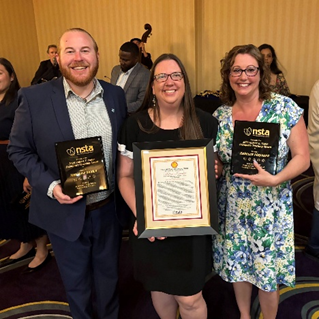
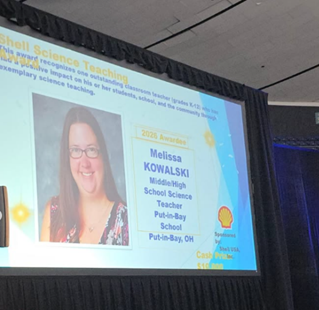
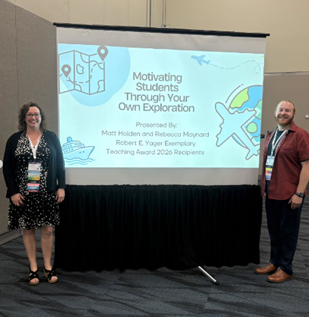
Earlier this month, the National Science Teachers Association hosted its annual conference in Anaheim, CA. In addition to keynote speakers and breakout sessions (one of which was hosted by FFT Fellows Matt Holden and Becky Maynard about their fellowship), special recognition was given to exemplary educators in several categories. And THREE FFT Fellows were among the winners! Congratulations to Becky and Matt, recipients of the 2026 Robert E. Yager Excellence in Teaching Award for excellence and innovation in the field of science education. We are also thrilled for Melissa Kowalski, recipient of the Shell Science Teaching Award which recognizes one outstanding classroom science teacher (K–12) who has had a positive impact on his or her students, school, and community through exemplary classroom science teaching.
Matt Holden, Melissa Kowalski and Becky Maynard.
“On our fellowship to Kenya, Matt and I decided to present at NSTA about our collaboration, then we applied for this award and we both got it!” said Becky. “Fund for Teachers does amazing things for educators.” Melissa added, “I’m certain that my experience as a FFT Fellow greatly improved my application for the NSTA award!!”
We are so proud of these FFT Fellows and equally as grateful that they chose to use this platform to tell others about Fund for Teachers!
Becky Maynard (Framingham High School, MA) and Matt Holden (Fayetteville High School, AR) used their Fund for Teachers fellowship grant to participate in the Global Exploration for Educators Organization Kenya 2025 Expedition, which includes wildlife safaris and immersive cultural experiences with indigenous communities, to create authentic student experiences focused on the cultural significance of environmental conservation.
Melissa Kowalksi (Put-in-Bay Schools, OH) used her Fund for Teachers fellowship grant to document the diverse geological features of Iceland’s untouched wilderness to enhance climate and earth science instruction that excites and engages elementary through high school students.
History in Color
The Fellow team of Rayna Walters, Garrett Griffin and Kurt Zimmerman (New Haven, CT) used a $10,000 Fund for Teachers grant to deepen their scholarship and student conversations about the Trans-Atlantic Slave Trade. But as they shared in this NPR interview, the slave trade is only a facet of Black history, not its genesis. And Walters and Griffin created a non-profit and downloadable curriculum to share that truth beyond their classrooms.
Anti Racism in Action (ARIA) was created in response to racial injustices and has grown into a community-wide effort dedicated to education, healing, and equity. According to the organization’s web site, “From our History In Color curriculum to community celebrations like Juneteenth and Kwanzaa, ARIA creates programs that uplift diverse histories, empower students, and bring people together. Our story is one of action, partnership, and the belief that lasting change begins with education and community.”
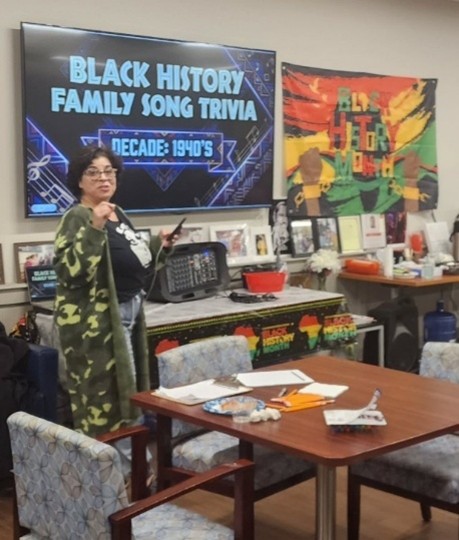
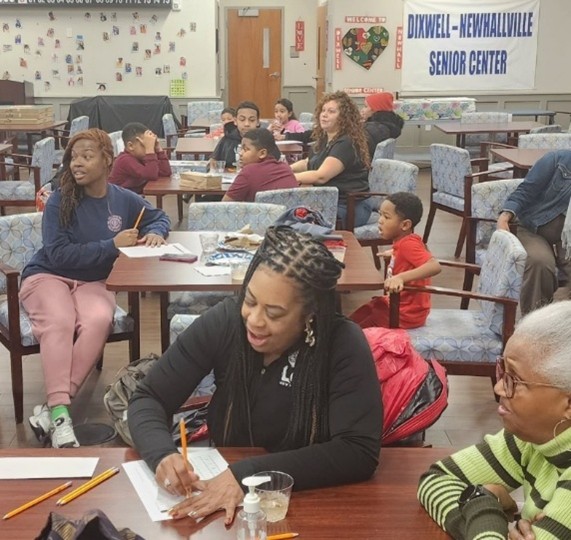
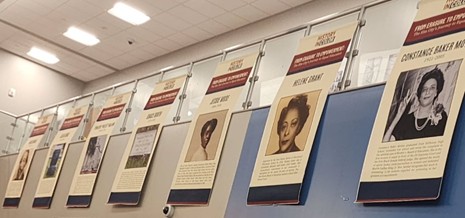
In celebration of Black History Month, ARIA partnered with the City of New Haven Department of Elderly Services and the Dixwell Community Q House to host a Family Game Night, with Black History trivia and games, food and intergenerational fellowship. Additional projects have included an exhibit titled “From Erasure to Empowerment” that highlights the role of education as a tool for empowerment, uplifting stories often left out of traditional classrooms and textbooks; a collaborative effort to document/preserve the Black experience in New Haven; and a walking tour which highlights the people and places intrinsic to the town’s black heritage.
ARIA’s History in Color curriculum, however, is available to anyone interested in teaching black history embedded in a social emotional component to grades preK-12, as is a suggested reading list curated by the non-profit.
“Our Fund for Teachers fellowship provided me with yet another lens from which to view the world. It has changed me,” said Walters. Taking a trip along the domestic slave trade from Alexandria, VA to New Orleans, LA was monumental and has helped push me to write grants for my current school. We need afterschool programs. We need a lot. I figured by starting here I can do some good and get our children more resources. Pray for us.”
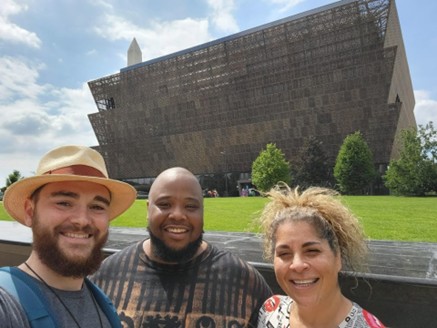
Zimmerman, Griffin and Walters on their fellowship at the National Museum of African American History & Culture in Washington DC.
Celebrating Our Fellows
SPRING 2026 UPDATE
Spring ushers in a season of recognition for educators, which gives us the opportunity to do a little humble bragging by saying “We knew them first.” Join us in celebrating these FFT Fellows and, please, let us know about exciting updates in your careers and classrooms!
James Sheridan (Houston) is an H-E-B Excellence in Education Award Finalist, earning him a $1,000 award and $1,000 for Yes Prep – East End Secondary.
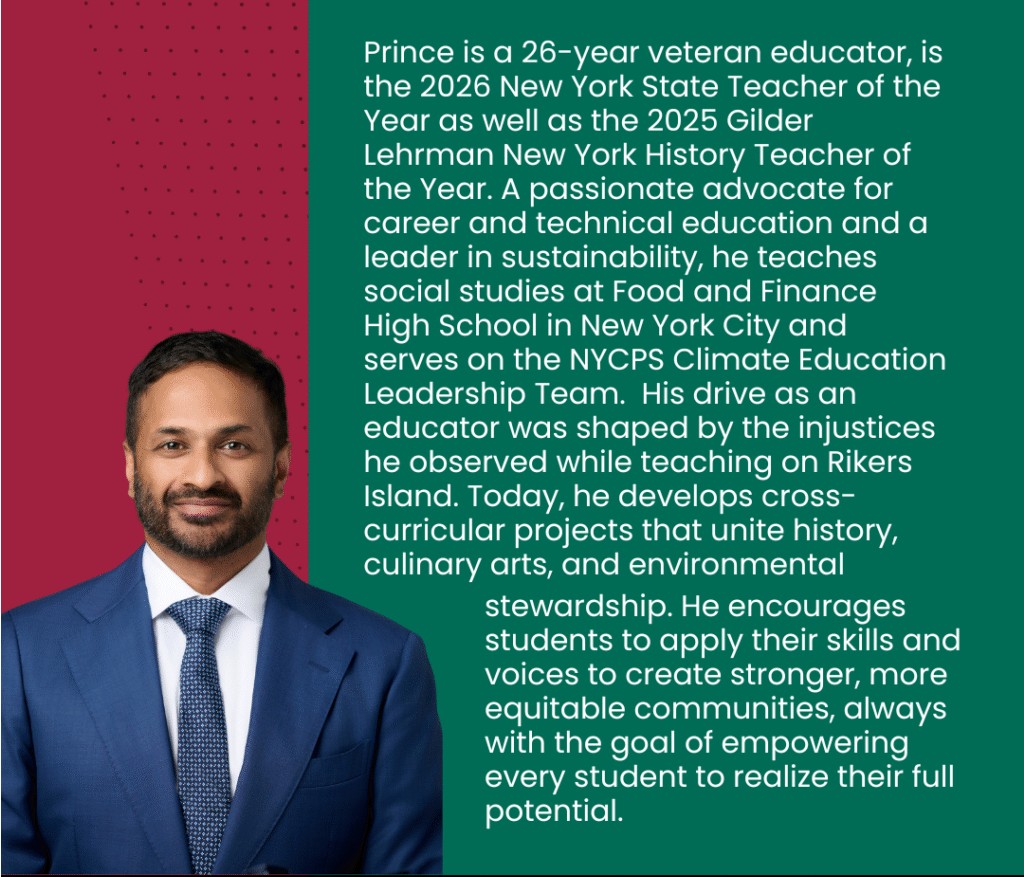
Prince Johnson (New York) joins The Institute for Educational Leadership’s spring 2026 Education Policy Fellowship Program.
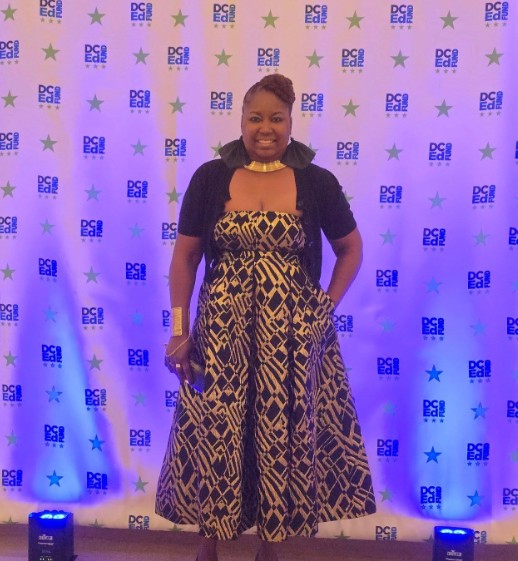
Shelina Warren (Washington DC) received the DC Public Education Fund’s Educator Excellence Award.
Angela Guy (Houston) is an ARTEFFECT Ambassador through the Lowell Milken Family Foundation.
Janet Damon (Colorado) is one of five 2026 recipients of the Horace Mann Educators Foundation’s Award for Teaching Excellence.
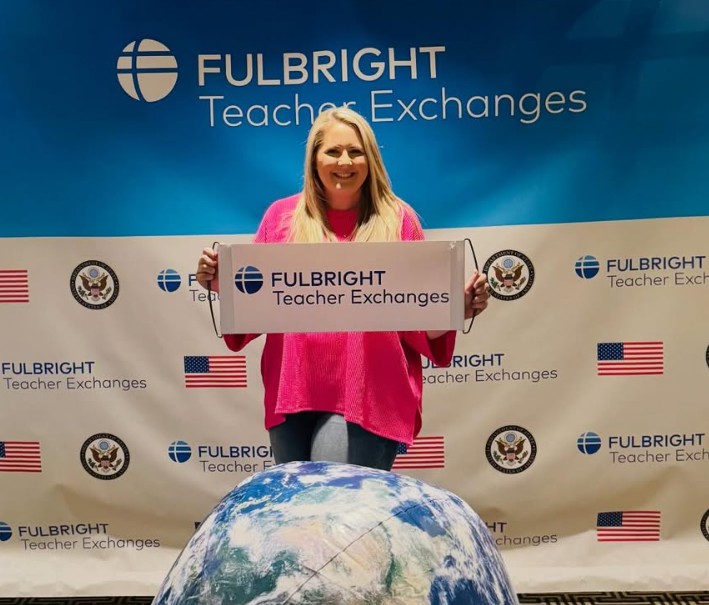
Matt Holden (Arkansas) and Bethany Seal (Mississippi) are members of the 2026 Fulbright Teacher Exchange cohort.
Erik Erickson (Saint Paul, MN) is in the running for 2026 Minnesota Teacher of the Year.
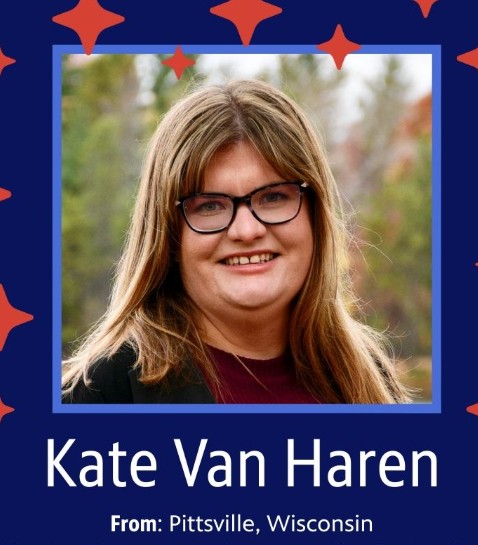
Kate Van Haren (Pittsville, WI) is a 2026 PBS LearningMedia Teacher Ambassador.
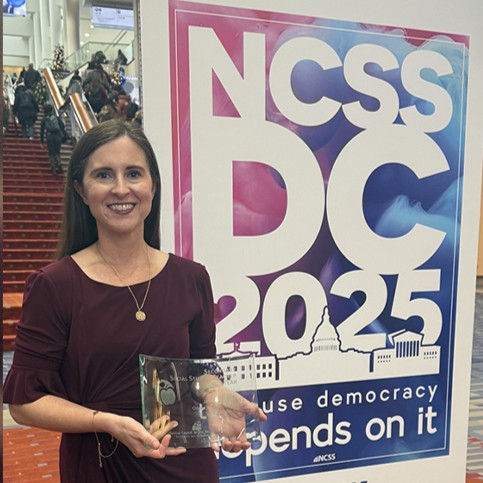
Jessica Culver (Ozark, AR) was named Secondary Level Social Studies Teacher of the Year by the National Council of Social Studies.
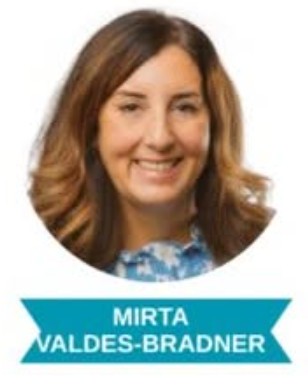
Mirta-Valdes-Bradner (Easton, MD ) was recognized by The Educator’s Room as a Trailblazing Top 50 Educator. And,
Melaney Sanchez (Owings, MD) received her state’s Teaching America250 Award through the Jack Miller Center for Teaching American’s Founding Principles of History.
Ramadan Mubarak
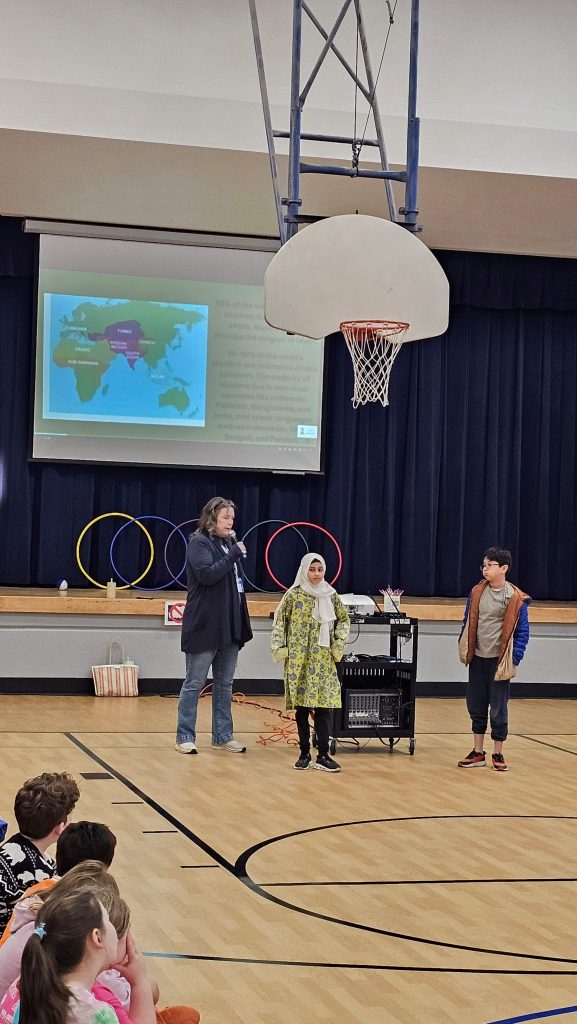
As 1.8 billion people across the globe are celebrating Ramadan, students at Lincoln Elementary in Norman, OK recently learned about the celebration from their fellow students who also are Muslim. Their teacher, Diane Wood, informed and inspired their presentation using experiences from her Fund for Teachers fellowship last summer.
“My fellowship to Spain and Morocco helped me to develop an approach to education that recognizes, respects, and uses students’ backgrounds as meaningful sources for learning,” said Diane. “Culturally responsive teaching fosters a sense of belonging, strengthens confidence, and honors different perspectives. I believe it is essential for creating equitable and effective classrooms and ensuring that every student has the opportunity to thrive.”
Diane serves as the Gifted Resource Coordinator for school with 270 students – six percent of whom are from North African or Middle Eastern countries. Because one of her responsibilities is enhancing the mandated curriculum with multi-disciplinary content, Diane seized the opportunity to design a fellowship that helped students affirm and appreciate their culture of origin while also developing fluency in other cultures.
“This fellowship has helped me develop a deeper understanding of how art and architecture are not just aesthetic choices, but also powerful expressions of identity, religion, and social values,” Diane said. “Understanding this shared history of cultural synthesis has been transformative, helping me appreciate the importance of cross-cultural collaboration and the ways in which traditions can enrich one another. I’ve learned to think more critically about cultural appropriation and heritage conservation.”
So have her students.
Diane is using Islamic patterns she studied in Spain and Morocco to teach symmetry and tessellations to fifth graders during a geometry unit. Students are analyzing Diane’s photographs of the intricate designs of historic sites such as the Alhambra in Granada to identify lines of symmetry, rotational symmetry, and repeating shapes that form tessellations. They are using rulers, compasses, and grid paper to design their own tessellating geometric tiles. By connecting geometry to real-world art rooted in Islamic tradition, she’s striving to make abstract concepts more concrete and visual, while honoring the mathematical contributions of diverse cultures.
“Ultimately, my experiences in Spain and Morocco transformed cultural responsiveness from an abstract educational concept into a lived commitment, said Diane. “By immersing myself in different cultural contexts, I developed greater empathy, curiosity, and humility. My classroom is stronger because I have seen the world more broadly, and I strive each day to ensure that my students feel seen, valued, and understood.”
In the Ramadan presentation to their peers, a student explained, “One of the things I love most about being Muslim is that God says in the Quran, I honor all children of Adam. That makes all humans my brothers and sisters who deserve respect, love, and kindness. That makes me want to be the kindest friend to everyone.”
So That Others May Learn
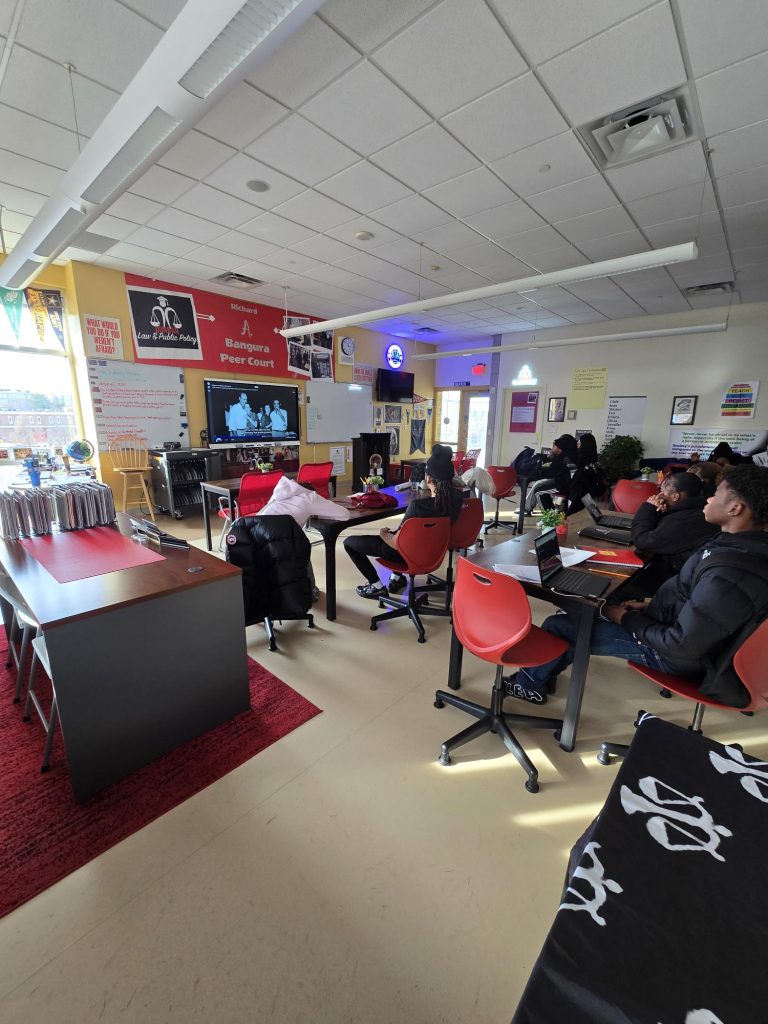
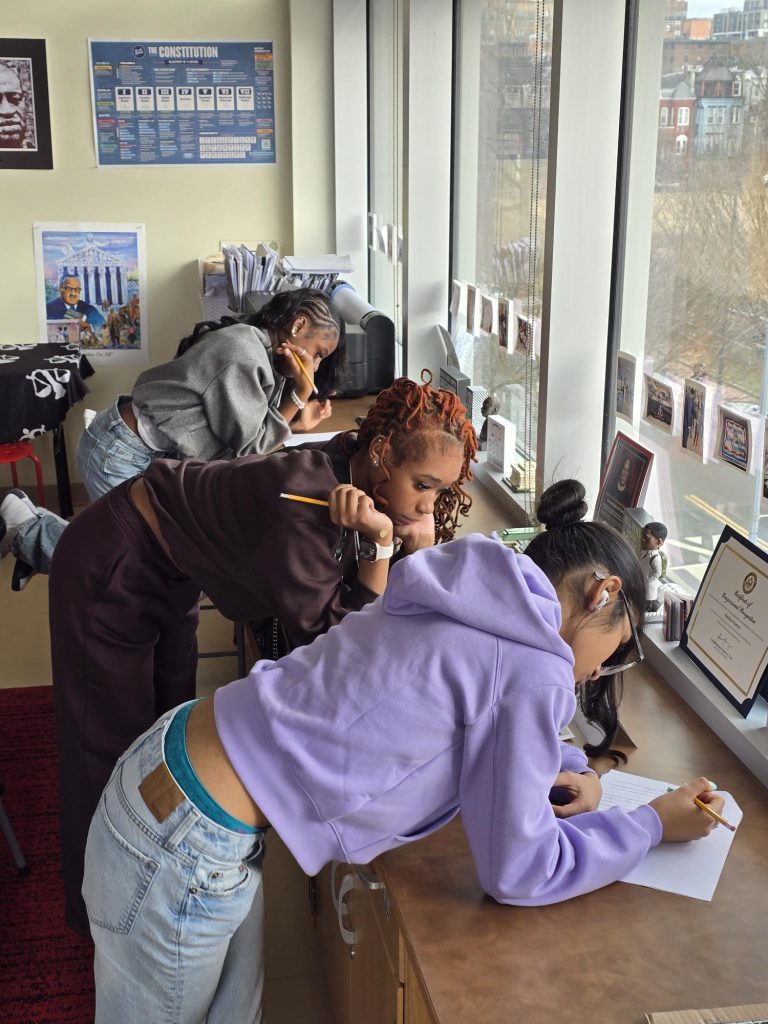
Last summer with a Fund for Teaches grant, Dr. Shelina Warren and four peers from Dunbar High Schoolin Washington DC embarked on a journey across five states in the Deep South to more effectively teach complex and accurate historical narratives about race, civil rights, and the African American experience. In advance of Martin Luther King Day, we reached out to Shelina to learn more about their experiences and how students are learning differently as a result…
You saw/experienced/internalized so much history on your fellowship. Is there one moment that stands out above the others?
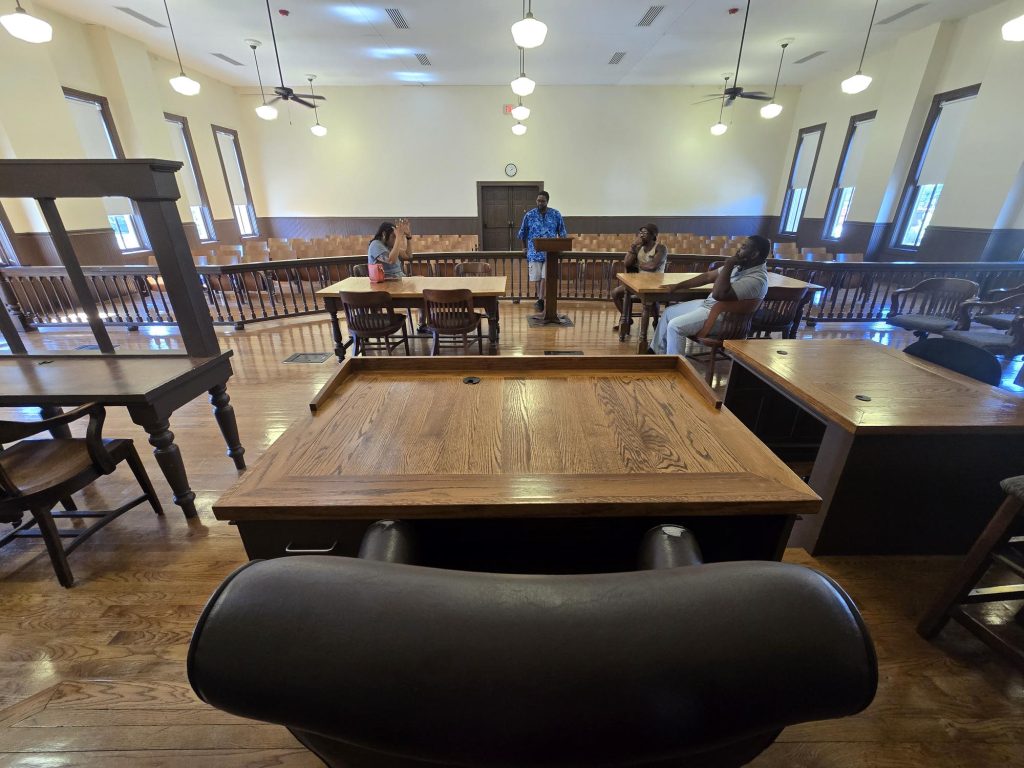
One of the most profound moments of the fellowship was standing inside the National Civil Rights Museumin Memphis, at the exact site where Dr. Martin Luther King, Jr. gave his life. The emotional weight of being in that space was unexpectedly similar to what I felt days later in Mississippi—standing in the courthouse where Emmett Till’s killers were acquitted and near the river where his body was found.
In both places, I felt the same question pressing in on me: How do we teach students not only what happened, but how people responded—and what those responses demand of us today?
That question is at the heart of what I was trying to solve through writing and receiving this fellowship.
And what were you trying to solve?
Before the fellowship, my students could name incidents of racial violence—Martin Luther King, Jr., George Floyd, Breonna Taylor—but they struggled to articulate:
How people responded in those moments;
Why those responses mattered; and,
What choices they themselves are inheriting today
A pre-survey I administered at the start of my Emmett Till unit confirmed this gap:
While students expressed strong emotional reactions to racial violence, many lacked confidence in explaining historical responses beyond protests or anger.
More than 80% of students indicated that primary sources, real locations, and personal narratives helped them understand people’s choices more than textbooks alone.
Nearly all students said they believe their responsibility today is to speak up when we see injustice, but many were unsure how to do so meaningfully.
The fellowship helped me realize that place-based learning—standing where history happened—is essential to bridging that gap.
How is your fellowship’s place-based learning informing students in the various classes you teach?
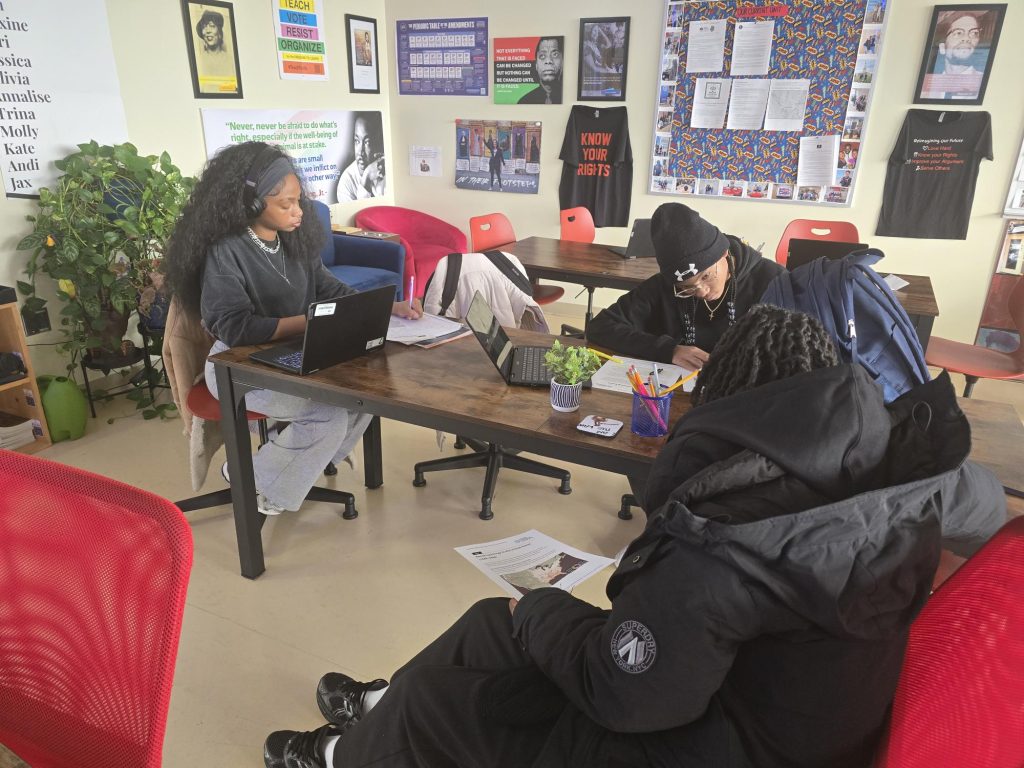
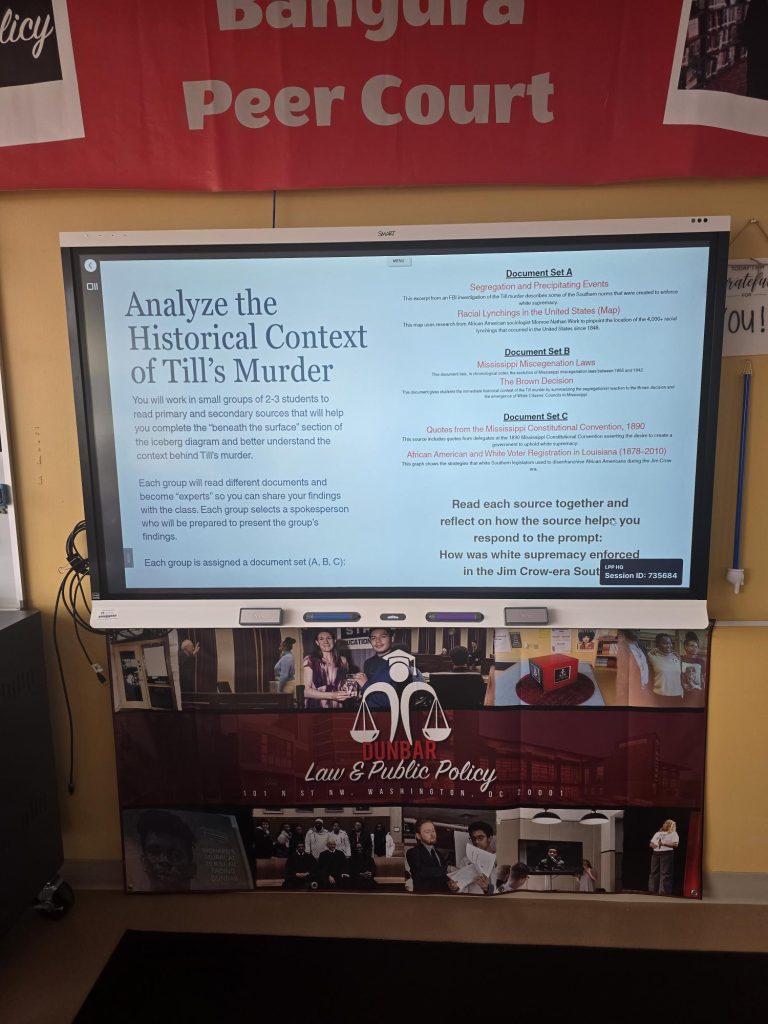
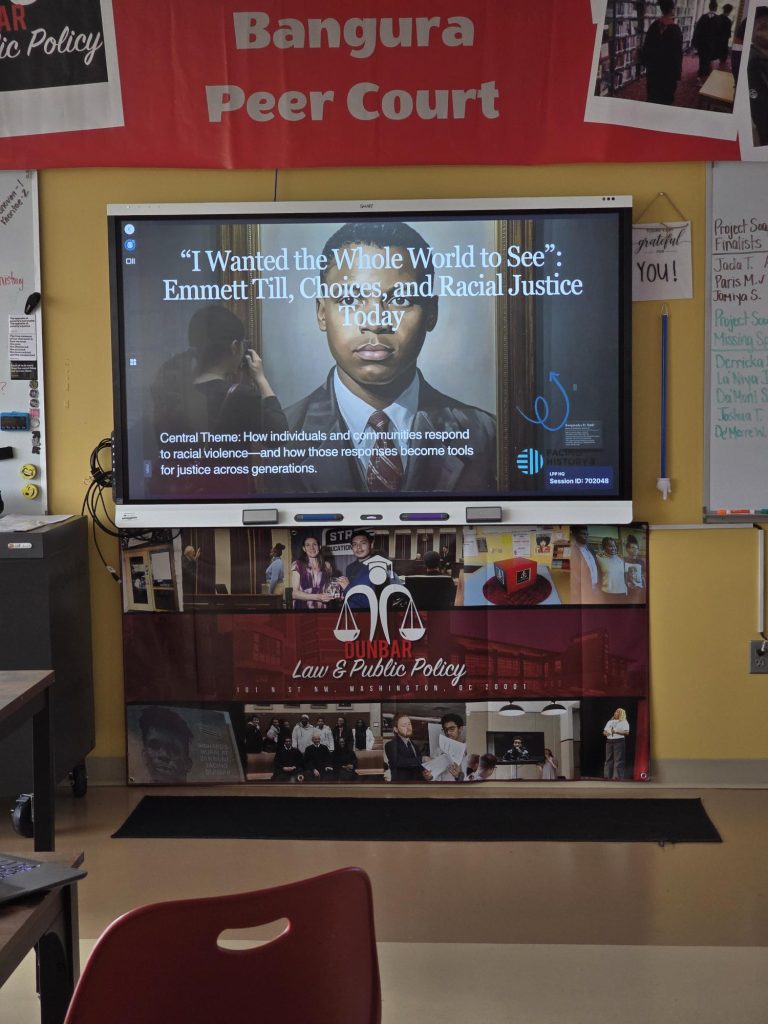
I am currently teaching a mini-unit on Emmett Till grounded directly in the fellowship experience, which specifically features high school curriculum activities and resources I received from the Emmett Till Interpretive Center and Facing History & Ourselves. Students are engaging with:
Photos and videos I captured at the Emmett Till Interpretive Center, courthouse, barn, and river as primary sources;
Documentary clips and insights shared by scholar Ben Saulsberry;
Comparative inquiry connecting Emmett Till’s murder to Dr. King’s assassination and contemporary racial violence; and,
Structured discussions centered on the essential question: As we pursue racial justice today, what can be learned from the choices people have made in response to racial violence in the past?
“Seeing the real places where Emmett Till’s story happened made it feel real in a way textbooks never did. It made me think about what I would have done then—and what I should do now.” — Dunbar High School Law & Public Policy student
Alongside this unit, I am developing:
A student-created video project modeled after the National Civil Rights Museum introductory film, highlighting the legacy of our Law & Public Policy Academy
Podcast episodes that weave together fellowship sites, including an on-location sound bite recorded outside Dooky Chase’s Restaurant—a historic civil rights strategy space
A classroom Matter of Law panel series inspired by the Mississippi Civil Rights Museum, where students examine court cases and consider legal vs. moral justice
With two decades of teaching and a Ph.D. in Urban Leadership, is there anything new that you learned on this fellowship?
Visiting Dr. King’s childhood home, final resting place, and the King Center in Atlanta helped me more fully understand the arc of his life—not just his death. Seeing where he was raised, where his ideas were nurtured, and where his legacy is preserved allowed me to teach him not only as a martyr, but as a strategist, organizer, and human being.
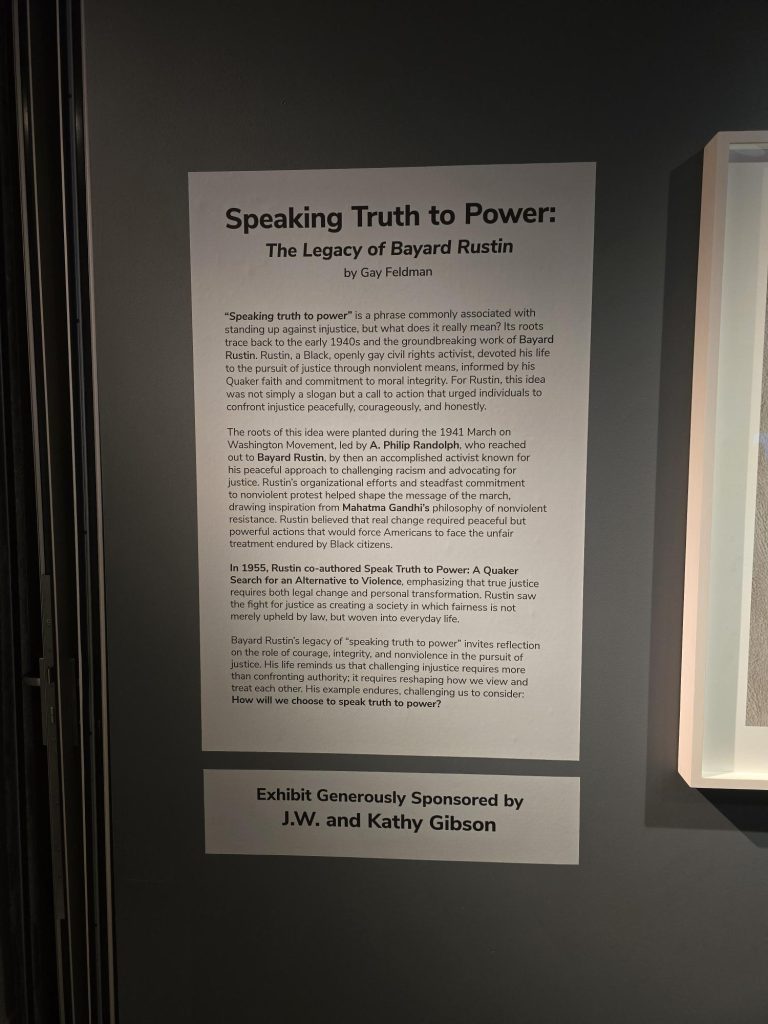
At the National Civil Rights Museum, I also learned the origins of the phrase Speaking Truth to Power through Bayard Rustin’s work. That learning reshaped how I frame activism for students—helping them see that justice requires both legal change and personal transformation.
One quote from Studio BE in New Orleans captured this tension perfectly: “How do you look terror in the face and still muster the courage to love?”
That question now anchors my classroom. Love, I tell my students, is not passive—it is a deliberate act of resistance, one Dr. King embodied fully.
I’m extending our fellowship’s beyond my students and me through:
Podcast episodes shared with families and the community
Ongoing conversations with colleagues about replicating place-based learning locally
An upcoming Humanities Circle presentation where I will share my Emmett Till unit and fellowship-based strategies
The recent CBS Sunday Morning update about preserving the Emmett Till barn—and Shonda Rhimes’ continued support—only reaffirmed why access to these sites matters. Memory is fragile. Place helps protect it.
At the heart of this fellowship is the belief that guides my work: So that others may learn. This experience strengthened my commitment to teaching truthfully, lovingly, and courageously, and to helping students understand that their responses to injustice matter.
Dr. Shelina Warren is the Law and Public Policy Academy director at Paul Laurence Dunbar High School in Washington, DC, where she teaches multiple courses, including Constitutional Law and Youth Justice. She is an Arkansas native, Army veteran, and National Board Certified social studies teacher/leader, finishing her 22nd year in education. She has a doctorate in Urban Leadership from Johns Hopkins University, which focused on civic empowerment for African American students.
Reaching Out to Rural Teachers
After 25 years of investing in educators—totaling $39 million in fellowships—one thing has become clear: Our grant recipients are our strongest ambassadors. When a teacher encourages a fellow teacher to apply, it just hits differently.
This holds especially true for our Rural Teacher initiative*. Inspired by our recent work to expand awareness of Fund for Teachers among educators of color, two members of our Educator Advisory Council embarked on a parallel effort to reach teachers in rural communities. We reached out to Maya Brodkey and Ben Olsen to learn what motivated them to take on this mission:
*for our purposes, “rural” is defined as “located in sparsely populated areas, often in small towns or the countryside.”
Q: With all that is on your plate, why is this work of bringing FFT to peers in rural regions a priority?
Ben: Rural areas and rural schools are close to my heart. I grew up attending rural schools – my graduating class had 56 seniors! Currently, though I teach in a larger district, my four children all attended, or graduated from a small, rural school district. I know as a kid, if I had had a teacher who had been to the Amazon to work with scientists, I would have been so amazed and inspired by that idea. I also would very much like the teachers that impact my own children to have the chance for amazing experiences that they can bring back to the classroom to add authenticity and awe to their students, my children included!
Maya: Teachers in rural areas generally have less access to professional development and learning opportunities. Teachers in urban/suburban areas have nearby universities, professional networks, and other schools. For rural teachers, we are often on our own! Fund for Teachers helps bridge this gap by allowing rural teachers to design their own highly personalized and relevant PD opportunities.
Q: What are the challenges you identified/experienced that are different from your peers in suburban/urban areas and why do you think FFT can meet those challenges?
Maya: Students in rural areas can often feel isolated and left out of larger conversations about global events and cultural trends. When I taught in a rural area, one of my biggest challenges was helping my students see themselves as part of/connected to the larger world. FFT helps rural teachers bring the larger world into their classroom, which (ideally) opens up further opportunities for their students.
Ben: Mainly, I’ve found that it’s all about awareness that a great opportunity like Fund for Teachers exists. With smaller staff and, sometimes, smaller budgets, the knowledge of high interest professional development may be lacking. Sometimes, students and teachers in smaller, rural districts may feel so far away from “the action” that they may not see how they can make a difference in the larger world. Teachers can take part in a FFT fellowship and help those students, and themselves, feel closer to the larger world.
Q: When leading previous and the upcoming workshop, is there a particular experience from your fellowship/its impact on which you lean when describing the value of FFT?
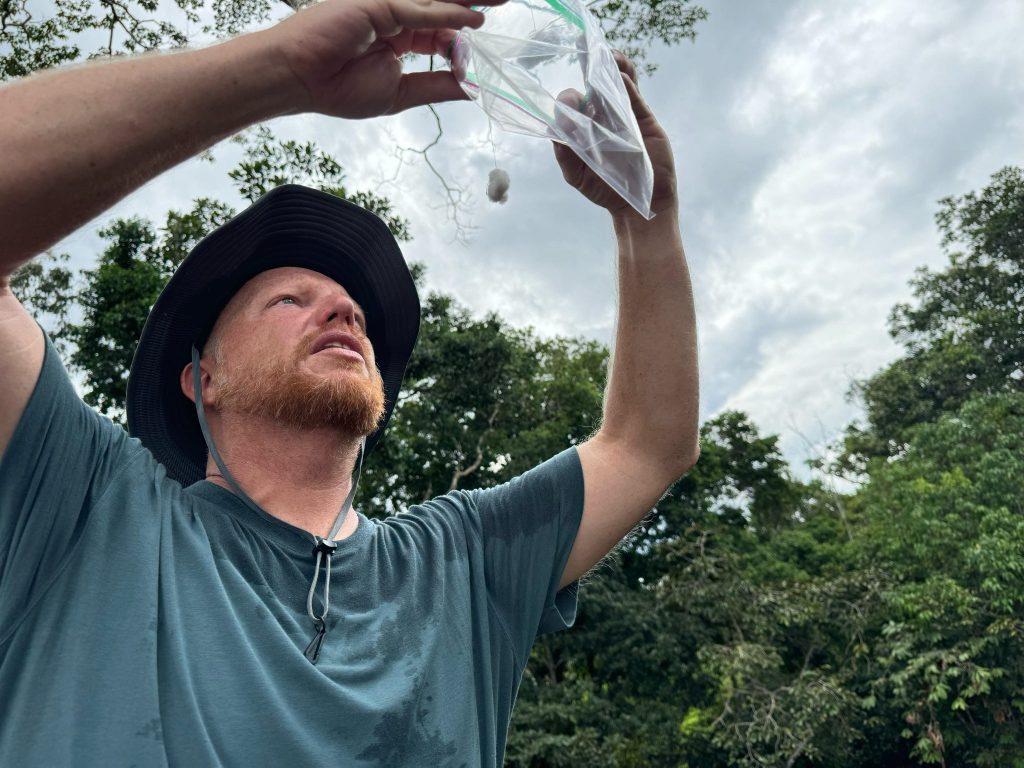
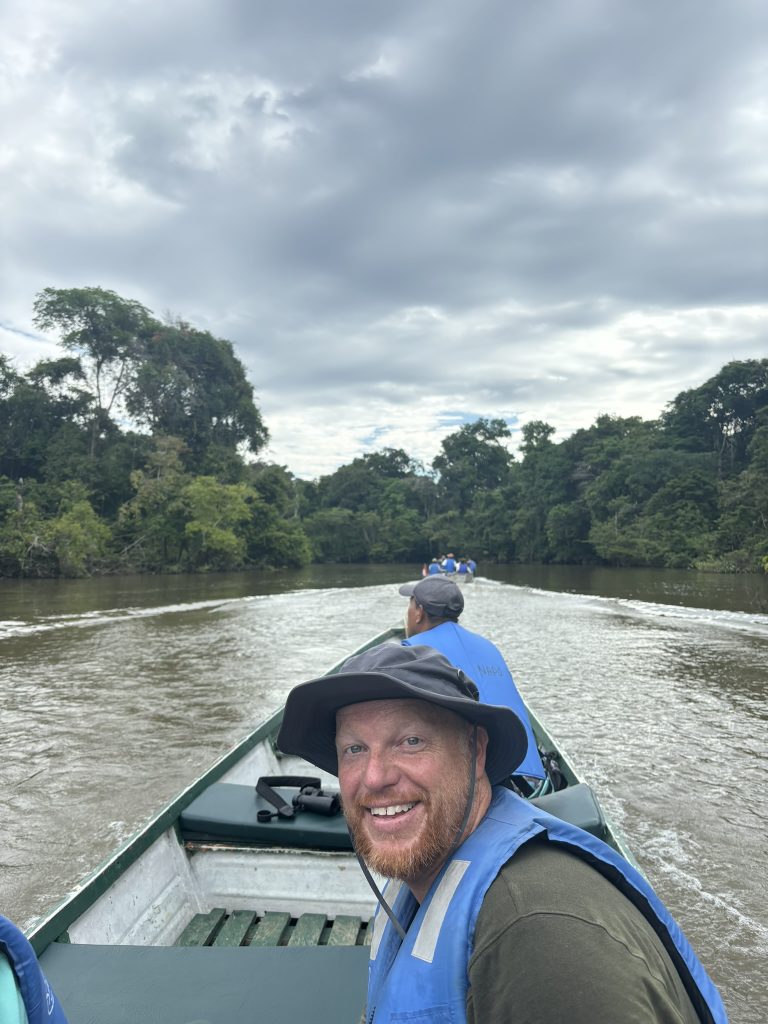
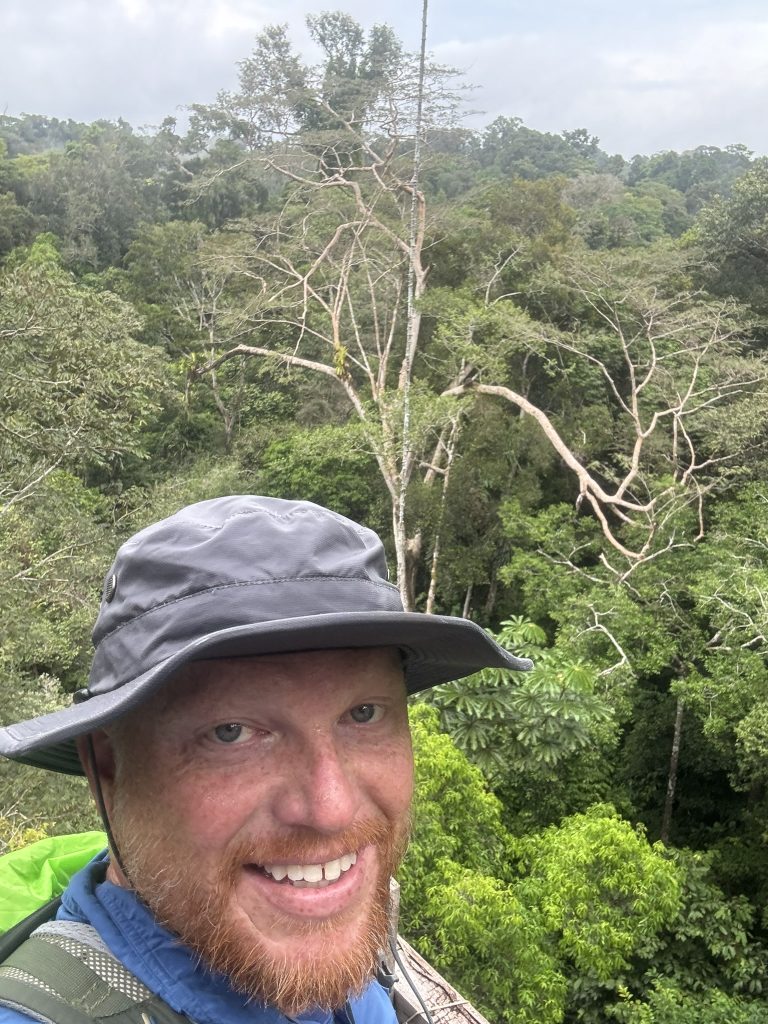
Ben: I lean on the amazing road that my fellowship put me onto. I designed my fellowship to provide me the chance to travel to the Amazon rainforest, a life-changing experience by itself, but also to work alongside researchers to better understand field techniques that I could bring back to my own students to simulate. I got that experience to be sure. But what I didn’t anticipate was how my fellowship would eventually lead me to leadership opportunities within the Morpho Institute’s programming by heading up their camera trap project outreach. I had to pinch myself this summer when I was getting emails from a Georgetown University researcher who was deep in the Amazon, sending me some of the latest camera trap recoveries. But here I am, a teacher in Iowa, who grew up in a rural setting, and I am able to participate in some really amazing things, all because of my FFT fellowship. That’s what I’d love for every teacher to experience, in whatever they find great interest.
Maya: My FFT experience really helped me rethink my approach to teaching. Though this wasn’t one of my stated goals, I came back from my fellowship very excited about bringing my students’ ideas and interests into my ELA classroom. Three years post-fellowship, my students are actively involved in panning units with me, and I’m a much happier and more engaged teacher.
With a 2024 Fund for Teachers grant, Ben collaborated with scientists at the Amazon Research Initiative for Educators in the Peruvian Amazon to experience field research that fits will within the context of developing global perspectives, understanding biodiversity and ecological systems, and inquiry-based learning for gifted learners.
Maya used a 2023 Fund for Teachers grant to study New Zealand’s Māori language and cultural education model while investigating bi-cultural, place-based education in rural schools to incorporate findings into culturally relevant and place-based practices that are responsive to and supportive of Indigenous students.
Embracing, Not Erasing, Vietnamese Heritage
“I remember setting foot on my first Boston snow in February 1992,” said FFT Fellow Thu-Hang Tran-Peou describing her arrival from Vietnam as a young girl. “It was my first encounter with tuyết (snow)—a word I had read, wrote, and pondered before but had never known. The coldness, the fragility of the white cluster melting in my hands—it felt like a metaphor for my identity as a Vietnamese immigrant and refugee.”
Beautiful, bracing and ephemeral. Everything about the life she and her family fled in Vietnam now abutted against assimilation.
“I lived in two worlds—ashamed of my Vietnamese at school and never fully confident in my English at home,” she continued. “I was told that success was when I could leave my Vietnamese roots and thrive as an ‘American’ with my new branches. Today, after 17 years as an educator, I find my reflection in the eyes of my students, who also navigate these dual identities.”
Thu-Hang and her FFT Fellow teammate Thuy Nguyen teach at Boston Public School’s Mather Elementary, the oldest public school in North America, where they are charged with implementing the Vietnamese Dual Language (VDL) program for fifth and sixth grades. (EdWeek recently reported on their work). The veteran teachers were inspired by the fellowship of 2024 Fellow Vincent Pham (Brooklyn, NY) after following his fellowship across Southeast Asia last summer and decided to design and submit their own proposal focused on ensuring that their students’ histories, heritages, and home languages are seen as assets to be embraced, not erased.
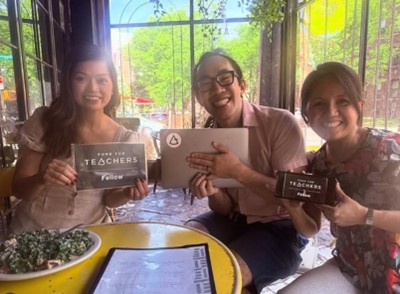
In a beautiful spirit of collaboration, Thuy and Thu-Hang met up with Vincent in New York this spring to collaborate on fine tuning their upcoming fellowship itinerary. In August, the teaching duo will navigate across Vietnam’s three regions—Ha Noi in the North, Hoi An and Hue in the Central, and Ho Chi Minh City in the South — to commemorate the 50th Anniversary of Saigon’s fall, gain linguistic proficiency in various dialects, and explore community spaces that represent the interplay of language, commerce, and culture in daily life. They will document each experience through oral interviews, videos/digital film, photography, and primary artifacts to bring back to share and teach in the classrooms.
“Over the past five decades, three generations of our Vietnamese families have navigated the complexities of displacement, survival, and identity,” wrote Thuy and Thu-Hang in their grant proposal. “From our parents, who risked their lives on perilous boats to escape conflict and rewrite their histories; our generation, navigating the tension between forgetting and forging a new identity in a foreign land; and our students, who now piece together hope for the future as the first cohort of Vietnamese bilingual learners. By embracing the diverse backgrounds of our students – culturally, linguistically, and even racially – we will create a learning environment that not only celebrates their differences but also unites them in shared pride and purpose in our Vietnamese Dual Language (VDL) Program, the first and only in the school district and Massachusetts”
Thuy and Thu-Hang are the inaugural recipients of Fund for Teachers’ Dottie Engler Follow the Learning Fellowship. Dottie served as the director of special projects at Boston Plan for Excellence and the director of external relations and development at the Harvard Graduate School of Education. However, we are most proud of her role as Fund for Teachers as a board member.
Life in Action
Students at Life Learning Academy are disconnected – literally and figuratively. Many of the students live on campus, located on Treasure Island in the San Francisco Bay. Also, students arrive after experiencing life traumas, often involving the juvenile justice system, and not finding success in traditional school settings.
Kevin Hicks arrived at Life Learning Academy with his own unique trajectory, including growing food at a commune in the foothills of the Rocky Mountains, founding a rowing studio gym, and working as laboratory scientist at the United States Department of Agriculture.
The common denominator between students and teacher? According to Kevin, meaningful connections, worldly lived experiences, and adventure — the same components of a Fund for Teachers fellowship.
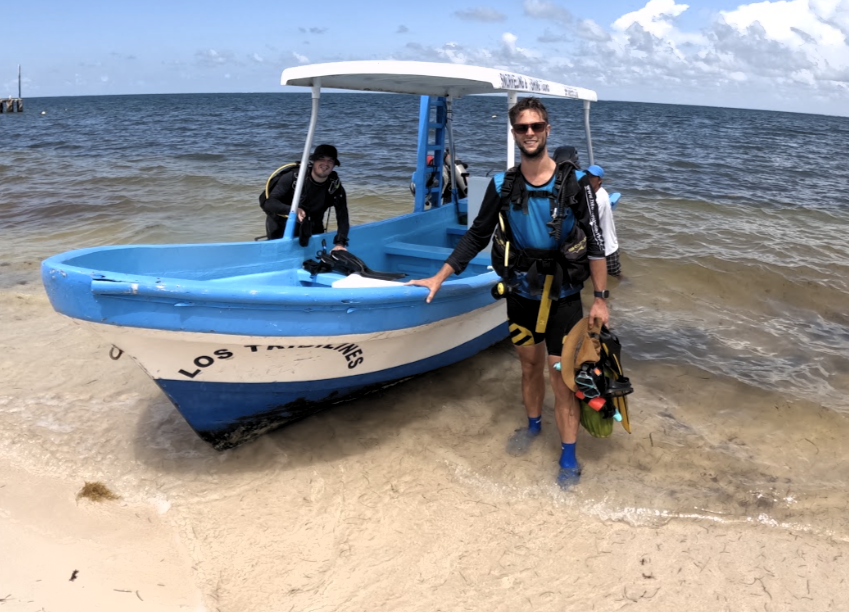
Last summer with a $5,000 Fund for Teachers grant, Kevin participated in the Marine Conservation program hosted by Global Vision International in Puerto Morelos, Mexico, to support the management and conservation of the Mesoamerican Barrier Reef. Working alongside national and international non-profits and government organizations, Kevin collected data, participated in coral nursery and management and joined beach clean-ups in the Mexico Caribbean Marine Biosphere Reserve, which is one of the largest ecosystems globally, and the largest national marine biosphere reserve in the Caribbean.
Afterwards, he studied Spanish with a tutor in Quintana Roo, improving fluency to better teach one-third of his students who are Spanish speaking.
“I got to see ‘Science as a human endeavor,’” said Kevin. “As humans, we have limited capacity. It made most sense to train us to be able to identify selected target species [such as sea turtles]. This way we focused on specific species that provide crucial data.”
Kevin relies on a similar targeted approach when teaching his “Earth Optimism in Action” ecology class, focusing on specific issues that provide opportunities for collaboration and change.
“My students choose a local environmental issue for which I supply 1-2 resources for them to contact for more information,” explained Kevin. “As the name of the class implies, they are empowered to take action and reach out to local organizations for more information. Their final project will be an ‘Action Plan’ with the help of the local agency to address the issue at hand. My fellowship will be used as my example for their final project.”
Through this class (and his fellowship), Kevin models more than environmental stewardship and hands-on science. He exemplifies for his students Life in Action.
“As an educator, it is my responsibility to be a role model, and I would like to be a role model of a global citizen who takes action in the world for the things that I care about,” he said. “I deeply care about our natural environment, and particularly the oceans’ health. I want to show my students, by my actions not just my words, that their actions matter.”
Kevin Hicks became a teacher through the US National Science Foundation’s Robert Noyce Teacher Scholarship Program. He also serves as director of education and first mate for Sea Valor, Inc., a nonprofit dedicated to improving life quality for Veterans, First Responders, those with PTSD and families affected by suicide.
Meet Our New Fellows
Fund for Teachers, one of the nation’s leading organizations supporting preK-12 educators, is proud to announce its 2025 grant recipients. This summer, 357 teachers will leverage $1.625 million into experiential learning in 79 countries on 6 continents.
These educators comprise Fund for Teachers’ 25th cohort of FFT Fellows. Since 2001, Fund for Teachers has invested $39 million in 10,225 public, private and charter school teachers from across the United States.
Fund for Teachers annually invites teachers to propose solutions that address learning gaps for themselves and their students. Teachers are trusted with the freedom to determine what and where they want to learn and, after a thorough review process, individual teachers are awarded up to $5,000 and teams of two or more up to $10,000 to pursue customized professional development during the summer.
Fund for Teachers annually invites teachers to propose solutions that address learning gaps for themselves and their students. Teachers are trusted with the freedom to determine what and where they want to learn and, after a thorough review process, individual teachers are awarded up to $5,000 and teams of two or more up to $10,000 to pursue customized professional development during the summer.
“Teachers are at the heart of shaping not only students’ academic trajectories, but often also their social and emotional well-being,” said Karen Eckhoff, Executive Director. “Fund for Teachers believes this high calling merits validation and support, which we provide by funding fellowships that ultimately inspire teachers’ enthusiasm for student engagement and extend their longevity in the profession.”
Experiencing History to Expand Knowledge
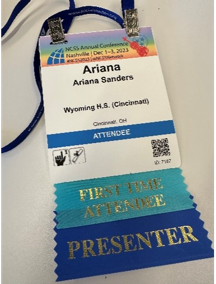
Three years ago, Ariana Sanders (Cincinnati) used a $5,000 Fund for Teachers grant to participate in the Witness Tree Institute’s immersive educator experience in Ghana, where she explored the impact of colonization, as well as how Africans protect their natural resources. Her goal was to inform the development of learning objectives and course modules for Ethnic Studies to be offered not just at her school, Wyoming High School, but to ALL of Ohio’s high school teachers.
“I cannot count the ways in which this fellowship was an influential time for me,” said Ariana. “It felt like an inspired experience literally from the second the plane landed — I felt more connected to my roots as a biracial person. The Witness Tree Program really allowed me to go into areas where it is NOT touristy, talk to many professors, participate in cultural activities (food, dancing, games, etc.) It is hard to put into words what that means or how much I see that impacting my soft skills — understanding others, appreciating differences…we all clearly need more of that!”
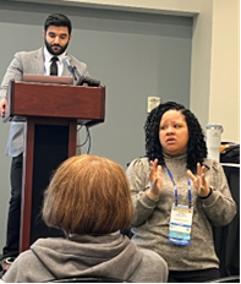
Caption: Standing in Slave River, where captured men, women and children slaves bathed for the last time before they went to the auction; Ariana’s conference nametag and presentation session.
That connection and cultural immersion informed learning standards and curriculum for a new official course offering in the Ohio Social Studies program called Religion, Gender, and Ethnic Studies, which Ariana presented at the National Council of Social Studies’ national conference.
Additionally, Ariana sits on the advisory board for Boston University’s Teaching Africa Teacher (TAT) Certificate Program, which supports pre-service and in-service K-12 teachers and higher education instructors interested in engaging with Africa in their classrooms. As part of this opportunity, Ariana crafted an additional curriculum titled W.E.B. DuBois & Ghana: As told through 3 primary sources –whichyou can access here.
“I’ve kept up with colleagues from my fellowship in Ghana, so those relationships, as well as peers through the TAT board, give me a space to advance higher education African studies and be in touch with people who are also working to ensure Africa is represented in more social studies classes. I feel like I am the biggest cheerleader for Fund for Teachers.”
W.E.B. DuBois said, “It is the trained, living human soul, cultivated and strengthened by long study and thought, that breathes the real breath of life into boys and girls and makes them human, whether they be black or white, Greek, Russian or American.” He would be proud of the impact Ariana is making, as are we.
Collaboration Across the Nation
To reach teachers working in communities across the country, Fund for Teachers partners with local education foundations and philanthropic organizations. Together we market the program, manage and support applicants, conduct selection processes and fund grants.
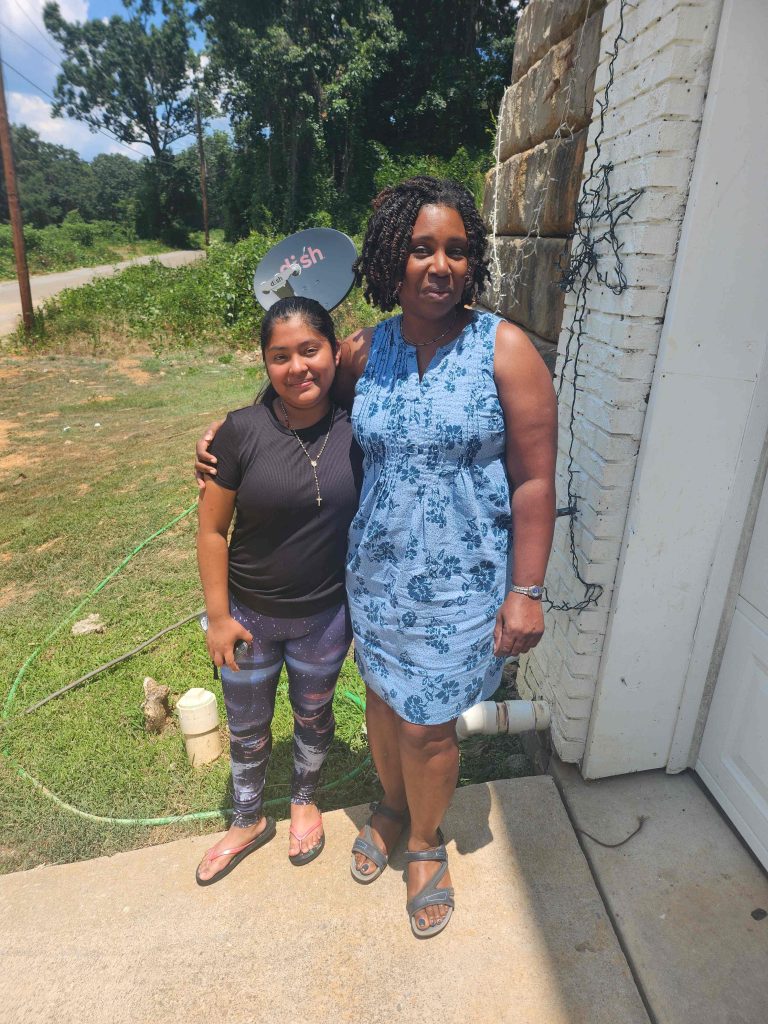
Here is an example of how Rowena Williams shared her fellowship, which included visiting the family and teachers of current student, Yadira, in her Guatemalan hometown.
Are you, your corporation or organization looking to impact education in a unique way, let us know!
Back to the Future via Fund for Teachers
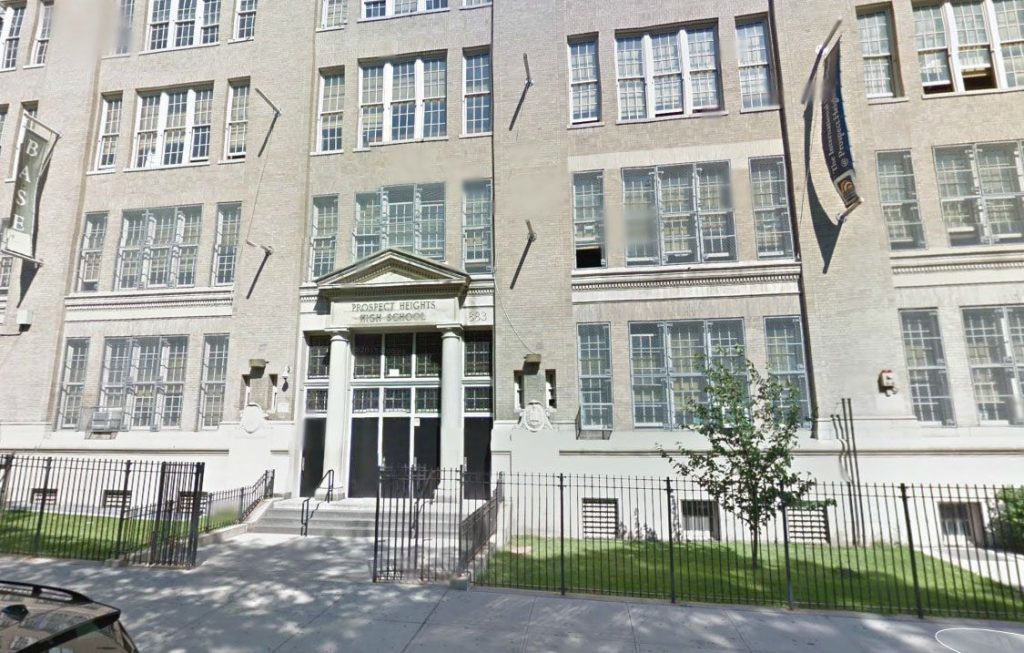
Vincent Pham (The International High School at Prospect Heights – Brooklyn) designed a 2024 Fund for Teachers fellowship to go back and go forward. He spent the month of August in Southeast Asia, researching his heritage to model resilience for students sharing his experiences as a refugee arriving in the United States. The following piece is an amalgamation of Vincent’s grant proposal and fellowship reflections drawn from his Instagram account, vincent.q.pham.
My parents, Vietnamese boat people who came to the U.S. in the late 1980s through the United Nations High Commissioner for Refugees’ resettlement initiative, were extremely cagey about sharing their memories of growing up in Vietnam with me. They lived through decades of conflict as Vietnamese forces fought against the French, the U.S., and even among themselves. Thus, their memories of Vietnam were marred by postwar poverty and having to leave behind family and friends as they fled the country.
In fact, they only began opening up to me after I received a Fulbright student fellowship to live and teach in Vietnam. Not only did they introduce me to family members still living in Vietnam, they also contemplated the challenges and triumphs of navigating the U.S. as teenagers with limited English. In return, I discussed with my parents about how my teaching and traveling experiences in Vietnam were similar or different from what they remembered. Consequently, I realized that to be a culturally relevant educator for a multicultural classroom, I needed to find ways to foster global interconnectedness.
After several more stints of teaching abroad, my personal and professional context influenced me to return to the U.S. to work in the nation’s largest and most diverse school district. For the past seven years, I have taught a two-year cycle of 11th grade U.S. History and 12th grade Government and Economics at an urban, Title I public school (right) that serves recently arrived immigrant and refugee Multilingual Language Learners (MLLs). I am responsible for supporting college readiness and English language acquisition for students who come from 30 different countries. Many students come from nations that are or were recently impacted by wars and conflicts stemming from U.S. foreign policy decisions including El Salvador, Guatemala, Haiti, Venezuela, and Yemen, with many coming as unaccompanied minors. We do not have a prescribed social studies curriculum at our school– teachers are empowered to implement whatever material and learning scaffolds that will best engage such a heterogeneous community.
Why Vietnam? Why Now?
As a social studies educator, I embrace the position that effective classroom teaching is inherently political and that it centers students’ lives when connecting to academic content. The classroom is NOT an escape from the politics and injustices of the world. Instead, it is a space in which the students, and teacher(s) collaborate to develop worldviews, skill sets, and self-affirmations to confront these challenges. Two years ago, I made the conscious decision to teach about how government policies amplify and/or rectify social inequities.
This subject matter evokes passionate (and oftentimes oppositional) opinions in my classroom, a testament to the wide-ranging cultural backgrounds and lived experiences that my students bring with them. Thus, I believe that if I challenge my students with such complex topics, I must provide them culturally expanding and rigorous learning opportunities to critically evaluate what they learn. That is why my 12th grade curriculum on U.S. foreign policy starts with Vietnam. At the unit’s conclusion, I share my family history with students to analyze how U.S. foreign policy has influenced the trajectory of my life. Although none of my students come from Vietnam, my unit’s themes of sociopolitical upheaval, family separation, and starting anew in a foreign land deeply resonate with them.
The Fellowship
The purpose of my fellowship was twofold:
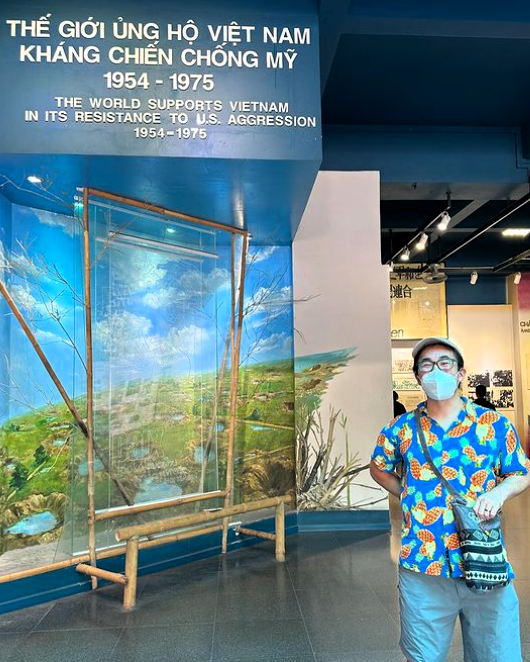
Experience Vietnam’s war museums (such as The War Remnants Museum in Ho Chi Minh City – pictured right), local NGOs, and interview family members, and
Seek out former Vietnamese refugee camp sites in Indonesia, Malaysia, and the Philippines to obtain more primary sources and texts that center the Vietnamese experience and curate a more authentic curriculum.
This fellowship was especially relevant because my school district has partnered with a local university to assess gaps in the Asian American curriculum in our public schools. Southeast Asian history has been overlooked at the school and district level, which is why my Fund for Teachers grant will assist in filling in that void. With authentic artifacts and personal connection, I aspire to empower MLLs to love history and reflect on their own personal journeys to the United States.
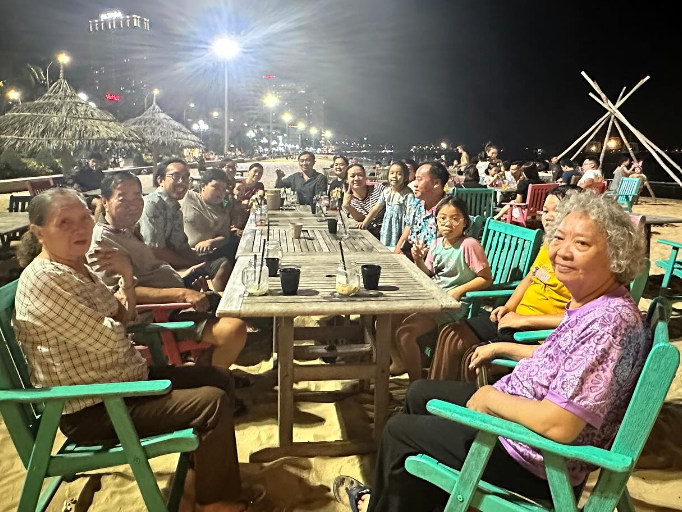
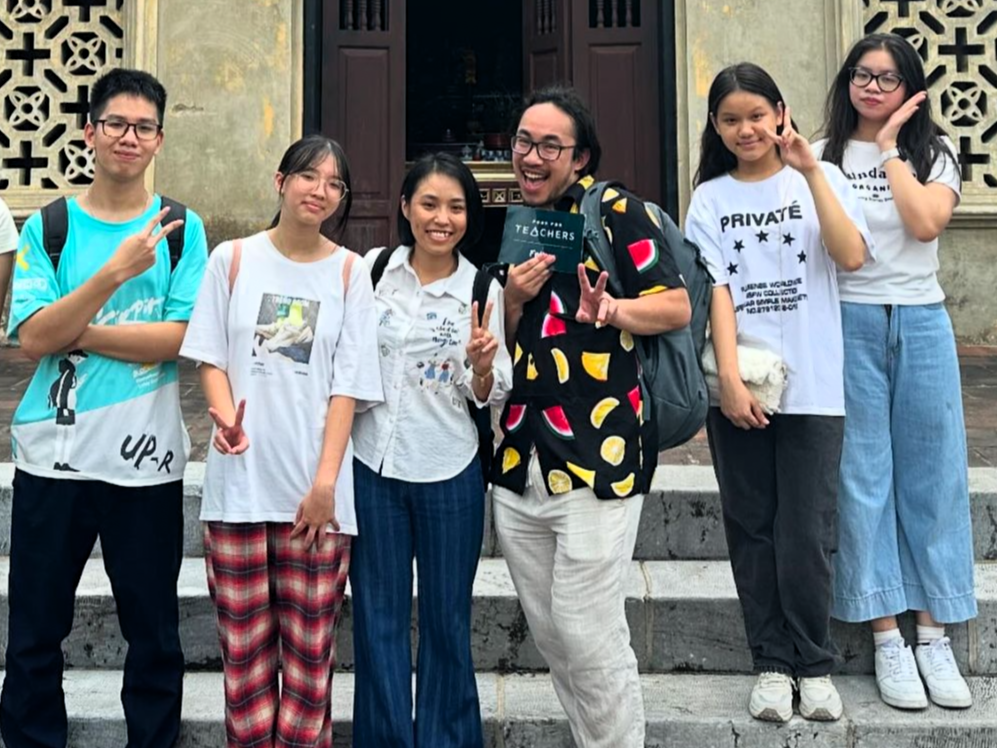
Visiting family in Quy NhonImperial Citadel of Thang Long
Vietnam
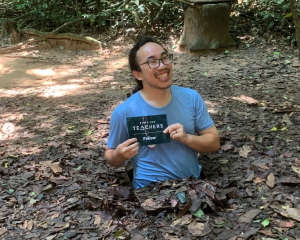
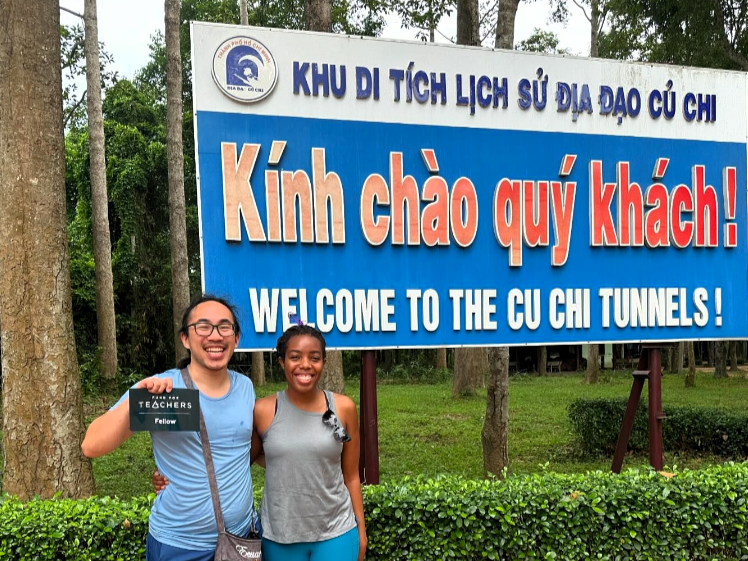
My first stop (after a quick layover in Tokyo) were the Củ Chi Tunnels. This was a 200km network of tunnels outside of Saigon and most notably used by Vietnamese guerrillas in their fight for liberation against French colonial rule and U.S. imperialists. Through experiencing parts of the tunnels and learning about its tunnels through a Vietnamese tour guide, I was able to gain deep insights on how to frame Vietnamese resistance and integrate primary sources to my future curriculum.
These tunnels enabled covert operations (moving supplies and organizing troops) and even allowed the Ho Chi Minh trail (which went through Laos and Cambodia) to connect. Consequently, the U.S. devoted intense aerial bombing campaigns and even targeted ground pursuits (that’s where “tunnel rats” would go underground to find the Viet Cong).
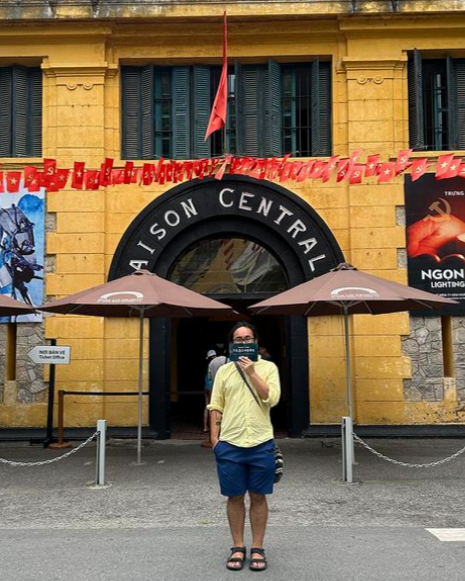
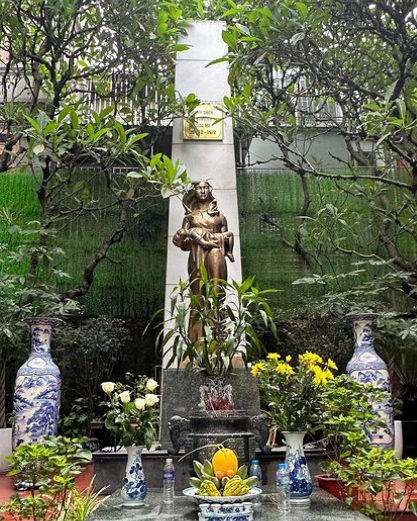
Visiting historical places is a tangible way to learn about how the past influences the present. It is especially jarring and profound to navigate Hà Nội because infamous sites such as the Hỏa Lò Prison and the Khâm Thiên Street (below) are seamlessly intertwined with the residential neighborhoods and local businesses. Being able to visit these different places was crucial for me to think about how we can identify and analyze the history imbued in everyday spaces.
Singapore
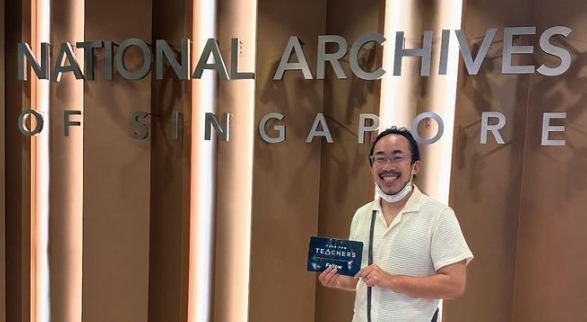
While exploring Singapore, my wife Marcelle suggested that we stop in the National Archives of Singapore. What was supposed to be a short stay turned into a several hour research experience for me. I came across an enormous catalog of historical newspapers reporting on the Vietnamese boat people between 1975-1996. research I did to demonstrate how U.S. economic trade embargo and refusal to provide reconstruction aid to Vietnam surely exacerbated the suffering in Vietnam. Of course, the stories I have read and heard from my family about the chaos and struggles in the aftermath of the war cannot be dismissed, but I have the privilege to examine all this from a historical perspective. Nevertheless, it is vital to evaluate with empathy.
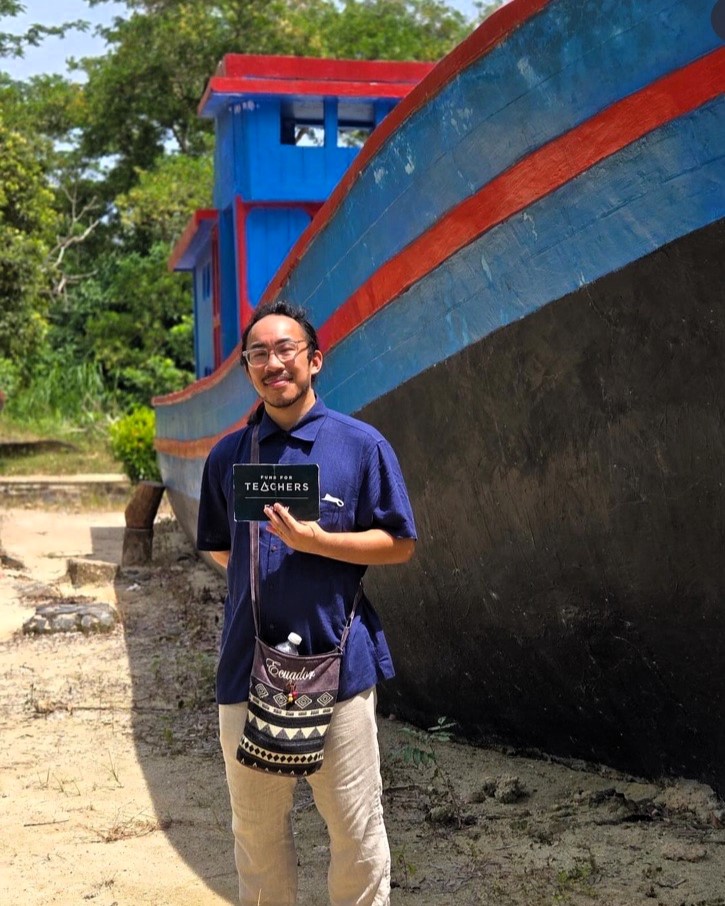
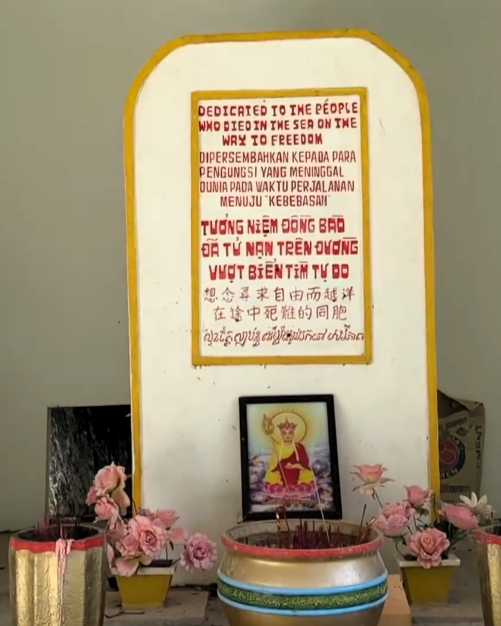
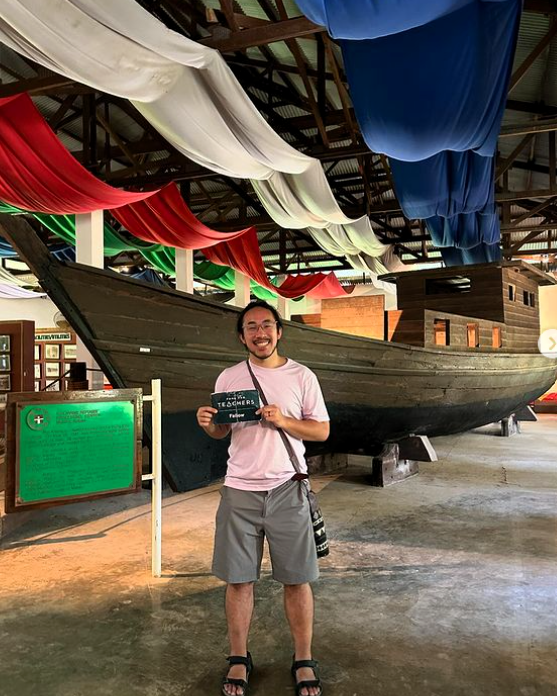
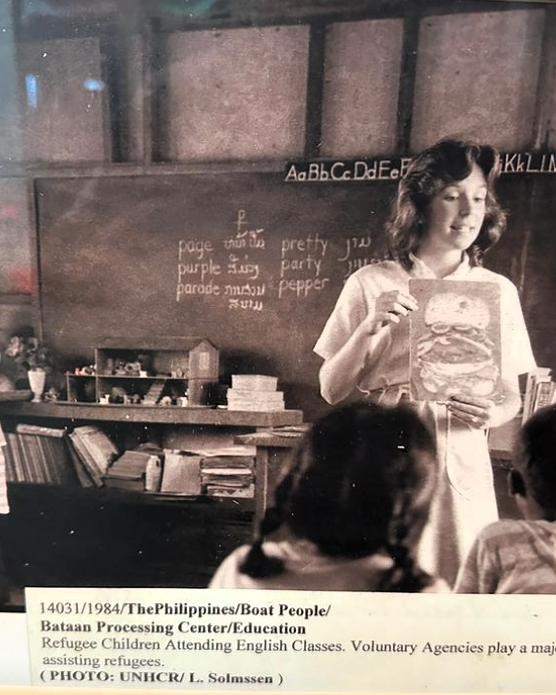
Pulau Galang, refugee camp located in the Riau Archipelago, near Singapore, was the first former refugee camp that I visited as part of my fellowship and I have to say, it was quite somber. In 1979, the Indonesian government and UNCHR (United Nations High Commissioner for Refugees) established a camp for Vietnamese refugees. From 1979-1996, an estimated 250,000 Vietnamese boat people and asylum seekers from countries like Cambodia and Laos were temporarily accommodated while their potential refugee status and resettlement was being processed.
Experiencing the Galang Refugee Camp was haunting, as much of the area lies in ruins. Besides the relatively newly built Buddhist temple and some renovated gravestones placed in the cemetery by former camp residents or their relatives, there is much decay as the understaffed workers barely do much.
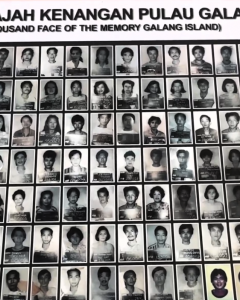
Posing by a model boat that would carry refugees.Nghia Trang GraveThe thousand faces section .
Malaysia
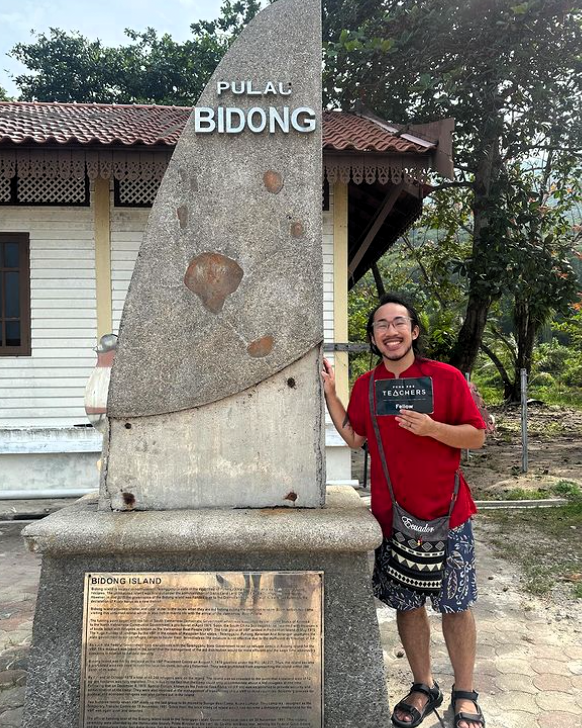
Pilau Bidong was the first refugee camp that my mother and most of her siblings resided upon their exodus from Vietnam. My research indicates that Pulau Bidong was only intended to host up to 4,500 people. However, the humanitarian crisis resulted in 18,000 people living there by January 1979. By June 1979, the numbers had crescendoed to 40,000 people living at a small camp on the south side of the island, which was no bigger than a football field. During that time Pulau Bidong came to be the most heavily populated place on earth. My mother and most of her siblings were part of these 40,000 people.
When the Pulau Bidong refugee camp was shut down in October 1991, the Malaysian government essentially tore down all the remaining shelters and material built by the Vietnamese. When I visited, I experienced the ghosts of the past via the makeshift burial grounds and plaques left behind by former Vietnamese boat people who came back to visit. This was an incredible historical and personal experience that I will be eternally grateful to Fund for Teachers for providing me the means to carry out this task. I cannot wait to integrate these visuals and videos into my unit to humanize the experience of people fleeing from sociopolitical upheaval.
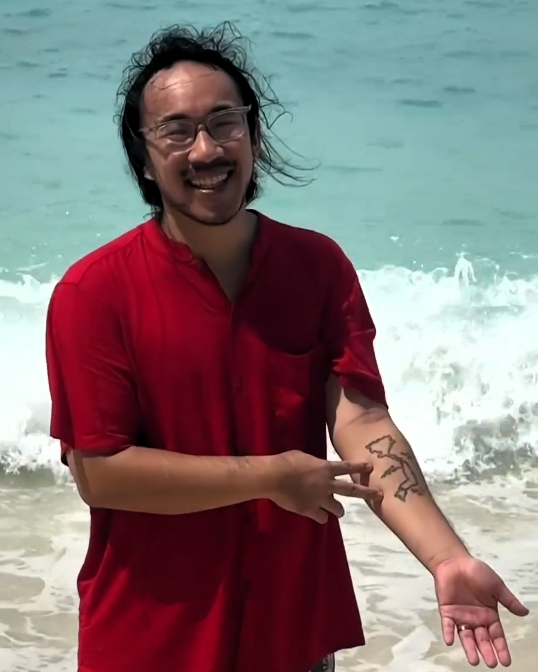
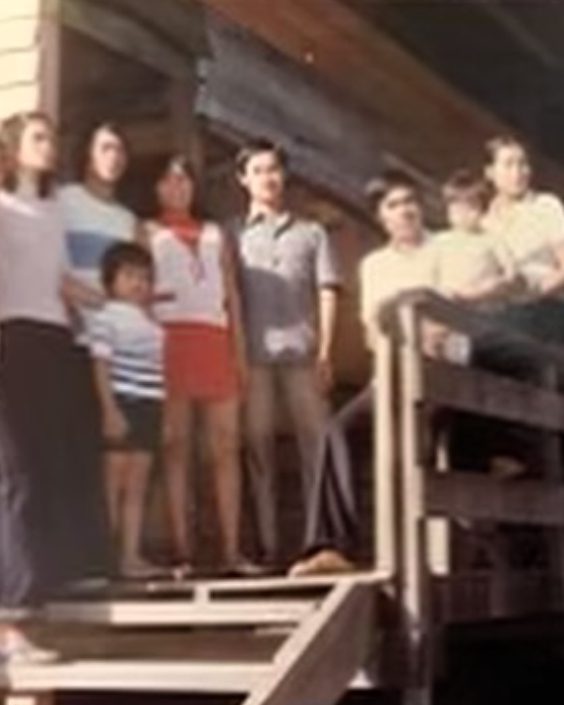
Pilgrimage to Pulau BridgeTatoo of MalaysiaMy mother and her family waiting for their new lives.
The Philippines
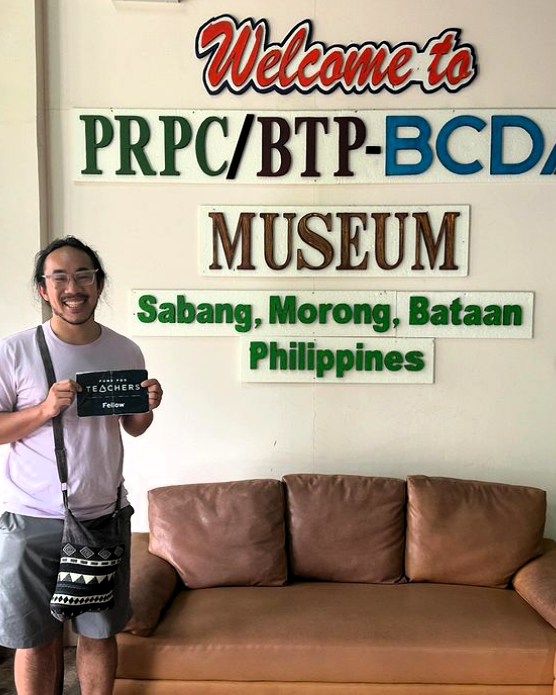
I visited the Philippine Refugee Processing Center (PRPC), located in Bataan (roughly a 3-hour drive from Manila). This was the last refugee camp my mother and members of her family stayed at before transitioning over to the U.S. By the time the PRPC closed in 1995, an estimated 400,000 refugees had come through.
Unlike my previous refugee camp visits to Pulau Galang and Pulau Bidong, nearly all refugees were confirmed that they had been accepted to resettle in another nation. Consequently, the ESL education and vocational courses offered by the camp took on even deeper significance for the people.
Visiting this former refugee camp was the most inspirational and hopeful due to its history. Unlike the previously aforementioned refugee camps in Indonesia and Malaysia, the Filipino government has sought to revitalize the area surrounding the PRPC- the territory is now called Bataan Technology Park. There are many assigned workers who actively look after the area. The wonderful museum has excellent documentation of the refugee camp and experience- the photos and videos I took will serve as profound primary sources for my students to explore in the class.
PeaceTrees Vietnam
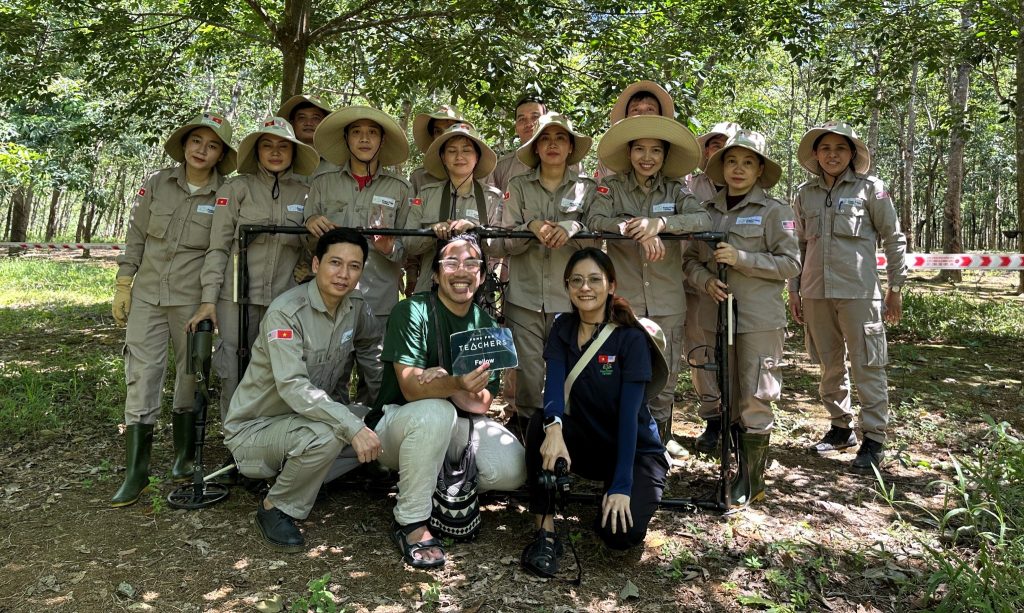
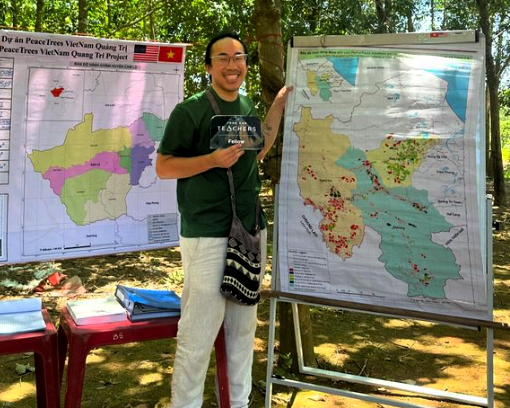
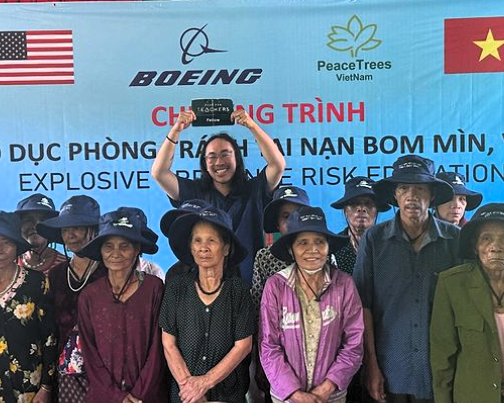
For so long, Vietnam has been defined by Americans by the war. However, we need to consider the ways that the Vietnamese people have addressed the legacies of American intervention. More importantly, I want to demonstrate how Vietnamese people are actively trying to move forward with their lives. Primarily based in the Quang Tri province, the #PeaceTrees organization began in 1995 (in Seattle of all places) as a humanitarian mission to remove landmines and cluster bombs in Vietnam’s most heavily bombed region. Land that has been cleared of explosive ordnance has been returned to Vietnamese ownership. In fact, many community centers and schools have been built on top of these lands to symbolize the repairing of American harm.
Thanks to mutual connections, I got the chance to visit the city of Dong Ha, and see the work being done firsthand. Not only did I get to see the maps demonstrating all the places that the organization has de-mined, I also got to attend their educational community outreach to ethnic minorities in Vietnam who are oftentimes the most at risk of encountering unexploded ordnance. It was especially incredible to witness the PeaceTrees team in Vietnam have 7am virtual meetings to accommodate the evenings in Seattle and then turnaround to conduct their educational outreach. I deeply admire their ethos.
My experience with PeaceTrees Vietnam was so memorable because this organization demonstrates that Vietnam’s postwar story is not just a chronicle of suffering and sorrow. Instead, it is a powerful story of resilience and empowering the local community to address their needs as they see fit. This is what I hope to impart to my immigrant students, to embrace the fact that their continued existence is powerful and worthy of celebration.”
Back To School
As the son of displaced people, my existence derives from the sociopolitical consequences of U.S. foreign policy. I believe that I must serve as a conduit between the past and present. Hence, my fellowship is deeply personal because I will not only delve further into my family history, but also the Vietnamese diaspora as well. I have been collaborating with Professor Christian Lentz of the University of North Carolina due to his research focus on Vietnam. Along with several other teachers, we will be submitting a piece to the American Historical Review. Our piece, scheduled for March 2025 publication, will focus on how high school teachers integrate scholarly sources and fieldwork to produce innovative pedagogy.
Additionally, as the only Southeast Asian individual in my school, I am compelled to contribute to the community’s global identity through educating about the nuances of this region’s history. My MLLs often tell me that they first learn about Southeast Asia through my unit about Vietnam. Teaching about Southeast Asia is crucial because my MLLs see how their diaspora and many Southeast Asian diasporic communities were formed in response to the forces of war, colonization, and imperialism. Ignoring Southeast Asia dismisses a significant critique of U.S foreign policy and obscures discussion of on-going struggles and triumphs of people affected by American intervention.
My lived histories as a child of refugees plays an important role in my school because I can dialogue with my students about the legacy of migration and resettlement. Moreover, I am empathic of how my MLLs’ cultural identities are in flux since I grew up navigating between American and Vietnamese cultures. Thus, the final part of my fellowship happens back in the classroom: intertwining these histories to my students and my pedagogy.
Vincent Pham is a National Board Certified educator at International High School at Prospect Heights in New York. As the son of Vietnamese refugees, he recognizes that education is political. Thus, for the past seven years, he has taught social studies and English as a New Language (ENL) to immigrant students. Other achievements include: a Teacher Advisory Council Member for the National Humanities Center, a mentor teacher for the Teacher Residency at Teachers College (Columbia University), the National Educators Association (NEA) Global Learning Fellowship (2023), a Pulitzer Teacher Center Fellow (2020), and Fulbright Fellow to Vietnam (2014). Listen to Vincent share part of his lived experience on The Moth Teacher Institute Story Slam here.
Teachers: We’re Hiring
Fund for Teachers’ fellowships are based on the belief that teachers know best what they AND their students need to succeed. We also believe that teachers know best what ourorganization needs to most effectively support teachers. That’s why we started our Educator Advisory Council (EAC). And that’s why we want you to APPLYfor the two-year term/paid opportunity.
We are looking for past Fellows to serve as EAC members, committed to furthering our organization’s ability to ignite culturally sustaining teacher leadership through rich, self-designed professional learning.
Furthermore, we are committed to hiring a group that is diverse in their identities, location, and teaching assignment.
The EAC provides educator perspective and feedback that guide the ongoing development of programs at Fund for Teachers. During the 2023/24 school year, this intrepid group helped us increase the racial diversity of our fellowship applicants and recipients and began work to amplify the impact of our grants.
In the 2024/25 school year, we hope to:
Continue to increase the diversity of the Fellows selected for our fellowship, and
Review data and teacher work samples to understand the impact of our fellowships.
Here are the high-level details:
2-year commitment
$700/ year stipend
Approximately 20–25-hour time commitment/ school year, including:
1 virtual, 1-hour orientation meeting (only in the first year)
5 virtual, 1.5-hour whole group meetings (usually 5-7pm CT)
3 virtual, 1-hour small working-group meetings, and,
Periodic individual work including offering feedback and meeting pre-work.
When asked why she wanted to join the EAC, Susie Kang (Manhattan, NY) responded: “I was excited about the opportunity to collaborate with teachers outside my school ad district, and to hear the perspectives of educators from different parts of the country. I strongly believe that Fund for Teachers is one of the most incredible grant opportunities available to teachers because of the freedom given them in designing a learning opportunity that is unique to them.”
Ricardo Alvelo (Bridgeport, CT) added: “I believe Fund for Teachers is right: Teachers know what our students and schools need. I wanted to be part of the EAC to learn how to push that idea further and give teachers, families and students opportunities to experience more joy in the classroom.”
Thank You for Paying it Forward
Four years ago, Fund for Teachers decided that because we are about teachers, we wanted teachers’ input about what we do and how. Our Educator Advisory Council (EAC) was the first outcome of that decision. A cohort of FFT Fellows were selected from a competitive application process to inform our programming in the best interest of peers and their students. We want to take this opportunity to acknowledge and appreciate their contributions, which required time outside of very full schedules to ensure that other teachers will have the most relevant and impactful Fund for Teachers experiences going forward.
The purpose of EAC, as originally designed, was to “provide educator perspective and feedback to help guide the development of programs,” said Liza Eaton, who oversees the cohort. “This purpose on paper has turned into tangible advancement in the form of helping guide the development of new application questions and scoring criteria, boosting recruitment of Fellows of color, and refining materials that elevate the work of our grant recipients. At the core of the EAC is the invaluable perspective that keeps Fund for Teachers grounded in the authentic experiences of teachers, in schools, doing the work of educating the next generation.”
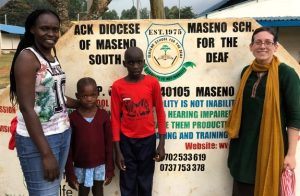
Wendy Harris teaches at the Metro Deaf School in Saint Paul, MN. With a fellowship grant, Wendy explored the intersection of culture and education for Deaf and DeafBlind students in Tanzania and Kenya to develop more culturally appropriate instructional strategies and social studies content and improve personal cultural competence in communication with East African families and their Deaf and DeafBlind children.
“The opportunity I had through FFT to explore a region and topic I knew would benefit me and my students had a significant impact on my teaching. I have wanted to repay this by helping FFT impact more teachers and students and the EAC was the right avenue,” said Wendy. “It’s been helpful for me to understand FFT specifically and education in the United States more generally in a broader/systematic way.”
“I respected FFT so much for their professionalism and for the autonomy and respect they gave to teachers,” reflected Olivia Flores, teacher at Paseo Academy of Fine and Performing Arts – Kansas City, MO. “I’ve loved being in community with others and pushing our thinking around these programs.”
With a fellowship grant, Olivia completed an intensive language immersion course in Barcelona and join an artifact-gathering/cultural enrichment experience in Pamplona, Madrid, and Valencia to bolster Spanish culture content in a dual language curriculum and firmly establish the accessibility of international travel opportunities through bilingualism in our students.
Amanda Hope (Moseley Elementary School – Dallas, TX) wanted to join the EAC to advocate for special education students and to diversity our applicant pool.
“Serving on the Educator Advisory Council for the past two school years has been both an honor and a pleasure,” said Amanda. “This experience deepened my investment in the greater FFT community and allowed me to collaborate with fellow educators. Together, we worked on initiatives to create lasting, positive changes for teachers, enhancing their professional growth and benefiting students. Being part of the EAC has been a fulfilling journey, reinforcing my commitment to empowering educators.”
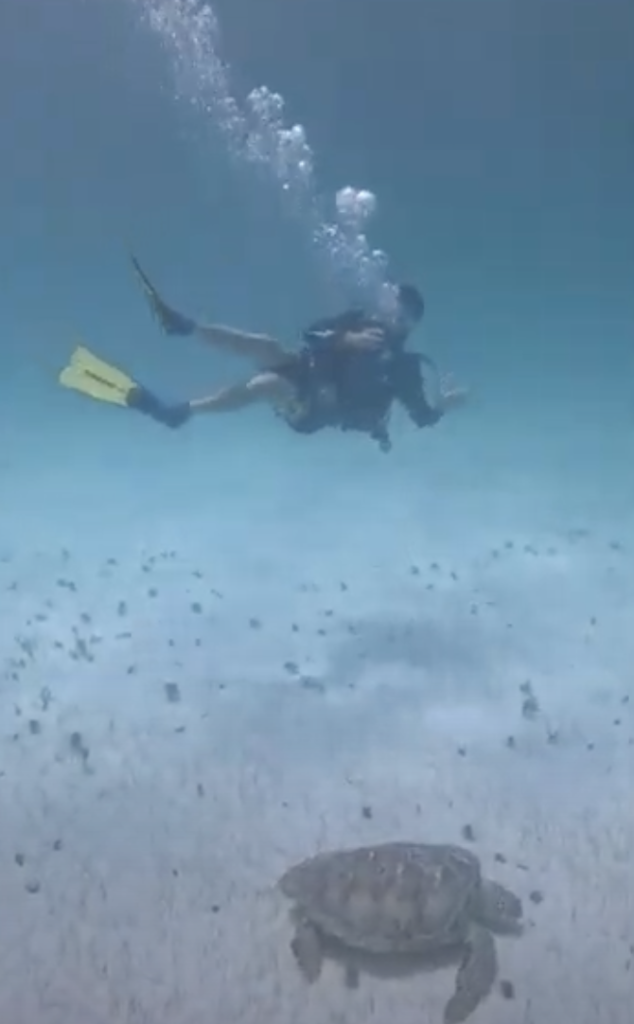
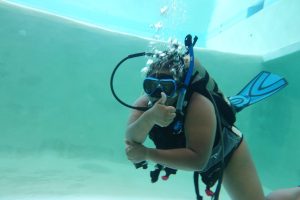
Vanessa Wylie (Hazlehurst High School – Hazlehurst, MS) used a fellowship grant to earn a diving certification to complete archaeology and marine life trainings with the organization Diving With a Purpose, Click here to read her article on how her experiences are helping break up long-standing stereotypes.
“Being a member of Fund for Teachers’ Education Advisory Council allowed me opportunities to:
Change my perspective
Grow in my ability to communicate, work with others, and allow others to lead, and
Be present for decision making, and outreach.”
Carly Imhoff (Ashford School – Ashford, CT) has been our most tenured FFT Fellow on the EAC. She received two fellowship grants: one to 0bserve in Bhutan ways in which nature and education contribute to human happiness and student success; and a second to participate in “Black Land Matters: A Gullah-Geechee Field Study” with the Nobis Project in Savannah, GA, to facilitate students’ respect of and connections between science and issues of land equity. Carly also received two Innovation Circle Grants she used to: collect evidence of natural selection in the Galapagos to inspire middle school students’ independent thinking and combat the spread of misinformation and skepticism toward parts of the science/social studies curriculums among some students and their families, and; join The Naturalist Teacher Workshop at the Bimini Shark Lab in the Bahamas to inspire students’ design of action projects that combine the excitement of “Shark Week” with opportunities that protect our environment year-round.
“Since I teach in a VERY tiny district, I rarely have opportunities to work with other teachers on big things,” said Carly. “The EAC helped me to feel engaged, empowered, and impassioned through this type of collaboration. It also gives me a taste of other aspects of working in education and helps me think about where I might want to go in education next.”
President John F. Kennedy said, “Leadership and learning are indispensable to each other.” We are grateful that these educators chose to combine both as members of our Educator Advisory Council, which keeps Fund for Teachers current, relevant, and aligned to teachers’ lived experiences.

 certification to complete archaeology and marine life trainings with the organization