Four Native American tribes once inhabited the territory that now comprises Tulsa, OK, where students of Rachel Langley and Jesse Wren attend school. Additionally, one-third of their students are descendants of Tribal Peoples. But how does one teach elementary students about complex topics such as land rights and Tribal sovereignty? Jesse and Rachel chose to learn from a community (and state) that’s made great strides to reclaim their own indigenous heritage – Hawaii.
The Fellow team wrote in their 2025 grant proposal: “Late in the 20th Century, Hawaii began a ‘Cultural Renaissance’ with a focus on preserving what had been lost. This Hawaiian story parallels the history of Oklahoma…By using the stories of others, students will be able to make connections and draw comparisons that will allow them to make decisions that will impact their own community. As Tulsa tries to reconnect to its roots in Native culture, students can use the examples from Hawaii to deepen their understanding of what it means to preserve culture without losing its authenticity.”
What that meant for Rachel and Jesse was researching Hawaiian traditions and history while experiencing that unique ecosystem to create interdisciplinary projects exploring cultural preservation of Oklahoma’s Native American communities.
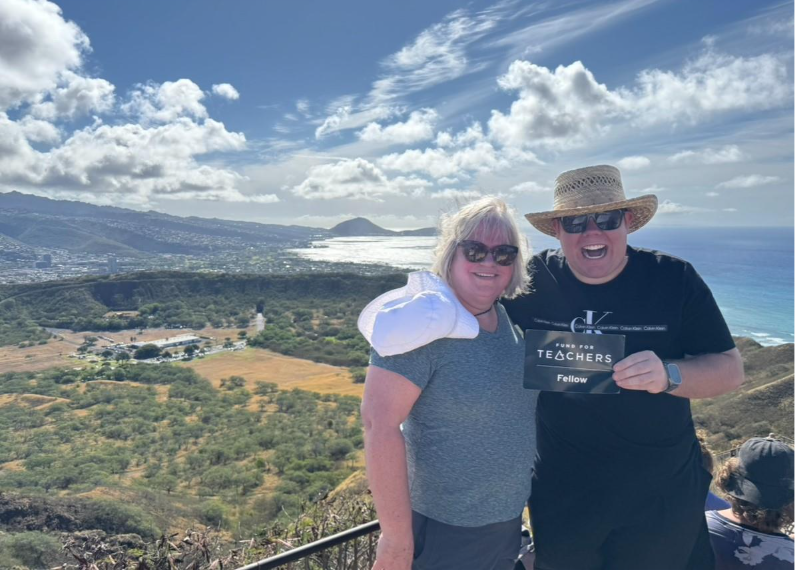
“Convincing our selection committee of a teacher’s need to learn in tropical sites like Hawaii is a tough sell,” said Karen Eckhoff, Fund for Teachers executive director. “These teachers made it clear that, for them, Hawaii wasn’t a vacation, but a necessary destination to deepen students’ cultural competency, awareness and appreciation.”
Rachel felt this, both in the writing and pursuit of their fellowship.
“Planning an educational experience to a tourist destination is difficult,” she said. “Even with the research we did prior to our adventure, we found that many itinerary spots had been westernized. (One person used the term “Disney-d.”) I soon discovered that my best experiences came from the people I met along the way. Once we explained that we were teachers looking at what it means to reclaim indigenous culture, people were more than willing to share their history, struggles, and stories.”
Instead of staying at a resort, Jesse and Rachel stayed in private residences. They avoided tourist sites in favor of learning led by Indigenous Hawaiian and Pacific Islander people. Exploring Hawaii’s Plantation Village offered insight into the lives of diverse Indigenous groups who contributed to Hawaii’s sugar industry from 1850–1950 and provided a lens for discussing themes like cultural adaptation, labor history, and social equity. Service learning came in the form of volunteering at the He’eia Fishpond, a cultural site lost to large corporate farming practices for sugar and pineapple and now being reclaimed as a touchstone of Hawaiian heritage.
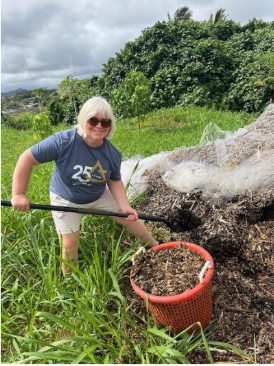
“Volunteering with Paepae o He’eia to restore the ancient He’eia Fishpond was transformative,” said Jesse. “The hands-on work tied to cultural preservation deepened my understanding of ecological and Indigenous restoration. Another powerful moment came from sailing with a Native Hawaiian family, where we prepared food, heard oral legends, and joined a sunset ceremony. Both experiences showed that true learning begins with respect, relationships, and community-rooted knowledge.”
Rachel and Jesse are now intent on translating their experiential learning to students in multiple ways, starting with their 120-acre school campus. Collaborating with an Ohio classroom through the National Air and Space Museum’s Teacher Innovator Institute, students are applying the design cycle to reimagine their own school grounds as spaces for inquiry, collaboration, and cultural storytelling. The school in Ohio is contributing ecological expertise, and our school is sharing Indigenous perspectives on honoring the land. “Through data collection, podcasting, and cross-campus consulting, students are becoming both designers and stewards while discovering that outdoor learning is not just about science. It’s about identity, belonging, and respect for the places we inhabit,” said Jesse.
“This exchange continues the spirit of our Hawaiian fellowship,” continued Jesse, “connecting young people to the land and to one another through creativity, cultural understanding, and hands-on environmental learning. It also demonstrates how lessons rooted in Indigenous wisdom can shape not just classrooms, but the way future generations imagine and care for their world.”