Bringing Shakespeare to Life: One Teacher’s Journey from Page to Stage

How does a teacher take Shakespeare from something “removed from lived experience, reduced to passive reading, and disconnected from collaboration or creativity” and transform it into “a living text—meant to be spoken, embodied, and collaboratively interpreted”?

That was the challenge facing Melissa Ewing, an English teacher at East Hartford High School. Her answer was to go straight to the source—to experience the Bard among peers in the city where he lived, wrote, and worked.

The bridge was a Fund for Teachers fellowship.

This summer, Melissa used a $5,000 grant to participate in Teaching Shakespeare Through Performance, a three-week course in London designed to help educators move Shakespeare beyond a purely academic exercise and toward a dynamic, student-centered experience. Through performance, collaboration, and creative exploration, the fellowship focused on strategies to increase student engagement, confidence, and literacy skills while fostering inclusion and voice in the English classroom.
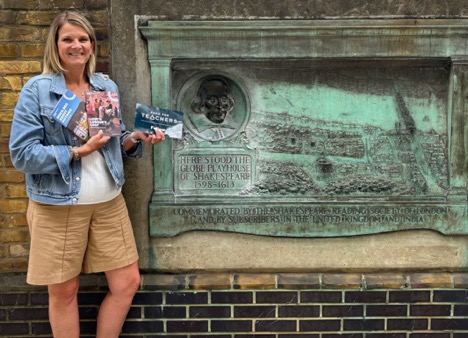
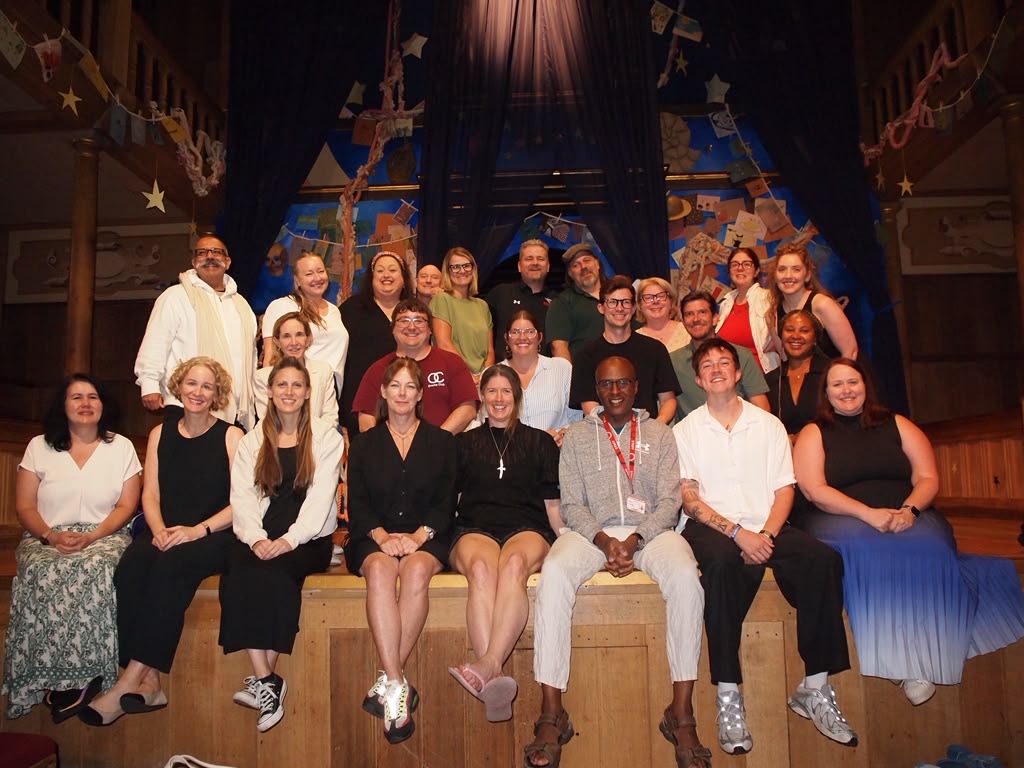
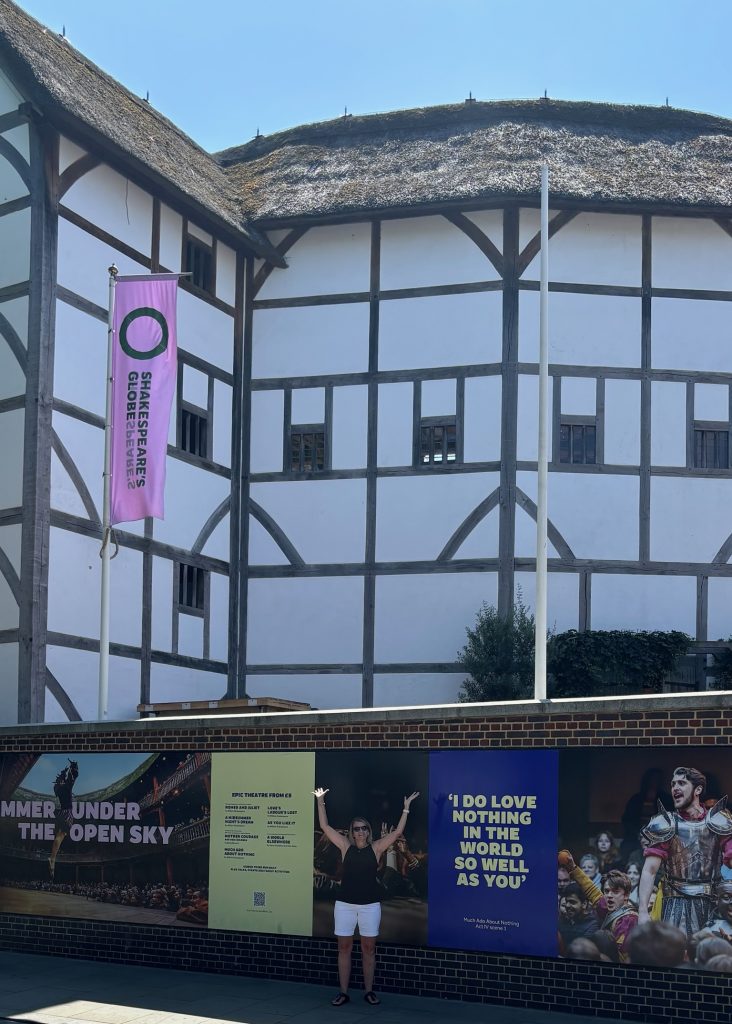
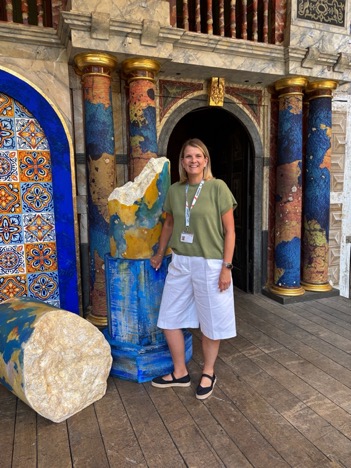
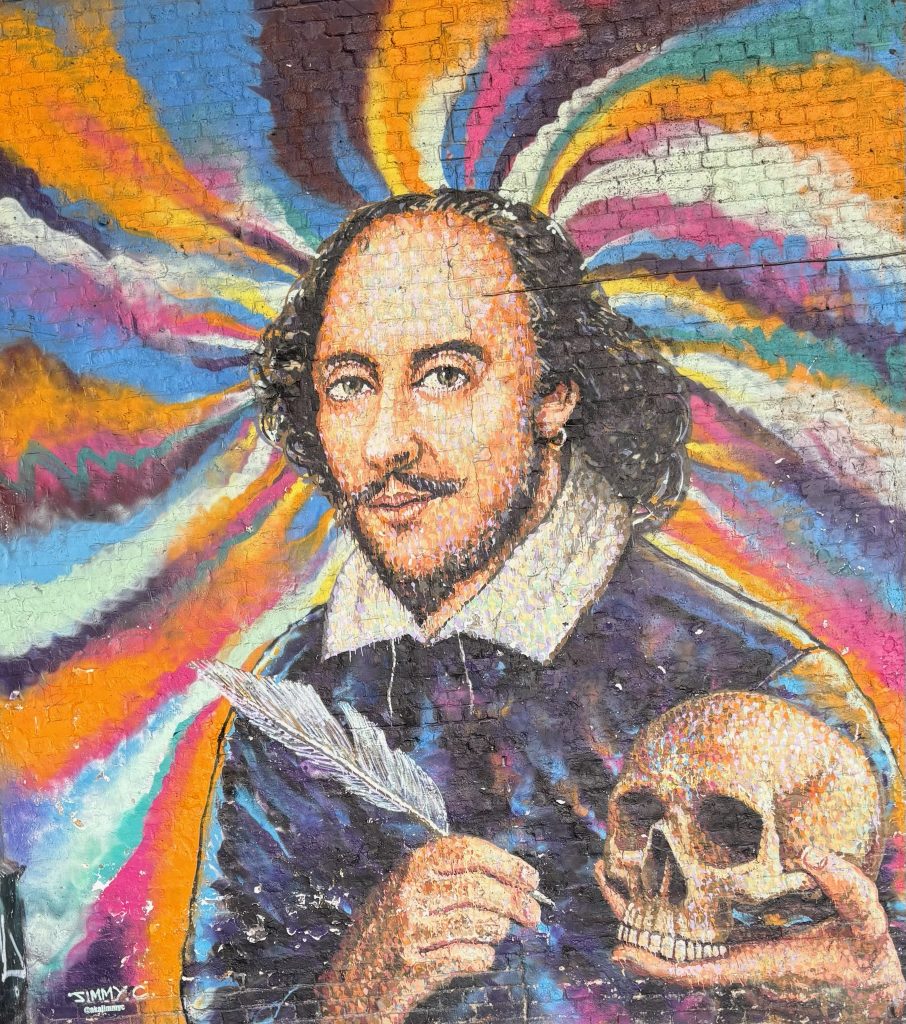
At Shakespeare’s Globe Theatre, Melissa experienced Shakespeare not simply as literature to be studied, but as a participatory and communal art form.

Her days were filled with seminars led by experts on placing Shakespeare in socially conscious contexts, observations of rehearsals and performances on the Globe stage, and hands-on practice performing Shakespearean texts under the guidance of scene directors and voice and movement specialists.

“This fellowship changed not only how I teach Shakespeare, but how I understand learning itself,” Melissa said.

Before the fellowship, Melissa often felt a disconnect between her students’ potential and their ability to access complex texts like Shakespeare. Many of her ninth graders—particularly multilingual learners and students who struggle with traditional reading and writing—would disengage, she said, not because they lacked insight, but because traditional approaches did not always meet their needs.

“Working alongside Globe practitioners and fellow educators, I experienced firsthand what it means to learn through movement, voice, collaboration, and risk-taking,” she said. “I began to see how Shakespeare comes alive not on the page alone, but through the body, through shared space, and through collective interpretation.”
Becoming the Student

In an unexpected plot twist, becoming a student herself proved just as instructive as learning new teaching strategies.

“One of the most unexpected outcomes of my fellowship was how much it transformed my own confidence and identity as both a learner and an educator,” Melissa said.

She arrived in London focused on gathering new tools for her students. What she didn’t anticipate was how much the experience would challenge her personally.

“Participating in rehearsal, performing, and taking creative risks alongside other educators reminded me what it feels like to be vulnerable in the learning process,” she said.

That vulnerability gave Melissa a new perspective on what she asks of her own students. By stepping outside her comfort zone, she experienced firsthand the uncertainty—and ultimately the confidence—that comes from learning through experimentation, collaboration, movement, and performance.

Now, she plans to bring that experience home.

Shakespeare Comes Alive

This fall, Melissa’s students will take part in a new “Shakespeare Comes Alive” unit built around performance-based learning and creative exploration. Rather than encountering Shakespeare solely through close reading and written analysis, students will have opportunities to speak, move, perform, interpret, and collaborate as they make meaning of the text.

Melissa will also share performance-based strategies with colleagues. And parents and community members will be invited to experience the students’ work as audience members during performances and a culminating Final Sharing.

To paraphrase the Bard himself, the world is ultimately her students’ stage and now she has new tools—and a renewed sense of purpose—to help prepare them to step onto it with confidence.

“Students will now have more ways to access meaning, build confidence, and see themselves as capable participants in the learning process,” Melissa said. “I believe they will become more engaged, more willing to participate, and more invested in their own learning.”
(Imaginary) Kingdom Building in the UK

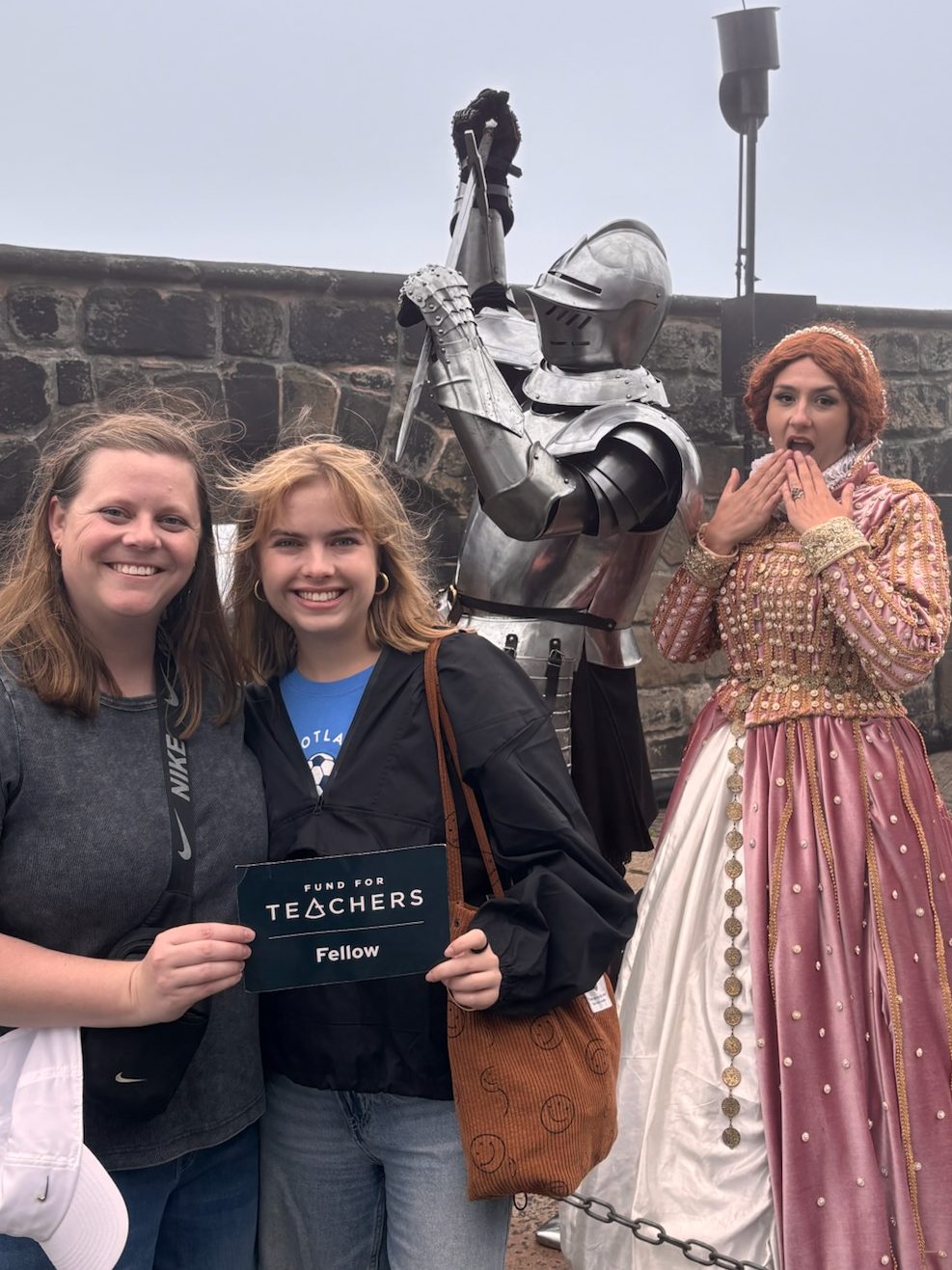
This summer, Danielle Woodard and Emma Sneed (Chattanooga, TN), embarked on a literary tour across Scotland and England, visiting sites students read about in various fictional works, to promote book to world connections and cultivate young writers who understand how imagination is shaped by place and experience. Upon their return, they shared some of their experience with us:

“We are so incredibly thankful for the opportunity you and Fund for Teachers gave us to go on this fellowship together. Our trip was highly enjoyable and we learned and saw many things to take back to the classroom. Scotland was filled with magic, inspiring us through scenery and history, and England was full of exemplars for how to engage audiences with stories. Our understanding of how narratives are created, developed, and sustained over time has truly been expanded through this experience, and we are so grateful. 

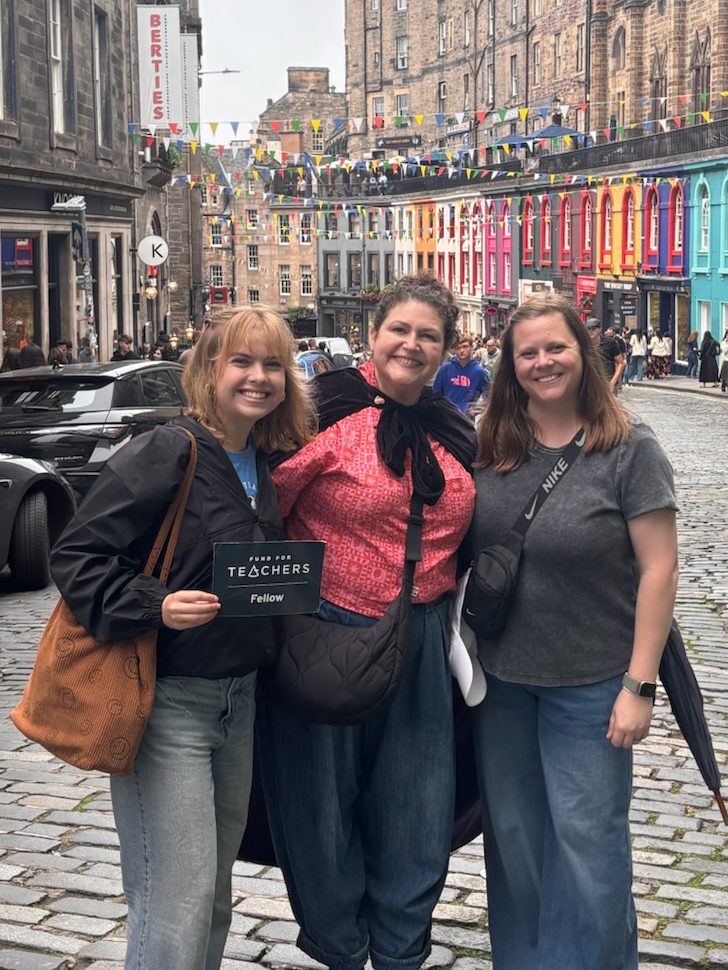
In Edinburgh, Scotland, one of our favorite moments was taking a Harry Potter Walking Tour led by an experienced and engaging guide named Caroline. She brought the city to life by telling stories of Edinburgh’s streets and buildings inspiring those who have come into the city, including J.K. Rowling, author of Harry Potter. We traced Rowling’s steps, seeing the school that inspired Hogwarts, the gravestones that inspired character names, and the shops where she sat to write each novel. Caroline described the creation of this series with new details unknown to either of us Fellows, including a description of Rowling first having the idea for Harry Potter while on a train ride and then using multiple different places she traveled to mold the rest of her world-building including Portugal, England, and Edinburgh. She gave information like this throughout the tour, but also engaged us with a house sorting ceremony, spells to reveal different parts of the city, and impressions of characters from the films. She also shared how love for the themes in the series about love, friendship, and hope keep her doing the job despite concerns over the inclusivity of the novels. This tour and information have inspired us to teach interactively and find new experiences for our students to give them ideas they can create and shape themselves. 

Our trip to the Writer’s Museum in Edinburgh also inspired us by seeing modern artistic creations still being made in response to classic pieces of literature. A miniature diorama was made out of a book of Dr. Jekyll and Mr. Hyde of one of the scenes and left anonymously for the museum to display. This gave us many ideas for student-led projects that could be created in response to pieces of literature we read in class next year. As we learned, often creativity creates creativity.

Outside of Edinburgh, in a town called Stirling, Danielle also got to see the exact place where her ancestors used to live! Through research, she was able to find their old address and we traveled to the buildings together for an emotional experience of personal significance. 

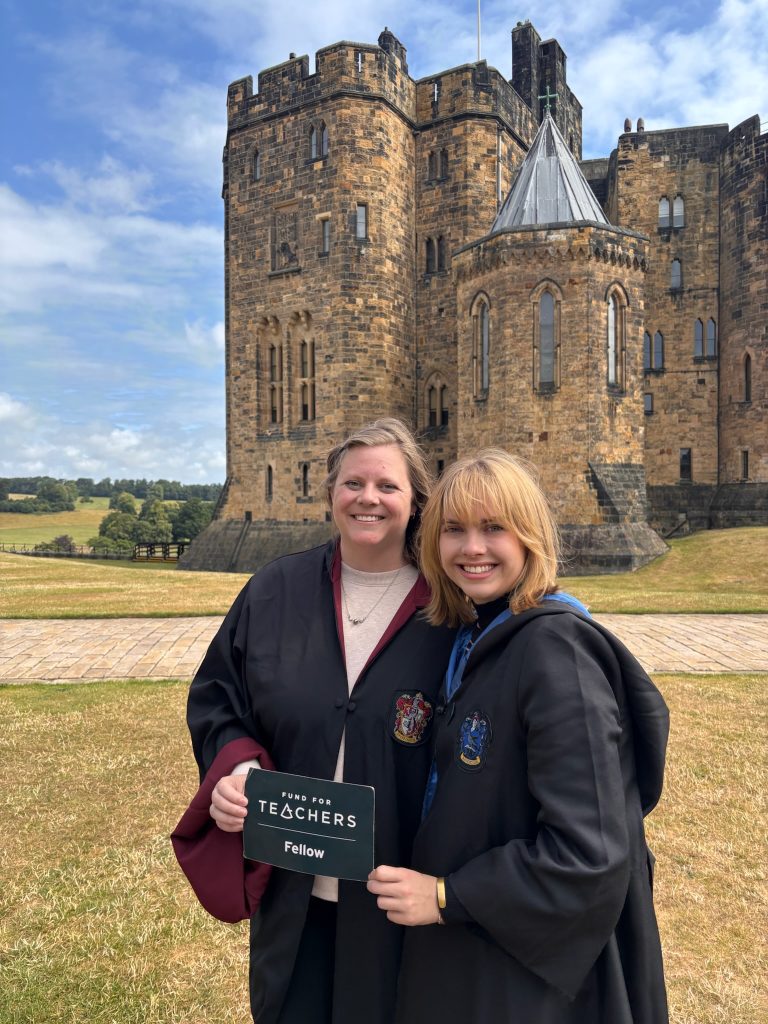
Our trip into the highlands of Scotland brought some of our favorite stories to life as we drove through mountainous landscapes that often appear as the setting behind the most fantastical of stories. The immersion did not stop there! In a small city on the border of Scotland and England called Alnwick, we participated in a broomstick training session on the exact same castle grounds where the first Harry Potter film conducted their own flying lessons. By practicing our childlike wonder and touring the castle grounds, we were able to see how setting truly impacts tone and emotional depth. We even had a little bit of fun recreating and recording a scene from the movie together in our Hogwarts robes, displaying a passion for the storytelling that we hope our students will come to emulate themselves. 

In Oxford, England, surrounded by centuries of stories, we toured the famous Bodleian Library. Our tour guide regaled us with history about the original library collection that only consisted of 20 manuscripts kept inside of a trunk in the university. Today, the library consists of over 14 million books, all thanks to one man’s belief in the power of the perseveration of stories and the city’s commitment to supporting that dream. Oxford also led us to many places where famous authors met to discuss and collaborate on their own works throughout the years, including C.S. Lewis and J.R.R Tolkien. Our experience in the city led us to a deeper understanding of how important community and support can really be in the creation and life of a written work, which is something we hope to bring back to our students. 

London was our final stop, and it brought us amazing examples of adaptation and attention to detail in narratives. The world-building of J.K. Rowling’s Harry Potter series was enhanced ten-fold through our experiences touring the Warner Brothers Harry Potter Studio and attending the theatre production of Harry Potter and the Cursed Child. We learned specific descriptions of the setting and characters from both the novel and films that will help guide our questions to the students as they create their own worlds. We studied how adaptations keep and change different elements as culture and time shifts as well. This will guide us to specific activities students can participate in while they reflect on stories in our classroom. 

Overall, this experience was the opportunity of a lifetime for us. Our love for stories and Harry Potter has only grown from our travels, and we are so excited to use our new insights and ideas in the classroom together to help students feel the same passion. Thank you so much for this fellowship and believing in us as educators. We are looking forward to sharing many more photos and stories!” 

Danielle and Emma’s grant was made possible through our partnership with The Maxwell/Hanrahan Foundation.

A Journey of Heritage, Resilience, and Belonging

Each summer, during what we affectionately call “Fellow Season,” we have the privilege of following Fund for Teachers Fellows as they immerse themselves in self-designed learning experiences around the world. Their journeys are rooted in a simple belief: when teachers are trusted to pursue the learning they need most, students reap the benefits.

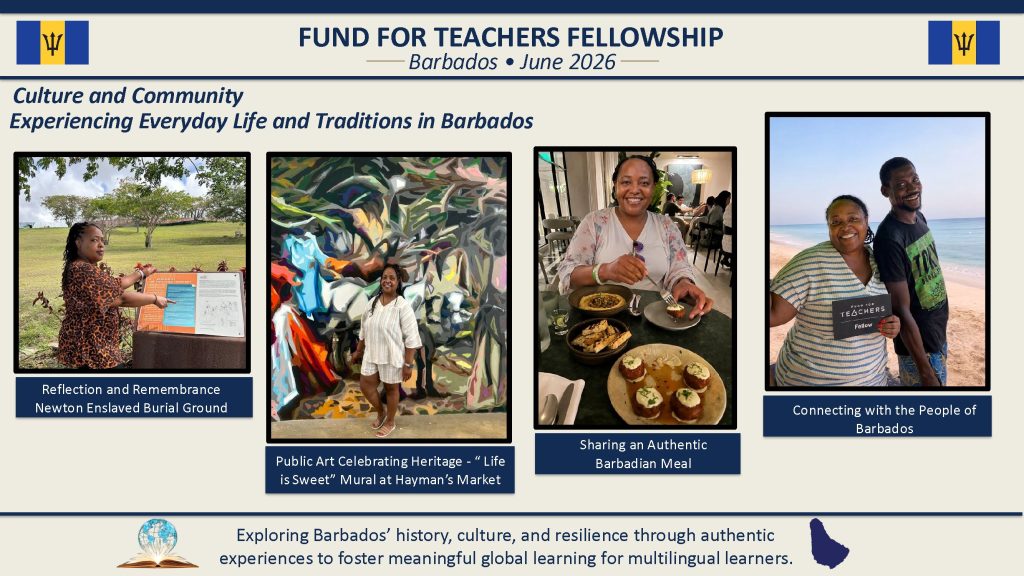
This week, we’re highlighting 2026 Fund for Teachers Fellow Kim Shockley, who traveled to Bridgetown, Barbados, to research African Diaspora history at significant heritage sites. Her fellowship centered on themes of resilience, freedom, and cultural identity—knowledge she will transform into meaningful learning experiences for her multilingual students.

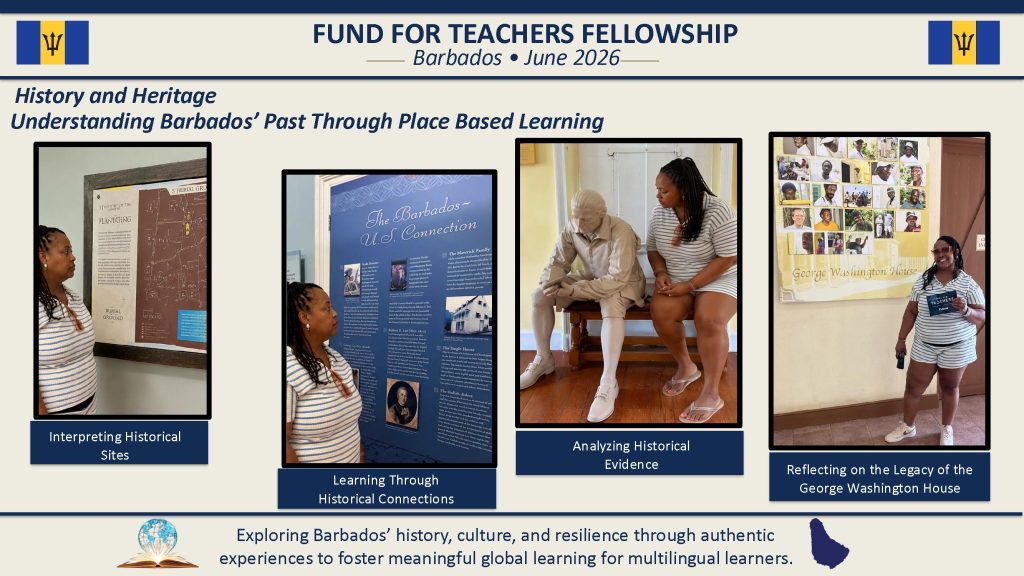
Kim’s journey took her beyond textbooks and into the places where history unfolded. At sites including the George Washington House, she examined historical evidence, interpreted exhibits, and reflected on Barbados’ unique connections to colonial history and the African Diaspora. By experiencing these places firsthand, she gained a richer understanding of how place-based learning can help students make meaningful connections between the past and the present.

Her fellowship also focused on the people and traditions that continue to shape Barbadian identity today. Kim explored local culture by sharing authentic meals, engaging with community members, viewing public art such as the “Life is Sweet” mural at Hayman’s Market, and visiting the Newton Enslaved Burial Ground, where she reflected on the enduring legacy of those whose lives and stories continue to influence the island’s identity. These experiences deepened her understanding of resilience, remembrance, and community—perspectives she hopes to bring into her classroom.

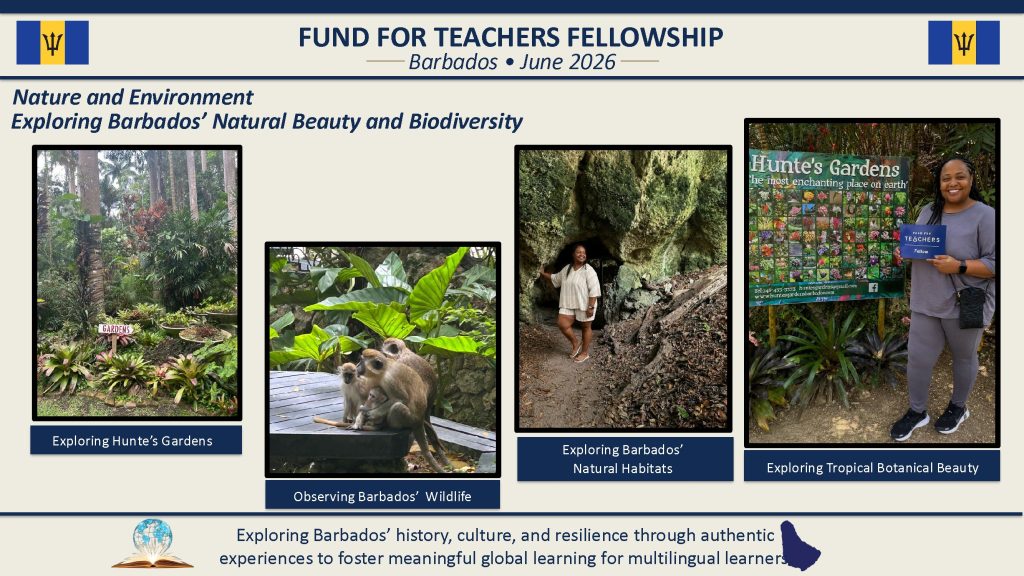
Beyond history and culture, Kim also explored Barbados’ remarkable natural environment. Visits to tropical gardens and natural habitats provided opportunities to learn about the island’s biodiversity and the relationship between people and place. Together, these experiences paint a more complete picture of Barbados—one that extends beyond historical landmarks to include the landscapes and ecosystems that continue to shape life on the island.

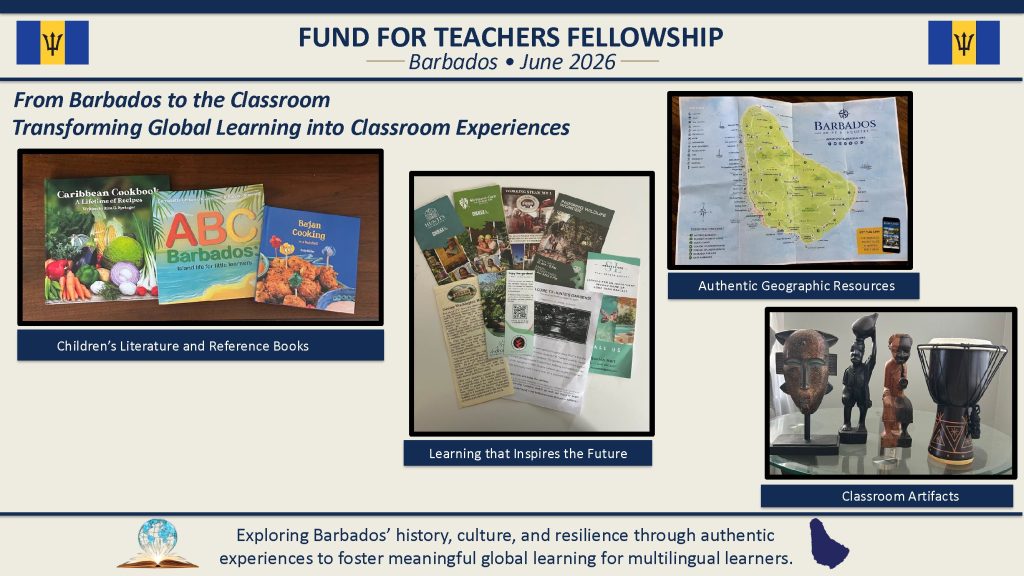
As with every Fund for Teachers fellowship, the journey doesn’t end when the plane lands back home. Kim returned with children’s literature, authentic classroom artifacts, geographic resources, and countless stories that will help bring Barbados into her classroom. More importantly, she returned with fresh perspectives and firsthand experiences that will empower her multilingual learners to celebrate their own heritage, think critically about justice and equality, and recognize the power of their own voices to make a difference.

Kim’s fellowship is a powerful reminder that professional learning is most transformative when it is authentic, immersive, and teacher-driven. By investing in educators’ curiosity, Fund for Teachers helps create classrooms where students don’t just learn about the world—they develop the knowledge, empathy, and confidence to help shape it.

Reflections on Our Founding

Cassidy Swinney (Jackson Academy – Jackson, MS) is currently on her fellowship studying American Transcendentalism in Concord and Boston–– Walden Pond, Emerson House, Thoreau archives, historical societies. This fall she plans to redesign an American Literature curriculum connecting Thoreau’s civil disobedience and Transcendentalist philosophy to modern social justice activism through primary sources, photographs, and authentic materials. But we are grateful that she took a moment to reflect upon – and share with us – her experiences so far in light of the upcoming 250th anniversary of our country…

I had the opportunity to visit the birthplace of America during the year of our 250th anniversary to explore a question central to my American Literature curriculum: what does it mean to be American?

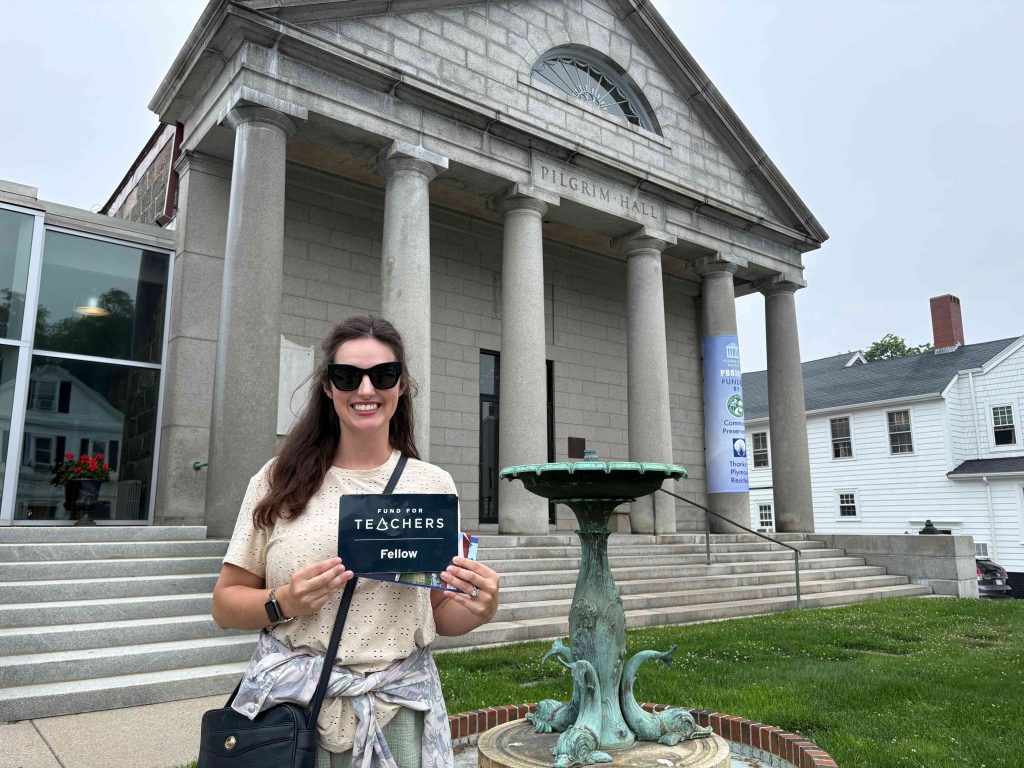
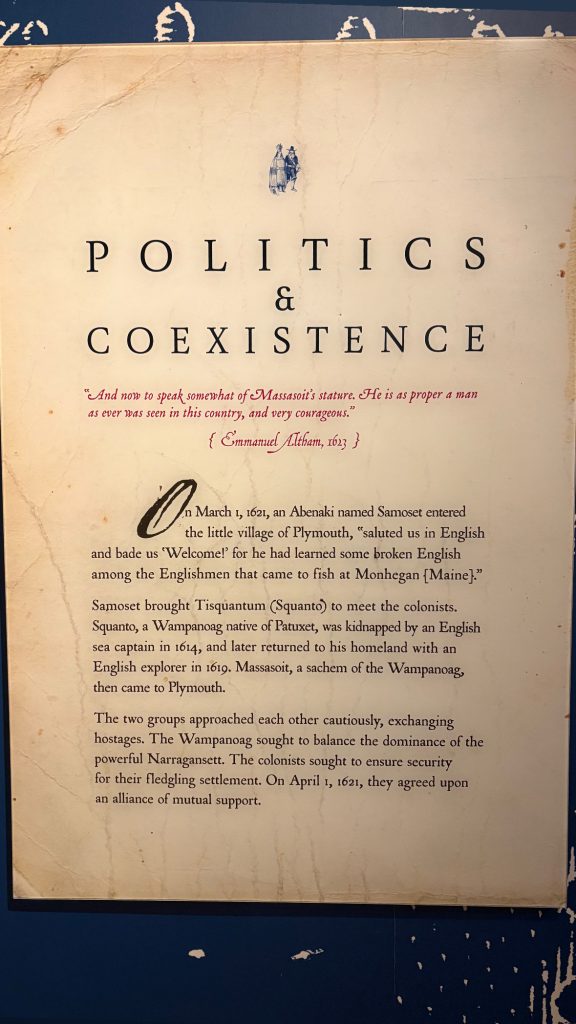
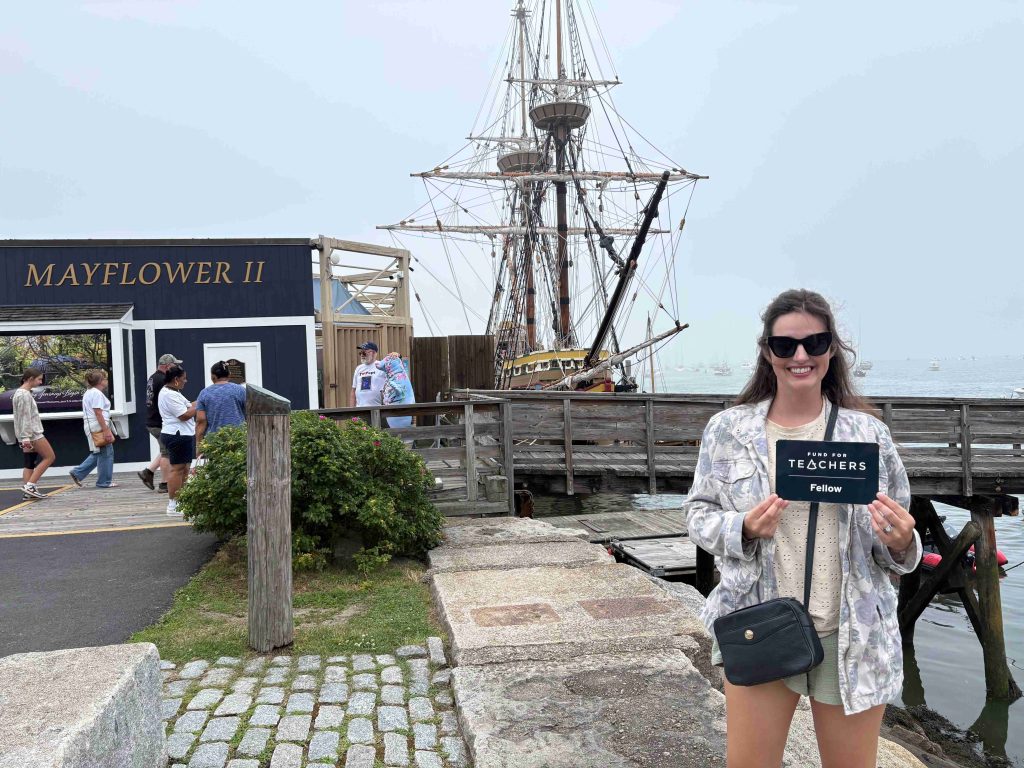
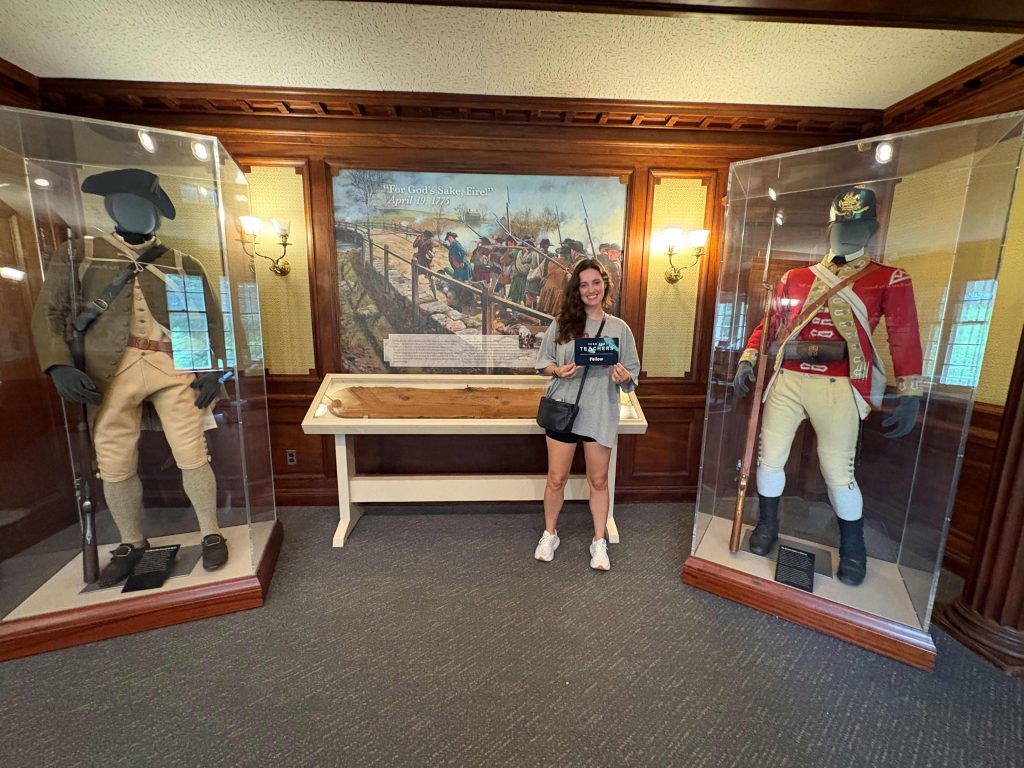
This summer, I stood in places that are older than the country itself. I walked the fog-covered waterfront in Plymouth where the Mayflower II sits in the harbor, a reminder that the story of America begins with people who crossed an ocean for the right to worship freely. I stood at the Old North Bridge in Concord where 400 ordinary people decided that the moment required something of them and marched down that hill for the right to govern themselves. I sat in the pews of the African Meeting House where Frederick Douglass and Sojourner Truth urged listeners to demand equality for all: the right to vote, the right to be heard, the right to be fully human. In the summer of 2026, with 250th anniversary banners hanging from every lamppost and the country actively celebrating itself and its history, I found myself coming to the same conclusion: To be American is to fight. 

Not against each other, though we’ve done plenty of that, but for something. For the idea that freedom is real and that it belongs to everyone. That fight didn’t end in 1776. It didn’t end with the Constitution. If anything, those moments just named the terms of an argument that every generation since has had the right and the privilege to take up for themselves.

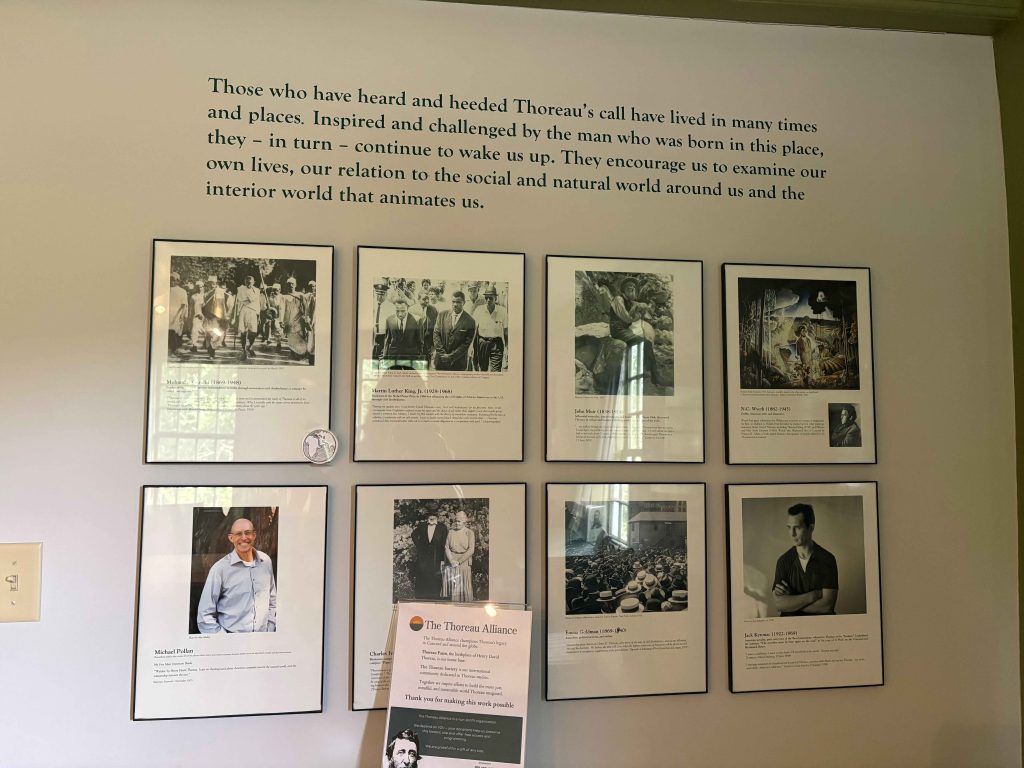
I came to New England this summer to research Transcendentalism and social justice, and what I found was the thread of the fight running through everything. At Walden Pond, a panel documents how Thoreau’s essay on civil disobedience traveled from Concord to Gandhi to Martin Luther King Jr., who wrote that reading it convinced him that refusing to cooperate with an evil system wasn’t just a right but a moral obligation. That’s not a detour from the American story. That’s the American story doing what it’s always done: asking the next generation what they’re willing to do about it.

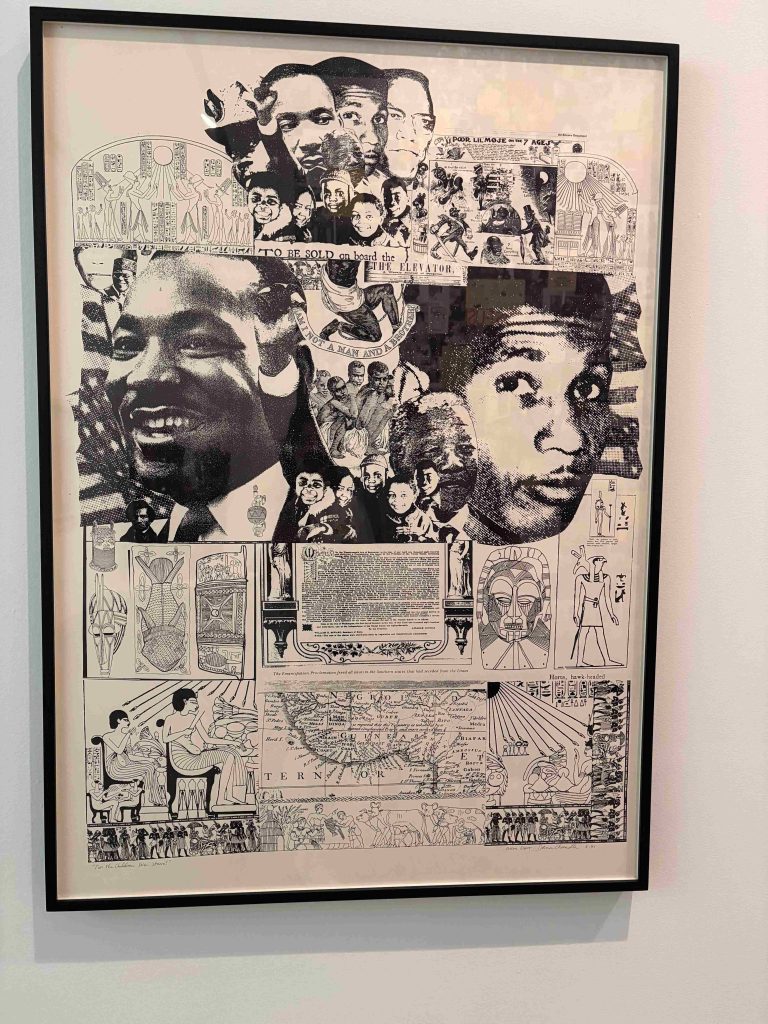
That question showed up everywhere I went. At the Robbins House in Concord, a marker outside a farmhouse where the first free generation of a Black family built their lives asks plainly: “What does independence look like?” At the Institute of Contemporary Art in Boston, artist Shea Justice painted Frederick Douglass and Ida B. Wells over the words “We the People,” layered with today’s headlines, still asking. Two hundred and fifty years in, and we still have the right and the privilege to fight.  

Help Shape the Future of FFT: Apply for the Educator Advisory Council

At Fund for Teachers, we believe teachers know best what they—and their students—need to succeed. We also believe that teachers are uniquely positioned to help us build stronger programs, deepen our impact, and better support educators across the country.

That’s why we created the Educator Advisory Council (EAC), and why we’re inviting current classroom teachers who are Fund for Teachers Fellows to apply for this paid leadership opportunity.

The EAC is a group of Fellows committed to advancing Fund for Teachers’ mission of igniting culturally sustaining teacher leadership through rich, self-designed professional learning. Council members bring their experiences, expertise, and perspectives to help guide the evolution of our programs and strengthen support for educators nationwide.

“I was excited about the opportunity to collaborate with teachers outside my school ad district, and to hear the perspectives of educators from different parts of the country. I strongly believe that Fund for Teachers is one of the most incredible grant opportunities available to teachers because of the freedom given them in designing a learning opportunity that is unique to them.”
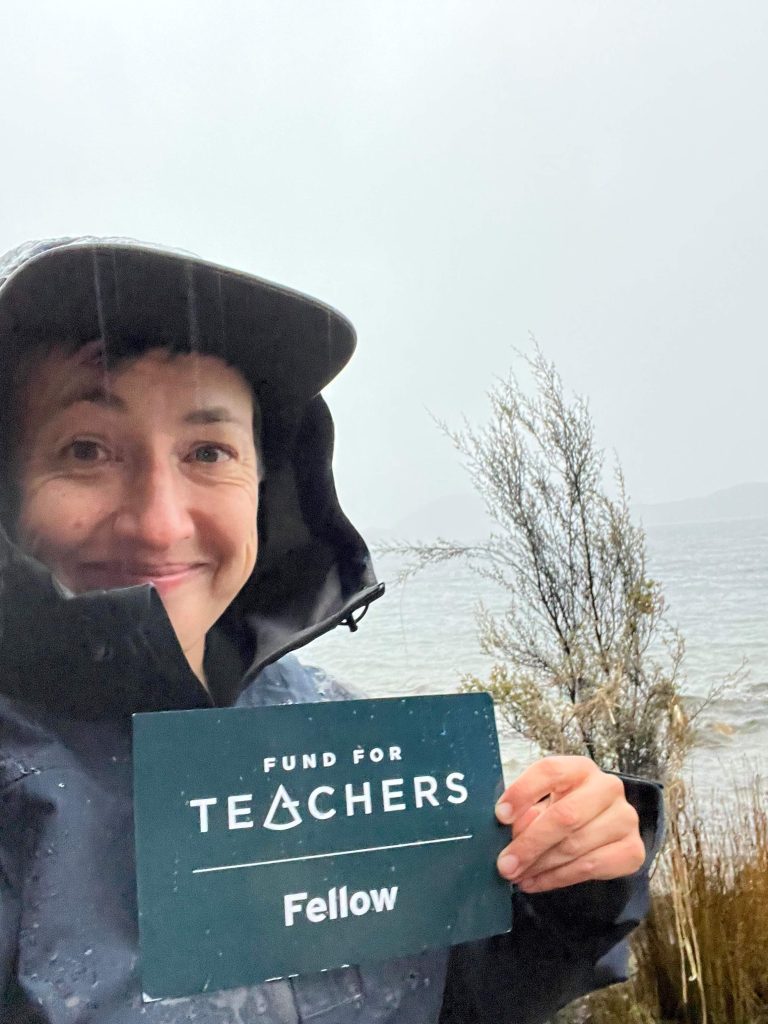
-Susie Kang, EAC class of ’24-’26

Why Join the EAC?

As an EAC member, you’ll collaborate with a diverse group of Fellows from across the country, contribute to meaningful organizational decisions, and help ensure that teacher voices remain at the center of our work.

What Will the Council Focus on?

During the 2026-27 school year, the EAC will work alongside FFT staff to:

  • Expand support networks for rural teachers, teachers of color, and educators serving underserved communities to encourage successful first-time applications
  • Design and test strategies that help Fellows implement and sustain their learning after their summer experiences
  • Develop recommendations for Fund for Teachers’ application and reporting processes within an increasingly AI-driven educational landscape

Commitment and Compensation

EAC members serve a two-year term and receive a stipend of $700 per year.

The annual commitment is approximately 20-25 hours throughout the school year and includes:

  • One virtual 1-hour orientation meeting (first year only)
  • Five virtual 90-minute full council meetings (typically held from 5:00-7:00 p.m. CT)
  • Three virtual 1-hour small-group working sessions
  • Occasional individual feedback, preparation, and project work between meetings

Who Should Apply?

We are seeking Fellows who:

  • Are currently working in a classroom setting
  • Want to contribute to the future direction of Fund for Teachers
  • Enjoy collaboration and problem-solving
  • Are eager to elevate the voices and experiences of educators

Fund for Teachers is committed to assembling a council that reflects the diversity of our Fellowship community, including diversity in identity, geography, school settings, and teaching assignments.

If you’ve ever wanted to help shape how Fund for Teachers serves educators, this is your opportunity. We hope you’ll consider lending your voice, expertise, and experience to the Educator Advisory Council.

“This was a great learning experience for me. The group was safe and supportive, and I enjoyed the opportunity to talk about important topics with people from around the country who teach in various settings.”
-Ben Olsen, EAC class of ’25-’27

APPLY BY JUNE 30, 2026

‘Follow the Learning’ Fellows Named

May 28, 2026 — Dottie Engler ‘Follow the Learning Fellowship’ 2026 Recipients Named
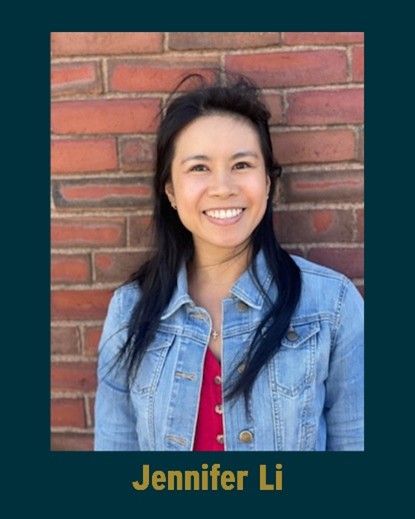
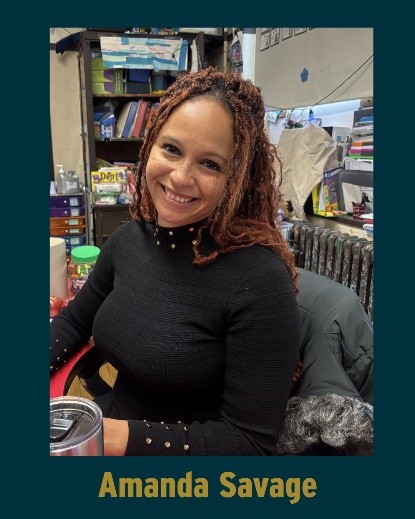
Jennifer Li and Amanda Savage, Henderson K-12 Inclusion School, Boston Public Schools

Each year, Fund for Teachers names its “Follow the Learning” Fellow(s) in honor of longtime Board member and advocate Dottie Engler. Throughout her distinguished career, Dottie served as Director of Special Projects at Boston Plan for Excellence and Director of External Relations and Development at the Harvard Graduate School of Education. However, we are most proud of her enduring impact as a Fund for Teachers Board member.

We are honored to recognize 2026 Fellows Jennifer Li and Amanda Savage as this year’s “Follow the Learning” Fellows. This summer, Jennifer and Amanda will visit Nemarluk School in Darwin, Australia, to observe how educators support students with disabilities in both separate and inclusive classroom settings. Their fellowship will focus on strengthening practices that empower students with disabilities to succeed within a full-inclusion school model.

“Our students deserve teachers who are well trained in data collection and progress monitoring so that we can provide the appropriate accommodations and support each child needs to succeed. Over the past several years, we have worked closely with colleagues and school teams to deepen our expertise in these areas and support new teachers in developing these practices as well. However, our school still lacks a cohesive and aligned process for using data to implement accommodations and monitor student progress effectively.


We believe there is tremendous value in learning from schools outside our own context, which is why we plan to visit Nemarluk School in Darwin, Australia. We were especially drawn to Nemarluk’s unique model, which includes a main campus serving students with disabilities alongside satellite classrooms embedded within seven public elementary schools. These fully inclusive classrooms closely resemble our own setting.

Nemarluk’s primary goal is to prepare students with disabilities for successful inclusion while ensuring they continue to make meaningful progress once placed in inclusive environments. We hope to bring back insights and strategies that we can share with our principal and teaching teams to strengthen special education practices and inclusive instruction at our school.”

Science Super Stars

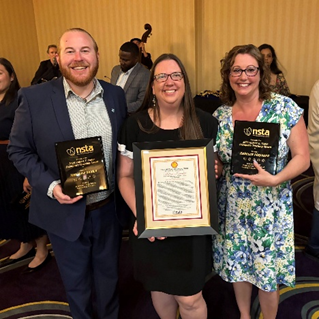
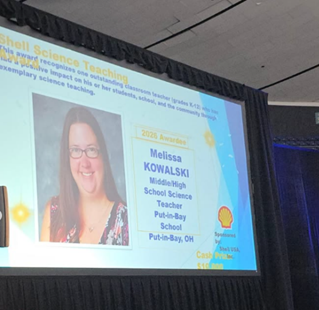
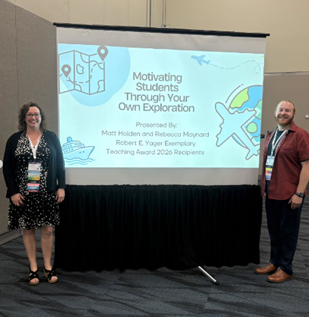
Earlier this month, the National Science Teachers Association hosted its annual conference in Anaheim, CA. In addition to keynote speakers and breakout sessions (one of which was hosted by FFT Fellows Matt Holden and Becky Maynard about their fellowship), special recognition was given to exemplary educators in several categories. And THREE FFT Fellows were among the winners! Congratulations to Becky and Matt, recipients of the 2026 Robert E. Yager Excellence in Teaching Award for excellence and innovation in the field of science education. We are also thrilled for Melissa Kowalski, recipient of the Shell Science Teaching Award which recognizes one outstanding classroom science teacher (K–12) who has had a positive impact on his or her students, school, and community through exemplary classroom science teaching.

 “On our fellowship to Kenya, Matt and I decided to present at NSTA about our collaboration, then we applied for this award and we both got it!” said Becky. “Fund for Teachers does amazing things for educators.” Melissa added, “I’m certain that my experience as a FFT Fellow greatly improved my application for the NSTA award!!”

We are so proud of these FFT Fellows and equally as grateful that they chose to use this platform to tell others about Fund for Teachers!


Becky Maynard (Framingham High School, MA) and Matt Holden (Fayetteville High School, AR) used their Fund for Teachers fellowship grant to participate in the Global Exploration for Educators Organization Kenya 2025 Expedition, which includes wildlife safaris and immersive cultural experiences with indigenous communities, to create authentic student experiences focused on the cultural significance of environmental conservation.

Melissa Kowalksi (Put-in-Bay Schools, OH) used her Fund for Teachers fellowship grant to document the diverse geological features of Iceland’s untouched wilderness to enhance climate and earth science instruction that excites and engages elementary through high school students.

Talk About a Revolution

Here’s a word association game: when you read “revolution,” what comes to mind? For students of Crystal Lamb and Jessica Freed, “Vietnam,” “Cambodia” and “China” didn’t. In fact, scores on their Global History state exam revealed an average of just 34% of students correctly answered questions related to these countries.

“In analyzing these results, we had to consider our own level of knowledge on these topics and how it may act as a barrier to our students’ success—not only on state exams but also in understanding the major economic and political revolutions that shaped the 20th century and continue to influence interactions between world powers today,” wrote Lamb and Freed in their Fund for Teachers grant proposal. “Upon reflection, we noted our limited knowledge on the topic, each revolution learned through the relationship with the United States and their foreign policy objectives of containment. This can also be reflected in the current curriculum we use which is dominated by documents with an American lens, discussions on stopping the spread of communism, and the role of the United States military within the region to promote this foreign policy.”

Last summer, they used a $10,000 Fund for Teachers grant to examine through the lens of art and culture the multifaceted perspectives of political and economic revolutions in China, Vietnam, and Cambodia to develop a culturally responsive curriculum that fosters critical thinking and an appreciation of multiple perspectives.

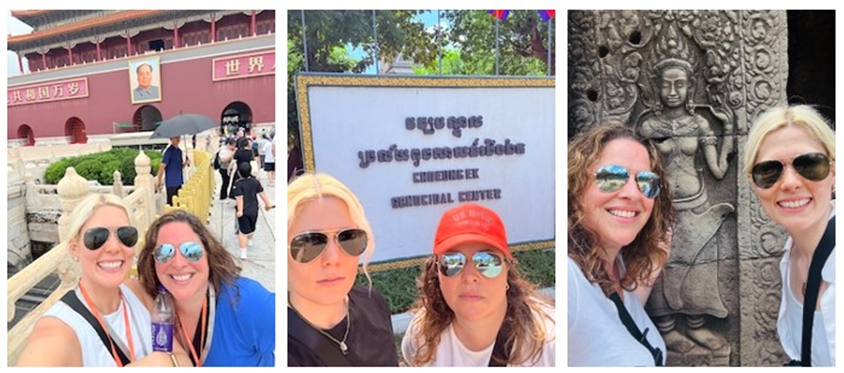
For two weeks, these FFT Fellows deepened their knowledge by interacting with people and experiencing sites integral to each country’s past (and future): learning about the legacy of Chairman Mao in mausoleums and museums; squeezing into underground tunnels dug by the Vietcong; and walking in Pol Pot’s Cambodian Killing Fields. They also experienced the spirituality of Angor Thom, calligraphy classes in Beijing and resistance at the Hanoi Hilton.

“I was changed by the opportunity to view history from the perspective of citizens of their country, understanding how viewpoints and perspectives vary greatly,” said Lamb. “I also benefitted from learning art practices from artists practicing in their country.”

Now their students at Bronx Bridges High School are benefitting from the fellowship, as well.

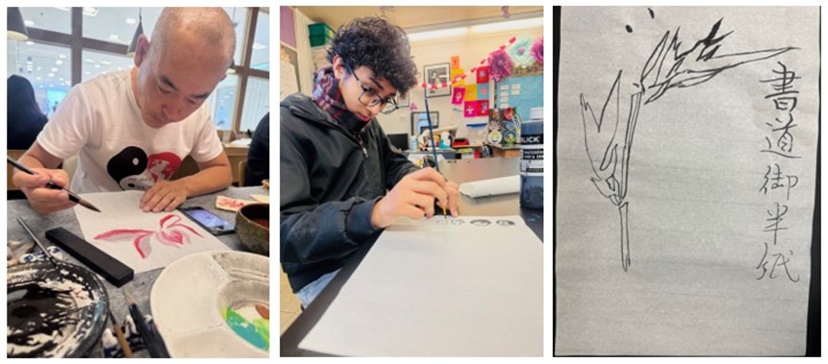
Recently, the teachers took students on a walking tour of Chinatown, where students learned about immigration and history and experienced new foods, with field trips to Vietnamese and Cambodian cafes and restaurants in the works. In Studio Art class, 9–12th grade students were introduced to the traditional calligraphy techniques we studied in Beijing, working with rice paper and natural-hair brushes. To provide authentic and direct instruction, students viewed videos Lamb filmed of their instructor in Beijing. This unit will culminate in the creation and presentation of a mini-museum display, with students from both Lamb and Freed’s classes incorporating artifacts, images, artwork, and propaganda collected throughout the fellowship to analyze how history is shaped by bias and perspective—learning to interpret history not as fixed, but as evolving and contested.

“Using photos from my experience has gotten history students very excited to learn not only about my experience, but to use my images to ground their learning,” added Freed. “I am seeing student interest and engagement grow in this topic as compared with previous years and am excited to see how the museum display projects turn out.”

“As educators, we must recognize that our understanding of history is influenced by dominant narratives, often reflecting the perspectives of those in power,” said Lamb. “By engaging with and interviewing locals, we gained insight into how these events are viewed by governments, historians, those in power, as well as those on the ground. And now this fellowship will continue to open doors for students and us to explore new perspectives and continually push back on biased or silenced narratives.”

Celebrating Our Fellows

SPRING 2026 UPDATE 

Spring ushers in a season of recognition for educators, which gives us the opportunity to do a little humble bragging by saying “We knew them first.” Join us in celebrating these FFT Fellows and, please, let us know about exciting updates in your careers and classrooms! 

  • James Sheridan (Houston) is an H-E-B Excellence in Education Award Finalist, earning him a $1,000 award and $1,000 for Yes Prep – East End Secondary. 
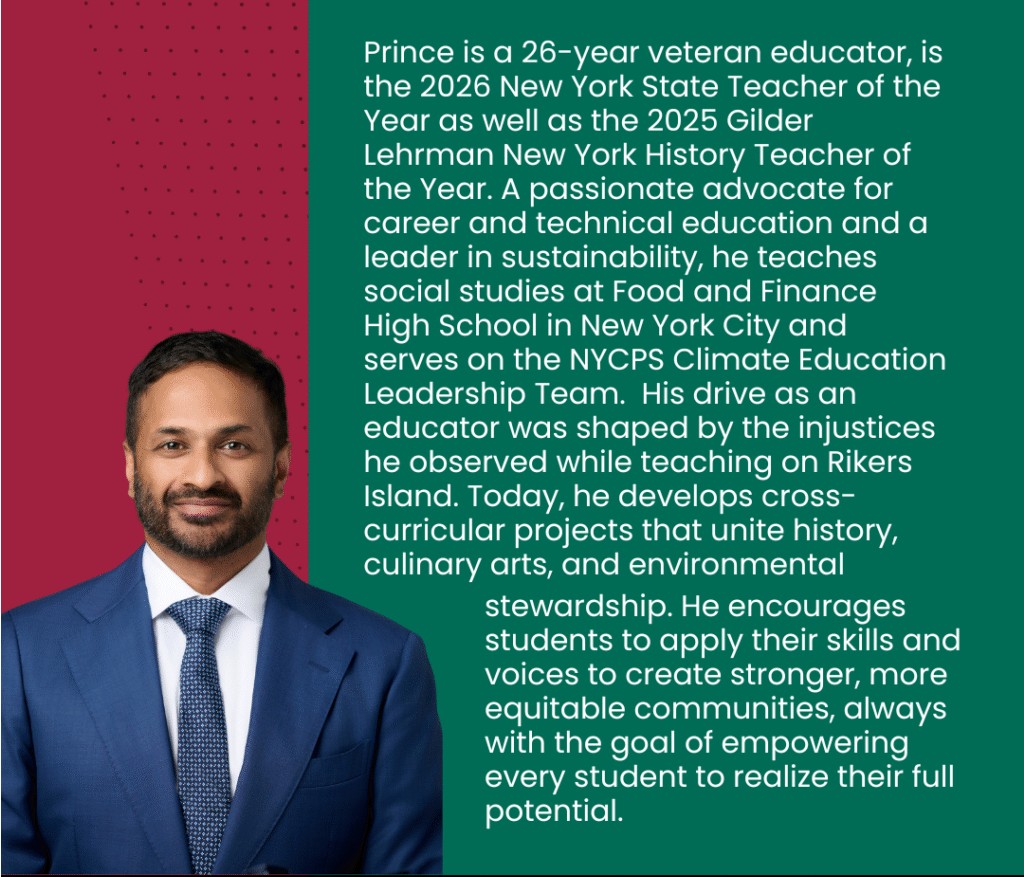
  • Prince Johnson (New York) joins The Institute for Educational Leadership’s spring 2026 Education Policy Fellowship Program. 
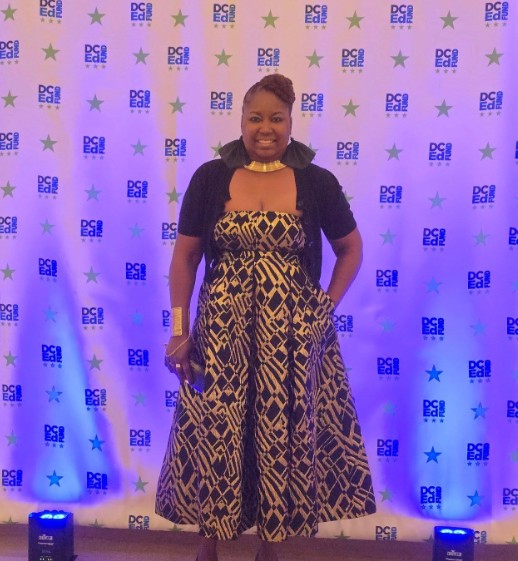
  • Shelina Warren (Washington DC) received the DC Public Education Fund’s Educator Excellence Award. 
  • Angela Guy (Houston) is an ARTEFFECT Ambassador through the Lowell Milken Family Foundation. 
  • Janet Damon (Colorado) is one of five 2026 recipients of the Horace Mann Educators Foundation’s Award for Teaching Excellence. 
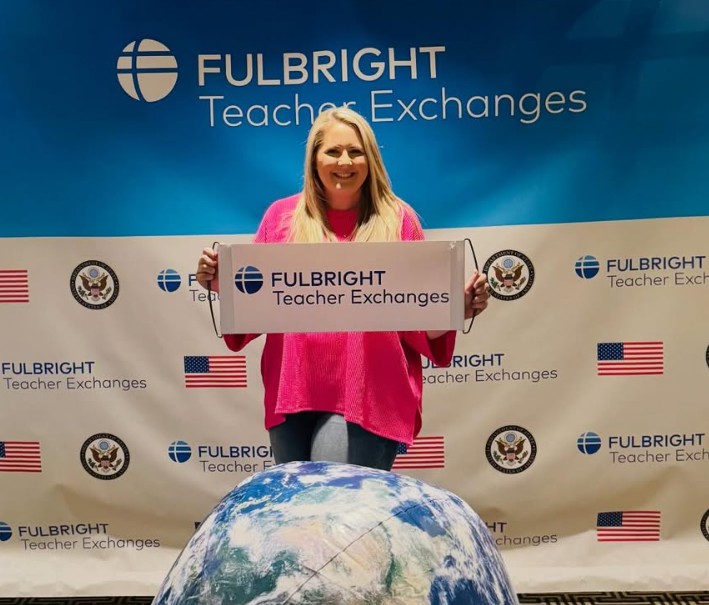
  • Matt Holden (Arkansas) and Bethany Seal (Mississippi) are members of the 2026 Fulbright Teacher Exchange cohort. 
  • Erik Erickson (Saint Paul, MN) is in the running for 2026 Minnesota Teacher of the Year. 
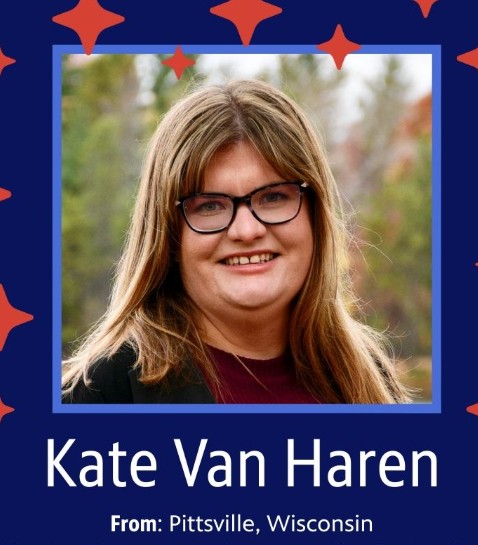
  • Kate Van Haren (Pittsville, WI) is a 2026 PBS LearningMedia Teacher Ambassador. 
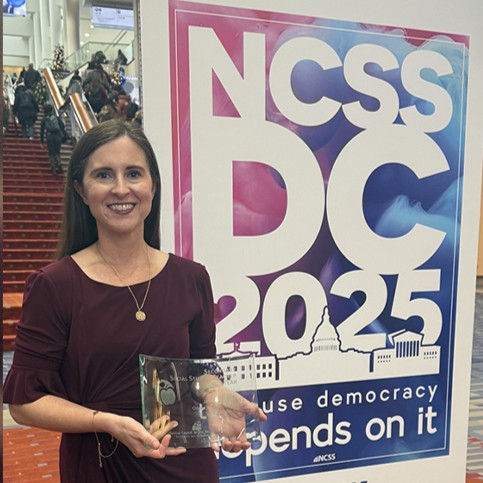
  • Jessica Culver (Ozark, AR) was named Secondary Level Social Studies Teacher of the Year by the National Council of Social Studies.  
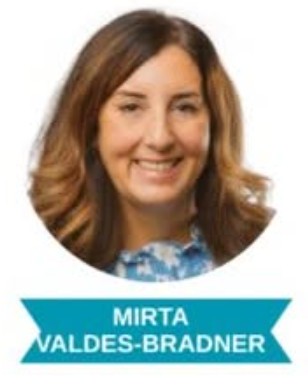
  • Mirta-Valdes-Bradner (Easton, MD ) was recognized by The Educator’s Room as a Trailblazing Top 50 Educator. And, 
  • Melaney Sanchez (Owings, MD) received her state’s Teaching America250 Award through the Jack Miller Center for Teaching American’s Founding Principles of History.  

Ramadan Mubarak

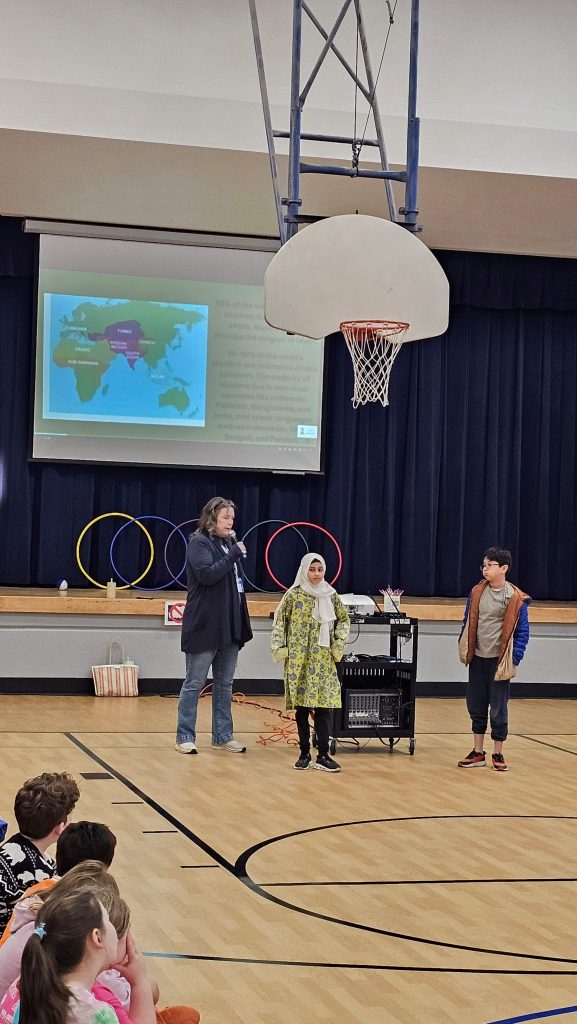
As 1.8 billion people across the globe are celebrating Ramadan, students at Lincoln Elementary in Norman, OK recently learned about the celebration from their fellow students who also are Muslim. Their teacher, Diane Wood, informed and inspired their presentation using experiences from her Fund for Teachers fellowship last summer.  

“My fellowship to Spain and Morocco helped me to develop an approach to education that recognizes, respects, and uses students’ backgrounds as meaningful sources for learning,” said Diane. “Culturally responsive teaching fosters a sense of belonging, strengthens confidence, and honors different perspectives. I believe it is essential for creating equitable and effective classrooms and ensuring that every student has the opportunity to thrive.” 

Diane serves as the Gifted Resource Coordinator for school with 270 students – six percent of whom are from North African or Middle Eastern countries. Because one of her responsibilities is enhancing the mandated curriculum with multi-disciplinary content, Diane seized the opportunity to design a fellowship that helped students affirm and appreciate their culture of origin while also developing fluency in other cultures. 

“This fellowship has helped me develop a deeper understanding of how art and architecture are not just aesthetic choices, but also powerful expressions of identity, religion, and social values,” Diane said. “Understanding this shared history of cultural synthesis has been transformative, helping me appreciate the importance of cross-cultural collaboration and the ways in which traditions can enrich one another. I’ve learned to think more critically about cultural appropriation and heritage conservation.” 

So have her students. 

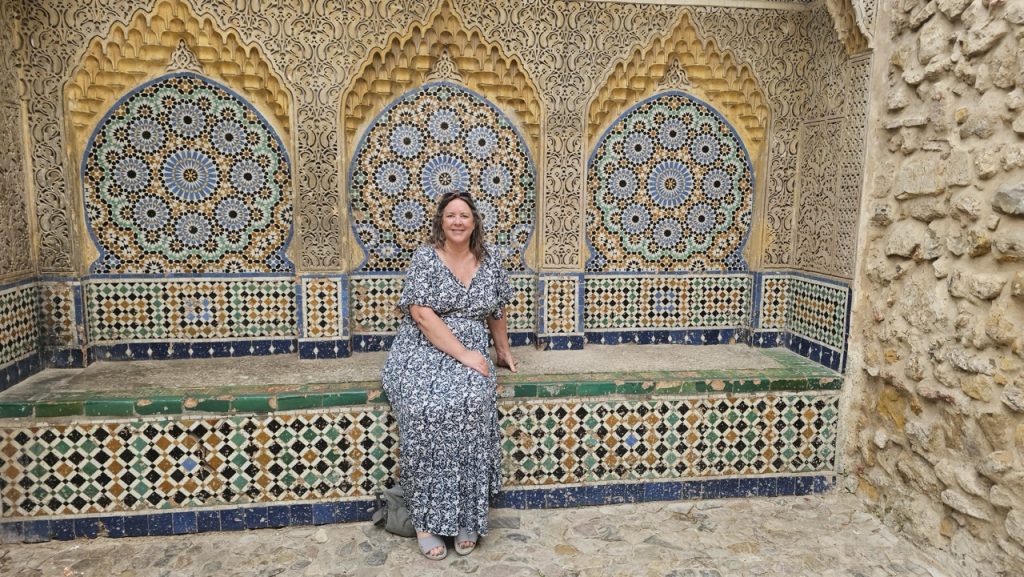
Diane is using Islamic patterns she studied in Spain and Morocco to teach symmetry and tessellations to fifth graders during a geometry unit. Students are analyzing Diane’s photographs of the intricate designs of historic sites such as the Alhambra in Granada to identify lines of symmetry, rotational symmetry, and repeating shapes that form tessellations. They are using rulers, compasses, and grid paper to design their own tessellating geometric tiles. By connecting geometry to real-world art rooted in Islamic tradition, she’s striving to make abstract concepts more concrete and visual, while honoring the mathematical contributions of diverse cultures. 

“Ultimately, my experiences in Spain and Morocco transformed cultural responsiveness from an abstract educational concept into a lived commitment, said Diane. “By immersing myself in different cultural contexts, I developed greater empathy, curiosity, and humility. My classroom is stronger because I have seen the world more broadly, and I strive each day to ensure that my students feel seen, valued, and understood.” 

In the Ramadan presentation to their peers, a student explained, “One of the things I love most about being Muslim is that God says in the Quran, I honor all children of Adam. That makes all humans my brothers and sisters who deserve respect, love, and kindness. That makes me want to be the kindest friend to everyone.”  

Reaching Out to Rural Teachers

After 25 years of investing in educators—totaling $39 million in fellowships—one thing has become clear: Our grant recipients are our strongest ambassadors. When a teacher encourages a fellow teacher to apply, it just hits differently. 

This holds especially true for our Rural Teacher initiative*. Inspired by our recent work to expand awareness of Fund for Teachers among educators of color, two members of our Educator Advisory Council embarked on a parallel effort to reach teachers in rural communities. We reached out to Maya Brodkey and Ben Olsen to learn what motivated them to take on this mission: 

*for our purposes, “rural” is defined as “located in sparsely populated areas, often in small towns or the countryside.” 

Q: With all that is on your plate, why is this work of bringing FFT to peers in rural regions a priority?   

Ben: Rural areas and rural schools are close to my heart.  I grew up attending rural schools – my graduating class had 56 seniors!  Currently, though I teach in a larger district, my four children all attended, or graduated from a small, rural school district.  I know as a kid, if I had had a teacher who had been to the Amazon to work with scientists, I would have been so amazed and inspired by that idea.  I also would very much like the teachers that impact my own children to have the chance for amazing experiences that they can bring back to the classroom to add authenticity and awe to their students, my children included! 

Maya: Teachers in rural areas generally have less access to professional development and learning opportunities. Teachers in urban/suburban areas have nearby universities, professional networks, and other schools. For rural teachers, we are often on our own! Fund for Teachers helps bridge this gap by allowing rural teachers to design their own highly personalized and relevant PD opportunities. 

Q: What are the challenges you identified/experienced that are different from your peers in suburban/urban areas and why do you think FFT can meet those challenges? 

Maya: Students in rural areas can often feel isolated and left out of larger conversations about global events and cultural trends. When I taught in a rural area, one of my biggest challenges was helping my students see themselves as part of/connected to the larger world. FFT helps rural teachers bring the larger world into their classroom, which (ideally) opens up further opportunities for their students. 

Ben: Mainly, I’ve found that it’s all about awareness that a great opportunity like Fund for Teachers exists.  With smaller staff and, sometimes, smaller budgets, the knowledge of high interest professional development may be lacking.  Sometimes, students and teachers in smaller, rural districts may feel so far away from “the action” that they may not see how they can make a difference in the larger world.  Teachers can take part in a FFT fellowship and help those students, and themselves, feel closer to the larger world.  

Q: When leading previous and the upcoming workshop, is there a particular experience from your fellowship/its impact on which you lean when describing the value of FFT? 

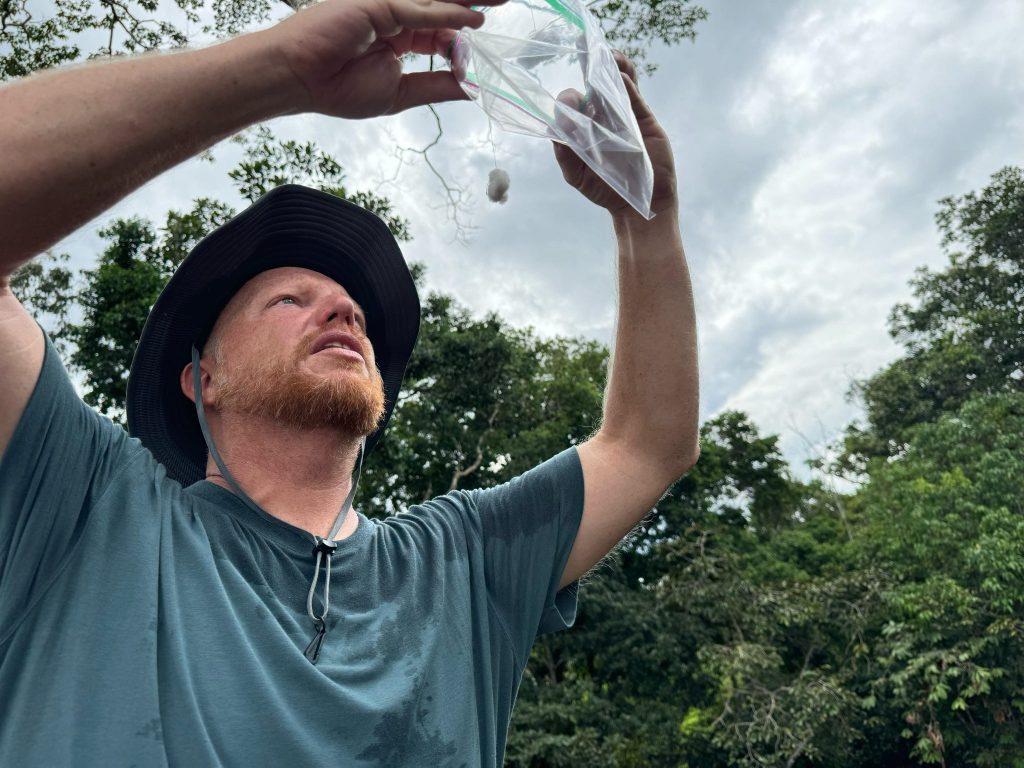
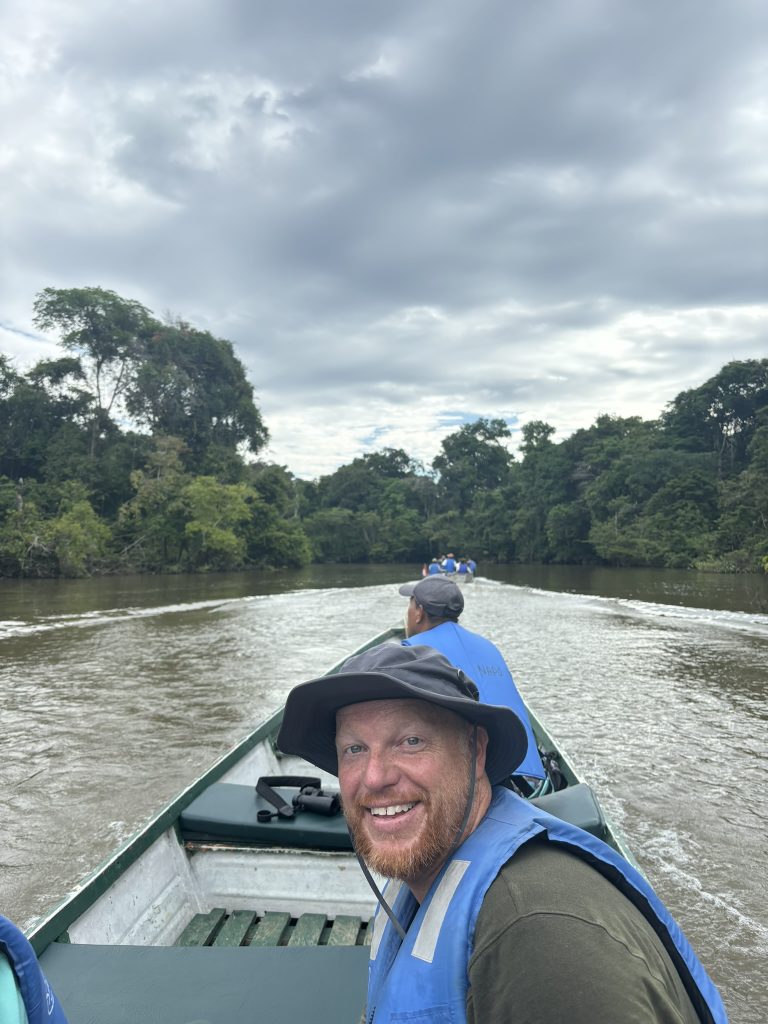
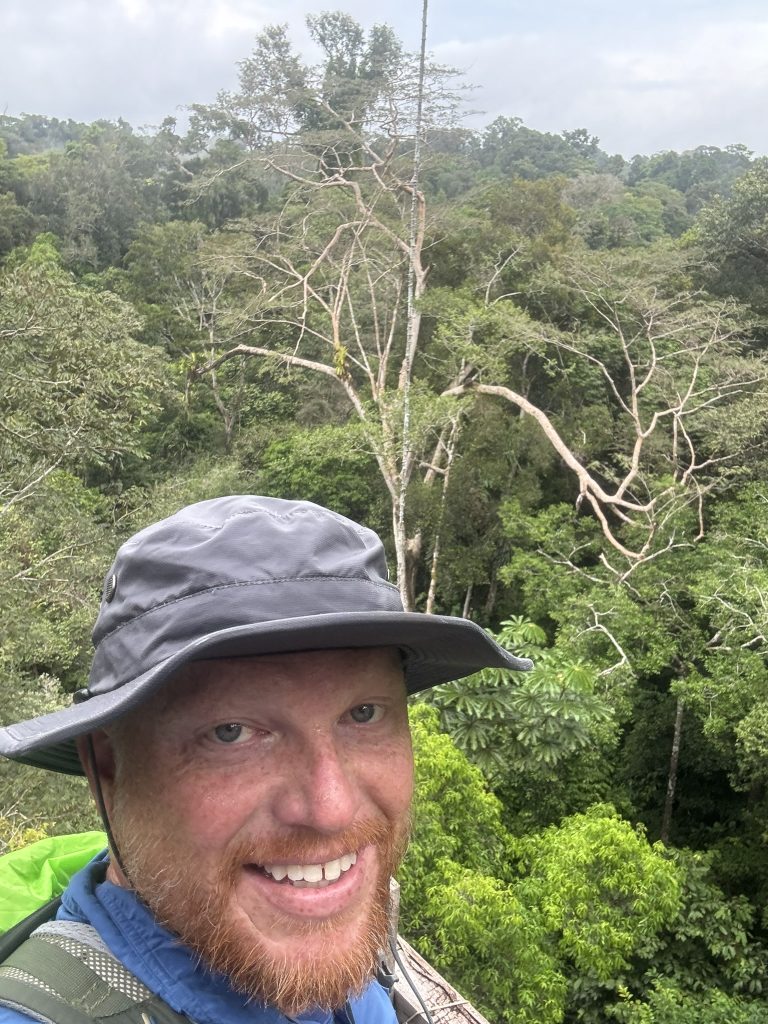
Ben: I lean on the amazing road that my fellowship put me onto.  I designed my fellowship to provide me the chance to travel to the Amazon rainforest, a life-changing experience by itself, but also to work alongside researchers to better understand field techniques that I could bring back to my own students to simulate.  I got that experience to be sure.  But what I didn’t anticipate was how my fellowship would eventually lead me to leadership opportunities within the Morpho Institute’s programming by heading up their camera trap project outreach.  I had to pinch myself this summer when I was getting emails from a Georgetown University researcher who was deep in the Amazon, sending me some of the latest camera trap recoveries.  But here I am, a teacher in Iowa, who grew up in a rural setting, and I am able to participate in some really amazing things, all because of my FFT fellowship.  That’s what I’d love for every teacher to experience, in whatever they find great interest.  

Maya: My FFT experience really helped me rethink my approach to teaching. Though this wasn’t one of my stated goals, I came back from my fellowship very excited about bringing my students’ ideas and interests into my ELA classroom. Three years post-fellowship, my students are actively involved in panning units with me, and I’m a much happier and more engaged teacher. 

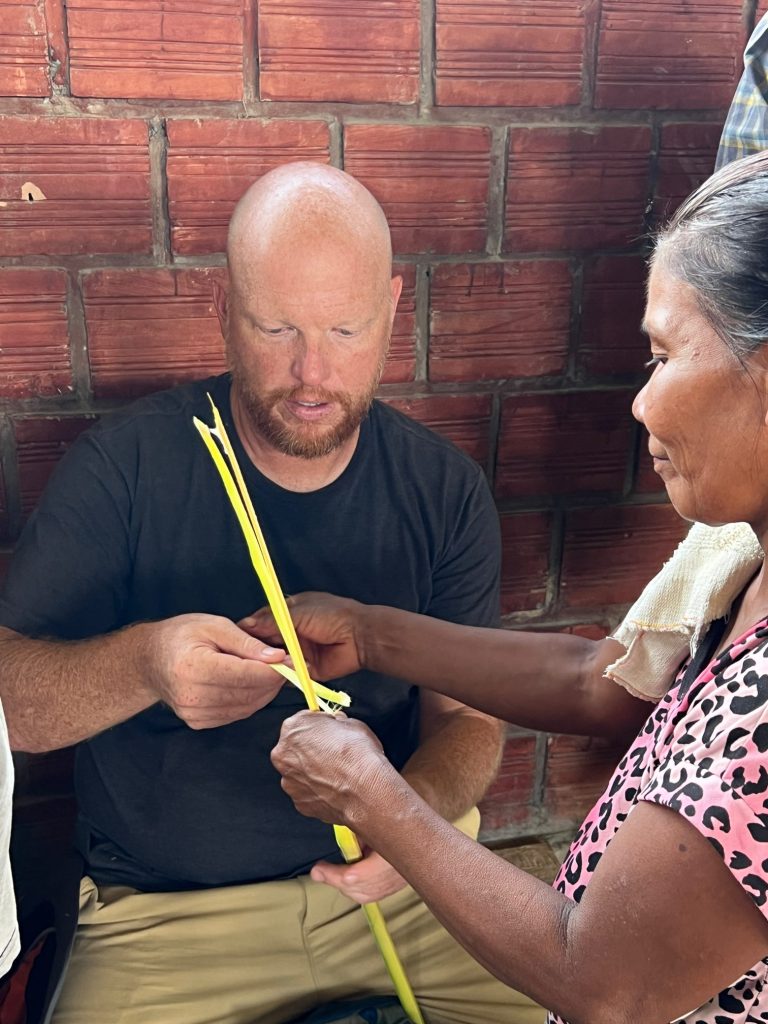
With a 2024 Fund for Teachers grant, Ben collaborated with scientists at the Amazon Research Initiative for Educators in the Peruvian Amazon to experience field research that fits will within the context of developing global perspectives, understanding biodiversity and ecological systems, and inquiry-based learning for gifted learners. 

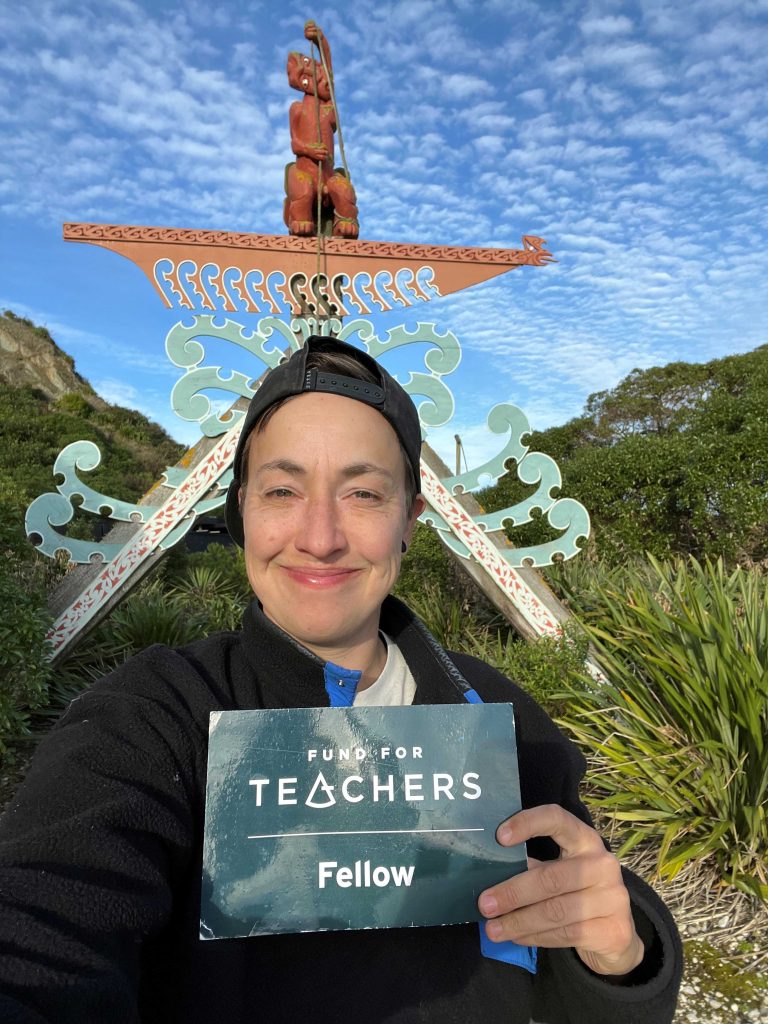
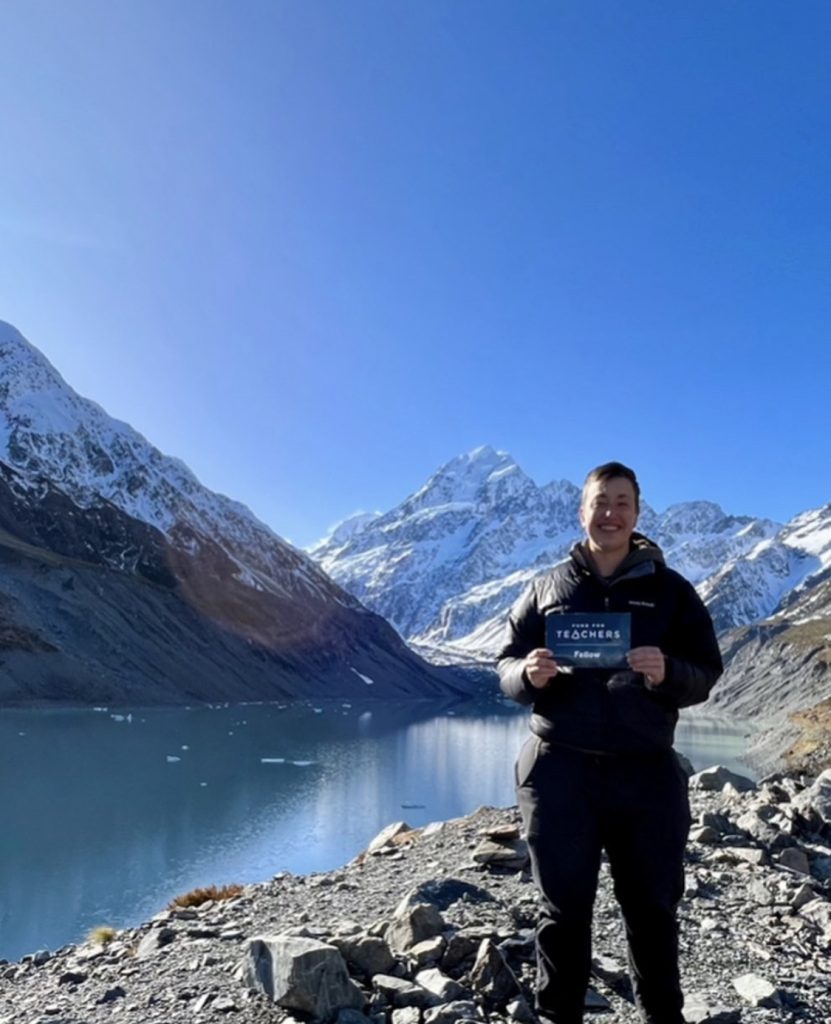
Maya used a 2023 Fund for Teachers grant to study New Zealand’s Māori language and cultural education model while investigating bi-cultural, place-based education in rural schools to incorporate findings into culturally relevant and place-based practices that are responsive to and supportive of Indigenous students. 

Commonalities Among Indigenous Cultures

Four Native American tribes once inhabited the territory that now comprises Tulsa, OK, where students of Rachel Langley and Jesse Wren attend school. Additionally, one-third of their students are descendants of Tribal Peoples. But how does one teach elementary students about complex topics such as land rights and Tribal sovereignty? Jesse and Rachel chose to learn from a community (and state) that’s made great strides to reclaim their own indigenous heritage – Hawaii. 

The Fellow team wrote in their 2025 grant proposal: “Late in the 20th Century, Hawaii began a ‘Cultural Renaissance’ with a focus on preserving what had been lost. This Hawaiian story parallels the history of Oklahoma…By using the stories of others, students will be able to make connections and draw comparisons that will allow them to make decisions that will impact their own community. As Tulsa tries to reconnect to its roots in Native culture, students can use the examples from Hawaii to deepen their understanding of what it means to preserve culture without losing its authenticity.” 

What that meant for Rachel and Jesse was researching Hawaiian traditions and history while experiencing that unique ecosystem to create interdisciplinary projects exploring cultural preservation of Oklahoma’s Native American communities. 

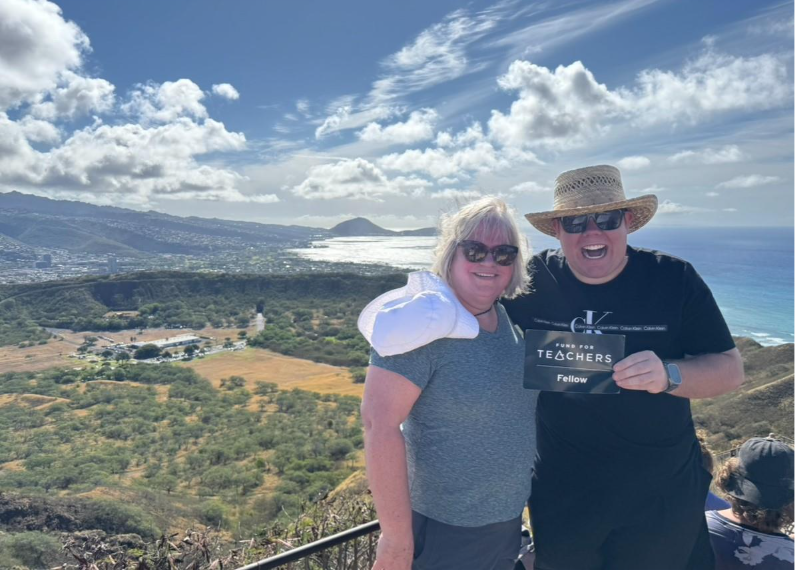
Hiking to the top of Lē’ahi (Diamond Head), one of Hawaii’s most iconic geological features and a significant natural, cultural, historical and recreational resource.

“Convincing our selection committee of a teacher’s need to learn in tropical sites like Hawaii is a tough sell,” said Karen Eckhoff, Fund for Teachers executive director. “These teachers made it clear that, for them, Hawaii wasn’t a vacation, but a necessary destination to deepen students’ cultural competency, awareness and appreciation.” 

Rachel felt this, both in the writing and pursuit of their fellowship. 

“Planning an educational experience to a tourist destination is difficult,” she said. “Even with the research we did prior to our adventure, we found that many itinerary spots had been westernized. (One person used the term “Disney-d.”) I soon discovered that my best experiences came from the people I met along the way. Once we explained that we were teachers looking at what it means to reclaim indigenous culture, people were more than willing to share their history, struggles, and stories.” 

Instead of staying at a resort, Jesse and Rachel stayed in private residences. They avoided tourist sites in favor of learning led by Indigenous Hawaiian and Pacific Islander people. Exploring Hawaii’s Plantation Village offered insight into the lives of diverse Indigenous groups who contributed to Hawaii’s sugar industry from 1850–1950 and provided a lens for discussing themes like cultural adaptation, labor history, and social equity. Service learning came in the form of volunteering at the He’eia Fishpond, a cultural site lost to large corporate farming practices for sugar and pineapple and now being reclaimed as a touchstone of Hawaiian heritage.  

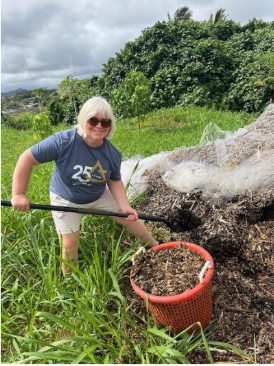
Rachel volunteering at the He’eia Fishpond

“Volunteering with Paepae o He’eia to restore the ancient He’eia Fishpond was transformative,” said Jesse. “The hands-on work tied to cultural preservation deepened my understanding of ecological and Indigenous restoration. Another powerful moment came from sailing with a Native Hawaiian family, where we prepared food, heard oral legends, and joined a sunset ceremony. Both experiences showed that true learning begins with respect, relationships, and community-rooted knowledge.”

Rachel and Jesse are now intent on translating their experiential learning to students in multiple ways, starting with their 120-acre school campus. Collaborating with an Ohio classroom through the National Air and Space Museum’s Teacher Innovator Institute, students are applying the design cycle to reimagine their own school grounds as spaces for inquiry, collaboration, and cultural storytelling. The school in Ohio is contributing ecological expertise, and our school is sharing Indigenous perspectives on honoring the land. “Through data collection, podcasting, and cross-campus consulting, students are becoming both designers and stewards while discovering that outdoor learning is not just about science. It’s about identity, belonging, and respect for the places we inhabit,” said Jesse. 

“This exchange continues the spirit of our Hawaiian fellowship,” continued Jesse, “connecting young people to the land and to one another through creativity, cultural understanding, and hands-on environmental learning. It also demonstrates how lessons rooted in Indigenous wisdom can shape not just classrooms, but the way future generations imagine and care for their world.” 

Looking Back to Move Forward

Students of Washington D.C.’s Dunbar High School walk in the footsteps of trailblazers such as the first Black graduate of the U.S. Naval Academy, the first Black U.S. Senator elected by a popular vote, and the head academic researcher on Brown v. The Board of Education. Established in 1870 as the Preparatory High School for Colored Youth and eponymously named in 1916 for the celebrated poet, Paul Laurence Dunbar, the school remains the first and oldest public high school for Black students.

Considering this distinctive history, school officials chose to center student learning around Sankofa, a principle derived from the Akan people of Ghana signifying the primacy of remembering the past to make positive progress in the future. And these students’ future is informed by four teachers who joined together to craft a Fund for Teachers fellowship researching the African American experience across five states in the Deep South.

“Collectively, based on student townhalls, class discussions, and private conversations with students, our students seem disconnected from society in that they feel that, as teenagers, they can’t make a difference in society or that their voice doesn’t matter, which directly connects to our school’s values of activism and pride,” wrote team leader Dr. Shelina Warren in her grant proposal. “More importantly, our students’ lack of historical context helps play a considerable role in this disconnect, as they see the Civil Rights Movement of the 1960s as a study of long-ago history, distancing the powerful movement from contemporary struggles. Sadly, many of our African American students, as well as our ELL students, do not know much about African American history.”

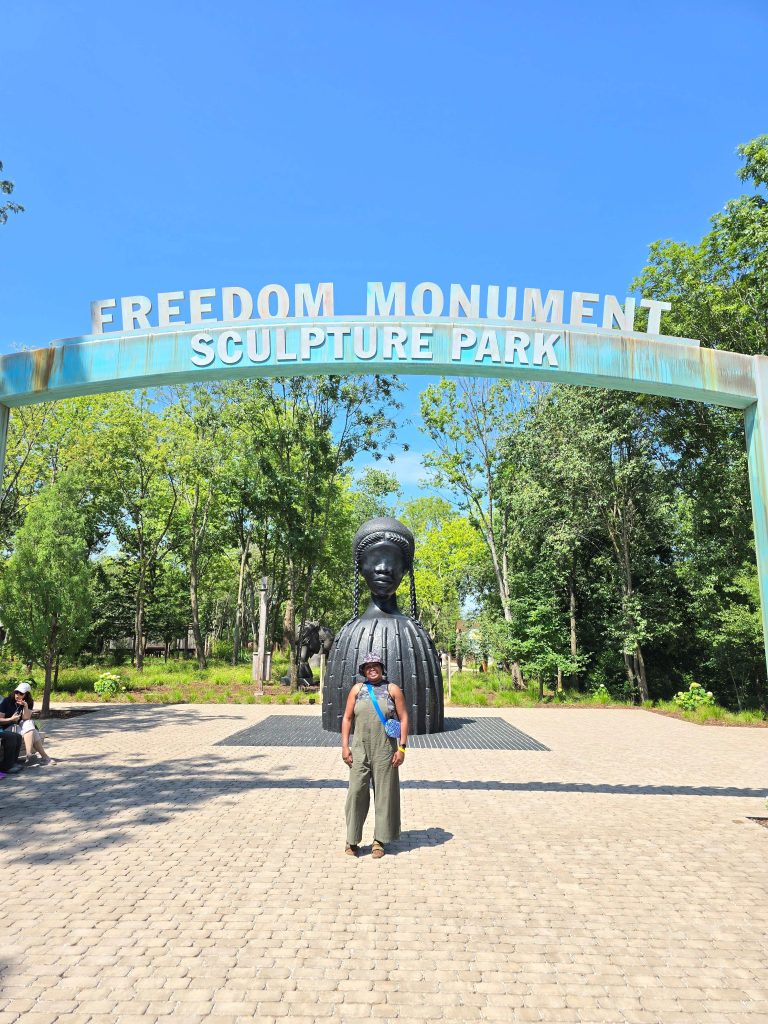
The team’s itinerary included stops at historically-relevant sites, such as the home of Medgar Evers, the National Center for Civil & Human Rights in Atlanta, and 16th Street Baptist Church in Birmingham. Less prominent locations holding equal significance were the Emmett Till Interpretive Center in the Mississippi Delta, the Freedom Monument Sculpture Park in Montgomery and TEP Center in New Orleans’ Lower Ninth Ward where they met Dr. Leona Tate, who – with two other six-year-old girls – integrated their elementary school an hour before Ruby Bridges did the same across town.

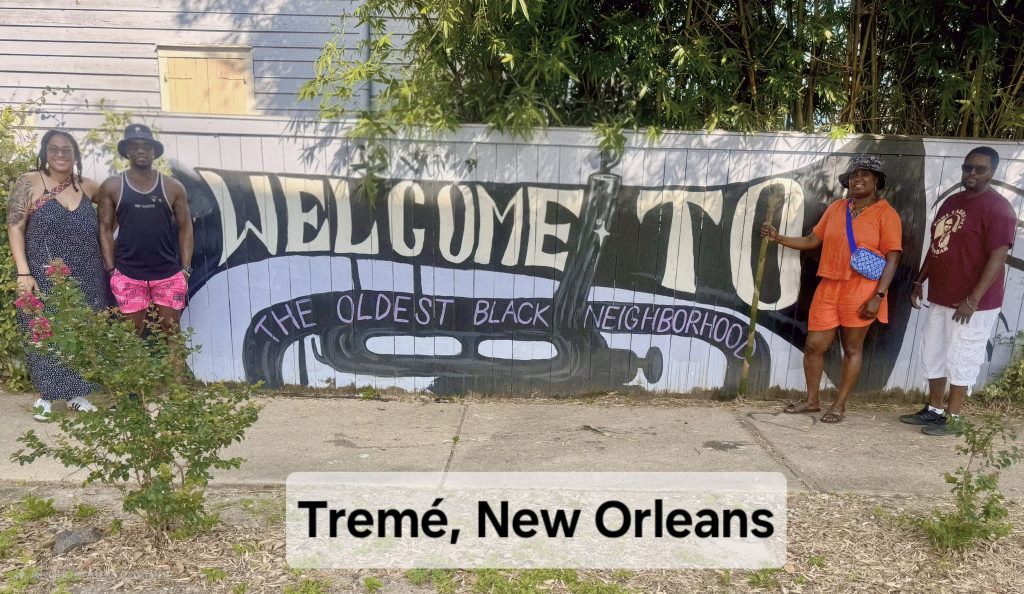
Their fellowship ran the gamut of emotions, from experiencing the story of slavery at the Whitney Plantation outside of New Orleans to later that day taking a walking tour of Tremé within the city. “Teachers from the first Black high school in the Unites States exploring the first Black neighborhood in the United States – so powerful!” said Dr. Warren.

“Experiential learning opportunities such as those provided by the Fund for Teachers fellowship are so beneficial for students,” said DCPS Chancellor, Dr. Lewis D. Ferebee. “We’re proud of how Dr. Warren and her social studies team at Dunbar make connections for students with a real-life history lesson—imparting knowledge through tours of renowned civil rights landmarks across the South.”

Two quotes seemed to epitomize this fellowship for the team: One explained in a museum and another found in a contemporary painting hanging in a gallery.

“I’ve always used the phrase ‘Speaking Truth to Power.’ but I never knew where it came from until visiting the Civil Rights Museum in Memphis,” said Dr. Warren. “They had an exhibit there on the originator of this phrase, Bayard Rustin, who used these words to explain that justice requires both legal change and personal transformation.”

The second quote, painted on the side of an art studio in New Orleans, captured how Dr. Warren plans to use new insights and experiences going forward in the classroom.

“’How do you look terror in the face and still muster the courage to love’ was a quote featured on a piece of art in a New Orleans’ gallery. It resonated with me because it shows that resistance is a form of power, and love is a tool used by activists before me to fight terror. In my way, I responded to this quote by writing this grant, exposing my students to educational opportunities, and being a lifelong learner. My motto is ‘so that others may learn,’ which shows my passion for education & love for my people.”

Dr. Shelina Warren served as the team leader for this fellowship, alongside Akinyele Emory, Adrienne Glasgow and Jermaine Robinson. She is the Law and Public Policy Academy director at Paul Laurence Dunbar High School, where she teaches courses including Constitutional Law and Youth Justice. She is an Arkansas native, Army veteran, and national board-certified social studies teacher/leader, finishing her 21st year in education. Shelina earned an undergraduate degree in Social Science Education, two Masters degrees, an additional certification and, most recently, a doctorate in Urban Educational Leadership from Johns Hopkins University, which focused on civic empowerment for African American students.

Get to Know Us!

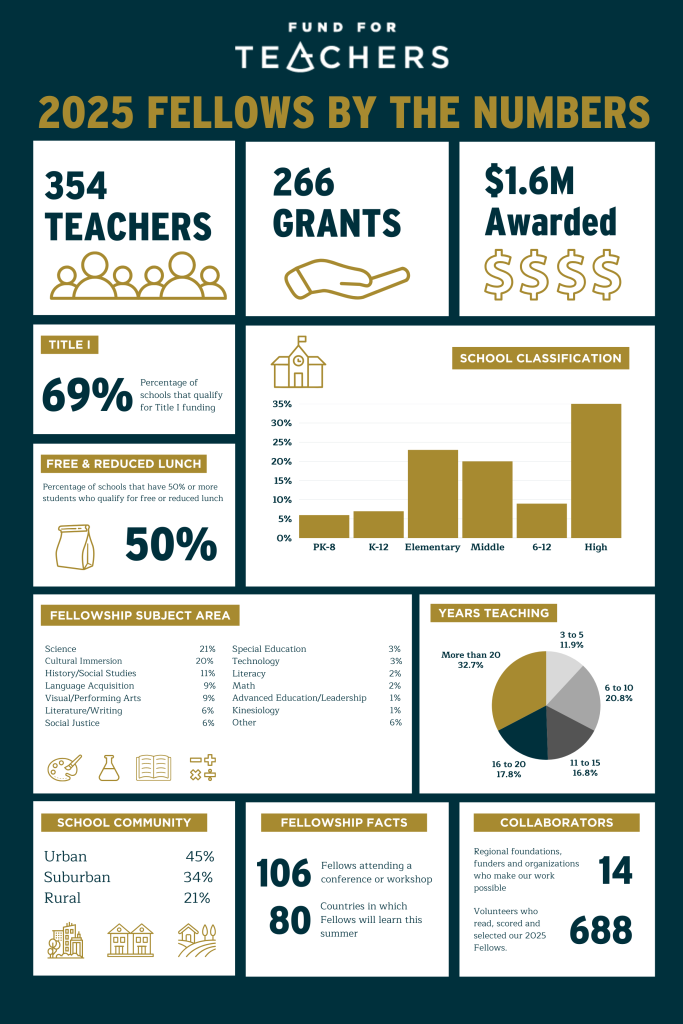
Who are the 354 teachers awarded 2025 Fund for Teachers grants? This infographic provides a snapshot. You can learn more about this 25th cohort of FFT Fellows here and don’t forget to follow their learning on our Facebook and Instagram pages!

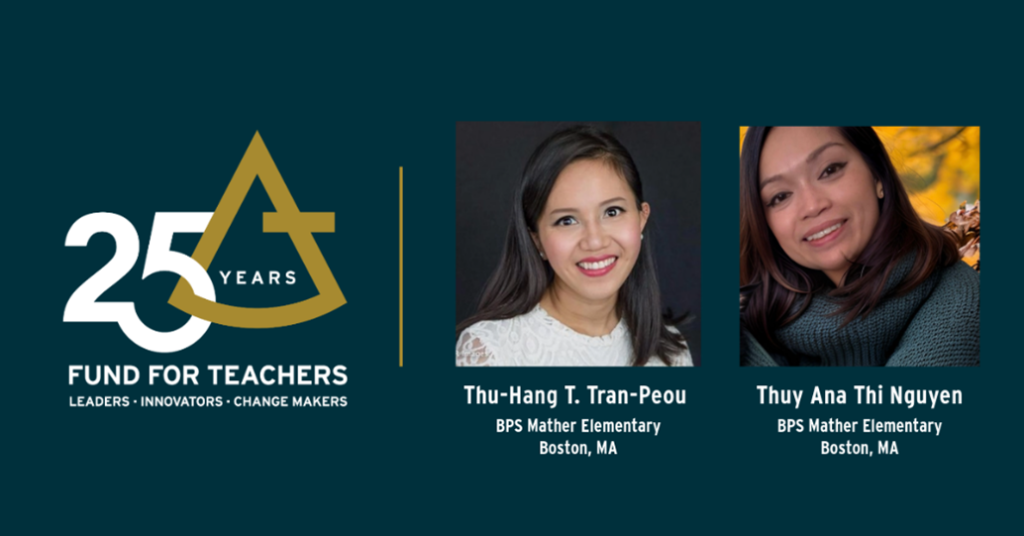
Embracing, Not Erasing, Vietnamese Heritage

“I remember setting foot on my first Boston snow in February 1992,” said FFT Fellow Thu-Hang Tran-Peou describing her arrival from Vietnam as a young girl. “It was my first encounter with tuyết (snow)—a word I had read, wrote, and pondered before but had never known. The coldness, the fragility of the white cluster melting in my hands—it felt like a metaphor for my identity as a Vietnamese immigrant and refugee.”


Beautiful, bracing and ephemeral. Everything about the life she and her family fled in Vietnam now abutted against assimilation.

“I lived in two worlds—ashamed of my Vietnamese at school and never fully confident in my English at home,” she continued. “I was told that success was when I could leave my Vietnamese roots and thrive as an ‘American’ with my new branches. Today, after 17 years as an educator, I find my reflection in the eyes of my students, who also navigate these dual identities.”

Thu-Hang and her FFT Fellow teammate Thuy Nguyen teach at Boston Public School’s Mather Elementary, the oldest public school in North America, where they are charged with implementing the Vietnamese Dual Language (VDL) program for fifth and sixth grades. (EdWeek recently reported on their work). The veteran teachers were inspired by the fellowship of 2024 Fellow Vincent Pham (Brooklyn, NY) after following his fellowship across Southeast Asia last summer and decided to design and submit their own proposal focused on ensuring that their students’ histories, heritages, and home languages are seen as assets to be embraced, not erased.

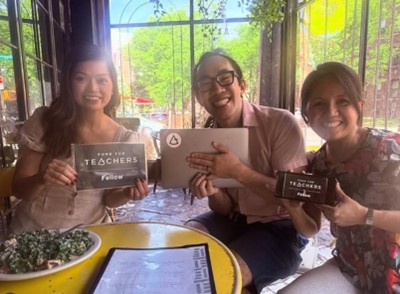
In a beautiful spirit of collaboration, Thuy and Thu-Hang met up with Vincent in New York this spring to collaborate on fine tuning their upcoming fellowship itinerary. In August, the teaching duo will navigate across Vietnam’s three regions—Ha Noi in the North, Hoi An and Hue in the Central, and Ho Chi Minh City in the South — to commemorate the 50th Anniversary of Saigon’s fall, gain linguistic proficiency in various dialects, and explore community spaces that represent the interplay of language, commerce, and culture in daily life. They will document each experience through oral interviews, videos/digital film, photography, and primary artifacts to bring back to share and teach in the classrooms.

“Over the past five decades, three generations of our Vietnamese families have navigated the complexities of displacement, survival, and identity,” wrote Thuy and Thu-Hang in their grant proposal. “From our parents, who risked their lives on perilous boats to escape conflict and rewrite their histories; our generation, navigating the tension between forgetting and forging a new identity in a foreign land; and our students, who now piece together hope for the future as the first cohort of Vietnamese bilingual learners. By embracing the diverse backgrounds of our students – culturally, linguistically, and even racially – we will create a learning environment that not only celebrates their differences but also unites them in shared pride and purpose in our Vietnamese Dual Language (VDL) Program, the first and only in the school district and Massachusetts”

Thuy and Thu-Hang are the inaugural recipients of Fund for Teachers’ Dottie Engler Follow the Learning Fellowship. Dottie served as the director of special projects at Boston Plan for Excellence and the director of external relations and development at the Harvard Graduate School of Education. However, we are most proud of her role as Fund for Teachers as a board member.

Life in Action

Students at Life Learning Academy are disconnected – literally and figuratively. Many of the students live on campus, located on Treasure Island in the San Francisco Bay. Also, students arrive after experiencing life traumas, often involving the juvenile justice system, and not finding success in traditional school settings.

Kevin Hicks arrived at Life Learning Academy with his own unique trajectory, including growing food at a commune in the foothills of the Rocky Mountains, founding a rowing studio gym, and working as laboratory scientist at the United States Department of Agriculture.

The common denominator between students and teacher? According to Kevin, meaningful connections, worldly lived experiences, and adventure — the same components of a Fund for Teachers fellowship.

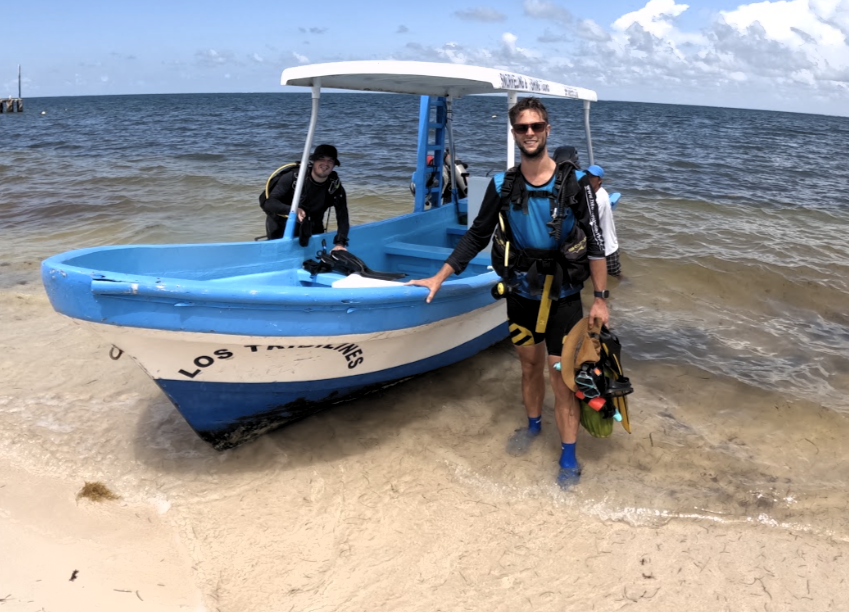
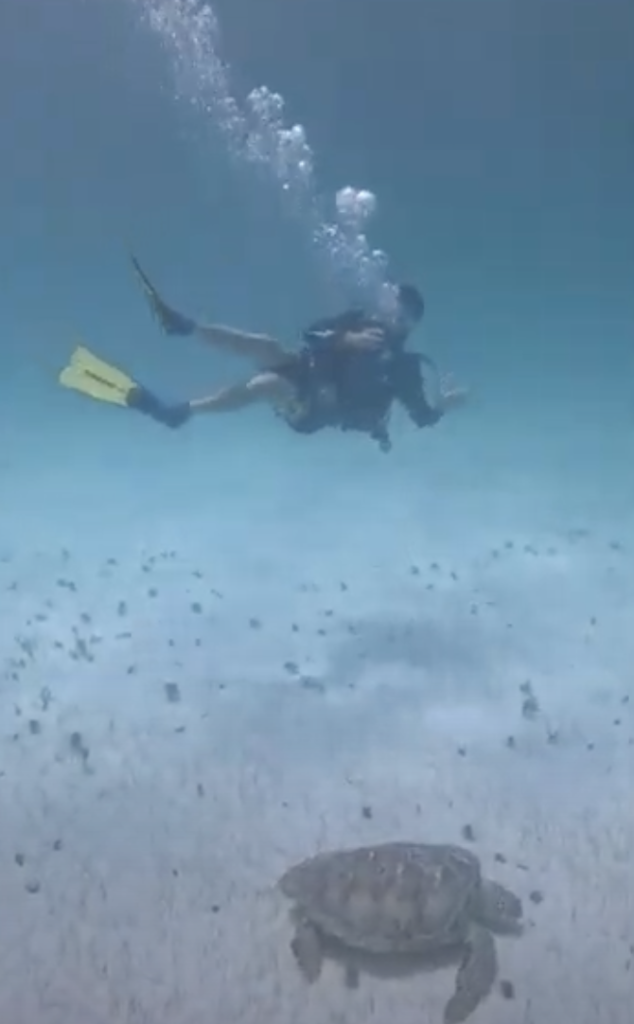
Last summer with a $5,000 Fund for Teachers grant, Kevin participated in the Marine Conservation program hosted by Global Vision International in Puerto Morelos, Mexico, to support the management and conservation of the Mesoamerican Barrier Reef. Working alongside national and international non-profits and government organizations, Kevin collected data, participated in coral nursery and management and joined beach clean-ups in the Mexico Caribbean Marine Biosphere Reserve, which is one of the largest ecosystems globally, and the largest national marine biosphere reserve in the Caribbean.

Afterwards, he studied Spanish with a tutor in Quintana Roo, improving fluency to better teach one-third of his students who are Spanish speaking.

“I got to see ‘Science as a human endeavor,’” said Kevin. “As humans, we have limited capacity. It made most sense to train us to be able to identify selected target species [such as sea turtles]. This way we focused on specific species that provide crucial data.”

Kevin relies on a similar targeted approach when teaching his “Earth Optimism in Action” ecology class, focusing on specific issues that provide opportunities for collaboration and change.

“My students choose a local environmental issue for which I supply 1-2 resources for them to contact for more information,” explained Kevin. “As the name of the class implies, they are empowered to take action and reach out to local organizations for more information. Their final project will be an ‘Action Plan’ with the help of the local agency to address the issue at hand. My fellowship will be used as my example for their final project.”

Through this class (and his fellowship), Kevin models more than environmental stewardship and hands-on science. He exemplifies for his students Life in Action.

“As an educator, it is my responsibility to be a role model, and I would like to be a role model of a global citizen who takes action in the world for the things that I care about,” he said. “I deeply care about our natural environment, and particularly the oceans’ health. I want to show my students, by my actions not just my words, that their actions matter.”

Kevin Hicks became a teacher through the US National Science Foundation’s Robert Noyce Teacher Scholarship Program. He also serves as director of education and first mate for Sea Valor, Inc., a nonprofit dedicated to improving life quality for Veterans, First Responders, those with PTSD and families affected by suicide.

Meet Our New Fellows

Fund for Teachers, one of the nation’s leading organizations supporting preK-12 educators, is proud to announce its 2025 grant recipients. This summer, 357 teachers will leverage $1.625 million into experiential learning in 79 countries on 6 continents.

These educators comprise Fund for Teachers’ 25th cohort of FFT Fellows. Since 2001, Fund for Teachers has invested $39 million in 10,225 public, private and charter school teachers from across the United States.

Fund for Teachers annually invites teachers to propose solutions that address learning gaps for themselves and their students. Teachers are trusted with the freedom to determine what and where they want to learn and, after a thorough review process, individual teachers are awarded up to $5,000 and teams of two or more up to $10,000 to pursue customized professional development during the summer.

Fund for Teachers annually invites teachers to propose solutions that address learning gaps for themselves and their students. Teachers are trusted with the freedom to determine what and where they want to learn and, after a thorough review process, individual teachers are awarded up to $5,000 and teams of two or more up to $10,000 to pursue customized professional development during the summer.

“Teachers are at the heart of shaping not only students’ academic trajectories, but often also their social and emotional well-being,” said Karen Eckhoff, Executive Director. “Fund for Teachers believes this high calling merits validation and support, which we provide by funding fellowships that ultimately inspire teachers’ enthusiasm for student engagement and extend their longevity in the profession.”

And they all learned happily ever after

Once upon a time, an elementary school librarian became a Fund for Teachers Fellow, and her fairy tale dreams became a reality. It really did feel like a whirlwind fairy tale. Back in January of 2023, a friend of mine reached out to me about working together on a FFT grant. I was hesitant at first, because life felt very busy at the time, but after only a little convincing I agreed. However, the application’s due date was around the corner, so we got to work right away!

Hailey Wansick and I are both librarians, but she is a librarian at a high school, and I’m at an elementary school. We decided on fairy tales, because fairy tales and their lessons are for everyone. They have spanned hundreds of years, and they continue to enchant generations as retellings and fractured fairy tales are consistently being published today. After some research, we decided to focus on England, Germany, and France. We wanted to create a deeper understanding of fairy tale origins and their importance, promote excitement for and interest in reading, and enhance our library collections. We wanted to learn more about fairy tale pioneers like Madame d’Aulnoy, Charles Perrault, and the Brothers Grimm. When I got the email that said our proposal had been selected, and I was officially a Fellow, I ran to my principal’s office with tears in my eyes! 

A few months later, Hailey and I flew into France, ready to start our adventure. Over the following two weeks, we traveled from France to Germany and then to England. We walked the streets of Paris and the Gardens of Versailles. We visited towns along the Fairy Tale Route in Germany. One of our favorite stops was GRIMMWELT Kassel in Kassel, Germany. GRIMMWELT Kassel is a Brothers Grimm museum. We learned so much about the Brothers Grimm, their inspirations, and their life works. Our last stop was England. Before the trip, I had been in contact with the University of Oxford’s Bodleian Libraries as well as the British Library. We were able to go through the process of acquiring library cards and gained access to their special collections. Being able to see and touch rare fairy tale books was this librarian’s dream come true!  My fellowship made me realize I have so much more to learn about fairy tales! I still feel this way. There is such a rich and extensive history surrounding fairy tales. 
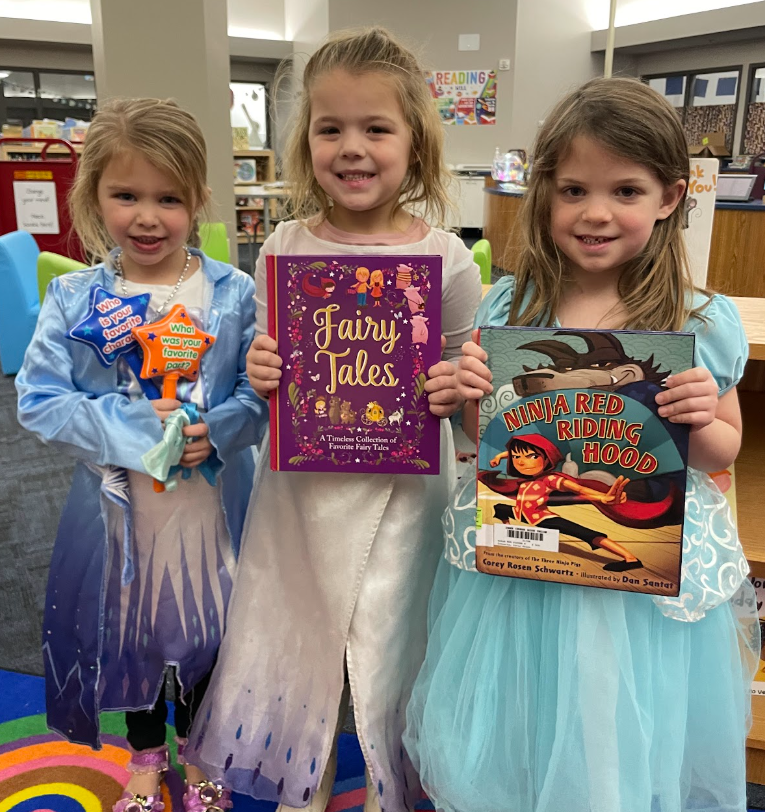
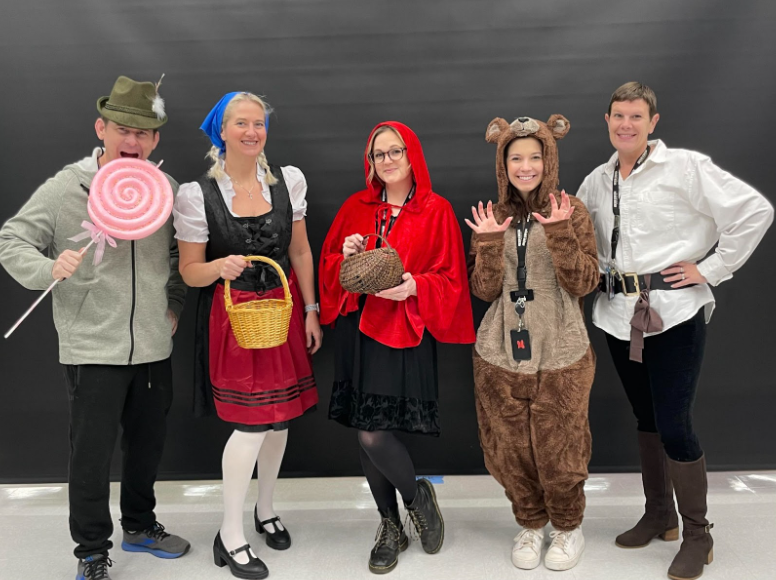
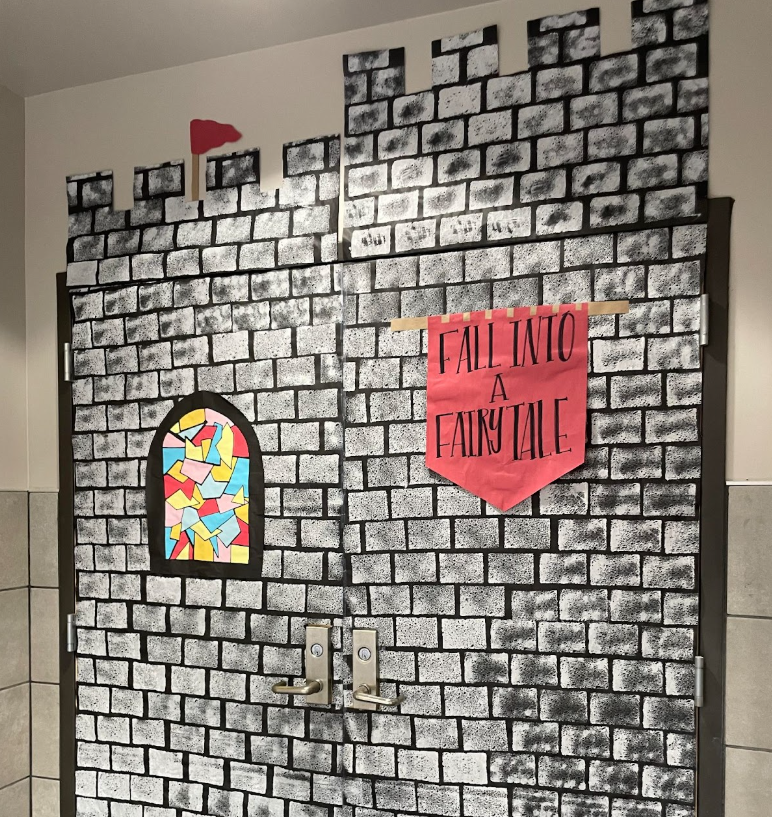
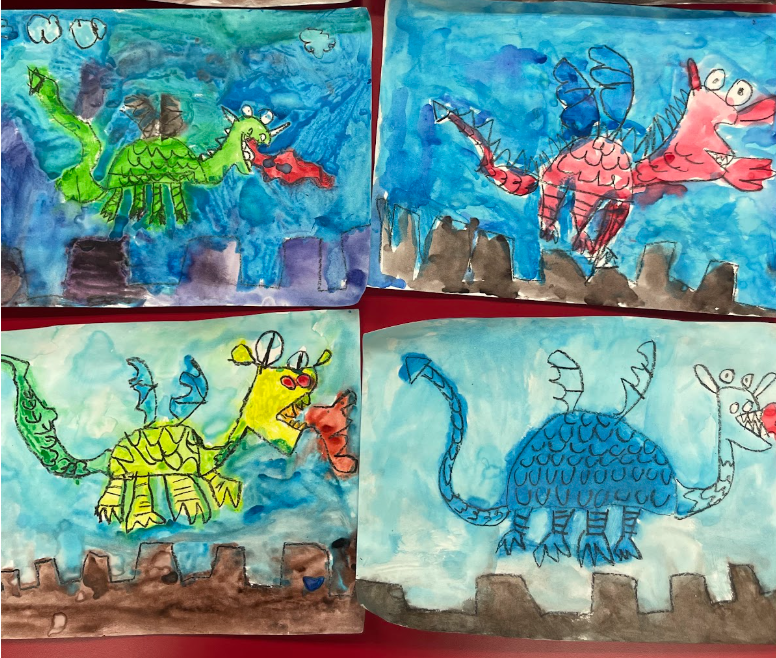
After I got back home it was time to work on bringing the magic to my students. Fairy Tale Week was born. I collaborated with my specials team on making Fairy Tale Week a reality. Students would have fairy tale-themed lessons in all of their specials classes: music, PE, art, STEM, and library. We would have a dress-up day on the Friday of that week, because who doesn’t want to dress up like a fairy tale character or creature? In November 2023 we had our first Fairy Tale Week, and it was a magical success. Students drew castles, dragons, and king and queen portraits. They played fairy tale games, and created their own fractured fairy tales. They participated in a musical storytelling and a Disney sing-a-long. They also competed in fairy tale STEM-related challenges.

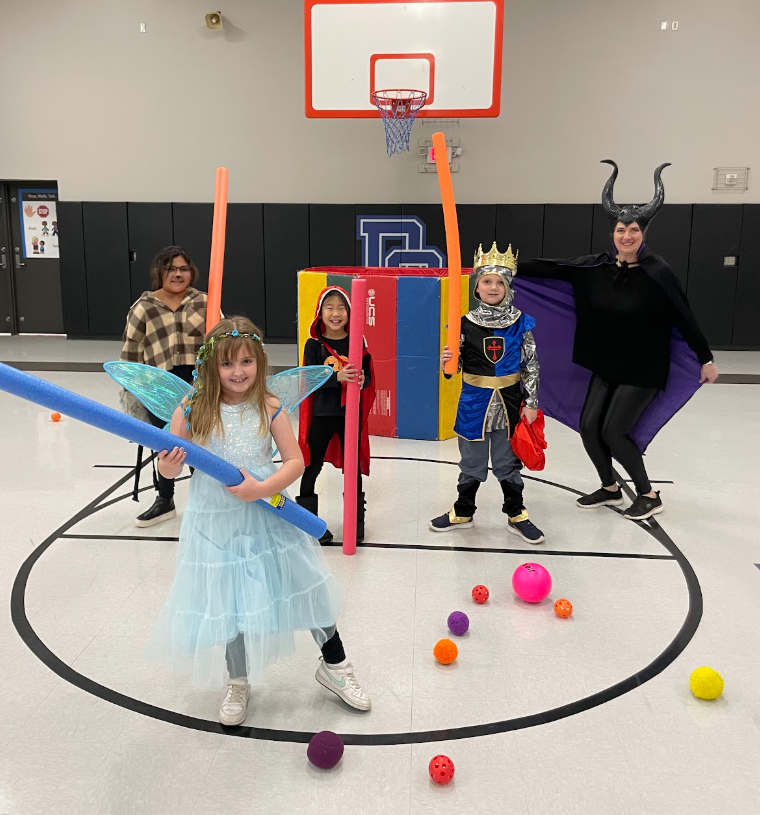
The week had been like a dream, but as I read stories to all of my classes that week, I realized many of my students were unfamiliar with the original fairy tales. To address this gap, this year I spent more time reading classic fairy tales to all of my students in preparation for Fairy Tale Week. Our second annual Fairy Tale Week was in January 2025, and it was once again filled with fairy tale-themed lessons in all of the specials classes. Fairy Tale Friday was especially fun! Classes gathered in the gym for enrichment during specials, where they heard the story of Rumplestiltskin, played a kingdom-defending game, and showed off their wonderful costumes. Both Fairy Tale Weeks wouldn’t have been as magical without my team. With my whole team on board, we were able to create a special week for all of our students! Recently, I have had teachers express a desire to have additional grades collaborate with us in the future. It will be interesting to see how Fairy Tale Week evolves. 

I’m so grateful to have been awarded this grant and to be able to call myself a Fund for Teachers Fellow. This experience has created in me a lifelong interest in fairy tales and a desire to share them with my students. I was able to present, along with Hailey Wansick, about our fellowship at the 2024 Oklahoma Library Association conference as well as during an Oklahoma School Librarians (OKSL) Learning Module over the summer. It was an honor to share with others about this special professional development opportunity and encourage them to apply! People often ask me what my favorite fairy tale is, and I have such a difficult time answering this question, because I know I have so many more fairy tales to read and discover! However, if I have to choose, Little Red Riding Hood is a forever favorite. National Tell a Fairy Tale Day is on February 26th, and I encourage everyone to take this opportunity to share with others a tale as old as time!