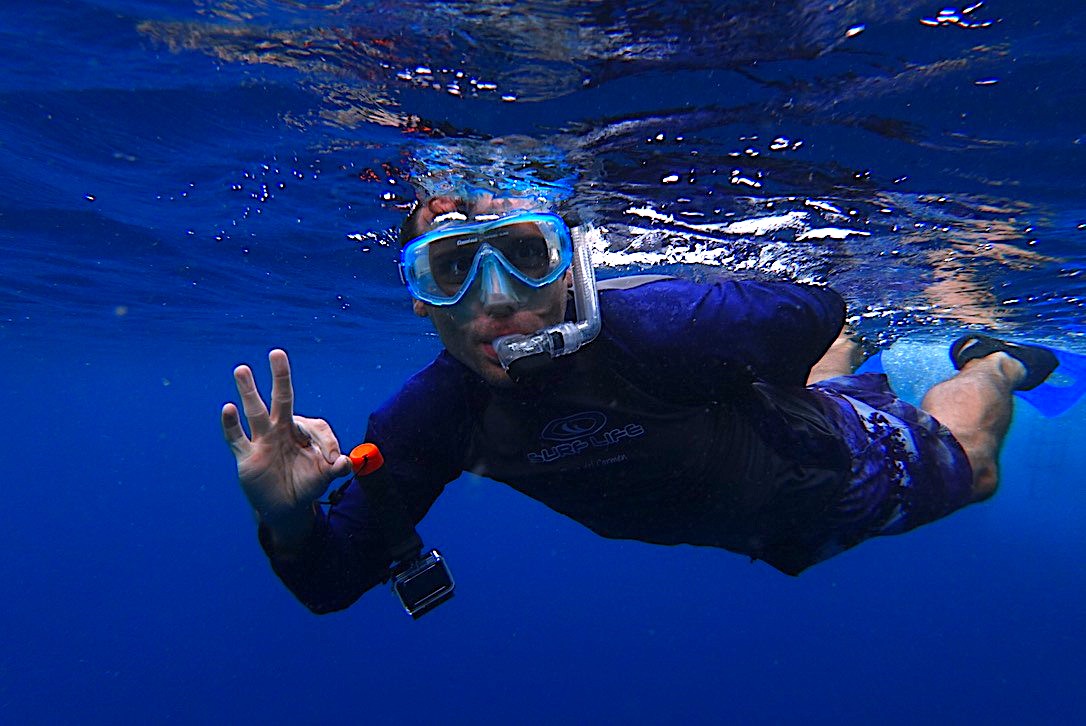
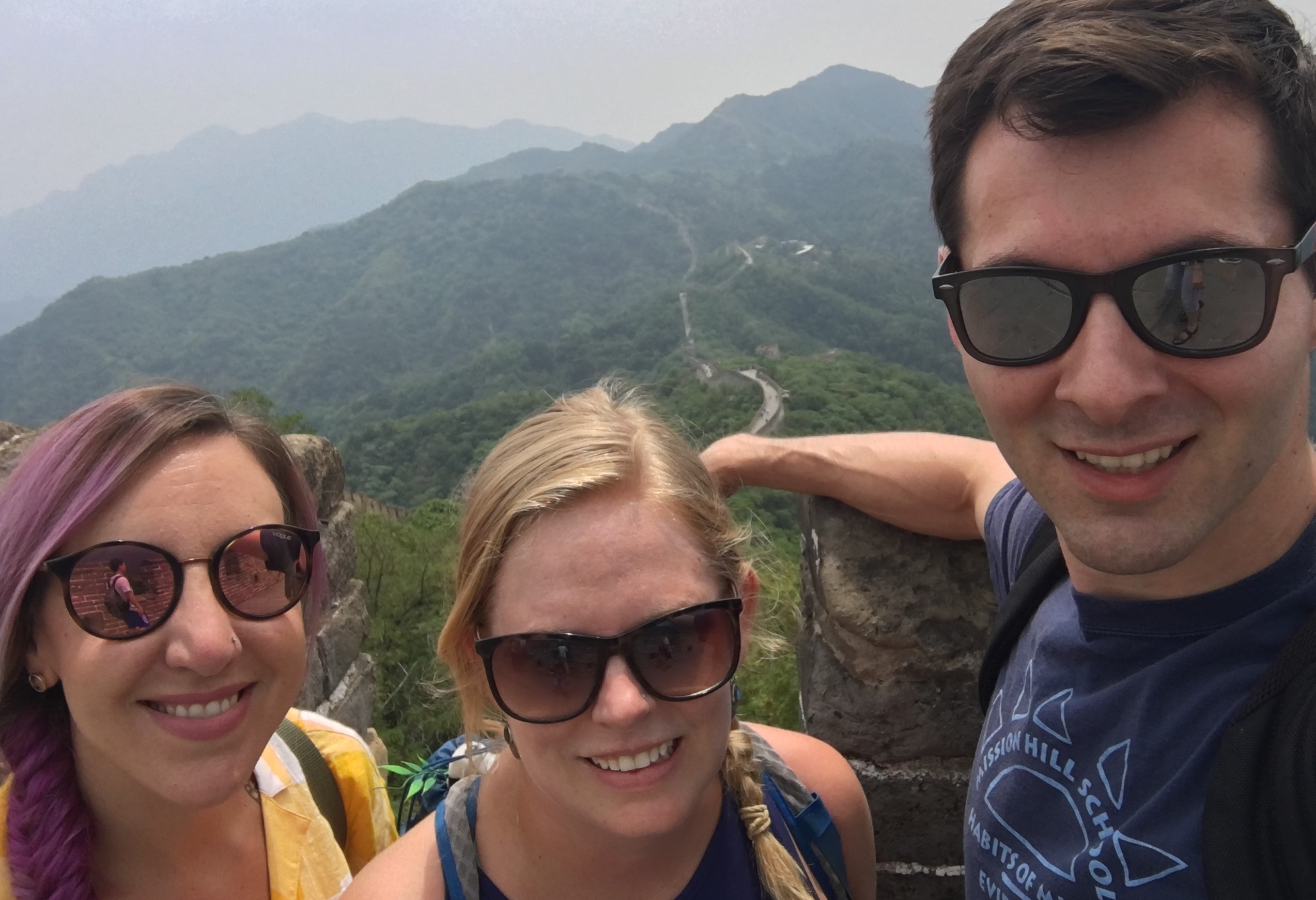
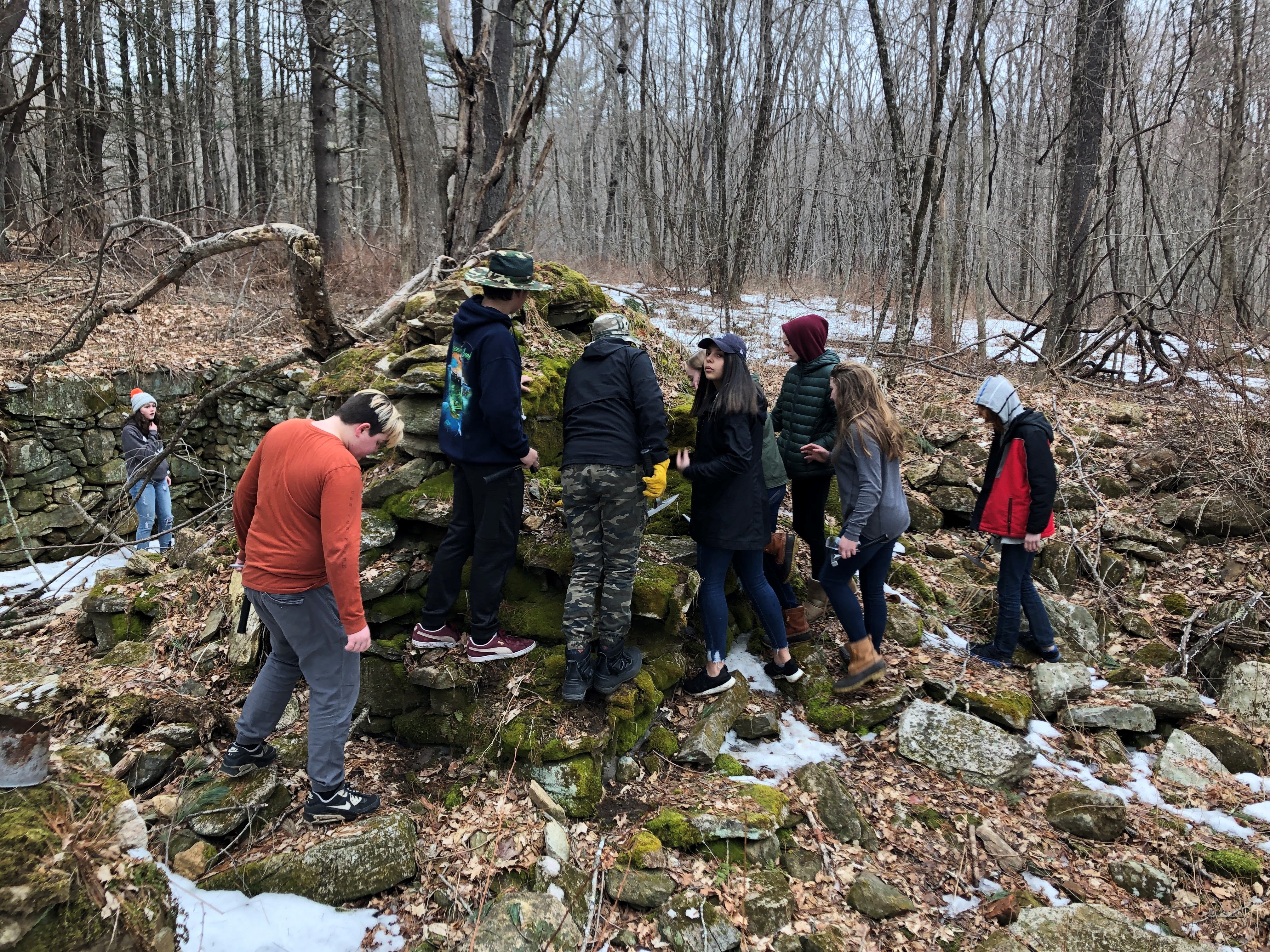
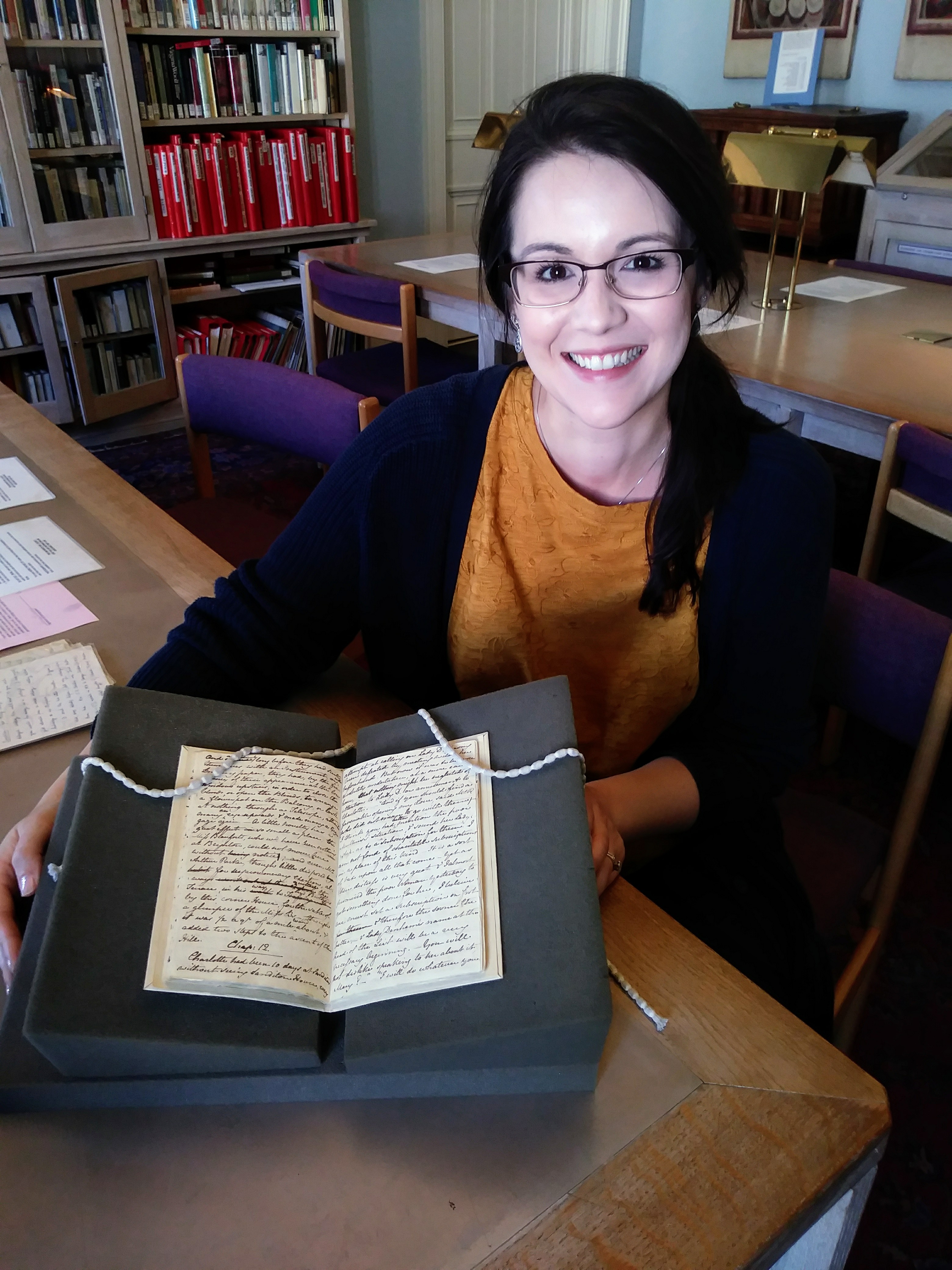
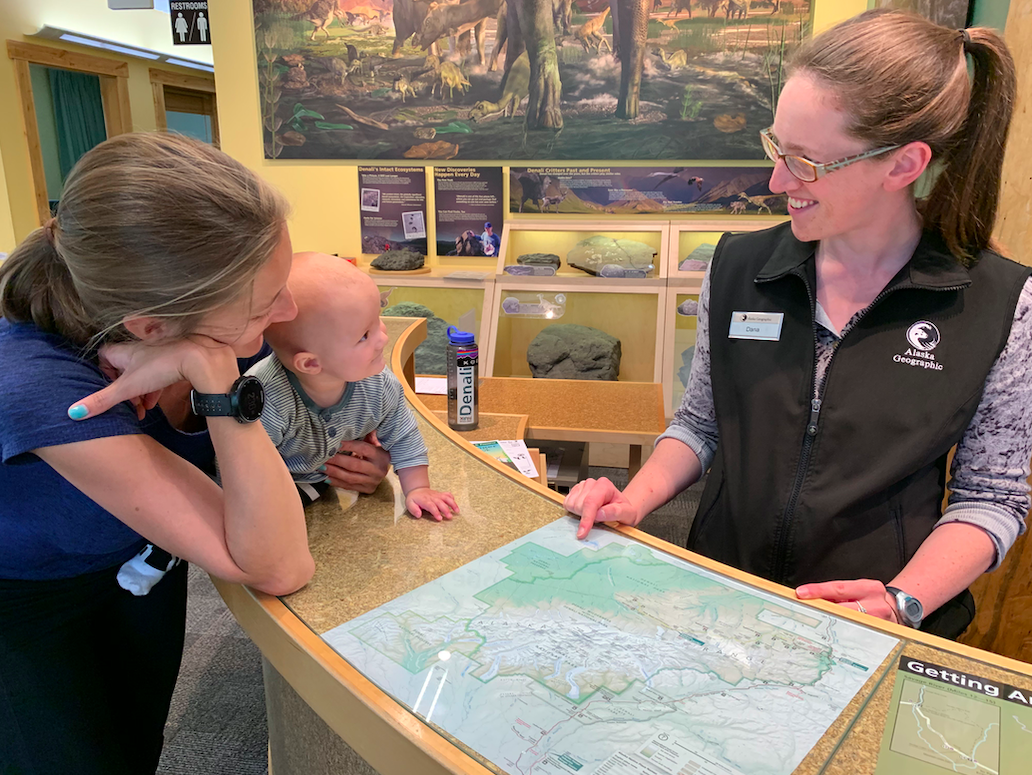
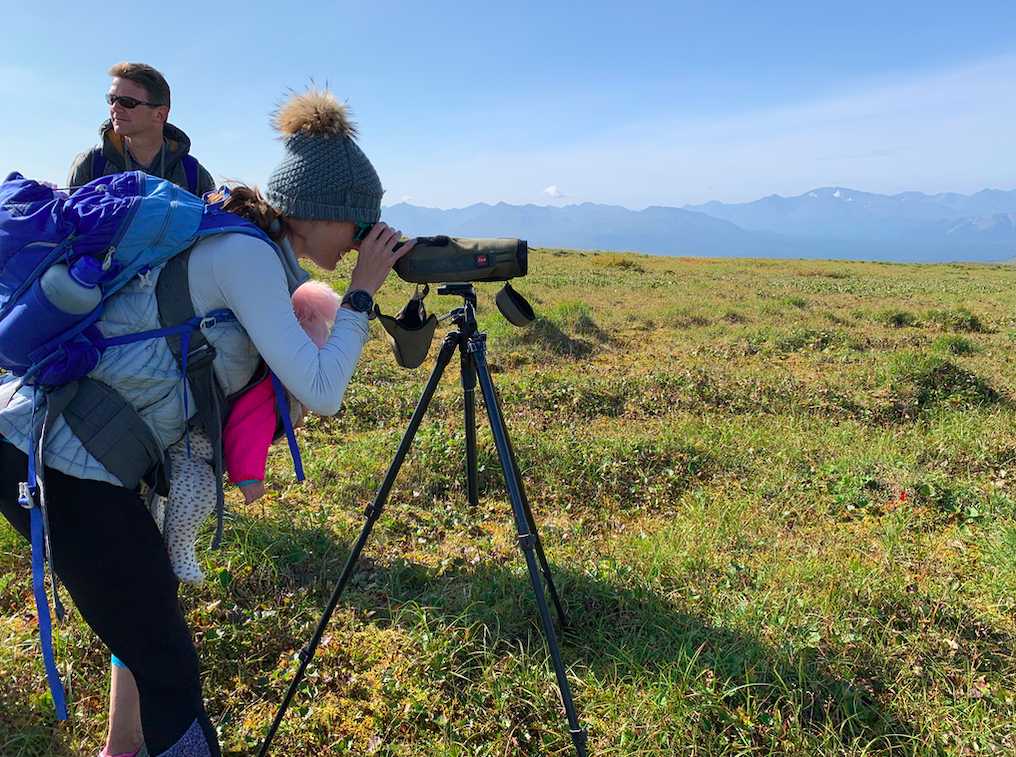
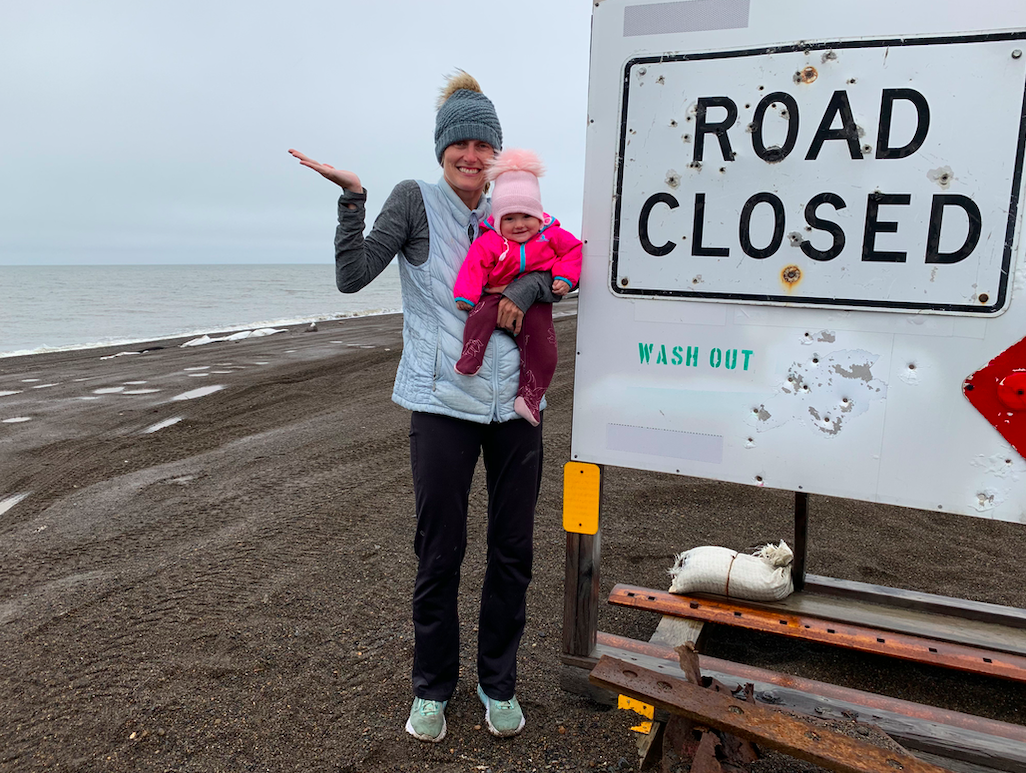
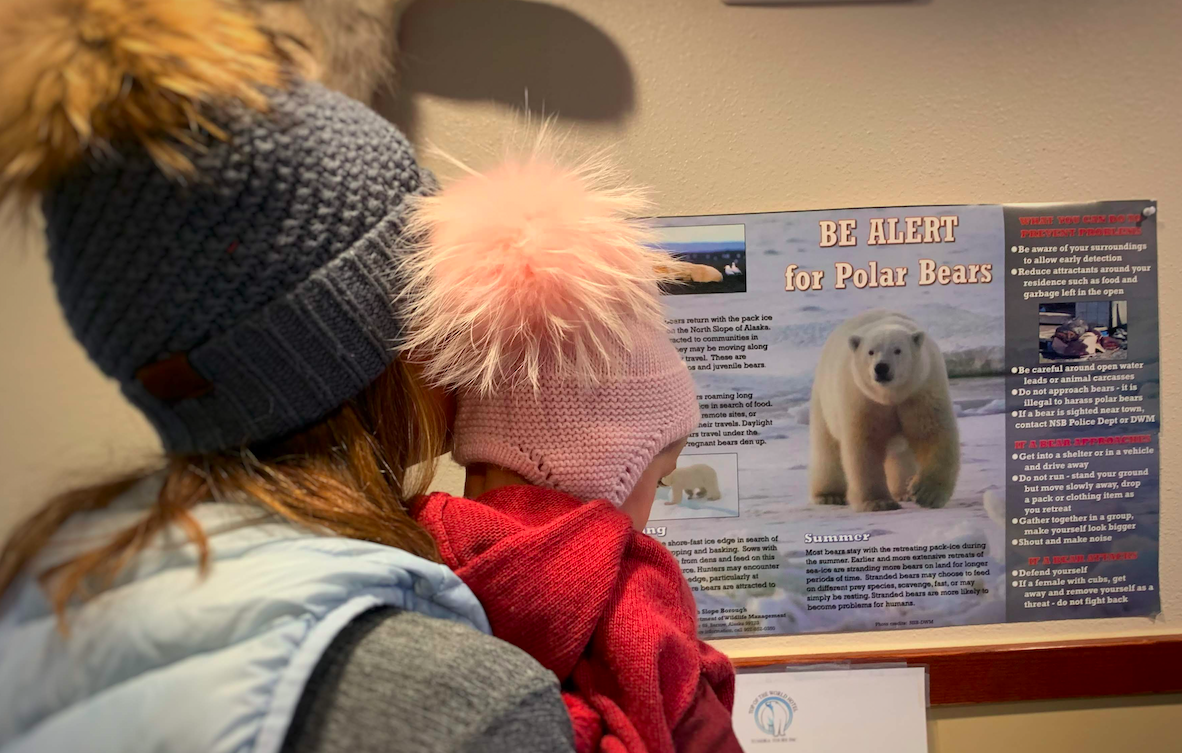
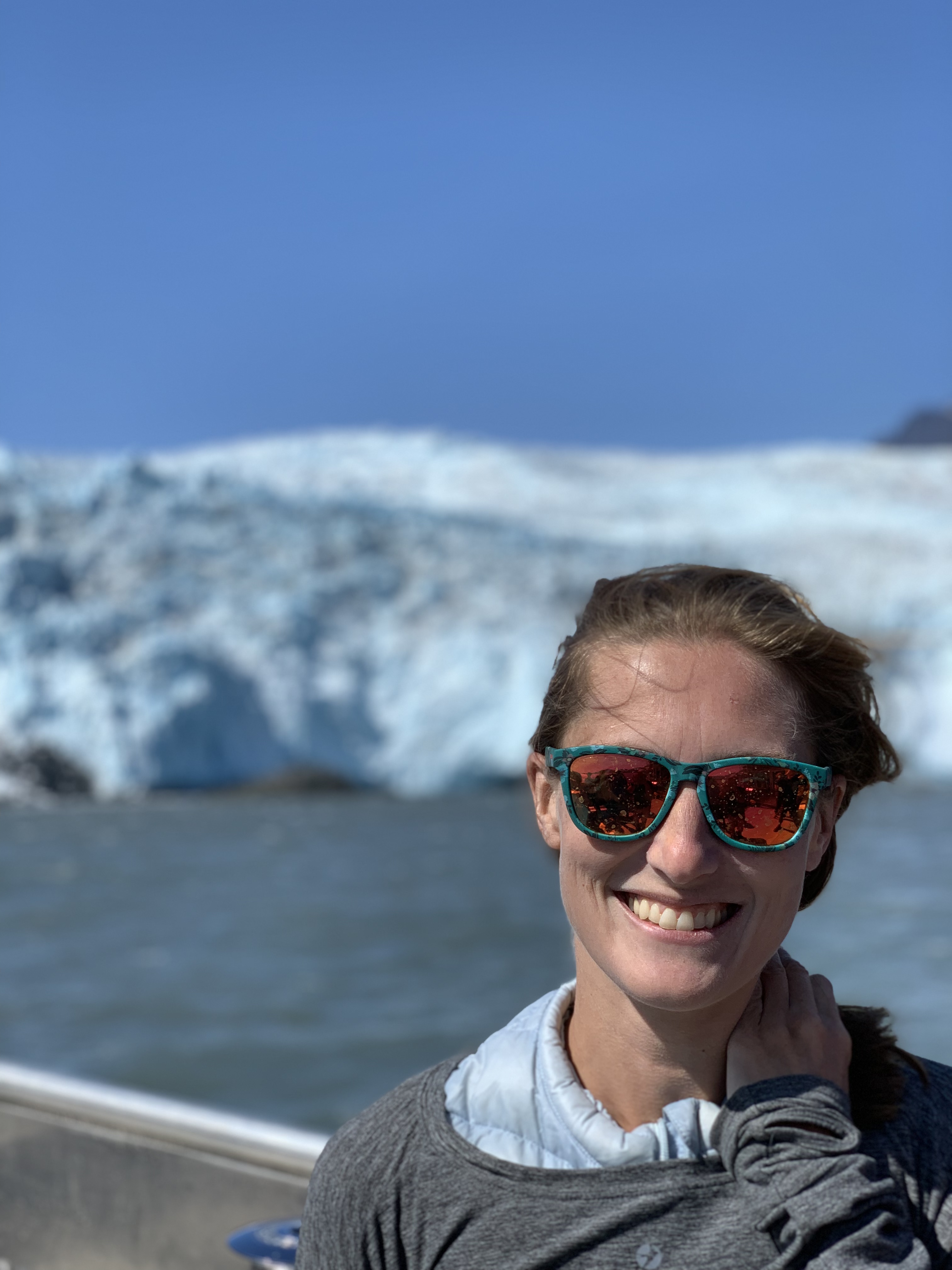
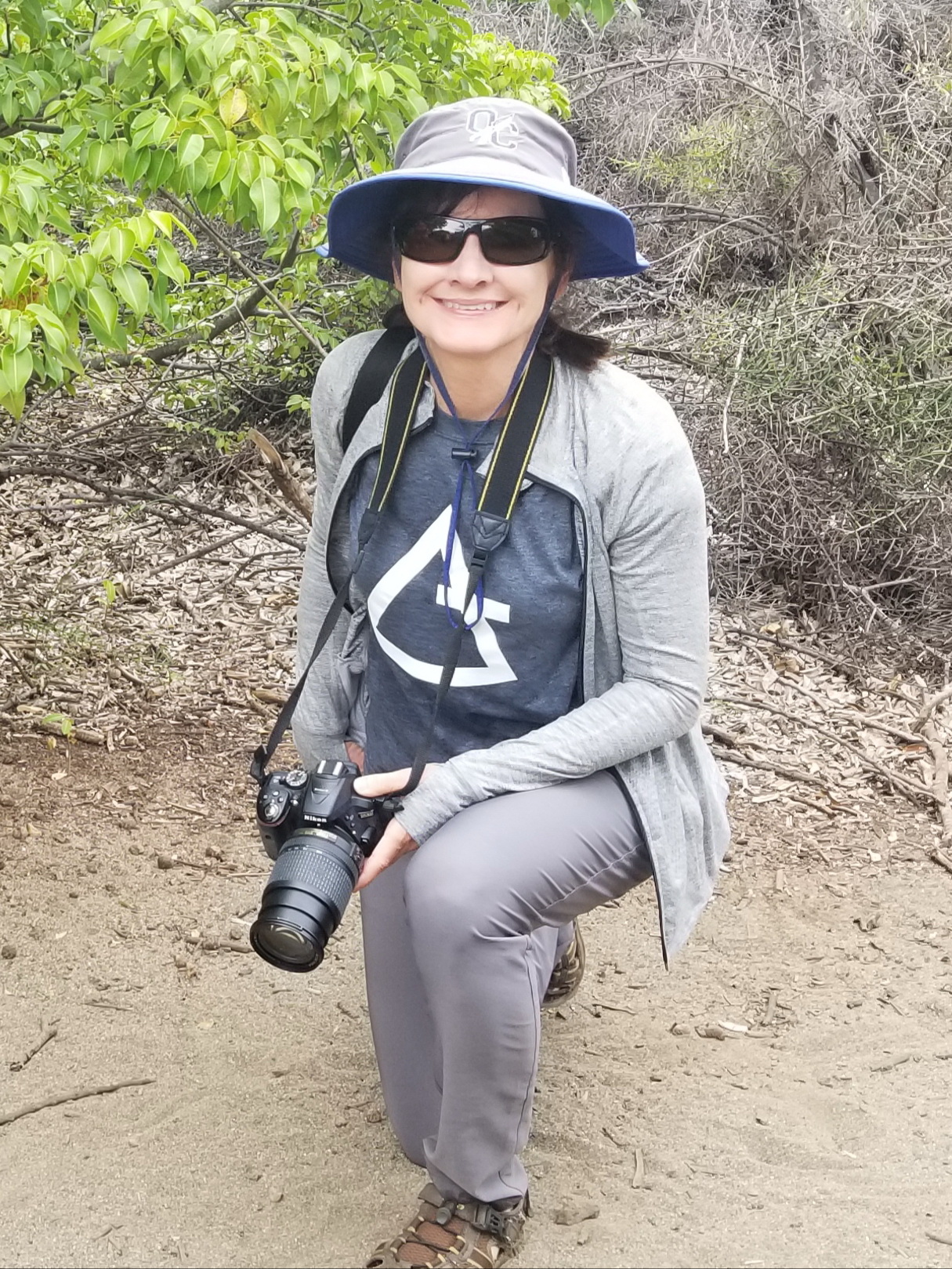
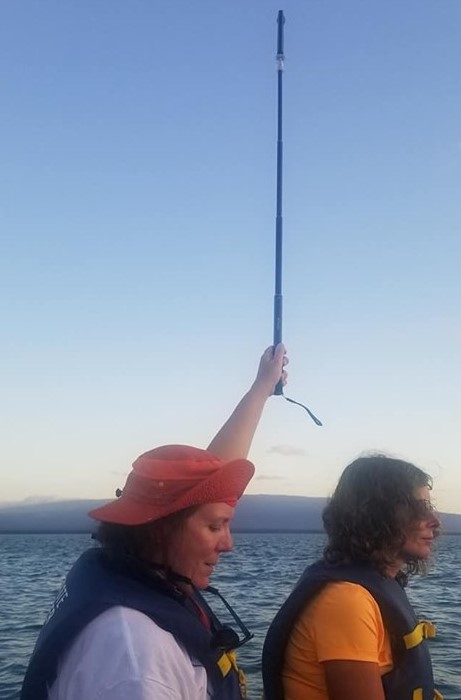
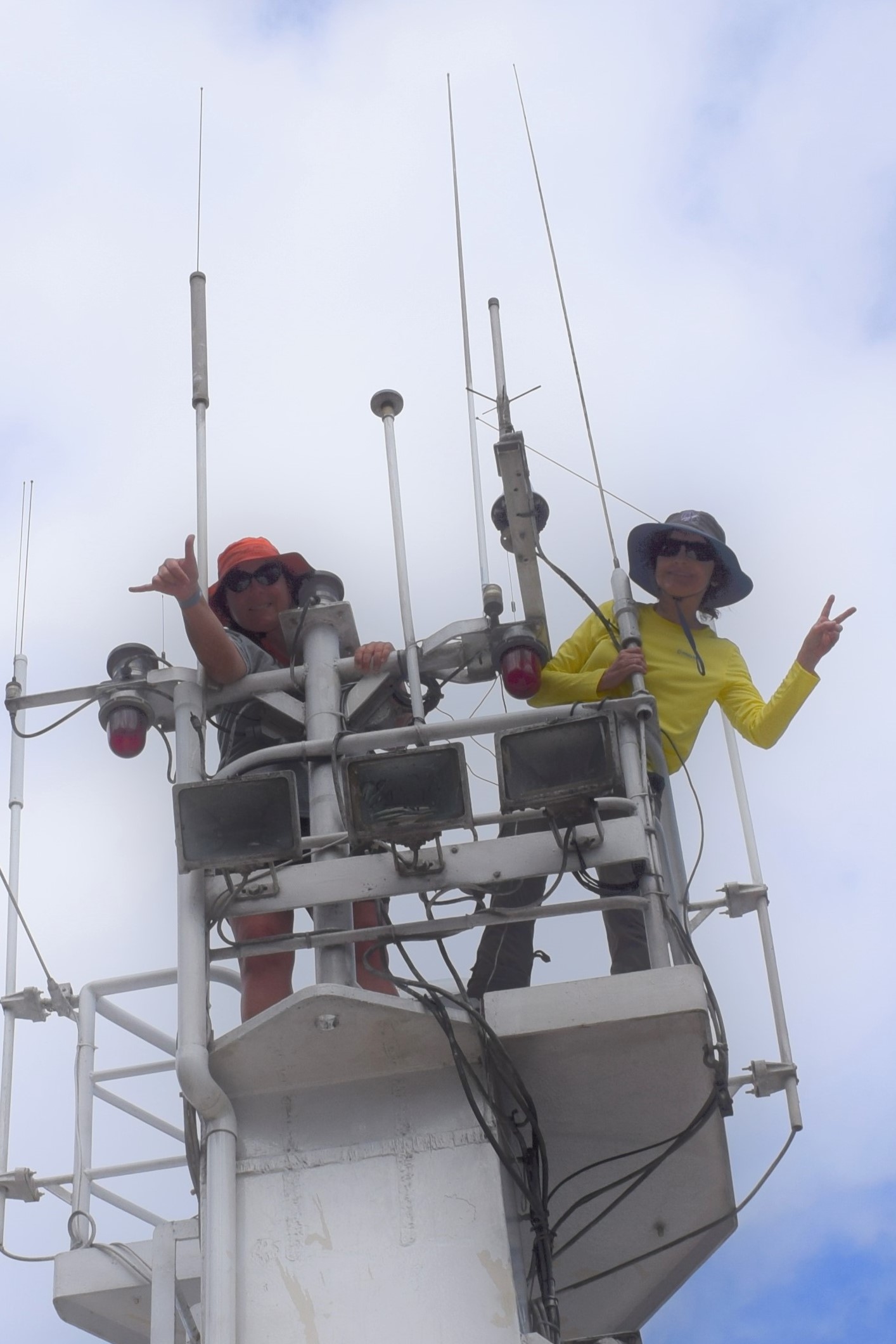
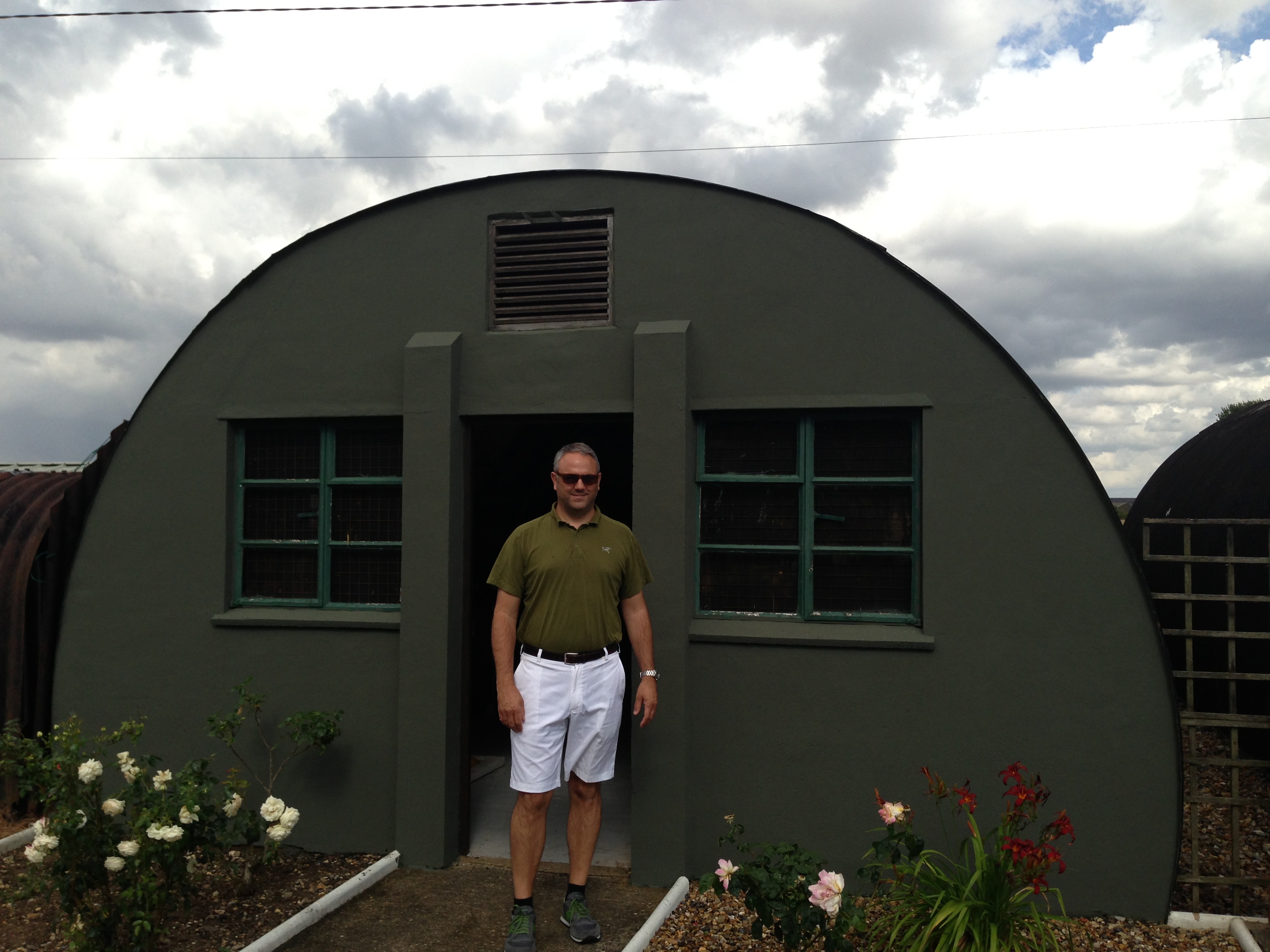
Barbara Walters said, “Most of us have trouble juggling. The woman who says she doesn’t is someone whom I admire but have never met.” FFT Fellow Helen Dole, however, seems to be managing fairly well. Helen teaches sixth grade at Lower Manhattan Community Middle School in New York City. With her teammate Molly Goodell, she and five-month-old daughter Sophie Tilmant set off for Alaska this summer to tour boreal forest, coastal, tundra, and glacial ecosystems and collect first-hand evidence of climate change for a sixth grade unit called Human Impacts. She shares some of her experiences below…

An educator in Denali shares with us about the methane that is being released as a result of permafrost melting.
We teach in a school that has students from a wide range of socio-economic backgrounds. Some students have second homes in the Hamptons, while others have grandparents/aunts/uncles cousins all under the same small roof in Chinatown. We previously did a Human Impact project; students relied on internet searches to source information. Now we have brought real data; photos, interviews, and our stories to ALL of our students–we are bringing the world to them even if they have yet to board a plane.
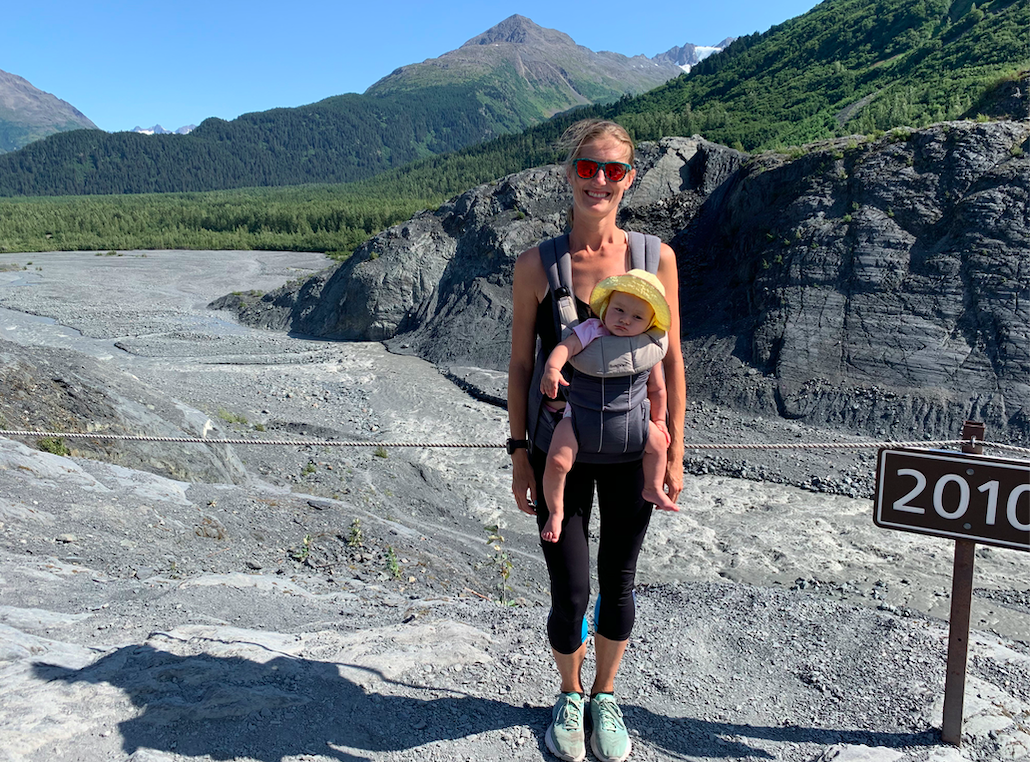
I now see the bigger picture in a deeper way and I’m more passionate about making my students ‘see’ it, too. It’s easy to read articles about climate change and cognitively understand what is happening. It’s an entirely different boat to stand by the sign showing where a glacier was just 10 years ago (and now it’s ice-free) and not viscerally feel how the world is being affected.

On our heli-hike adventure, we learned how about it’s not how warm it is, but rather the length of the growing season that is changing the vegetation.
Teaching is a joy and a grind. You are always “on;” engaging with students in person, families via email, via google docs with colleagues, or in person at staff meetings. This opportunity allowed me to turn my brain to a different mode from the regular routine. I was learning, yes, but in a more open and unencumbered way than the minute-by-minute schedule of a middle school environment. I landed back in NYC feeling enriched and invigorated for the year ahead.
Also, we experience the world through storytelling and now, our stories are going to be much richer and more vivid; filled with cutting edge science and personal anecdotes from our time in Alaska. They will be able to cite specific examples — equisetum plants spreading, the number of days above 50 degrees Fahrenheit North of the Arctic Circle, soil that doesn’t hold rain, roadways decimated from melting permafrost, increased frequency of wildfires, heavier snowfalls in winter, methane gas being released at an alarming rate, the list goes on — and then have teacher stories/images to connect to these sometimes hard-to-internalize science facts.
I went into this fellowship with the understanding that I was traveling with my co-teacher, Molly, and that we would strengthen our co-teaching skills on this trip. I didn’t know how much so, though! I traveled with my 5-month-old infant, so I relied on Molly in SO many ways for support and sanity. This journey to Alaska was like the ultimate trust-builder. If students thought we completed each other’s sentences BEFORE this trip, now they’re going to think communicate telepathically!
Additionally, living in a city, it is easy to go about my day and not feel fundamentally affected by climate change. My food, my transportation, my workplace, and home are all far enough removed from Mother Earth that I am not forced to see how climate change is a real thing affecting real people, animals, and plants. On this fellowship, I was able to witness how ice has shifted, plants and animals have migrated, and people have altered their ways of life because of a warming planet.
[minti_divider style=”3″ icon=”” margin=”20px 0px 20px 0px”]
Helen is in her 15th year of teaching. She is a New York City Teaching Fellow, Math for America Master Teacher, and former Department of Energy Teacher as Scientist. She believes in helping students to see science in their everyday lives; continually striving to make connections between their world and the science they are learning about. Outside the classroom she is a passionate runner. She’s a proud mom to two young children.
America’s teachers were among the first responders on September 11, instantly becoming students’ source of information and calm. In the years following the tragedy, multiple teachers have turned to Fund for Teachers for grants to develop strategies and resources that help students process what happened and also provide context for those not yet born when the planes flew into the World Trade Center. One such FFT Fellow is Julie Gallegos, teacher at Bret Harte Middle School in Oakland, CA.
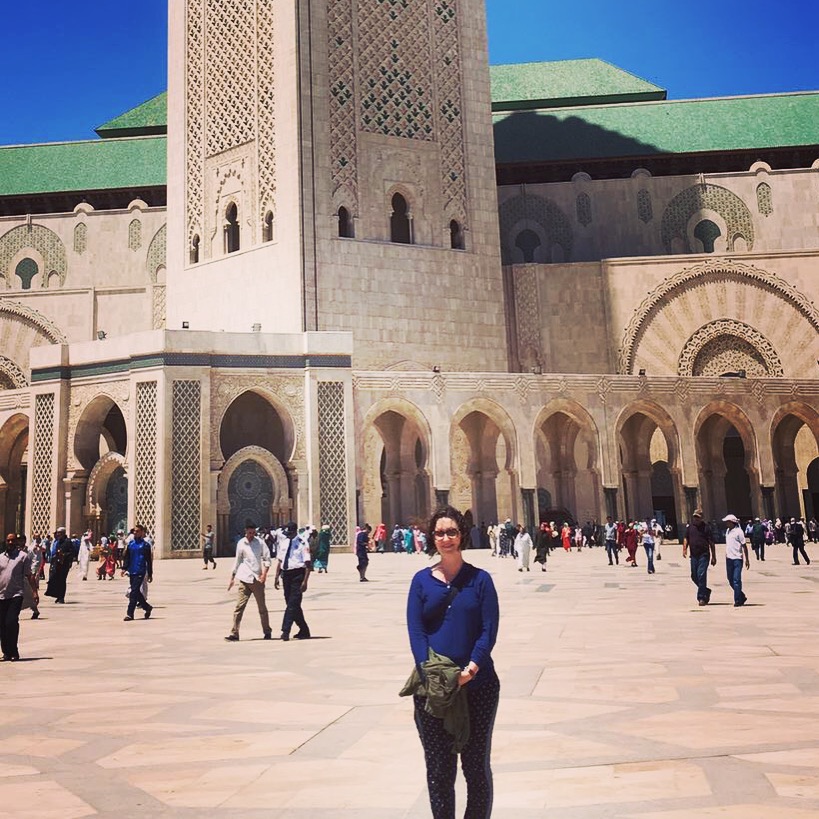
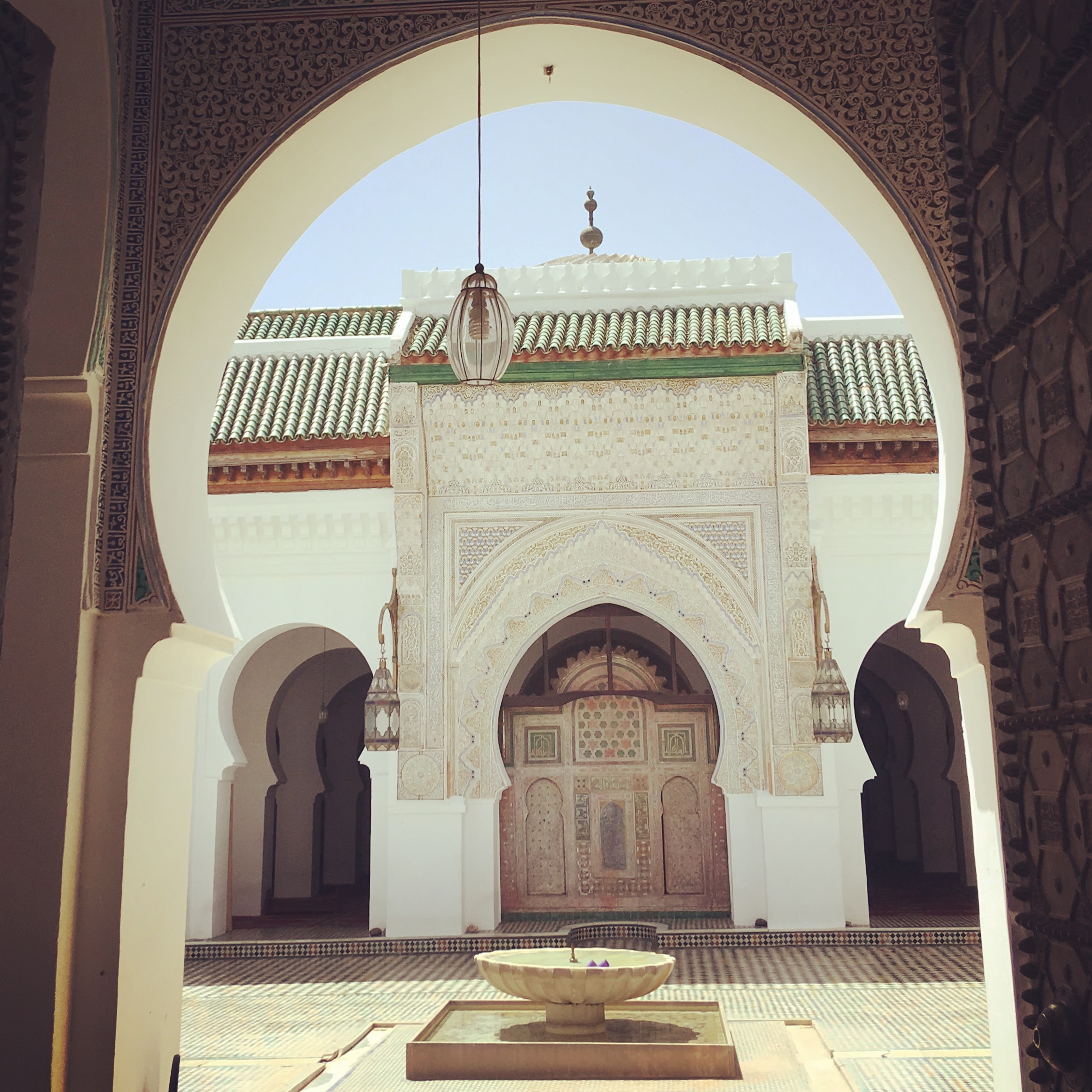
In 2017, she spent one month in Morocco participating in an intensive Arabic language course and visiting sites of historical and cultural significance to create curriculum that promotes understanding of Islam among Muslim and non-Muslim students.
As a teacher and instructional leader in a diverse middle school program for recently arrived immigrant students, all of Julie’s students are English Language Learners. Despite a growing number of students arriving from Arabic speaking countries, the school had no classroom teachers who spoke the language or had even studied the Islamic culture.
“I am passionate about being an advocate for my immigrant students and their families,” said Julie. “I already had an understanding and knowledge of Spanish and Latino cultures, which prepared me to be a culturally-informed educator for students of this background. However, considering the current political climate regarding Muslims and immigration, I felt it was critical for me to be informed and ready to speak and act on behalf of our Muslim students.”
Julie chose Morocco as her fellowship destination due to its rich and diverse history, as well as a large number of religious and culturally-significant Islamic sites. (Morocco is also one of the few Islamic countries for which the US State Department has not issued travel advisories.) For two weeks, she enrolled in Dar Loughat, a language institute in Tetouan, where she spent mornings in language classes and afternoons and weekends joining excursions to local cultural and religious sites. Her experience also included a homestay with a local family. Julie joined a 14-day guided tour of Morocco for the second half of her fellowship, filming mosques, universities, museums and, especially, interviews with people in large cities and small villages to inform lessons for students and professional development for colleagues.
“What struck me most about Morocco is how peacefully different cultures and religions of people are living together. In the city of Tetouan, Muslims, Christians, and Jews live together in close quarters as neighbors and consider each other brothers and sisters. The people I met connected with each other through their common humanity and didn’t view religious or cultural differences as a barrier. Witnessing this type of human connection inspired me to plan team-building and cultural exchange opportunities for my students to help them better connect with and understand each other.
Julie now uses her experiences and insights not only in her classroom, but also in supporting her role as liaison with the school’s Family Resource Center, which facilitates the intake process for new students. She believes her new, basic knowledge of even simple Arabic phrases will indicate to families that the school community cares about all students and that teachers are making an effort to understand their cultures.
Additionally, as an instructional leader at her school, Julie is working to design workshops for her colleagues that discuss implications for teaching Muslim immigrant students and facilitate cross-cultural understanding among the students of diverse backgrounds.
“Studying Islam and Arabic in Morocco allowed me to learn about Islamic cultures, customs, and values and different education systems our students may be coming from so that I can share this knowledge with teachers,” said Julie.”I will design a program to share this information and also address teachers’ questions and misconceptions about our students and their cultures and religion. Overall, my goal is to help lead the staff at my school in being more inclusive and understanding of our Muslim students.”
“The congratulations email we got from Fund for Teachers on April 4 about our grant said “This is just the beginning…” Little did we know how true that sentiment was…”
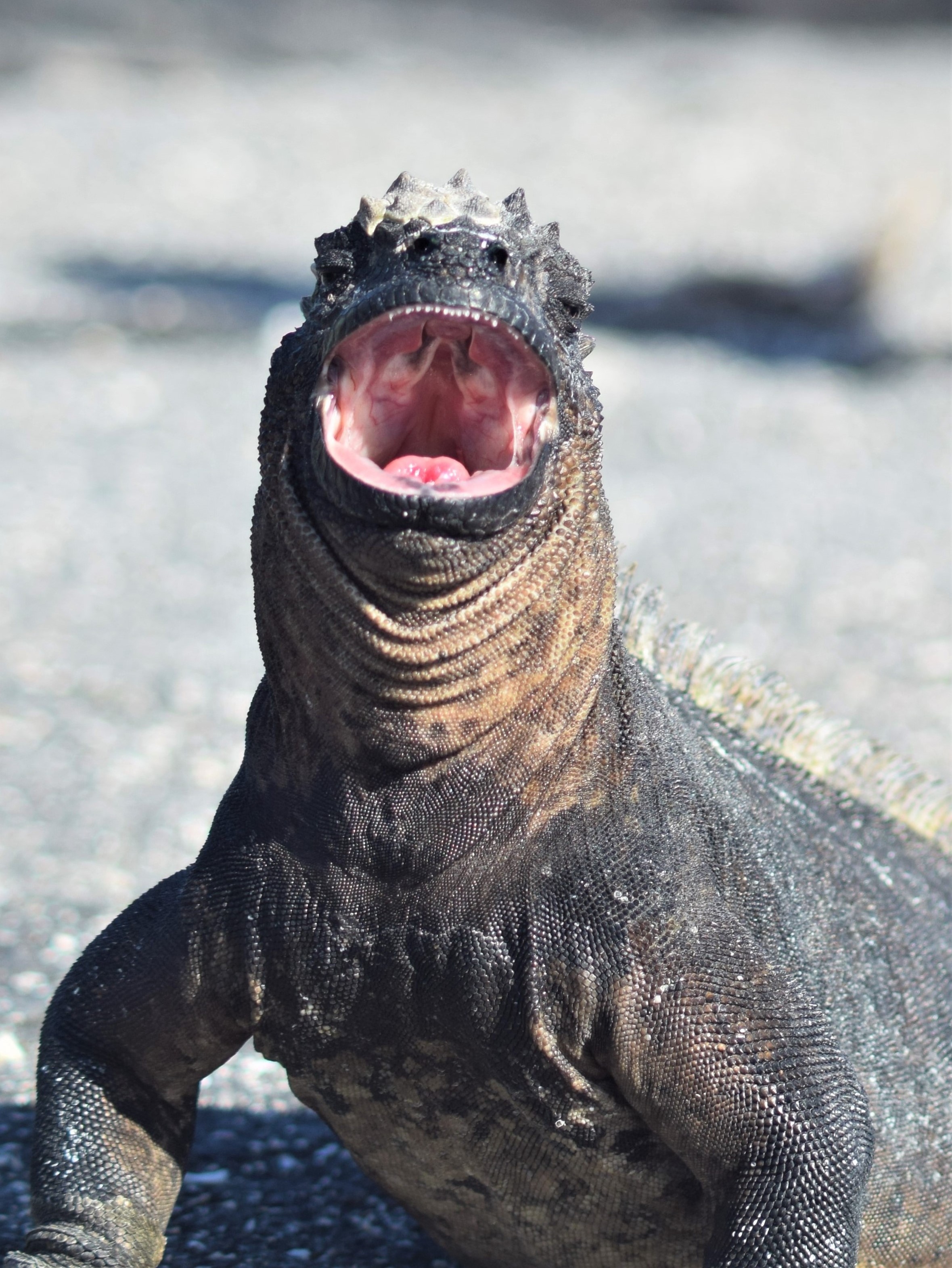
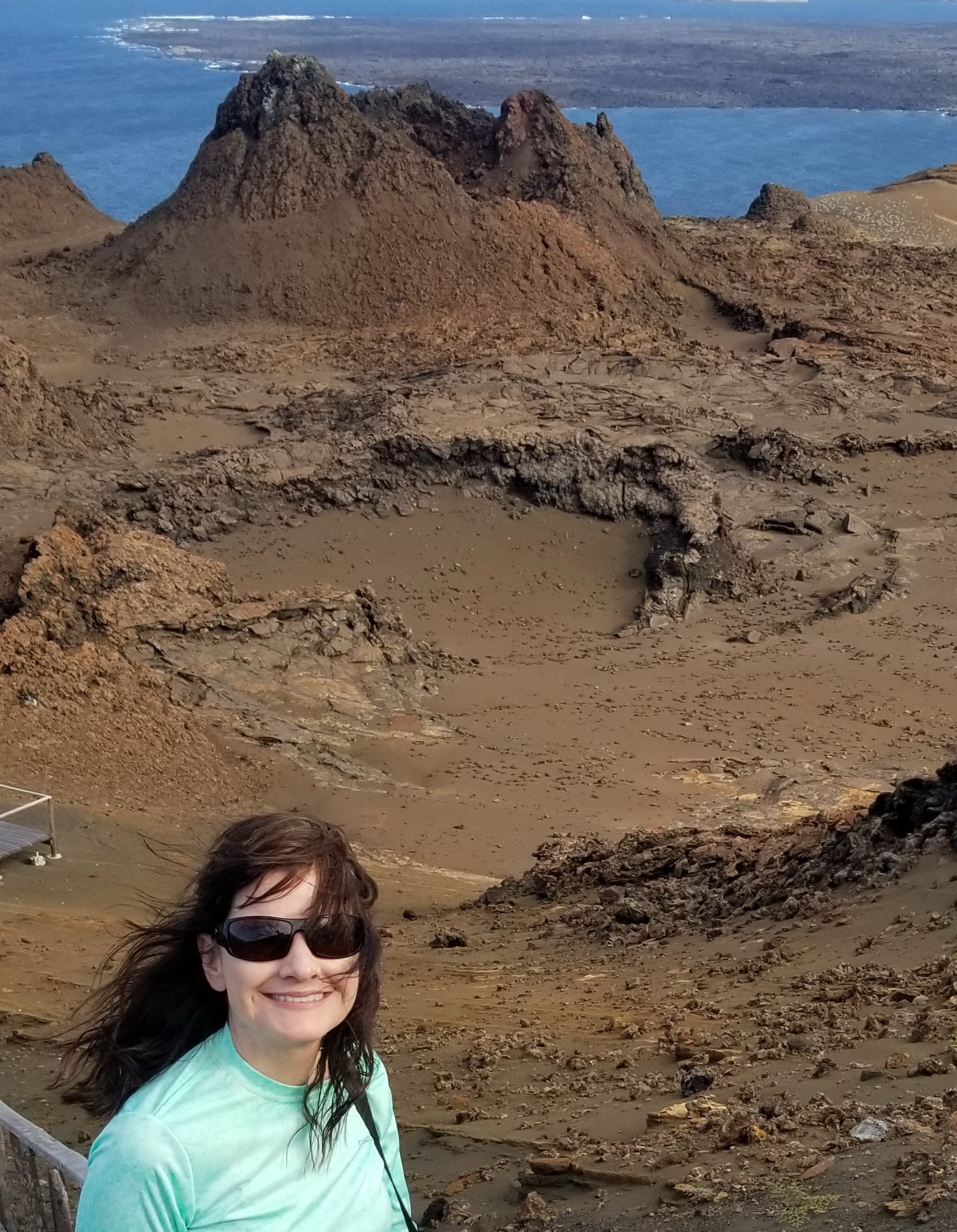
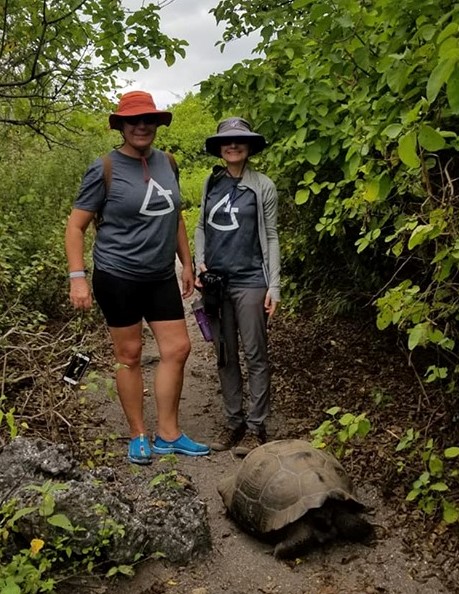
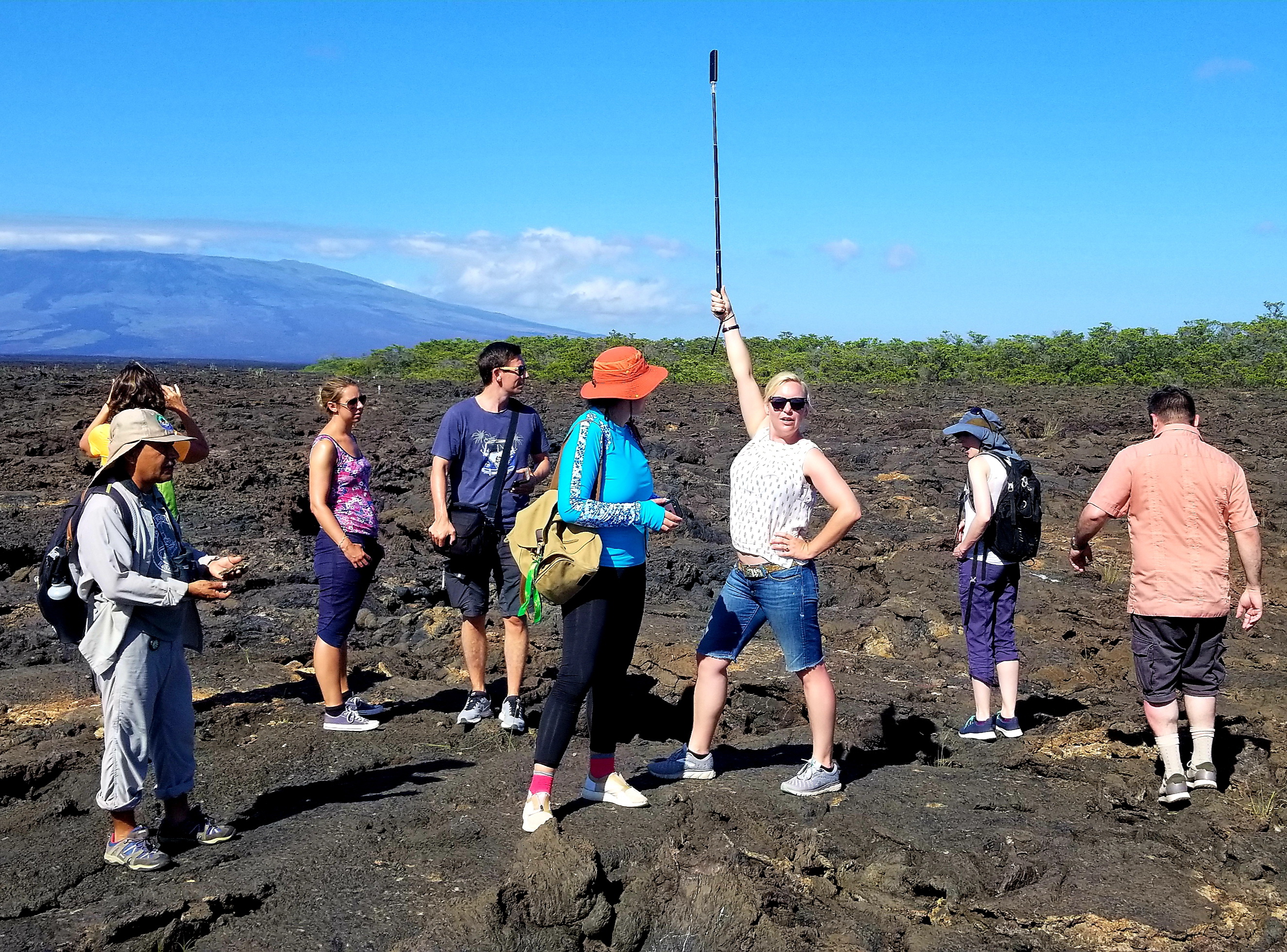
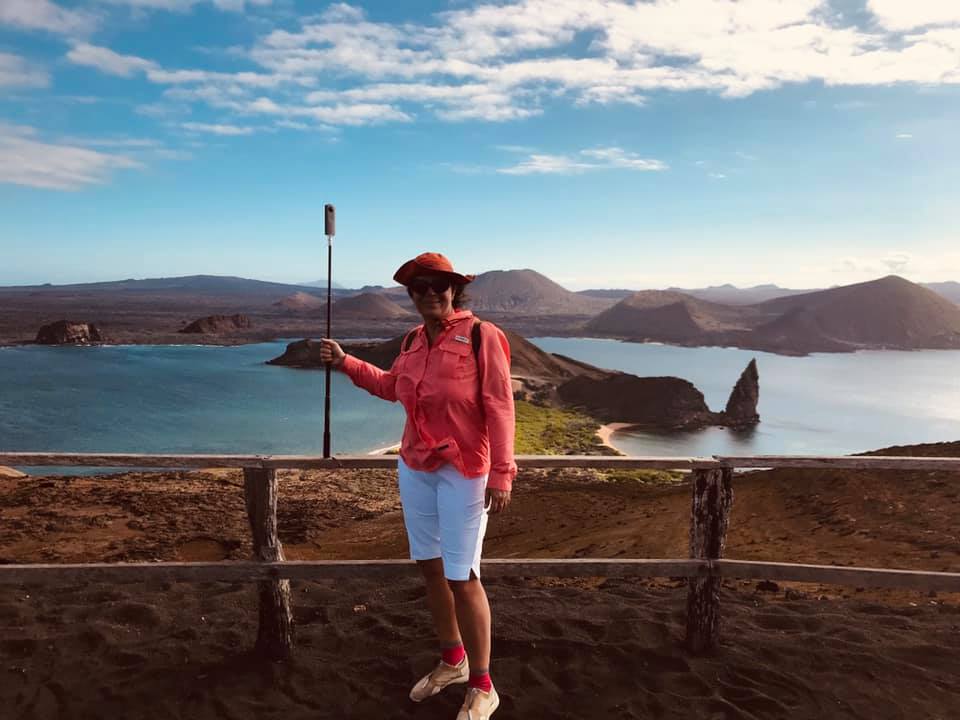
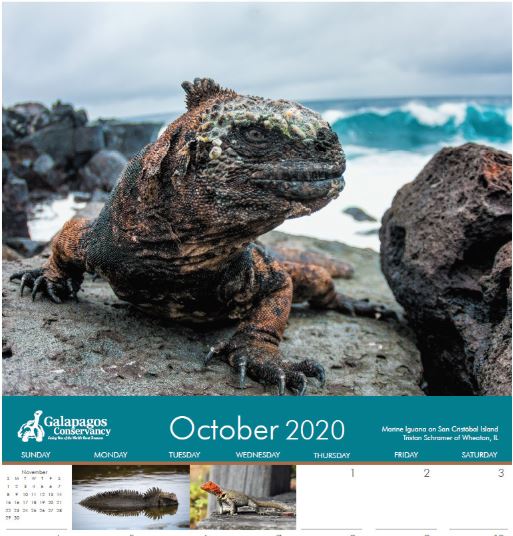
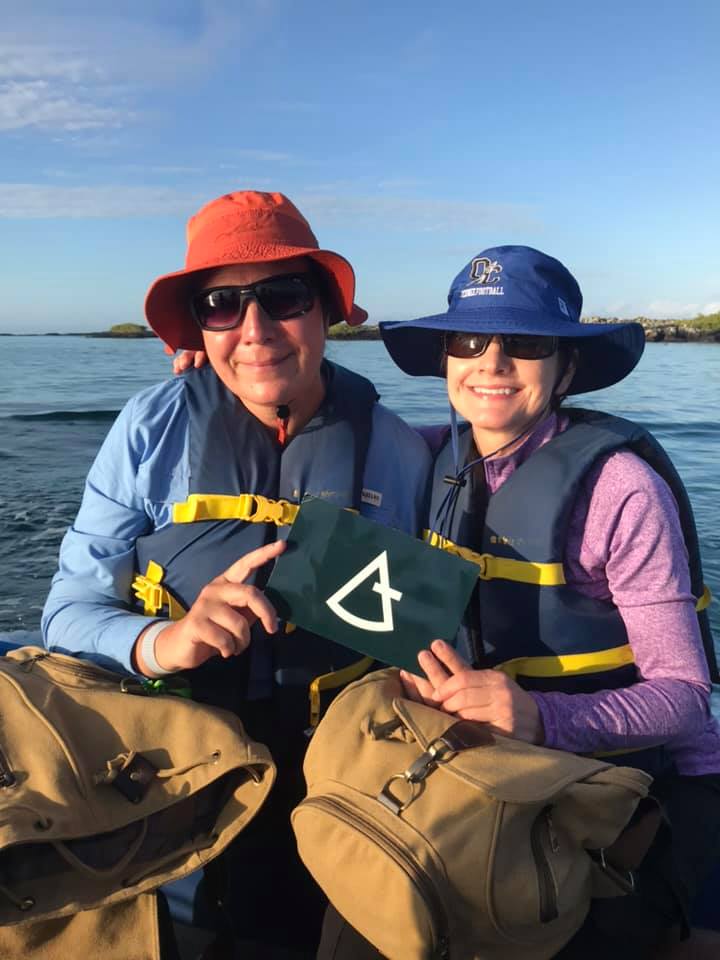
So began the note from 2019 FFT Fellow Kelly Whitaker. She and team mate Sherry Grogan (Monroe Area High School – Monroe, GA) designed their fellowship to collect data and capture 360 video in the Galapagos Islands to inspire scientific field experiences in Georgia that culminate in student presentations at elementary and middle schools intended to pique student interest in biology. Now, photos from their fellowship will also help fund conservation efforts of the Islands.
“My team member, Sherry Grogan, submitted some photos to the photography competition for the Galapagos Conservancy. She was notified this weekend that one of her photos of a lava lizard (above) had received an Honorable Mention and will be in the 2020 calendar.”
Read on to see more of “Team Darwin’s” adventures:
Sherry: “I pushed the limits of my comfort zone routinely while in the Galapagos. I learned to snorkel and engaged with land and sea creatures while shooting 360 videos and taking pictures. Learning in this manner has shown me the importance of capturing student interest in every unit and I feel that I am better equipped to make this happen after the fellowship. Students will surely perform higher in the evolution unit with newly designed lessons of 360 VR experiences and having studied Darwin’s work.”
Kelly: “As my teammate said, ‘We showed up as teachers and we are leaving as students. Our ‘I wonder…’ list is a mile long; our confidence has exploded; our friendship bond is rock solid. The emotional impact was more than I could have imagined. I sat in a panga with six other people with tears rolling down my cheeks at my first sighting of a blue footed booby. I found out that I can’t cry and snorkel at the same time, when I was bobbing in water with penguins.”
Sherry: “I will be entering my 22nd year of teaching next year. This fellowship has completely overhauled my passion for teaching and finding ways to spark interest in my students. I have already tentatively created a plan for involving some portion of the “Galapagos” in each unit. I think this recurring theme will brilliantly help the students learn about such a fascinating place on earth, while also mastering the standards in Biology.”
Kelly: “Our students are going to see our excitement and come up with their own ‘I wonder…’ lists. Our students will be able to ‘visit’ the Galapagos using our 360 video and still shots. They will have a connection to this material that they didn’t have before. We are already looking at the photos we want to exhibit in the elementary schools and middle schools. Our students will have a different level of engagement due to this connection.”
Sherry: “With all of the footage we shot (i.e., 360 video, photographs, 360 still photos, etc), we have a new approach to many of our units. The photos will come to life in the classroom through the eyes of two very enthusiastic teachers who absolutely cannot stop talking about this trip with friends and family. I learned so much about myself as a teacher, reevaluated my students, and I am prepared to provide a growth opportunity for all students in my room with exciting new material!”
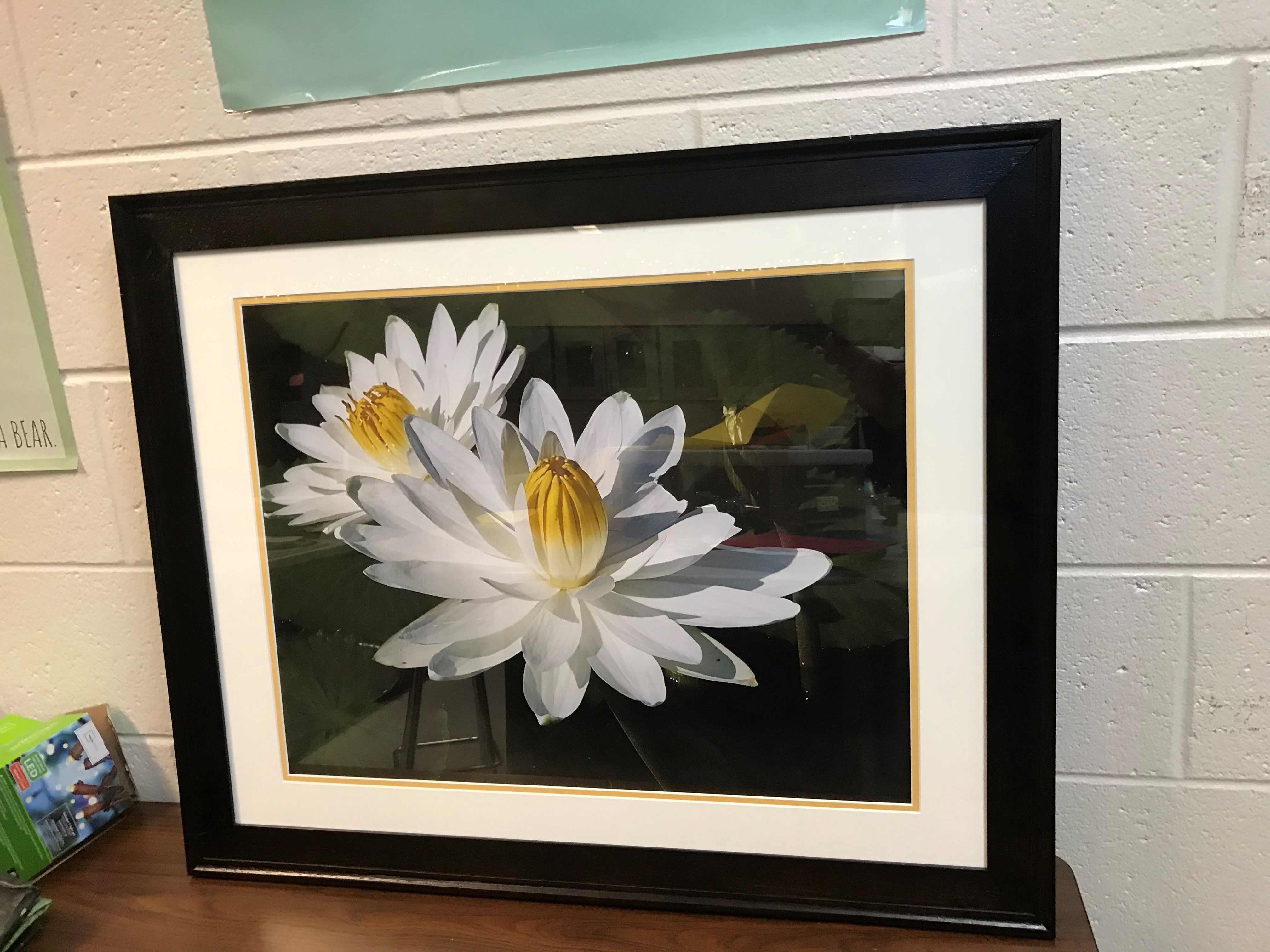
Kelly: “We wrote a grant for mini journals for every student, as well as for field trips to the state park and the Atlanta Botanical Gardens. Sherry’s winning photograph with the Galapagos Conservancy inspired us to have a photo competition among our students. Our media specialist printed the winning photos and our principal ended up paying to frame them! (That’s the water lily picture below).
We also worked in some interdisciplinary activities. We invited the art teacher in to teach a mini-lesson in nature sketching. Our favorite language arts teacher taught a mini lesson on descriptive writing. And our math teacher did a lesson on data collection and also designed a geometry lesson for a putt putt golf course.
Lastly, while writing our grant proposal, we reached out to our mayor. This connection built a relationship and we felt completely comfortable inviting him in to our class to have a forum with our students about environmental decisions in our town. How cool is that? We presented him with the winning photo from the photo competition and he took it to city hall where it was displayed for a month. All because of the connections made during the development of our grant proposal.”
[minti_divider style=”1″ icon=”” margin=”20px 0px 20px 0px”]
Sherry Grogan has taught high school biology for 20 years after spending 8 years as a police officer. Dr. Kelly Whitaker is a special education co-teacher in Biology and Physics. Her previous summer adventures include riding a motorcycle, solo, across thirty states and 16,000 miles; hiking 500 miles across Northern Spain on the Camino de Santiago and climbing Mt. Katahdin. To order the Galapagos Conservatory’s 2020 calendar featuring Sherry’s photographs from her fellowship, click here.
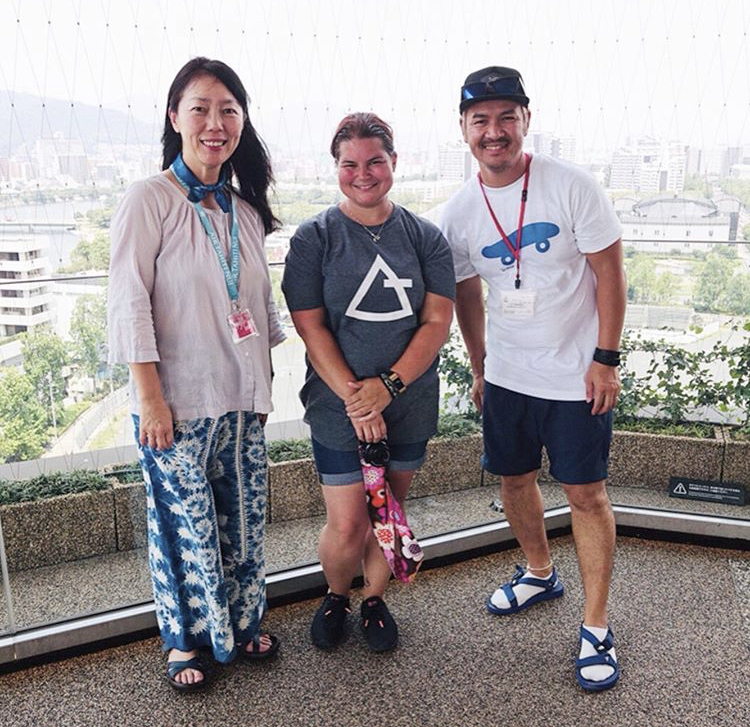
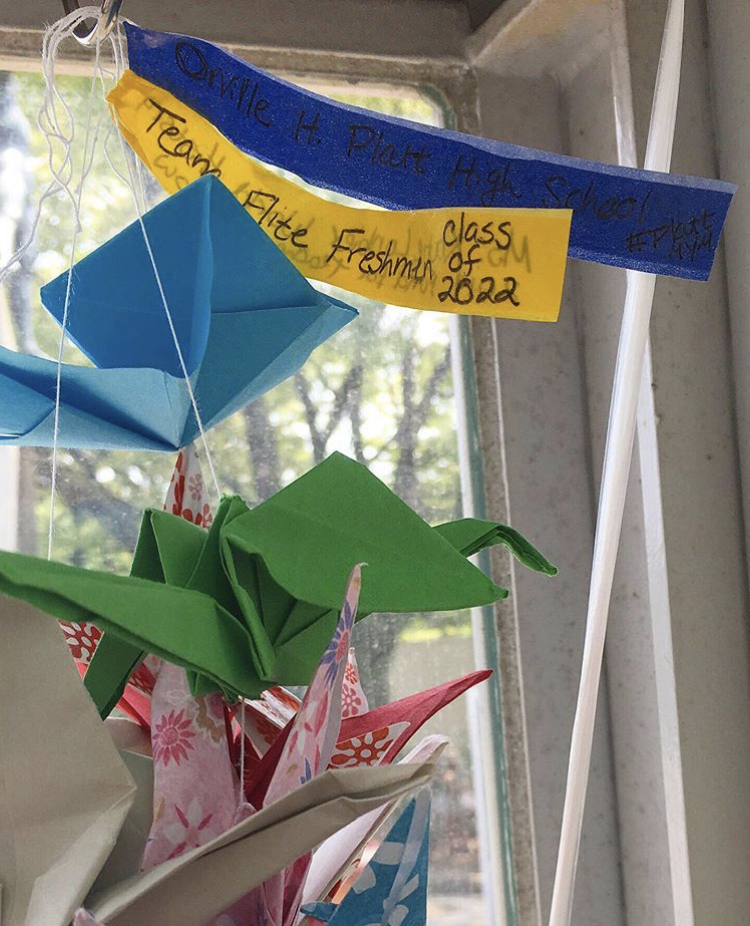
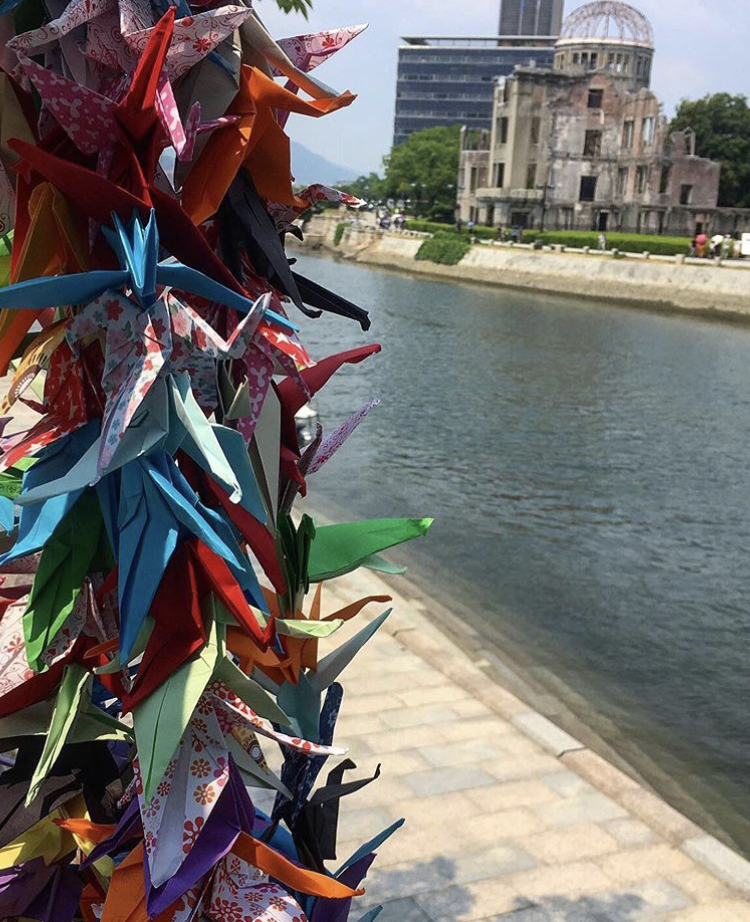
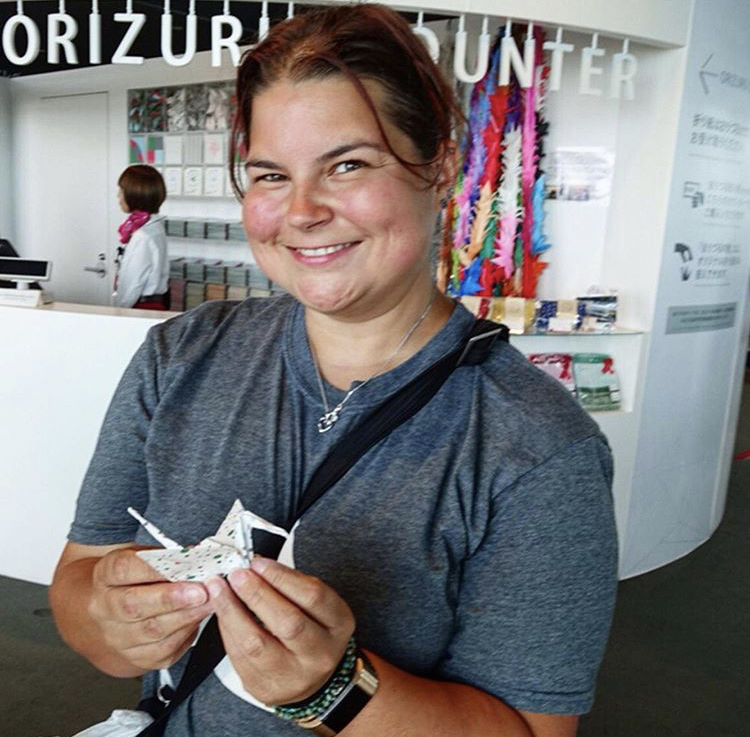
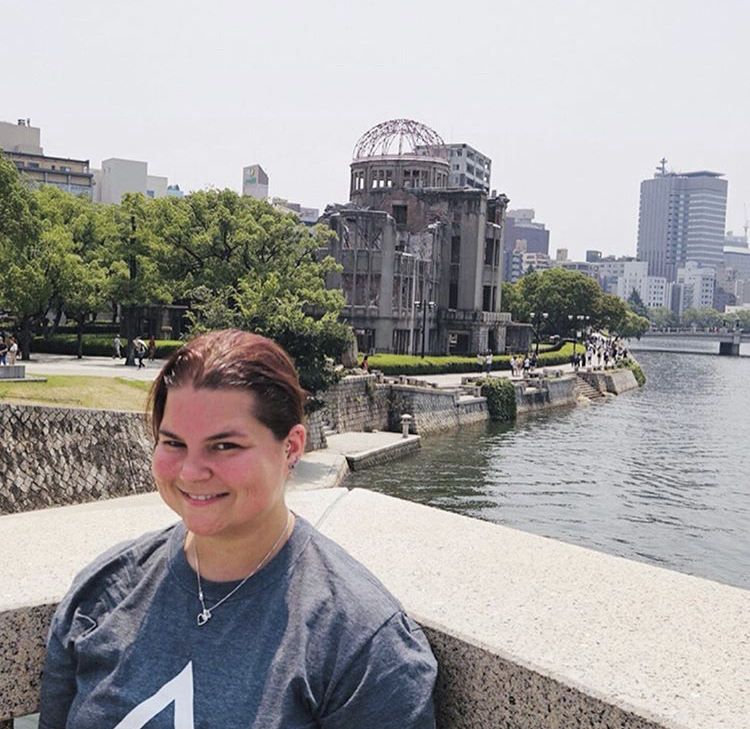
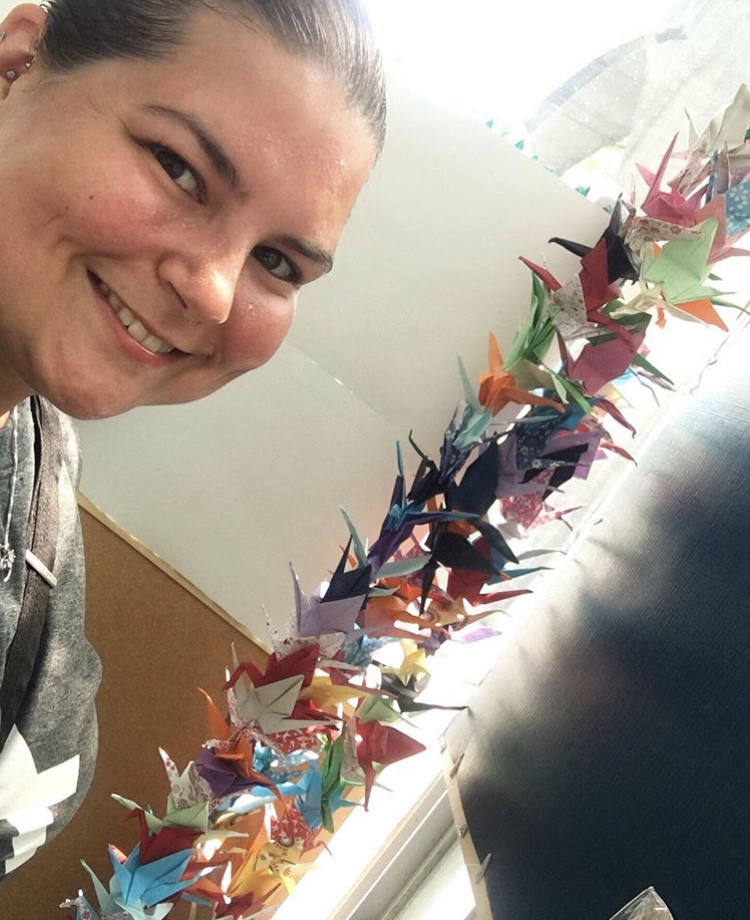
On this day in 1945, an atomic bomb flattened Hiroshima – one of two bombings that induced the Japanese to surrender and end World War II. FFT Fellow Kelly Loubier (Orville H. Platt High School-Meriden, CT) participated in the anniversary ceremonies at the Hiroshima Memorial Peace Park, where she also delivered to the Children’s Memorial paper cranes folded by her students in keeping with the novel Sadako and the Thousand Paper Cranes.
Kelly designed this fellowship to document the nuclear legacy in Nagasaki, Hiroshima, Osaka and Fukushima and demonstrate how these events continue to impact citizens and the greater world community in relation to policy decisions regarding war, nuclear weapons, nuclear energy, peace and disaster relief.
She continues to share experiences on her Instagram and we’re honored to include a portion of her learning below in recognition of this momentous day in history…
[minti_divider style=”3″ icon=”” margin=”20px 0px 20px 0px”]
[minti_dropcap style=”circle”]I[/minti_dropcap] headed to the memorial service this morning around 7:30 and I joined crowds of people who I thought were just going to work. I was so wrong about that. They were all headed to the cenotaph and the ceremony at 8 am. I read online afterwards that 70% of all citizens of Hiroshima have attended a memorial service for the atomic bomb victims. It’s not a recognized day off, so kids still have school, men and women still go to work. The ceremony took place from about 8-8:45 and it included adding names to the cenotaph, a moment of silence at 8:15, an address from the mayor renewing calls for peace and decrying nationalism and addresses from students. They also sang a song of peace and released doves. After, people lined up to deliver flowers and offer a prayer. It’s 2pm and there is still a line. There have been groups promoting peace and youth groups, high schools and universities teaching people about the atomic bombs and interviewing others about peace in the park. More cranes are being brought to various monuments and people are purchasing lanterns for later. The sense of community is unreal, even 74 years later.
[minti_dropcap style=”circle”]O[/minti_dropcap]ne of my major take aways from Hiroshima is that the knowledge about the atomic bomb is so ingrained in the fabric of the city that it isn’t something that just happened in the past and that’s it. It’s something that the people of Hiroshima must learn about and teach others about so that we as a global community don’t let it happen again. There were so many people in the park today, but what really amazed me was the amount of students involved. The Boy Scouts handed out programs and cold towels before the ceremony. Sixth graders gave the children’s address during the ceremony and other students sang or played music. A group of fourteen year old girls gave me a peace declaration their high school drafted. University students interviewed me about peace. Other kids were involved in music, tours, tea ceremonies, peace demonstrations, delivering cranes, reading Sadako’s story (in English and Japanese) and presenting their art. So many families were out with their young children tonight helping them to send out lanterns, color wax candles and present flowers and prayers to the cenotaph. My mind has constantly been thinking of the Margaret Mead quote, “Never doubt that a small group of thoughtful, committed citizens can change the world; indeed, it’s the only thing that ever has.” The people of Hiroshima are leading the charge to a more peaceful world.
[minti_dropcap style=”circle”]T[/minti_dropcap]he face you make when a small Japanese woman grips you by the hand, puts you in a line of other confused foreigners, and puts a necklace of paper cranes around your neck. Turns out, I was given a Croatian flag to wave and lead the crowd in a prayer for peace for Croatia. All countries were represented. The artwork pictured represents 193 countries, their flags and a message of peace in their language.
[minti_dropcap style=”circle”]I[/minti_dropcap]want to give thanks to Yuji @fellanandez_tokugiwa and Holly @hiroshimayasuko from @magicaltripcom for a wonderful tour of the Hiroshima Peace Memorial Park and the pictures. I learned quite a bit during the Heiwa Walking Tour that I’m looking forward to bringing back to my classroom and the Meriden community. I learned a lot today and I’m still trying to process everything and put it into words. I did go to the Children’s Peace Monument this afternoon to drop off the cranes. They’re in the second cabinet at the monument and I filled out a sheet so they will be recorded.
[minti_dropcap style=”circle”]I[/minti_dropcap]n Japan, the atomic bomb is taught with the stories of the people who were affected through their clothing, their pictures, their art and their stories. I learned that many of the victims were school aged children between the ages of 12-14. They had been reporting to school on August 6 at 8:15 am to clear buildings to create buffer zones in case of an air raid to prevent fires from spreading. Many of their stories are told in the Hiroshima Peace Memorial Museum, allowing visitors to bear witness and connect with the human aspect of this terrible tragedy. It is not until the end of the museum when you learn about the science of the atomic bomb, the reason it was used and what the global community did with nuclear weapons after World War 2. We need to teach these stories in the United States.
[minti_dropcap style=”circle”]T[/minti_dropcap]here is a rumor that persists that claims nothing would grow in Hiroshima for 75 years after the atomic bomb. I heard the rumor as a student and I still hear it from my students today. Hiroshima is actually very green and there are trees everywhere. This is because during the recovery period, citizens and organizations from Japan and the global community and governments around the world donated trees. There are also 170 Hibakujumoku (survivor trees) in various locations around Hiroshima that are marked with plaques. The organization, Green Legacy Hiroshima works to spread saplings from these trees around the world. I’d love to talk to @ctca19 in September more about this organization.
[minti_divider style=”3″ icon=”” margin=”20px 0px 20px 0px”]
Thank you, Katie, for the exemplary job you’ve done in designing, pursuing and sharing your learning with us. You can follow her entire fellowship on Instagram @kcloubier. Katie teaches 9th grade world history and 11 and 12th grade human rights at O.H. Platt High School in Meriden, Connecticut. As a third year teacher, she believes that students should walk away from her classroom with a greater understanding of the world around them. She has worked with exchange students from around the world and traveled to places such as Egypt, El Salvador and Iceland, bringing her experiences with her into the classroom.
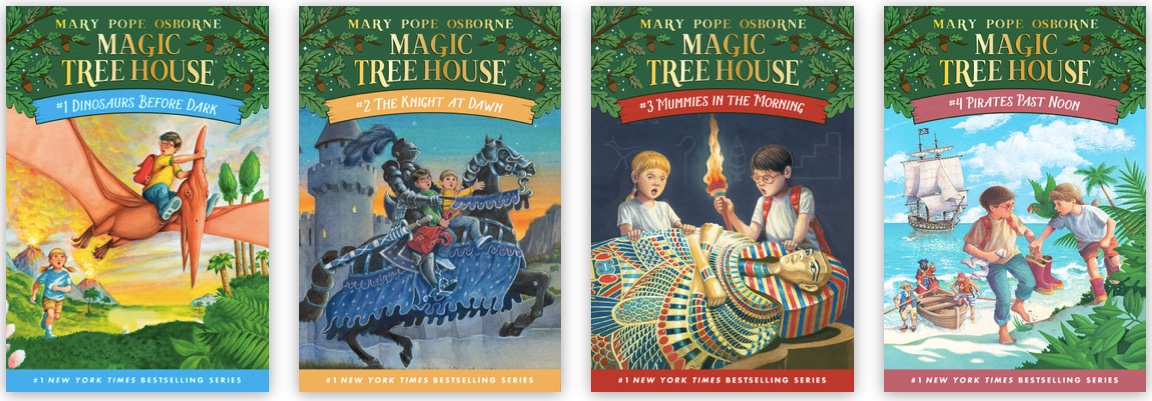
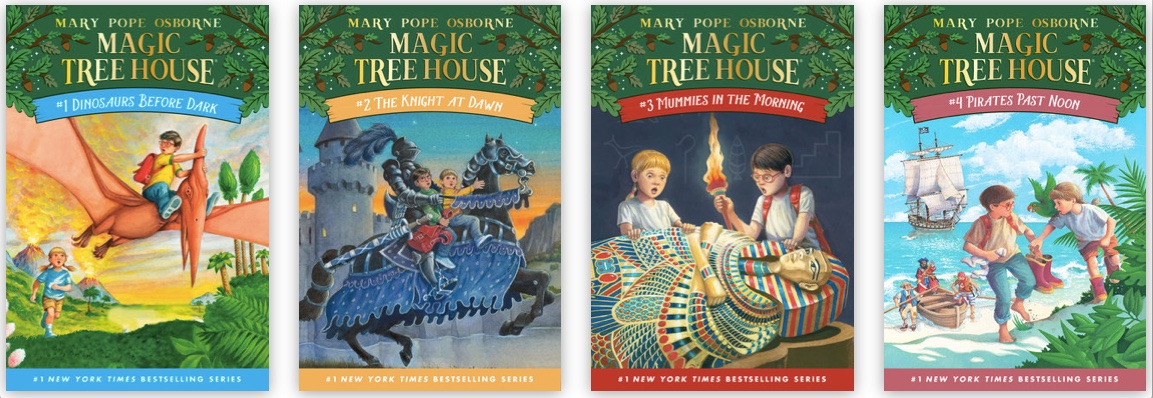
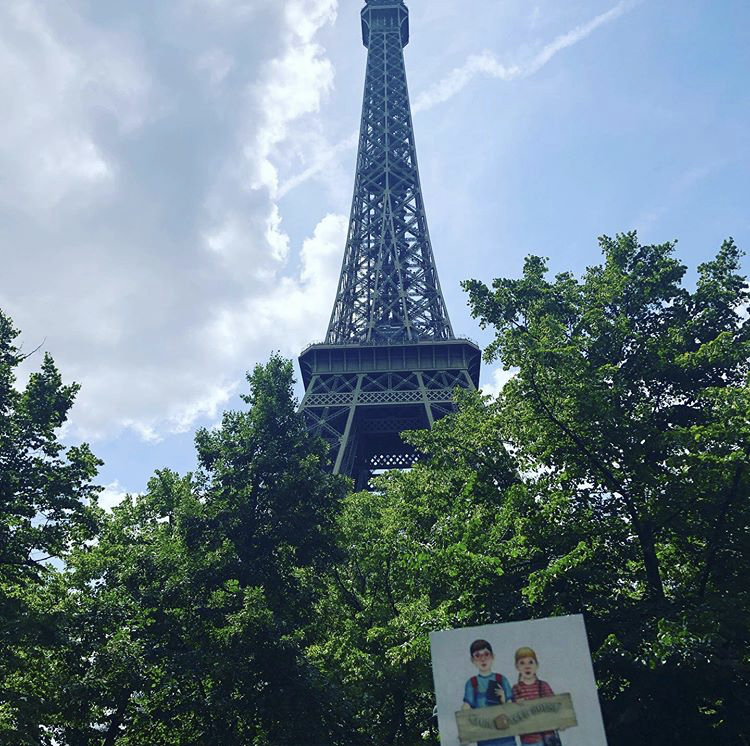
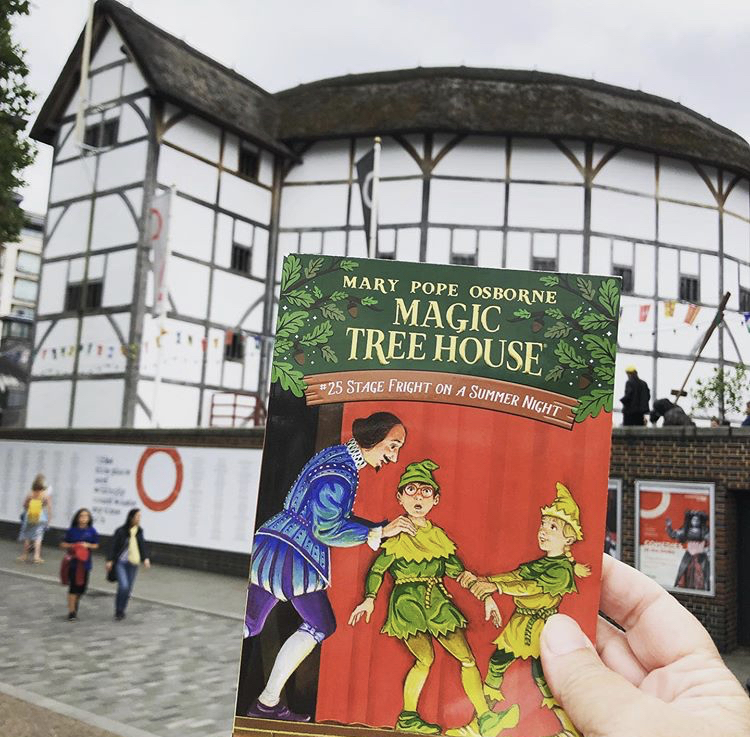
Fund for Teachers invites PreK-12 educators to design learning adventures wherever their imaginations can take them, which is the same thing author Mary Pope Osborne does for young readers through her Magic Tree House series. These award-winning books transport main characters Jack and Annie on quests that pursue people and topics they previously only read about.
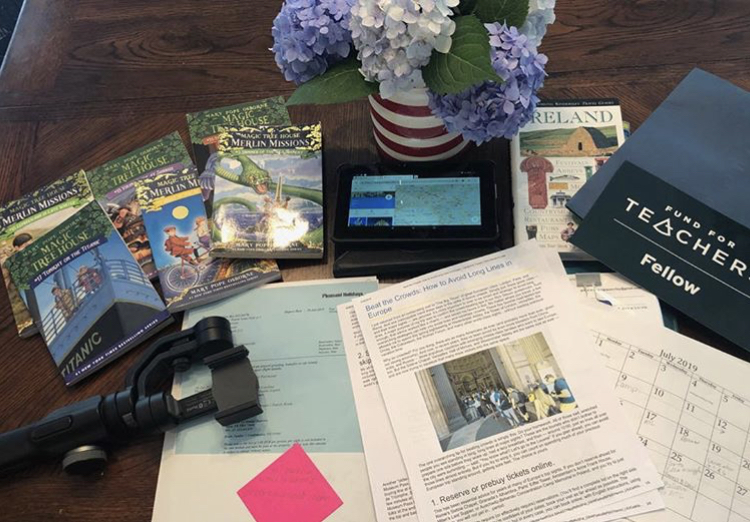
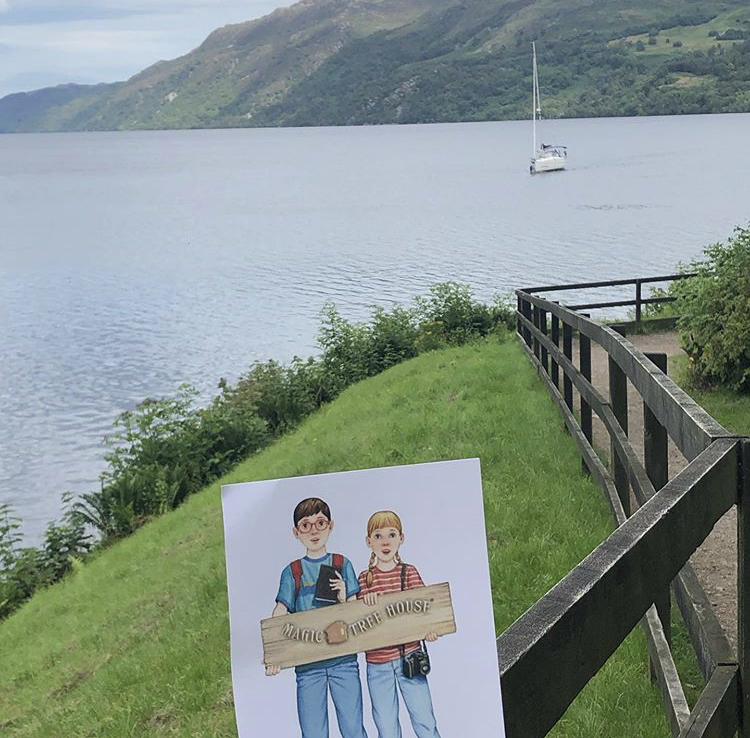
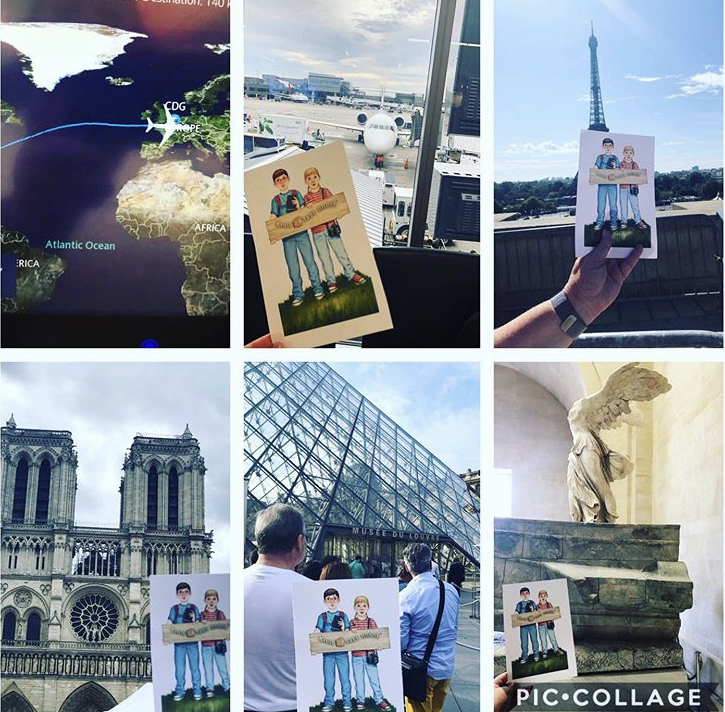
This summer, librarian Riley Grant (Pelzer, SC) is writing her own learning adventure and is bringing Jack and Annie along. We caught up with her (and Jack and Annie) as she’s investigating European settings found in the book series to produce springboard book trailers and book talks for project-based learning that helps students identify ways to explore and improve their community…
[minti_divider style=”1″ icon=”” margin=”20px 0px 20px 0px”]
So, I am half way through with the travel part of my Fund for Teachers Fellowship…it has been nothing short of incredible!!
It truly is all about relationships —
I have spent my adult life building relationships in my personal and professional life and I claim to know some of the best people in the world…honestly!! But, most of my relationships are contained in my small southern state. And, while that is very wonderful, I’m so glad to have this opportunity to build relationships around the world! It is through these relationships that I learn history, geography, cultural similarities and differences and most of all, how to be a good and kind friend.
I am a librarian in a rather rural elementary school but it is close to an up and coming large city. My dream is that by using literature, Project-Based/International Baccalaureate Learning projects, and videos from this fellowship, I can inspire my young students to build meaningful relationships in their small community, our large city, our beautiful state and the world!
To be honest, I’ve also learned a lot about myself. Last fall my principal asked to think of a word for our school year and I chose “execute”… as in “to make things happen.” I had heard about the Fund for Teachers program and decided I wanted to make that fellowship happen. I was nervous and after I pushed the submit button, I did nothing put doubt myself. And, the day the grants were announced, it was late in the afternoon before I received my acceptance email. But getting the fellowship was only the beginning! I overcame my anxiety about going to a country where I did not speak the language, getting lost in a foreign country, meeting total strangers, riding trains between countries and generally “executing” this project. I am truly humbled and proud to be a part of the Fund for Teachers Fellowship program.
Meanwhile I am living my dream of exploring Europe and meeting amazing people from Paris, London, and look forward to building relationships in Edinburgh, Belfast and Dublin.
Thank you, FFT!!
“I love teaching,” said Mary Pope Osborne. “It’s a job that lasts forever. Whatever you teach children today travels with them far into the future.” We agree and can’t wait to see where Riley, Jack and Annie take the students of Fork Shoals Elementary!
[minti_divider style=”1″ icon=”” margin=”20px 0px 20px 0px”]
Follow the rest of Riley’s Magical Mystery Tour on Instagram @graceorileysreadingclubhouse.
This month, 230 prek-12 teachers are learning around the world with Fund for Teachers grants, making this our busiest “Fellow Season.” Highlighting one teacher for our weekly Friday Fellow post is tough, as our exemplary grant recipients are checking in from near and far with updates that inspire wanderlust from behind our computers. In light of this holiday weekend, however, Jean Molloy‘s learning seems most timely.
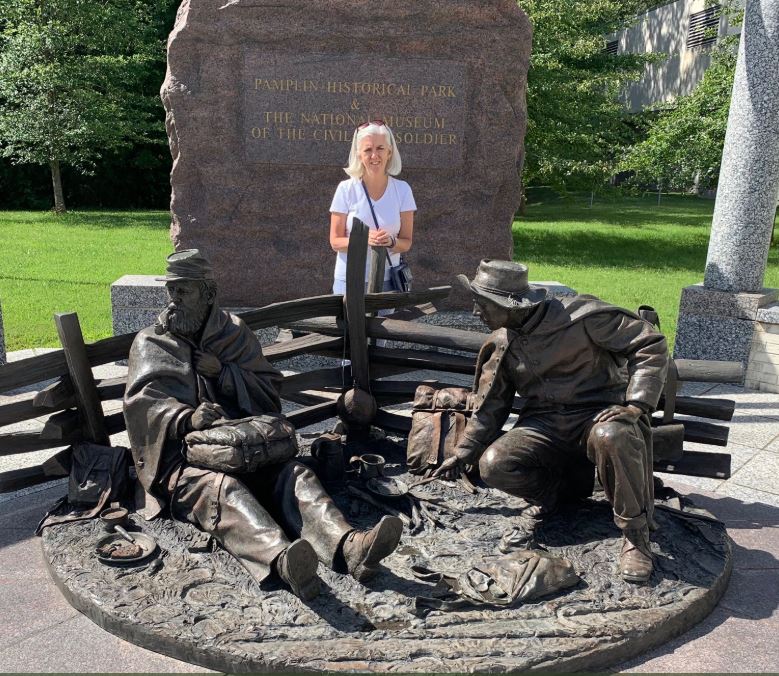
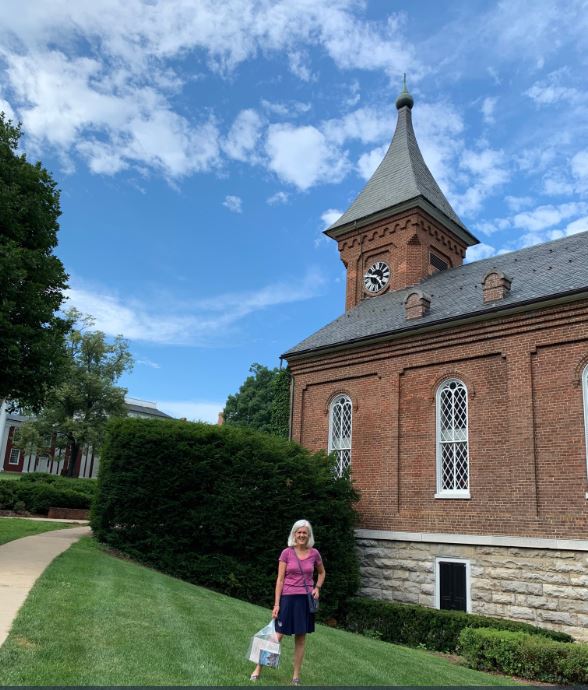
Jean teaches American History at Robbins Middle School in Farmington, CT. She is currently in the middle of her fellowship exploring Civil War landmarks, monuments, and museums in four southern states to document how historians preserve and honor the past while maintaining values respectful to all Americans. We caught up with Jean to see how the research is going…
[minti_divider style=”3″ icon=”” margin=”20px 0px 20px 0px”]
As a U.S. history teacher, I need to develop the critical thinking and reasoning skills of my 8th graders. Students tend to accept non-fiction text without questioning or extending their thinking and they struggle when reading primary sources. Middle school students sometimes have difficulty understanding the perspectives of others. One of the social studies standards that we want them to master in my district is the ability to analyze both primary and secondary sources to determine claims, evidence, and perspective. One of my goals is to help them improve this skill which is imperative to creating lifelong learners as students navigate through controversial issues throughout their education and beyond.
My fellowship will help me frame the following key questions for my U.S. History course:
[minti_divider style=”3″ icon=”” margin=”20px 0px 20px 0px”]
A great focus of the fellowship is on National Parks where significant events took place, but I’m also visiting some state- and privately-funded museums and engaging in conversations with curators, docents, and volunteers to help in my evaluation of how Americans are preserving our history. In Gettysburg, I’m participating in two professional workshops for teachers: What was the Civil War really about? and Why do we preserve and protect Battlefields? In Richmond, I plan to meet with a member of the City Historic Preservation Committee to discuss the five Confederate statues on Monument Avenue. I hope to secure an interview with representatives of a movement to remove the statues as well. According to a survey conducted by the Southern Poverty Law Center in 2017, “…our schools are failing to teach the hard history of African enslavement.” I chose destinations that will inform my teaching of this history in a balanced and coherent manner and also help students see the connections between our past and our society today.
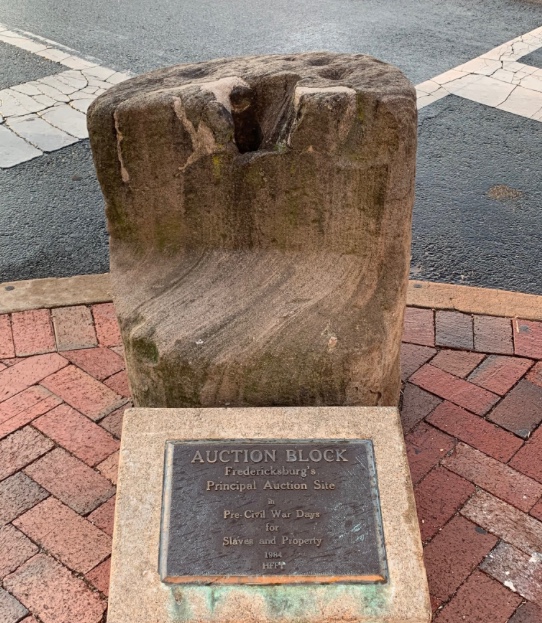
I am about half-way through my Civil War exploration and it is hard to process all that I have learned so far! Speaking with park rangers, museum docents and volunteers has deepened my understanding of this great conflict in American history and especially of the key people who were making critical decisions on each side. I have also learned that Virginians are very proud of their history and they want to talk about it. In addition to interacting with professional historians, I have been speaking with people in restaurants, B&Bs, and with other tourists at historical locations. I would have walked right by a slave auction block on a Fredericksburg street corner if I had not been chatting with my waitress at dinner. She explained how the city council recently voted to remove the block to a museum. I had to stop and think about what it must be like to walk by this every day which prompted me to dig a little deeper. The Fredericksburg website states that, “It is important to recognize that the City Council decision-making process, specific to the future of the auction block, has been taking place within the larger context of a community dialogue about race, history, and memory.”
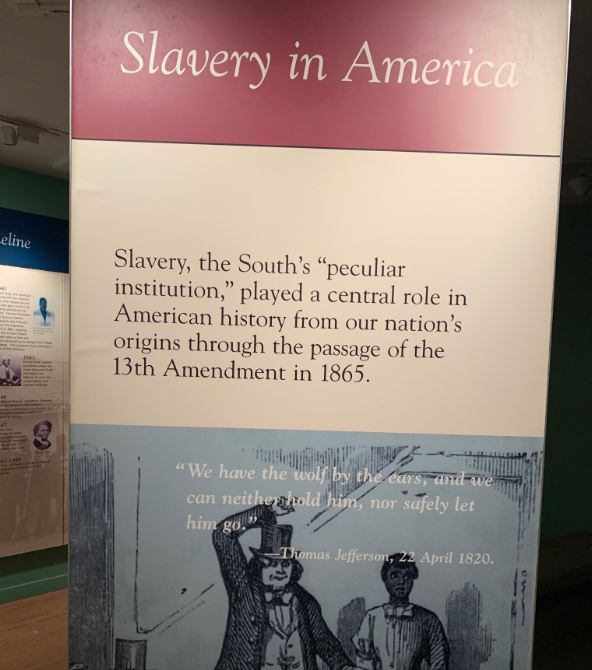
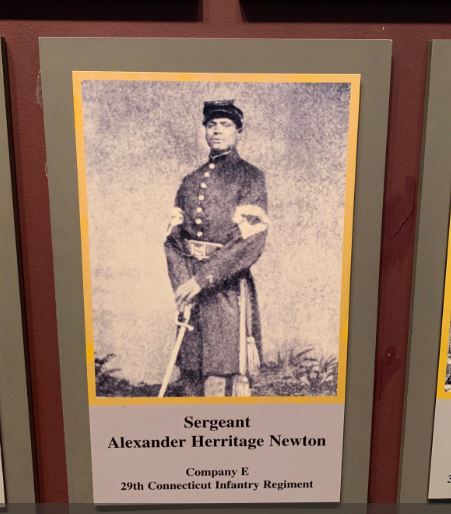
In most of the Civil War Museums, there have been exhibits that also document the story of slavery in America, its role in the Civil War, and in American economics. Although I have grappled with how this story should be preserved, what I have seen so far in Virginia has helped me learn and is helping me frame questions for my students.
[minti_divider style=”3″ icon=”” margin=”20px 0px 20px 0px”]
Jean teaches 8th grade U.S. History, which includes a project based learning event on local history. Previously, she taught 7th grade Asian studies and participated in a teacher exchange program with the Republic of Korea organized by the East-West Center for UNESCO and also a teacher study tour in China with the National Consortium for Teaching about Asia. You can follow Jean’s FFT fellowship on Twitter @IARMolloy.
Alexander Graham Bell’s most well-known accomplishment is the invention of the telephone; however, his first job was as a teacher. In fact, he was teaching at the Boston School for Deaf Mutes when he began creating a machine that changed the way we communicate forever.
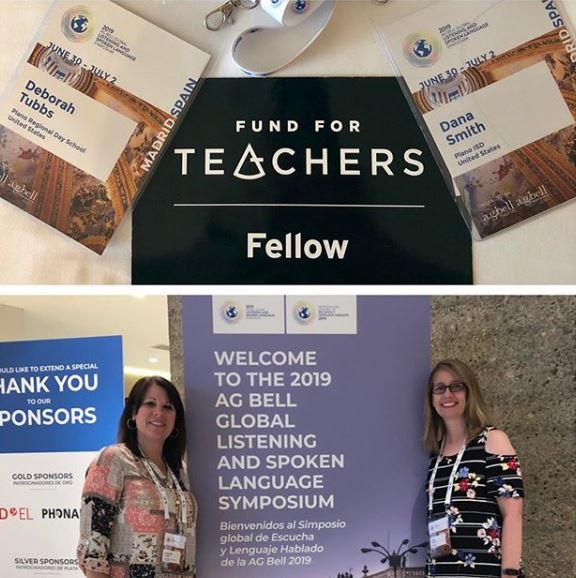
Deborah Tubbs and Dana Smith share a lot in common with Bell: They are deaf education teachers and are also intent on changing the way their second- and third-graders not only communicate, but also integrate and socialize with their hearing peers. Ostensibly our most excited grant recipients judging from this video, Deborah and Dana designed their fellowship to attend the AG Bell Association for the Deaf‘s Global Listening and Spoken Language Symposium in Madrid.
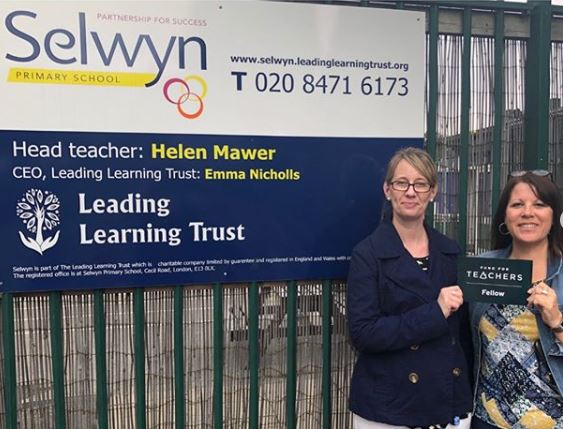
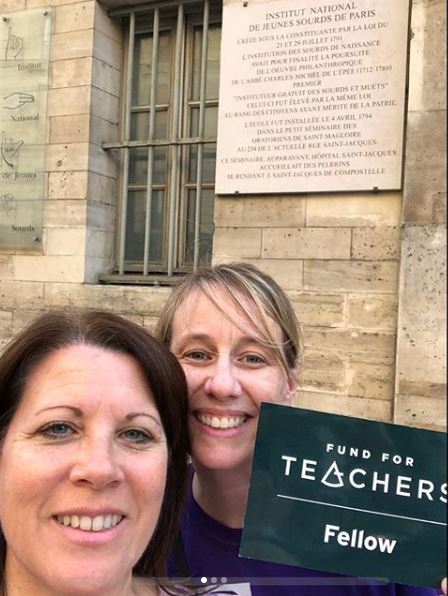
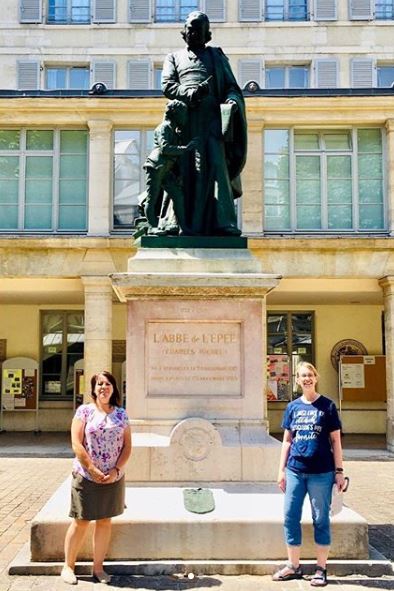
In advance of the symposium, Dana and Deborah toured London schools with programs similar to theirs and with whom their students interact via a pen pal program. En route to Spain, they visited the National Institute for Young Deaf in Paris, established in 1760 as the first public school in the world for deaf students.
We caught up with Dana and Deborah in Madrid as their fellowship is drawing to a close…
[minti_divider style=”3″ icon=”” margin=”20px 0px 20px 0px”]
“Deaf Awareness. Not just for a select few but for the entire staff and student body, including our students who are deaf. Everyone needs to understand and appreciate the potential challenges that can arise when communicating with individuals who are deaf. And it is up to all parties to anticipate and recognize when they occur in order to overcome them. For our students who are deaf, they must learn to advocate for themselves.”
“As we come back to Davis Elementary School in Plano, TX and apply what we have seen and learned, our students who are deaf will become more confident in who they are and how they communicate. Our short term plan for our own learning goals can be summed up in two words: learn and connect. Each leg of our fellowship is providing us with both of these opportunities. We are learning from and and connecting with our historical predecessors, our British colleagues and our global professional mentors. Long term, we’ll use these unique experiences to help students become more confident in challenging listening situations, develop skills necessary to repair communication breakdowns, and evolve from a fixed mindset, where they are too intimidated to speak up for their communication needs, to a growth mindset, where they recognize the challenges they face and have the tools and strategies they need to become successful and effective communicators.”
[minti_divider style=”3″ icon=”” margin=”20px 0px 20px 0px”]
Follow the remainder of this fellowship on the teachers’ Instagram feed @deborah_dana_fft.
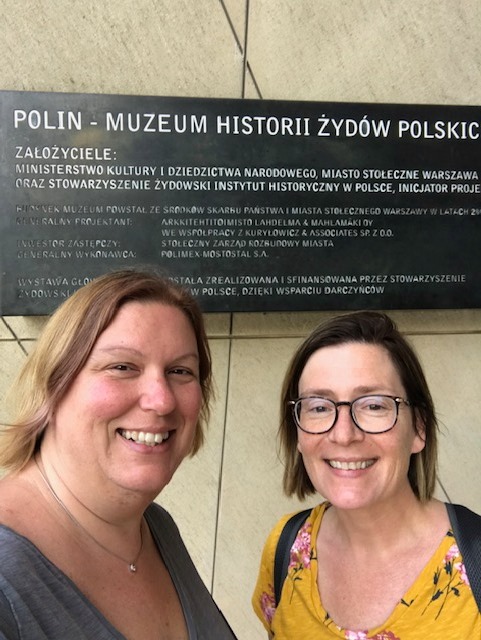
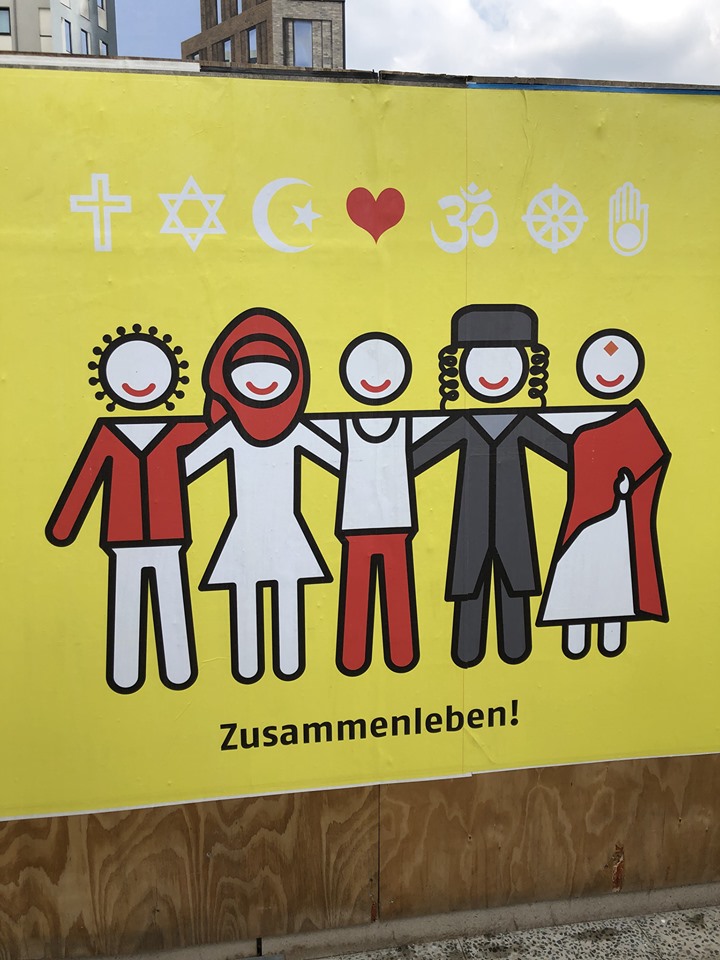
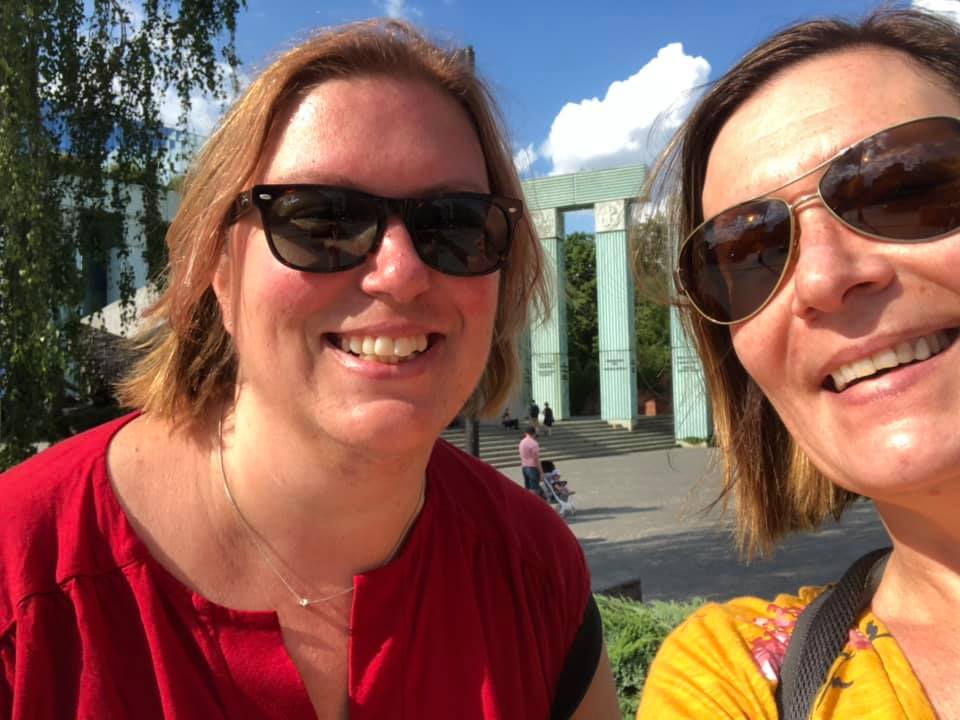
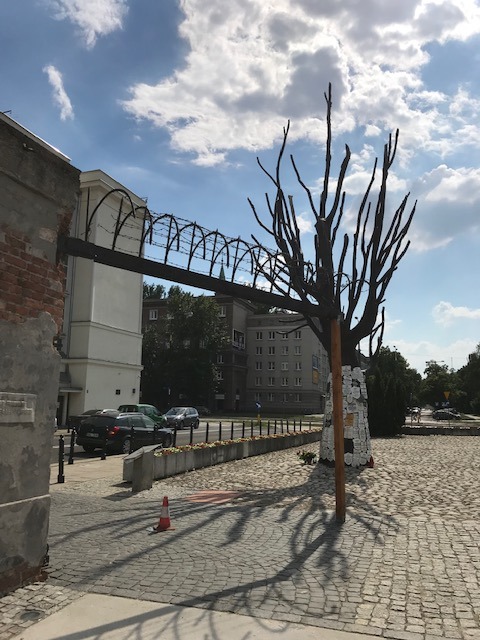
Monday begins World Refugee Awareness Week, an extension of the United Nation’s annual World Refugee Day on Wednesday, June 20th. In solidarity with those forced to flee as a result of resettlement, poverty, unemployment, stigmatization, and bias, we share one day in the fellowship of two teachers from Naperville, IL. Christine Halblander and Jenn Nekolny are currently exploring physical and societal divisions in historical and contemporary Poland, Czechia, Austria and Germany.
They designed this experience to supplement Social Studies and Language Arts curricula that enhances junior high students’ interest in human rights, migration and refugees. In order to strengthen their teaching practices, their fellowship goals are to:
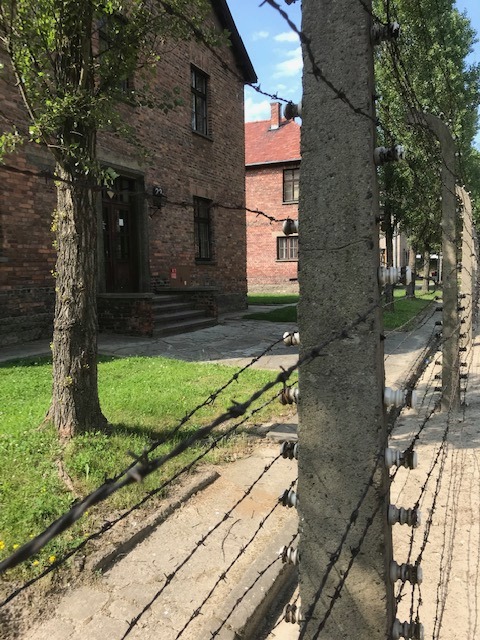
Below is a day in the life of their fellowship, after visiting Auschwitz-Birkenau but before helping teach refugees English in a Berlin cafe…
[minti_divider style=”3″ icon=”” margin=”20px 0px 20px 0px”]
“Do you remember the floor of your childhood home? Can you recall playing outside with your siblings? Rushing up the stairs with good news? Your grandmother’s “good plates” pattern?
As we were checking in to our Air BnB flat in Krakow, our host asked if we wanted a little history of the place. Of course. . .we’re teachers and learners and, to be honest, the outside of the building left a bit to be desired with all its graffiti and crumbling exterior walls. It would be nice to hear some history of this building that had clearly seen better days.
He told us that just as they were finishing the interior renovations of the flat last year, he came to check on the progress. As he was walking in, he noticed “an old grandma” at the entrance with someone who appeared to be her daughter. He asked if they needed to be let in, but the woman’s Polish was weak and she responded in English that this used to be her building. Switching to English, he asked her which flat was theirs, as there had been many changes and divisions over the years. As they turned onto the first landing, tears began to well in her eyes as she recognized the tile floors in the hallway.
It turned out that the apartment he hosts was her family’s home for years before the Nazis took power and forced them out. The walls are re-plastered, the interior courtyard is filled in with the back sides of restaurants, the stairs have lost their shine (and have a pleasant rounded edge where thousands and thousands of footfalls have happened), but the heart of the place is the same. He unlocked the door to her old apartment and she began to cry when she saw the preserved floor. This beautiful wood herringbone-patterned floor where she played as a seven year old girl. This floor where she would help her mother clean up crumbs that fell from the table. This floor where she would place her shoes after coming up the flight of stairs at the end of the school day. This floor where her suitcase lay waiting next to the door in case they had to flee. This floor opened the gates of memory. This woman was 94 years old and wanted to first see her family’s home and then find the families that gave her refuge when she was forced to flee to thank them. For 87 years, she’d imagined these floors, these stairs, this place. She’s imagined the faces and clothing and sweet smells of dinner in this kitchen where I’m sitting typing this now.
Why are we doing this? Why are some of these posts so long? Our intent is to have our students use the information in our posts and notes not published here to create their own learning. One plan is to have them map our journey on GoogleTourBuilder. Another is to create a profile box for each person (photo, map, realia such as a bar of soap or spice mix, written notes, etc) and have students create fiction and non fiction writing that pertains to the person and historical period. We are also using Refugee by Alan Gratz as a mentor text where students will write letters between characters.
[minti_divider style=”3″ icon=”” margin=”20px 0px 20px 0px”]
The remainder of this team’s 22-day fellowship includes additional WWII research, as well as the modern refugee crisis. They will be:
You can follow the remainder of this fellowship on the teachers’ Facebook page titled Tear Down These Walls.
Today marks the 76th anniversary of D-Day, when 156,000 American, British and Canadian forces landed on five beaches along a 50-mile stretch of the heavily fortified coast of France’s Normandy region. We share below the remarkable experience of FFT Fellow Dan Lundak. He designed an experience to retrace the steps of the US soldiers (specifically his grandfather’s) from England to the shores of France during the invasion to lead students’ debate of the essential question, “At what point does the United States become involved in another country’s affairs?” The American History teacher planned to use his research to help eighth graders at Chicago’s Sauganash Elementary School personally connect with World War II. The pilgrimage grew more personal than expected, however, upon discovering his grandfather’s photograph hanging in a wartime museum.
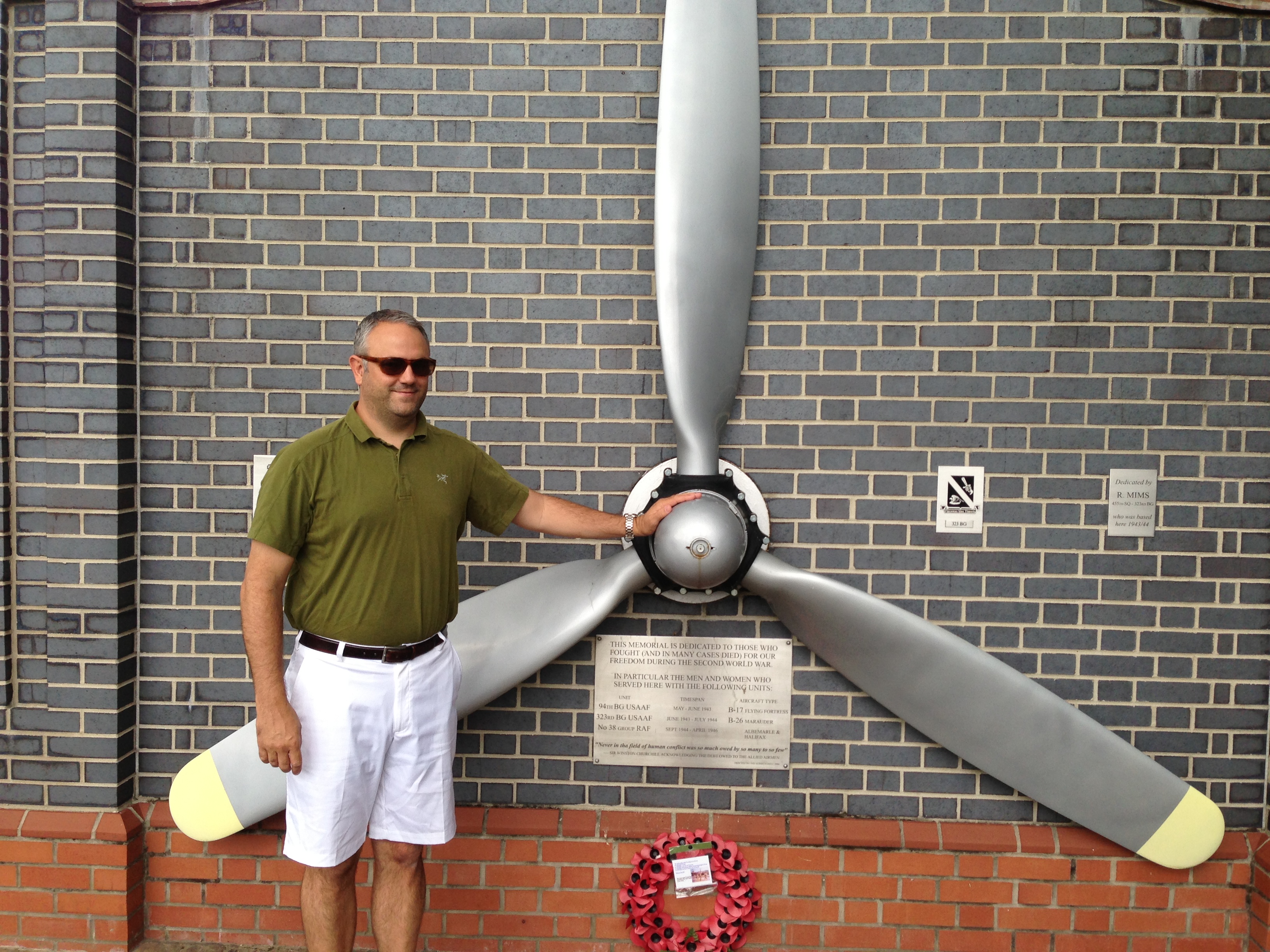
“When applying for the Fund for Teachers grant, I researched my grandfather’s military service and his path from Nebraska to Normandy,” said Dan. “On D-Day, he flew the Boeing B-17 with the USAF 94th squadron from the RAF base in Bury St. Edmonds, England — so that was my first stop. Townspeople converted his squadron’s control tower into a museum, which was dark and locked when I arrived.
A museum volunteer repairing the roof saw me walking away and offered to let me in. As I made my way around the artifacts, I suddenly came face-to-face with a framed, yellowed photograph of Lt. Col. E.E. Lundak – my grandfather.”
The volunteer explained that displays included “random photos of pilots” found when creating the museum. He could offer no definitive explanation why the photo of Dan’s grandfather, never seen by his family, hung there to greet Dan 70 years after the war.
Lt. Col. Lundak flew 47 missions while stationed at Bury St. Edmonds. He crash landed twice (once, the only surviving crew member) and again escaped death after trading places with a co-pilot subsequently shot by enemy fire. The night before D-Day, Lundak bombed the beaches of Normandy; the day after the invasion, he delivered gasoline to Allied forces and returned US casualties to England. Lundak remained in the Air Force for years before becoming a US diplomat in China and the US liaison with President Chiang Kai-shek. Upon retirement, he returned to Nebraska to teach school, serve as a superintendent and, eventually, Dean of Admissions for the University of Nebraska.
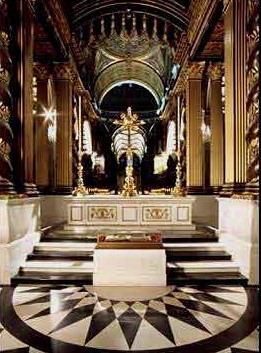
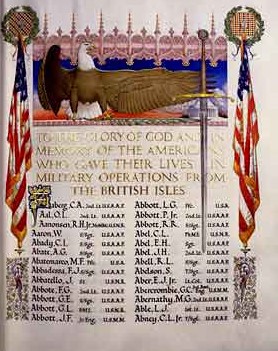
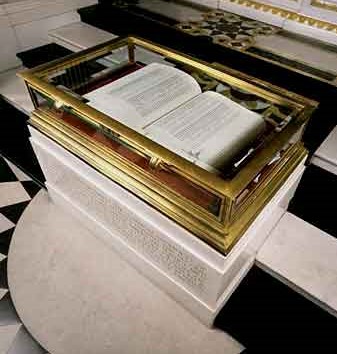
Inspired by the discovery, Dan continued his WWII odyssey at London’s St. Paul’s Cathedral and American Memorial Chapel, seeing the honor roll of more than 28,000 Americans who died in WWII while stationed in England. He also followed the London Blitz Bomb Site Interactive Map to visit areas affected by bombings and, afterwards, the Imperial War Museum. Before taking a ferry across the English Channel, Dan stopped at General Eisenhower’s headquarters in Porstmouth to research the planning and preparation of Operation Overlord, the final meeting that resulted in the D-Day command, “Let’s go!”
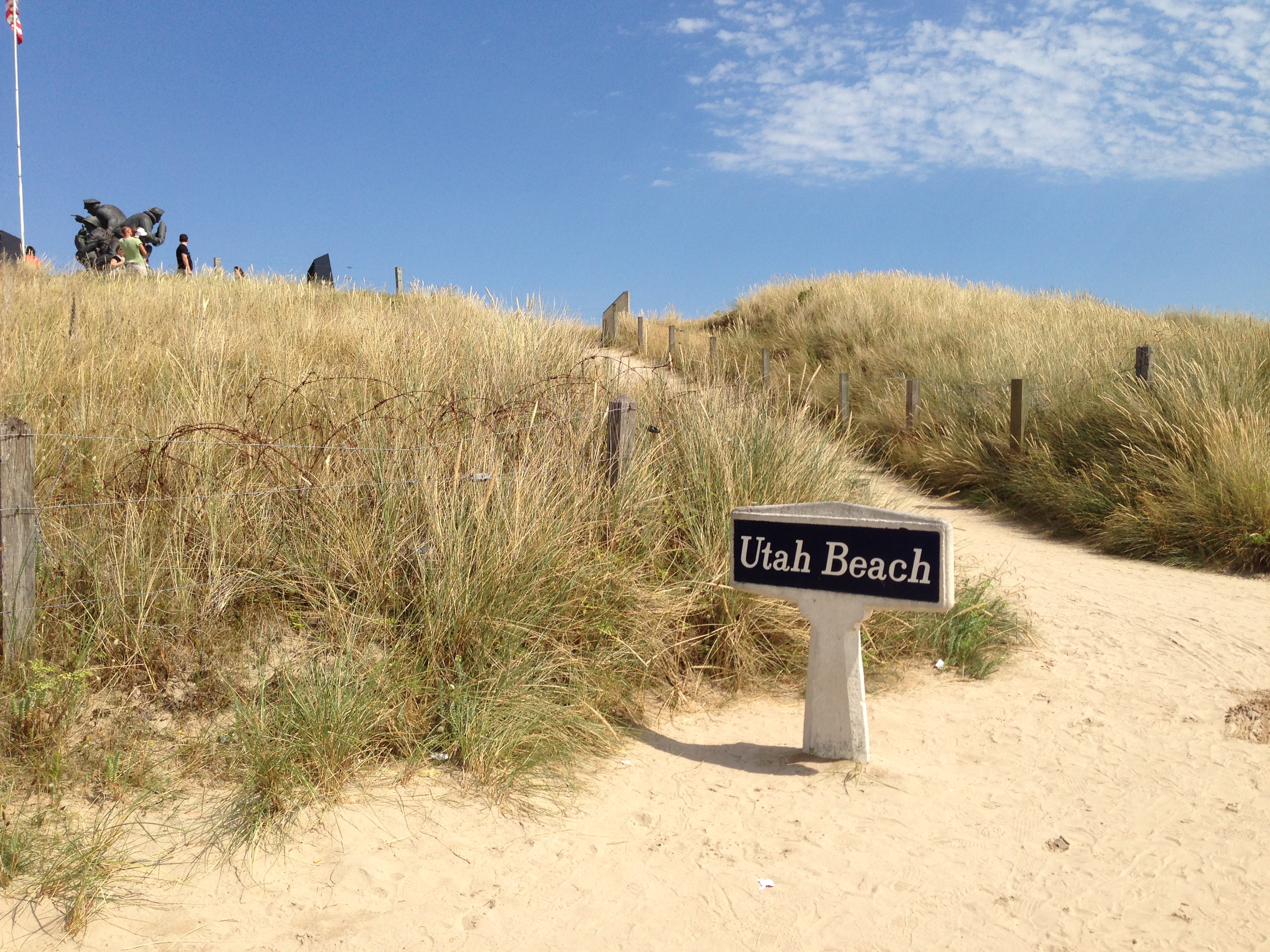
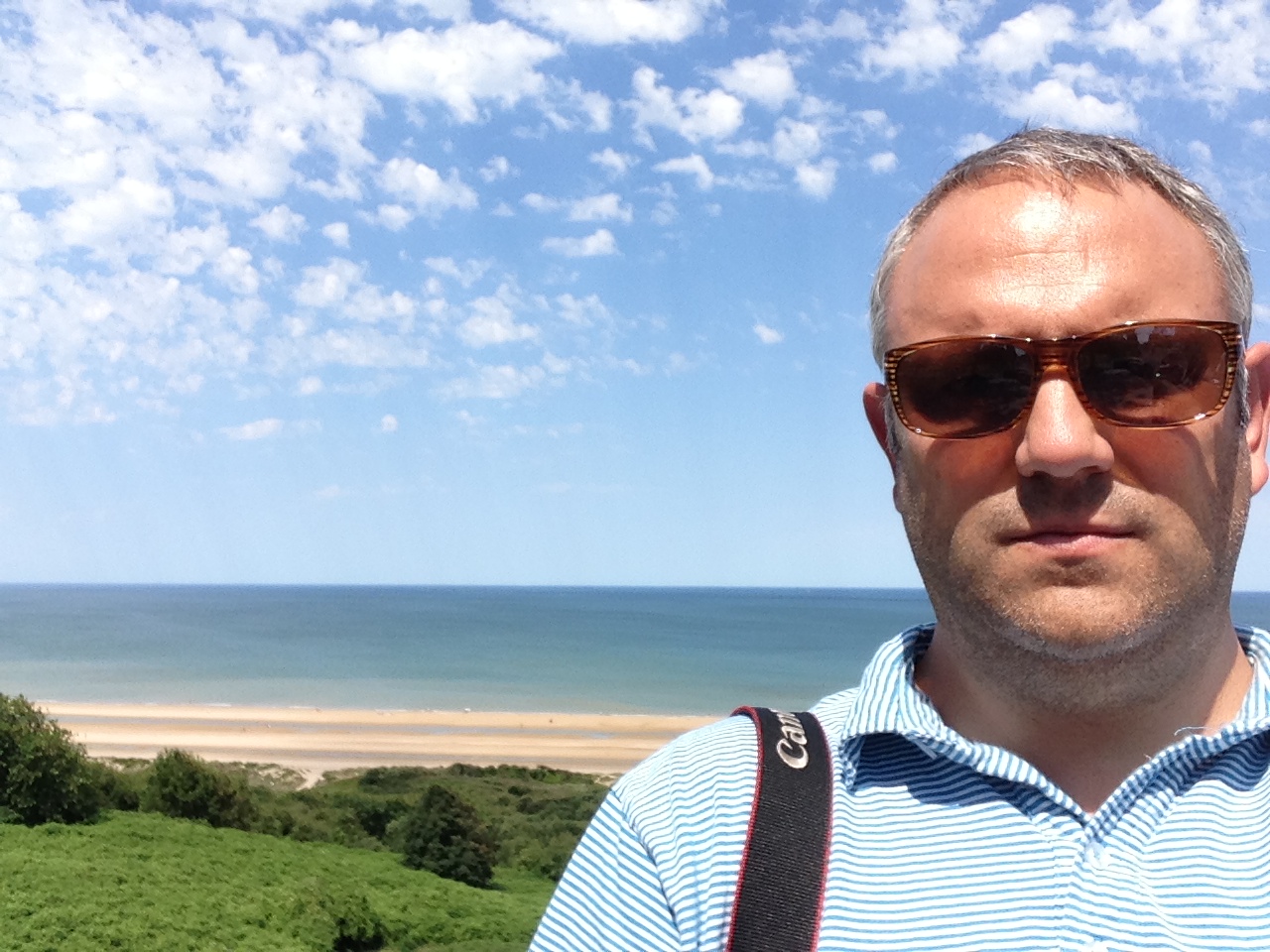
Bayeux served as home base for Lundak in France, where Dan toured Omaha and Utah beaches, visited the D-Day Museum and experienced the flag lowering ceremony at the American Cemetery. His ten-day fellowship concluded in Paris, where he followed the movement of General Patton’s Third Army and its role in the Liberation of Paris.
Armed with fellowship experiences and research, Dan now encourages his students to “dive deeper” in their study of World War II – a requirement of the new Common Core State Standards. Lt. Col. Lundak serves as a case study for students’ exploration of the questions, “At what point do people get involved with the affairs of others?” and “What makes someone brave?” Dan believes these questions are particularly relevant as students prepare to face diverse socio-economics, cultures and traditions represented in a large public high school. Students also write letters of appreciation to veterans, which Dan delivers to the local American Legion post.
“Retracing my grandfather’s service during the D-Day invasion gave me personal insight into what each person has to ask themselves in a time a crisis; the experience also gives my students a personal story they can relate to when facing similar decisions about personal sacrifice,” said Dan. “Understanding history through the close examination of my grandfather’s service – rather than a textbook – interjects real-life perspective into the curriculum and helps students arrive at their own conclusions.”
[minti_divider style=”1″ icon=”” margin=”20px 0px 20px 0px”]
Two 2020 Fellows will pursue experiential learning around the European theatre of World War II:
Patrick McCarney (Stonington High School – Stonington, CT) will experience World War II landmarks, museums, and monuments, gathering the stories of those on the battlefront and home front–young soldiers, women and minorities–to make the diversity of the American war experience more visible for students; and,
Bret Godfrey (American Indian Magnet – Saint Paul, MN) will research and document in France, Belgium and Luxembourg contributions made by American Indians during World War II to create engaging lessons that incorporate these contributions for preK-8 students sharing this heritage.
Each Friday throughout the summer, we are highlighting one of our 2019 Fellows — their inspiration, itinerary, and plan for transforming student learning going forward. Today, we highlight our first team, which named themselves “Spainward Bound.” Erin Strack, Andrew Murphy, Juan Carlos Lara and Pato Cabral will use their $10,000 Fund for Teachers grant to attend the International Colloquium on Languages, Culture, and Identity in Schools and Society in Soria, Spain, this summer. Because they work at a dual language school in Kansas City, they designed this fellowship to address topics in the forefront of dual language educational practices and inform a new Spanish/English poetry unit inspired by Spanish architecture and landscapes.
We’re an urban elementary school (grades K-6) with a population of about 80% Latino students, the remaining 20% being mainly comprised of African American students. While being part of such a unique form of education is engaging and rewarding, it can also be frustrating and confusing at times:
There simply aren’t enough teacher education agencies in the US that can appropriately train and prepare teachers how to competently teach both English and Spanish literacy simultaneously.
The Colloquium will highlight topics that are in the forefront of dual language educational practices. When not in sessions, we’ll scour the city of Soria for natively written literature for both children and adults. There is a huge need for Spanish books in content areas such as science, as well as fiction books and comics. Most of our Spanish teachers have to create much of their content area resources themselves, as it’s next to impossible to find this variety of resources in the US.
Upon completion of the Colloquium, we’ll explore the Casa de los Poetas, which describes the lives and works of three famous Spanish poets. We also plan to visit the nearby village of Calatanazor, which was a location for Orson Wells’ Chimes at Midnight, and Agreda,
the village of three cultures: Arabic, Jewish, and Christian. In visiting these local points of interest, we can enliven our classroom teaching with vivid descriptions of Spain’s history, architecture, and natural beauty.

Panoramic view of Calatanazor (courtesy of sorianitelaimaginas.com)
Our team consists of a 5th/6th grade Spanish math teacher, a 4th grade Spanish literacy teacher, a 3rd grade English literacy teacher and literacy coach, and an ESL teacher that co-teaches in 3rd and 4th grade. Working collaboratively, we’ll use our newly learned strategies and newly acquired resources to create a Spanish/English poetry unit. This would include author studies, poetry reading and writing, and shared presentations of written poetry. Both 3rd and 4th grade have poetry standards that have been notoriously
tricky to cover in Spanish. None of the nuances of poetry that make it so beautiful (rhythm, imagery, descriptive language, word play) can be translated well, so finding famous poems written in English and then translating them is not an option. This fellowship would provide our students with this brilliant new learning opportunity, to engage in a linguistically balanced poetry study unit.
We’re incredibly grateful for the opportunity to attend the colloquium on dual language education in Spain. The knowledge, experiences, and resources we expect to return with are beyond measure. Our colleagues are equally excited, as we’re all well aware of the positive and direct impact this fellowship will have on our students and school community as a whole. We’re deeply honored, and of course, more than a little excited!
Each Friday, we highlight one of our 2019 Fellows — their inspiration, itinerary, and plan for transforming student learning going forward. Today, however, we celebrate the completion of our first fellowship of the year!
Kristin Gladish (Newcomer Program – Indianapolis) obtained permission from her administration to embark on her fellowship during the first week of May — the only time UCLArts & Healing offers facilitator training for Beat the Odds, a trauma-informed program that integrates activities from group drumming and counseling to build core strengths such as team building, leadership, stress management, empathy and gratitude.
“In short, my fellowship was amazing!” said Kristin. “As a student, then practicing as the facilitator, I learned how to mix in drum circle facilitation with affirmations, rhythm games, and activities to increase students’ focus, listening, self-awareness, and self-expression. The goal behind all of this is to incorporate counseling techniques into drum circles and help students who have experienced trauma.”
For Kristin, that includes all of her students — refugees or newly arrived immigrants hailing from 15 countries and speaking 21 languages. Of her 257 music students in grades 2-10, 100 percent are minorities and qualify for free and reduced lunch.
An extension of her fellowship includes working with a local “Beat the Odds” trainer, which will help Kristin build local partnerships and community collaborations. In addition to the musical implications of her fellowship, she is also learning how to measure the results of the program through documented observations, pre- and post- student surveys, video evidence of musical/rhythm/social improvements, and attendance and grade data.
Kristin, who holds a bachelor and Master’s degree in Vocal Music, wasted no time implementing her fellowship. For the final three weeks of school, she is introducing the new drumming curriculum on instruments she also purchased with FFT grant money.
“Every country has some sort of drumming, and each student, no matter what language they speak, can learn to play a rhythmic pattern together and to keep a beat together,” said Kristin. “Beyond that, students will learn methods to relieve stress and to express their
feelings through drumming and words — valuable coping methods for students who experienced trauma and violence in their home countries and come to school struggling with inattention, depression, PTSD and anxiety.”

[minti_divider style=”3″ icon=”” margin=”20px 0px 20px 0px”]
Kristin has taught music for 11 years in Lousiana, Texas, and now Indiana. She was the 2019 Teacher of the Year, and was a Top 10 Finalist for the Indianapolis Public Schools District Teacher of the Year. Kristin has completed her Level 1 Orff Training, and enjoys sewing and hiking in her free time.

Brown’s demonstration of trendacis mosaics
Tammy Friedman believes the link between art and its history can help build bridges among different cultures, including the culture of a school. Cloonan Middle School in Stamford, CT, is experiencing a sharp increase in English Language Learners who speak Spanish at home. Realizing the lack of relationship between herself and students’ parents, Tammy turned to art (and a Fund for Teachers fellowship) to bridge the gap.
Last summer, Tammy developed under Barcelona artist Martin Brown skills to create “trencadis” mosaics popularized by Antoni Gaudi. Trendacis literally means “chopped,” referring to the fragmented shards and recycled materials pieced together to form images and/or patterns. When not in Brown’s class, Tammy embarked on daily field trips across Barcelona, exploring Gaudi’s masterpieces, such as those at Park Güell.
Tammy’s goals for this fellowship were:
With her new expertise, Tammy led 100 art students (40% of whom are Hispanic) in the creation of four 30 x 56 murals, which were installed around the school last week.

“The four mosaics represent Pablo Picasso, Salvador Dali, Frida Kahlo, and Antoni Gaudi, including inspirational quotes from the artists,” said Tammy. “In addition, students painted cubist self-portraits, personal cultural art, surreal collages, surreal hands, and street art. This fellowship inspired me with new creative ideas to share with my students, not for just one year, but for years to come.”
“Tammy is one of three teachers at our school who have received Fund for Teachers fellowships and I can’t say enough about how they return re-energized and with experiences that are relevant to kids, which has a huge impact on how they respond,” said David Tate, principal at Cloonan Middle School. “Tammy’s project is particularly relevant, as our school’s single largest demographic is students from Latino homes, so for them to see this aspect of their culture on permanent display is huge.”
A group photo of students who created each mosaic is mounted alongside their artworks, which were praised by the mayor and the superintendent during a special showing.

Tammy chose for one mosaic Dali’s quote, “Intelligence without ambition is a bird without wings.” We love how Tammy embodies this quote as a role model for her students — taking her belief in the power of art from her classroom to Barcelona and back again to foster cultural pride and community relationships.
[minti_divider style=”3″ icon=”” margin=”20px 0px 20px 0px”]
Tammy has taught for 29 years, first with special education, then third grade, middle school Language Arts, and now Fine Arts. Recently she received a Spotlight Award for Teachers, one of 20 recipients nominated by peers and awarded from across the Stamford Public School district.
[minti_dropcap style=”normal”]B[/minti_dropcap]ack in the ’80s, when Saturday Night Live was funny, Jon Lovitz did a skit called “Get to Know Me!” espousing how people (i.e. Steve Martin) benefited from knowing him. We believe the same is true of our 2019 Fellows and are, therefore, continuing a blog series throughout the summer to introduce you to many of our grant recipients.
Today, we meet Reid Daniels, teacher at Soddy Daisy High School in Soddy Daisy, TN. He plans to travel more than 5,500 miles across the United States to help students understand the structure of the New Deal and the continuing impact of the government’s intervention on behalf of the people.
[minti_divider style=”3″ icon=”” margin=”20px 0px 20px 0px”]
The students I teach represent a wide range of socio-economic backgrounds, many of whom rarely even leave the county. Their ability to conceptualize the vastness of our country, and our country’s resources is very limited, making it difficult to grasp the scope and initiatives involved in the New Deal.
My students also demonstrate a great interest in the natural world around them. They are avid fishermen, hunters, hikers, boaters, photographers, and rock climbers. Academically, they have a great deal of interest in the sciences, construction, and art. All of these interests can be exemplified within the New Deal projects that I will be visiting on my fellowship.
Another tangential goal will be to show the students that during one of the worst times of economic and social struggle in the US, the country was able to construct a network of parks that is truly unique in the world. This kind of unity is refreshing to think about especially in these seemingly divided times. I hope to demonstrate this to my students to give them hope about the US for the future.
The two key questions I will seek to answer through this fellowship and the student involvement afterwards are:

CCC workers working in front of the Wind Cave National Park Visitor Center

Vintage WPA National Park Poster
Over the course of 22 days and 11 states, I will pull my camper in order to give myself the best opportunity to experience the environment that the Civilian Conservation Corp (CCC) and Works Progress Administration (WPA) workers were living and working in. Destinations include:

Pinning his destinations on the FFT Fellows map at our partner, Public Education Foundation – Chattanooga
My students will create their own virtual trips to our national parks and monuments developed during the New Deal. To demonstrate the outcome of their projects, my students will create a digital video that will walk me through the trips that they have planned, and the locations that they will be visiting. This project will give my students, who have such limited experience with travel outside of the immediate area, the tools they need to create real trips instead of virtual trips.
The daily (short term) plans for student learning will include direct instruction on this project to include the documentation, visual as well as tangible (maps, books, additional artifacts I will find, etc.) of the locations I visit. I will largely focus this instruction on the living and working conditions at these locations for the Works Progress Administration and Civilian Conservation Corp workers. The long term unit plan will demonstrate my fellowship takeaways, starting with President Hoover’s decision to not intervene, governmentally, in the Great Depression and will conclude with the start of World War II.
Lastly, I will set up an interactive booth at the local history day in which I can share my experiences with the community at large. I will be available to answer questions about my travels as well as share the stories that I have learned from the experts at the locations I have visited. I will work with my students to host a clean up day at a local New Deal park in order to give them a feel for what it is like to address global needs.
My own family was greatly affected by the New Deal, as my family’s land was taken over in eminent domain in one of the first projects developed. The New Deal has been a constant topic in my family for the last 80 years. Even in what my family had to give up, they were able to appreciate the transformation within their community due to these projects. The sacrifices made by the families whose homes were taken over, and whose young men were sent off to work on these projects (and eventually off to World War II) are a significant part of the fabric of our nation. They tell of our national character in a way nothing else can. My intent with the fellowship is to add the stories of other families to my own to enhance my understanding of the magnitude of the New Deal. That will, of course translate into an enhancement of how I teach this time period in American History.

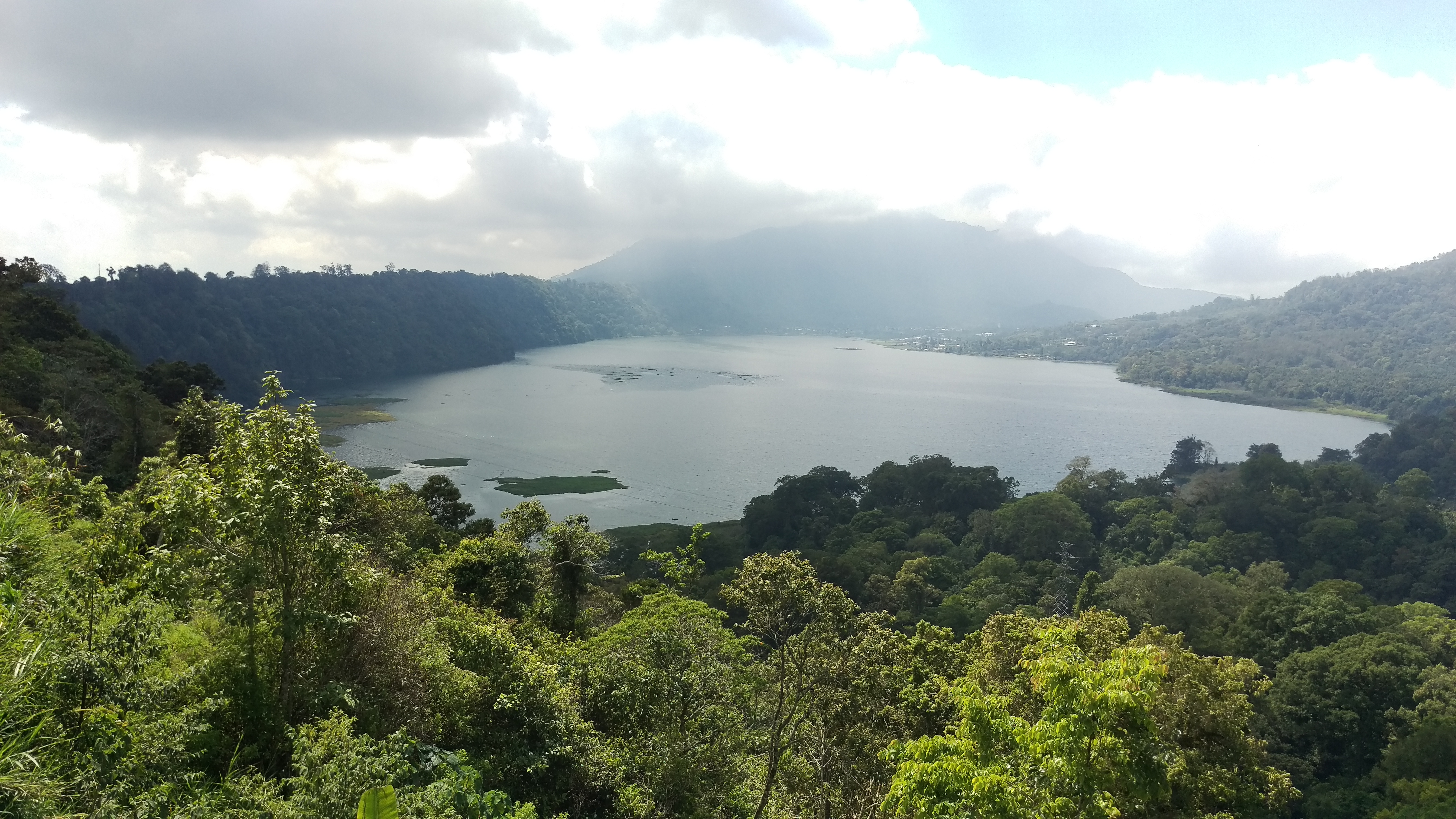
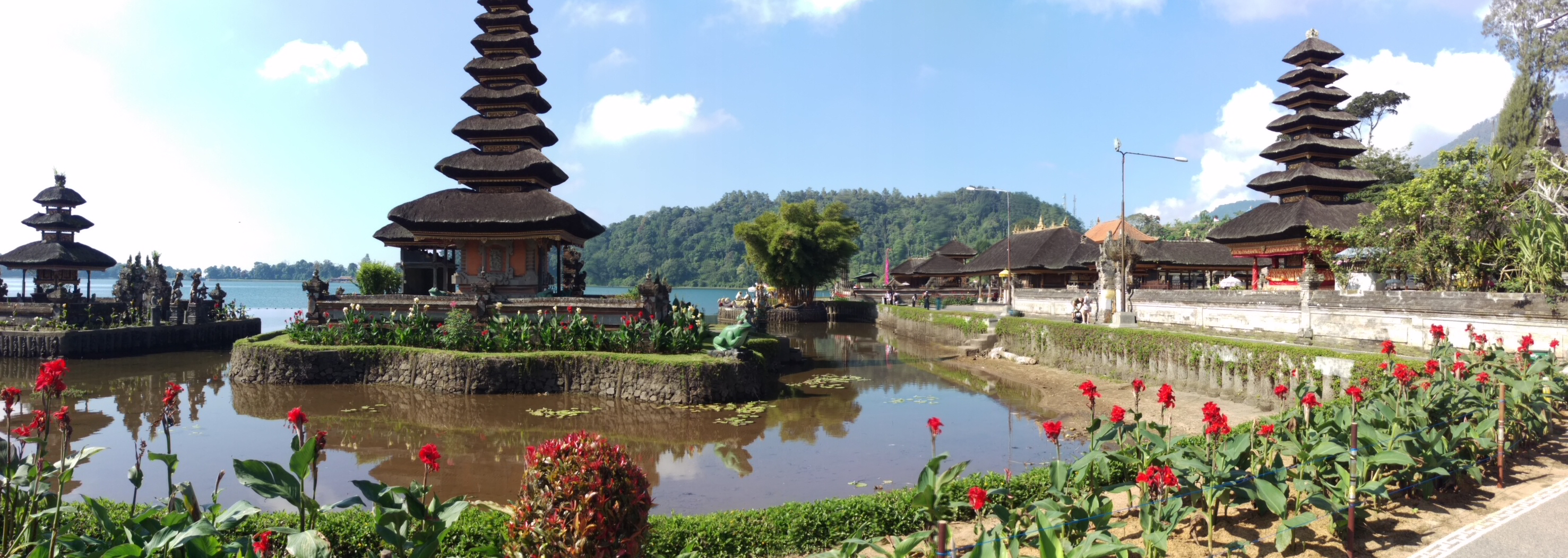
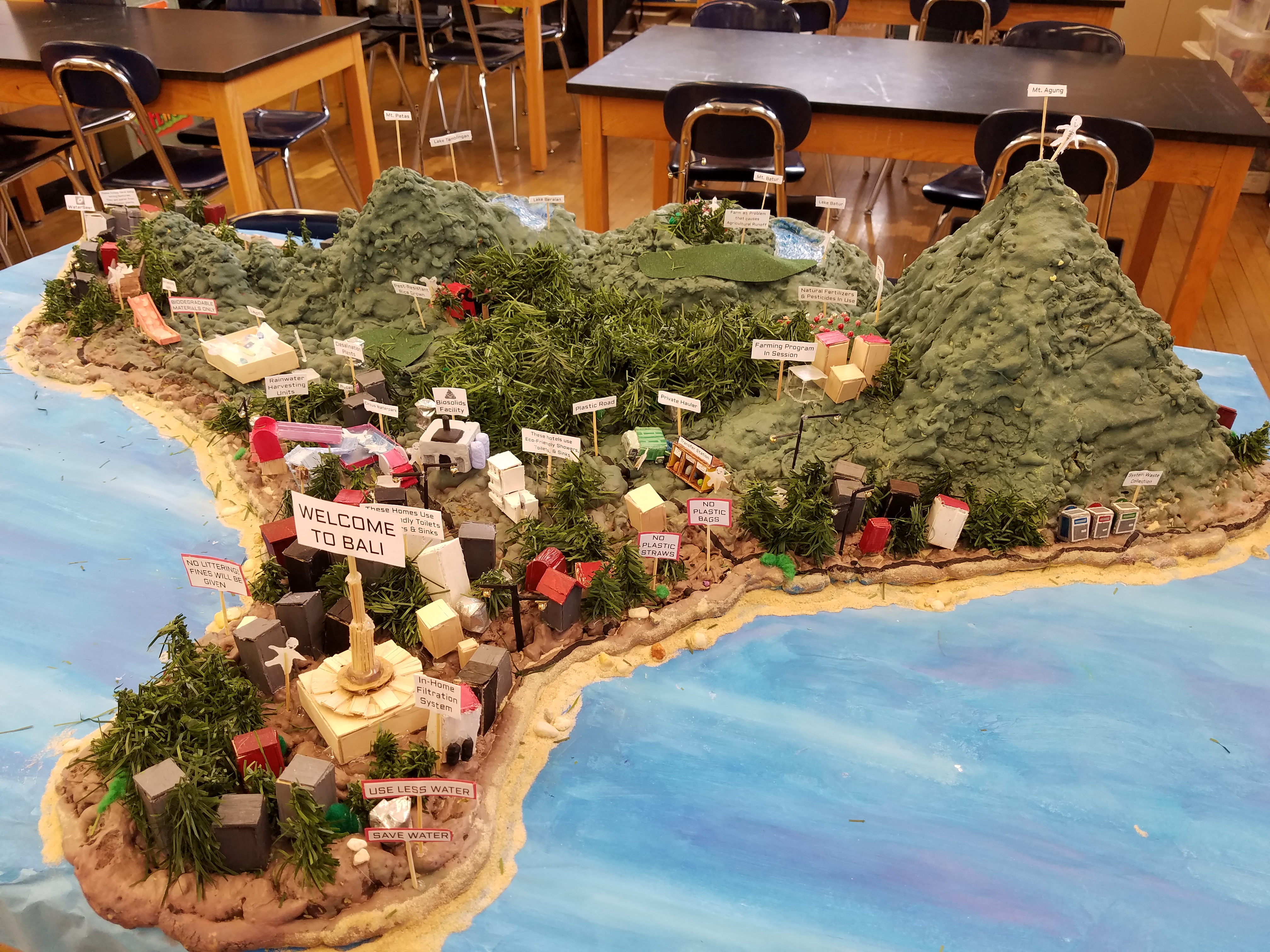
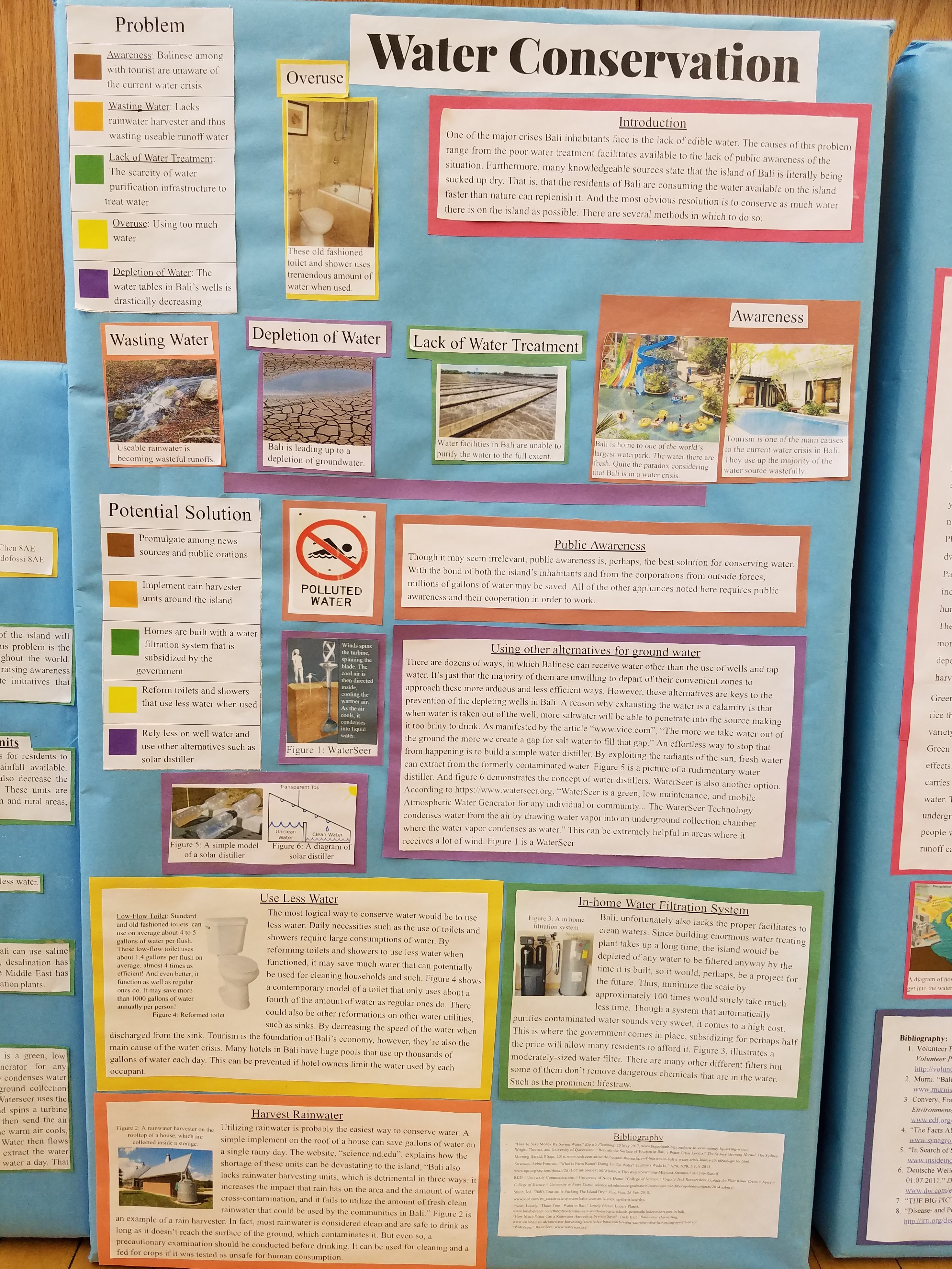
…not a drop to drink. That’s what Richard Lebowitz discovered on his Fund for Teachers fellowship last summer in Indonesia. For two weeks, he collaborated with Balinese municipalities, scholars, citizens and tourists to research the country’s inability to overcome its water shortage crisis. Richard’s inspiration came from observing water waste at The SEEALL Academy in Brooklyn, NY, where his students are now implementing sustainability practices as a result of his research.
“An environmental sustainability practice that my school fails to address is our overconsumption of freshwater,” said Richard. “Our sinks and water fountains often break, and excess water pours out of these faucets while they are not in use. They are eventually fixed, but only after wasting potable water. The school’s sinks and toilets are outdated and overconsume freshwater because they lack modern water saving technology, like reduced water volume sinks and toilets. I am committed to transforming our school culture, first by transforming the way my students view their roles as environmental stewards within our school and community.”
The most effective way to do that, he decided, was to show students what happens when a community fails to advocate for its environment.
Throughout his fellowship, Richard witnessed and documented the implications of a freshwater shortage crisis:
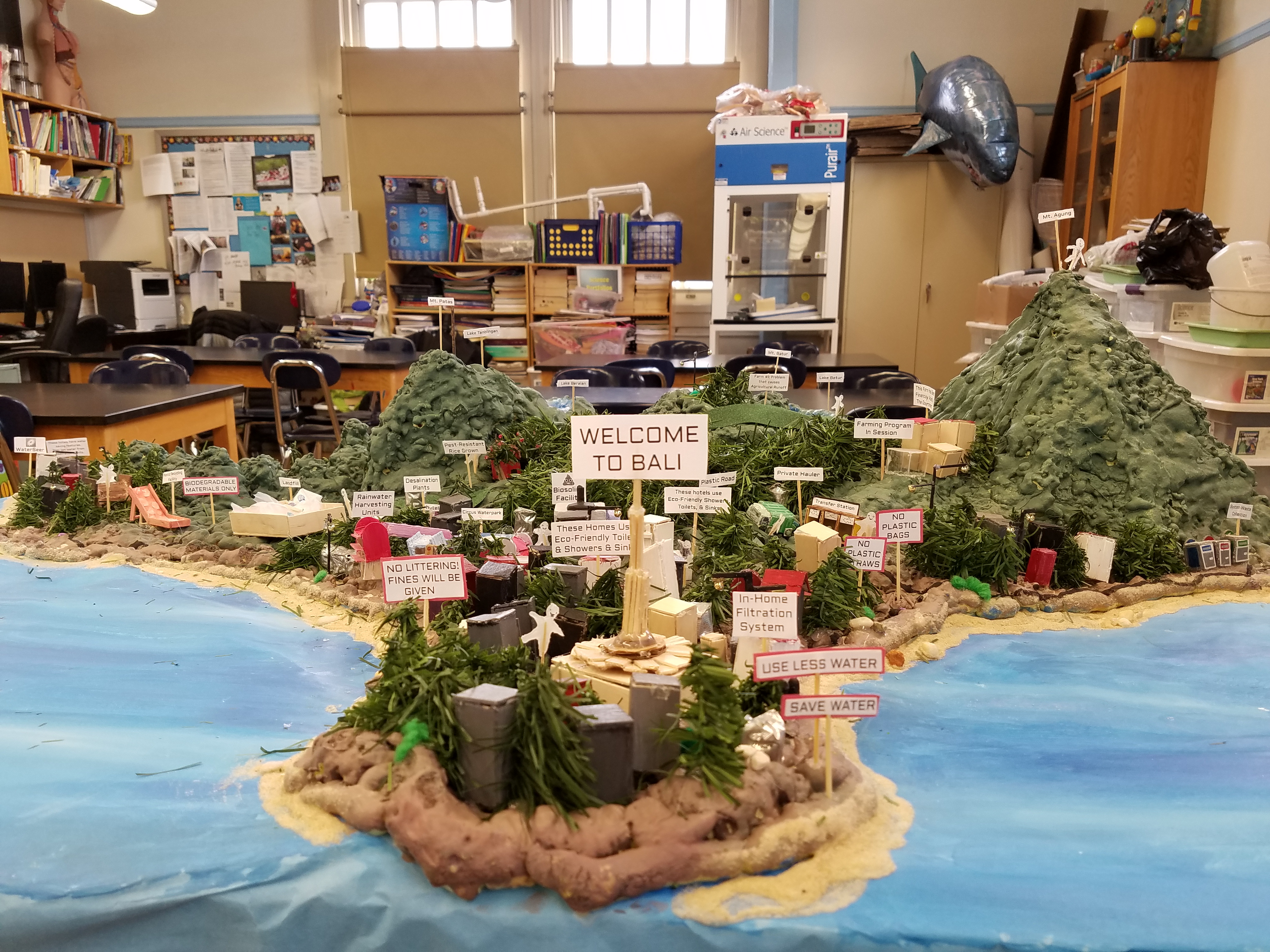
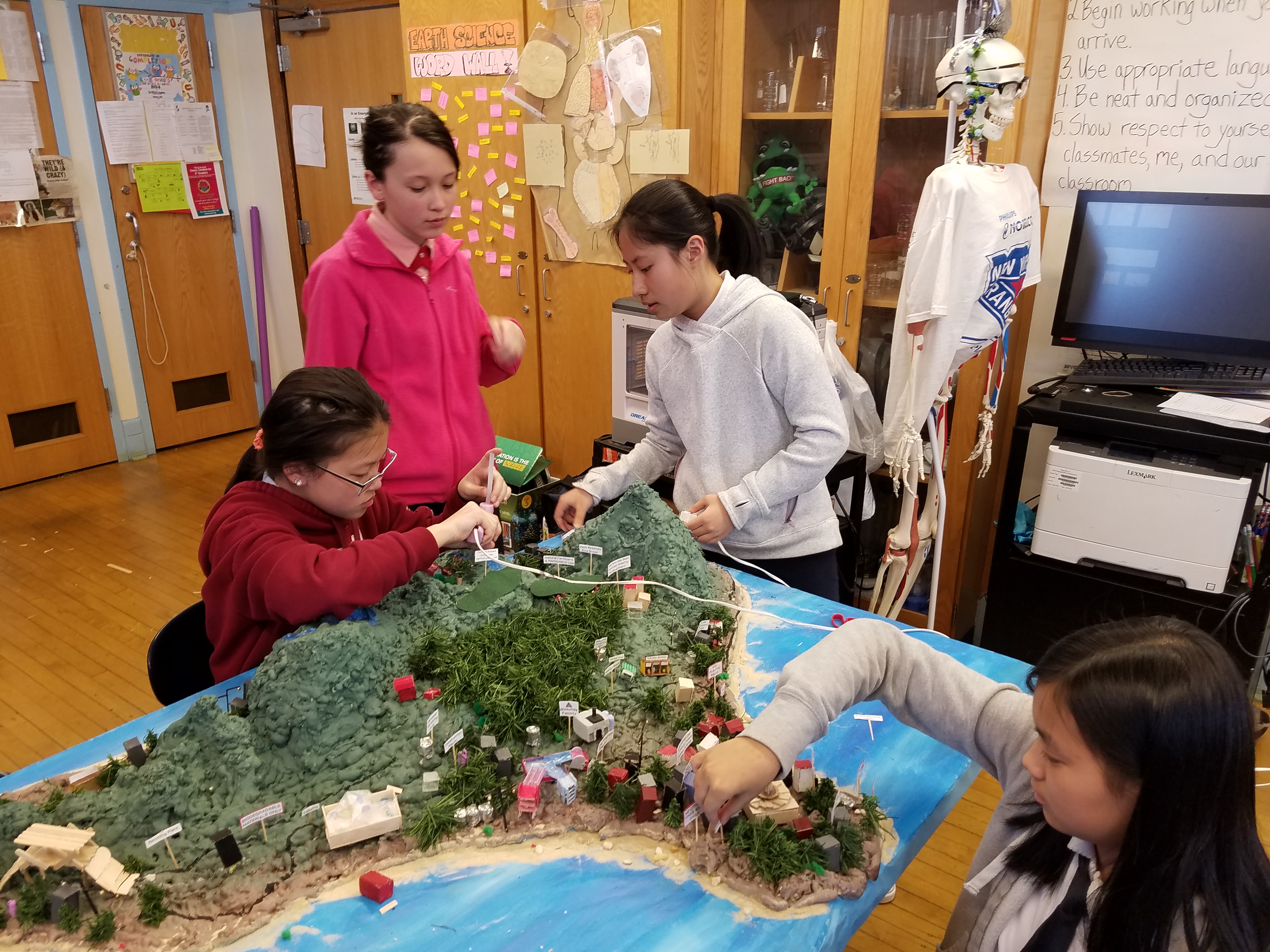
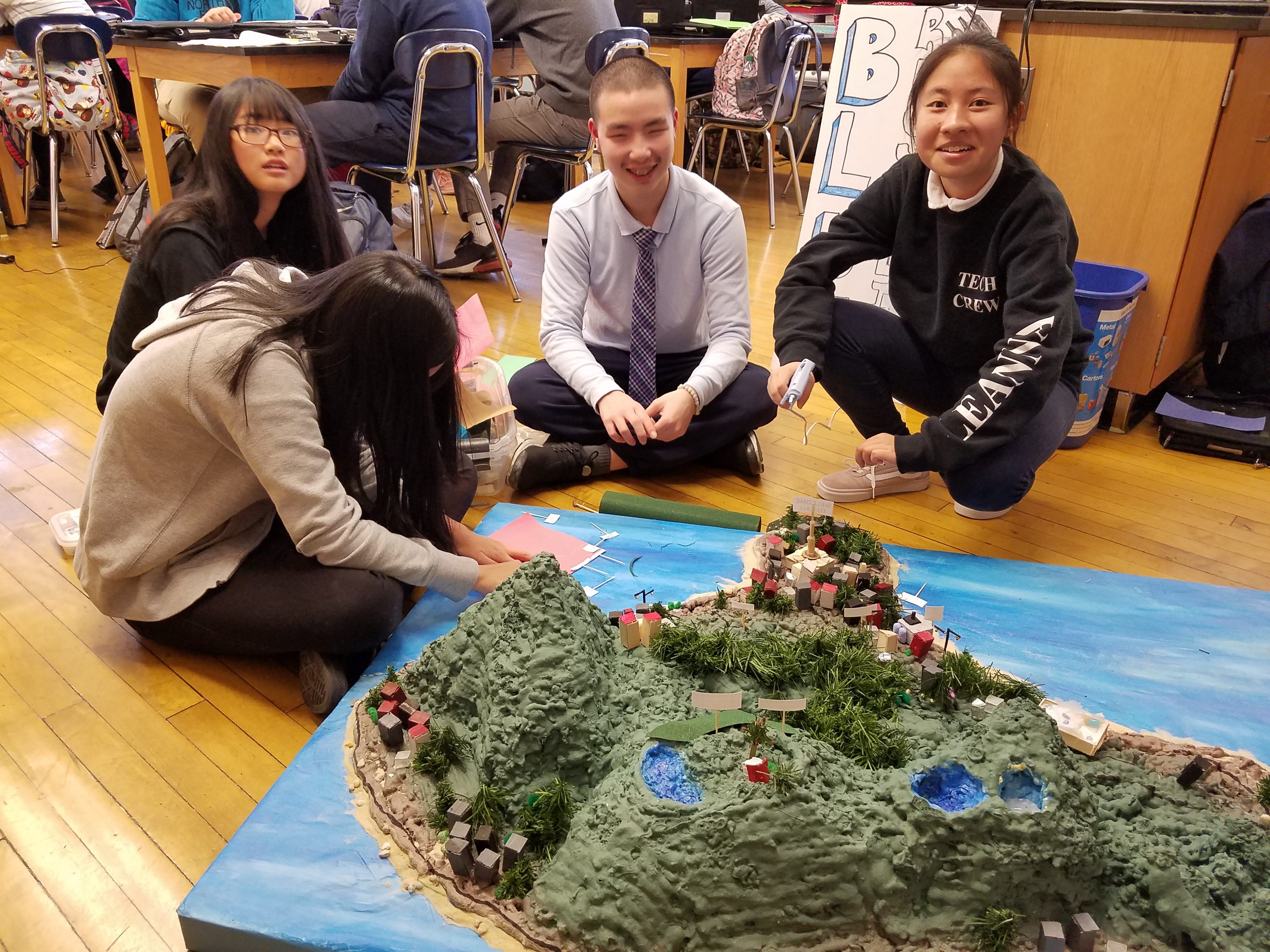
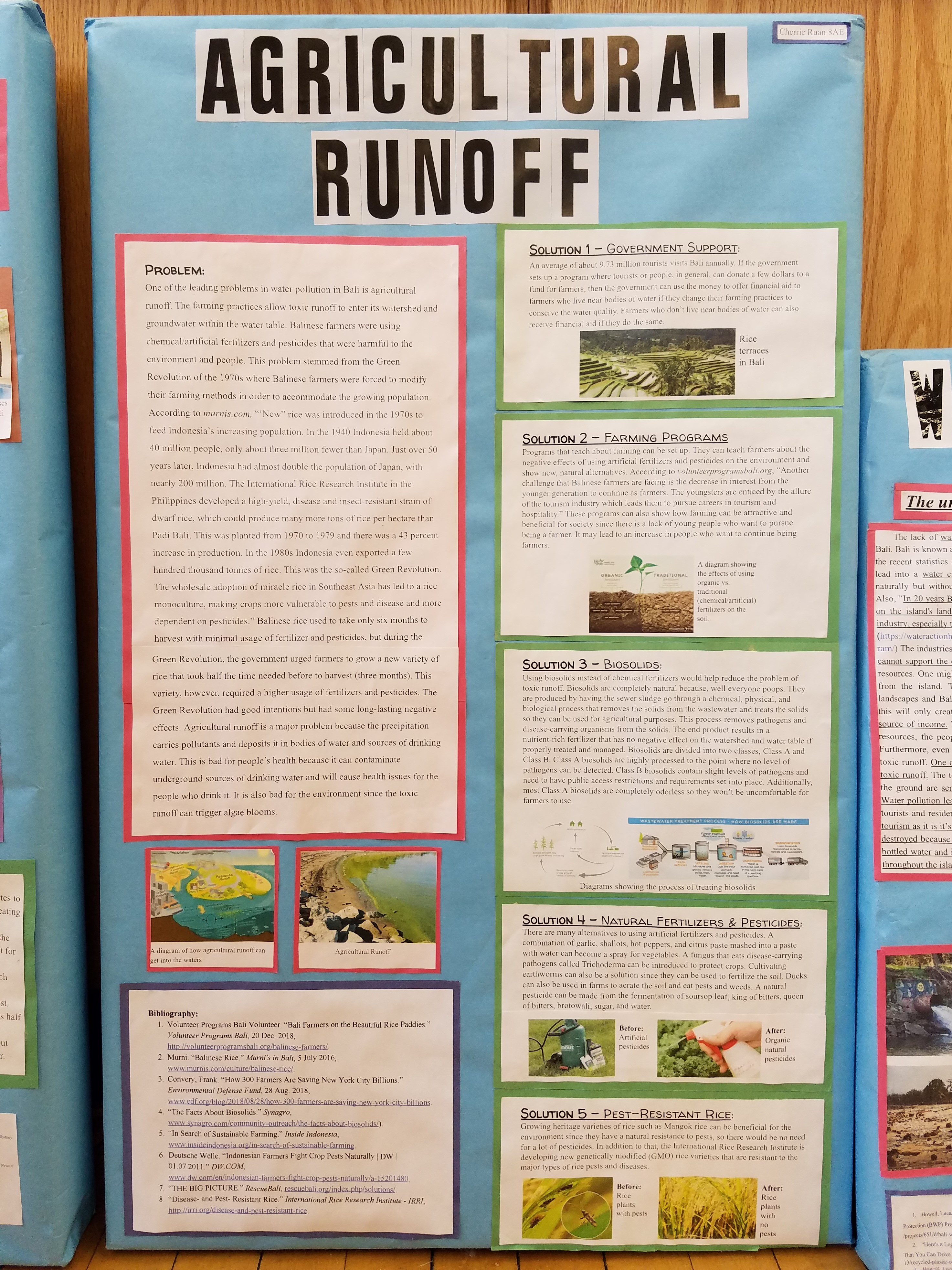
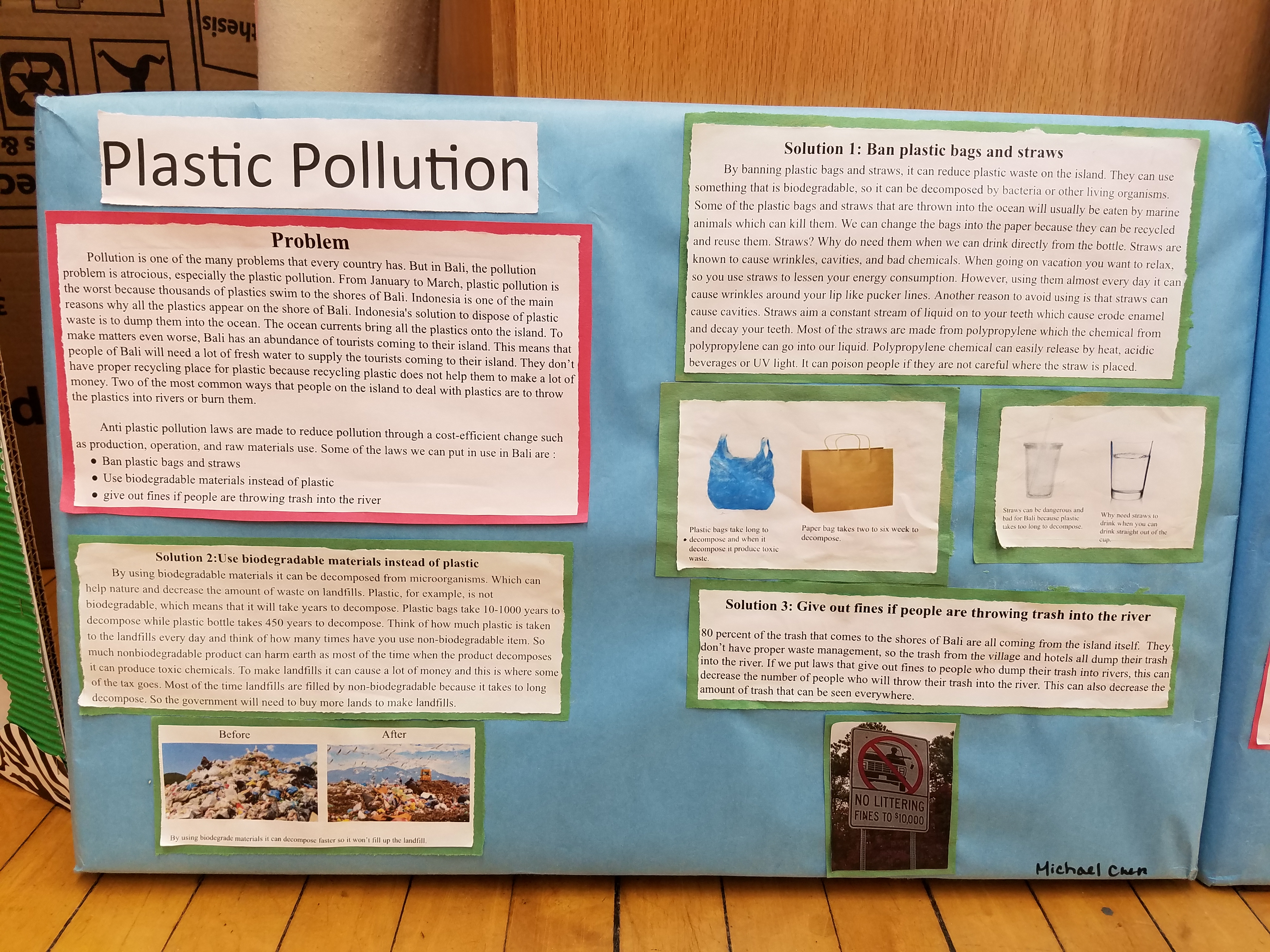
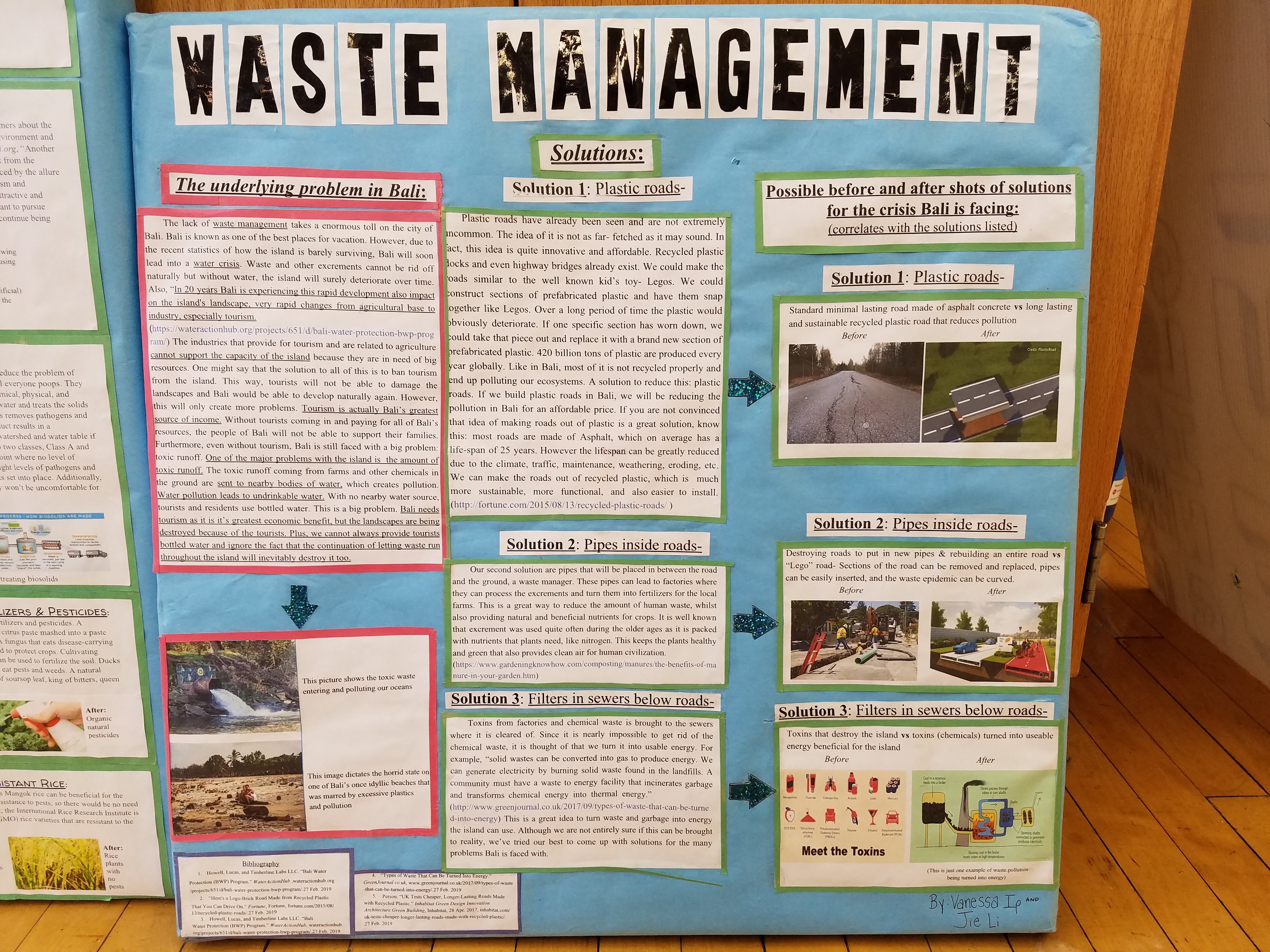
Back at school, Richard introduced students to the topic of Bali’s water crisis through his fellowship pictures, videos and interviews. Then the students got to work, proposing solutions to four primary challenges listed above. The process included creating visual representations of their solutions through a classroom model, as well as science fair tri-folds.
This project sparked further student activism around the school, including elimination of single-use plastics and a new recycling program.
“Before the fellowship, my professional obligation as a science teacher was to inspire students to develop a love for learning while aiding their growth and development,” said Richard. “Now, my job continues to be what it was plus to inspire students to become positive contributors to society, the community, and the world within areas of science such as environment conservation. I have an obligation to share my experiences with others. I am grateful that I was able to have this opportunity to learn.”
We’re proud to share Richard’s story in celebration of Asian American and Pacific Islander Heritage Month. Watch this blog and our social media sites this summer for more teachers’ odysseys in Cambodia, China, India, Indonesia, Japan, Laos, Maldives, Nepal, Taiwan, Thailand and Vietnam.
[minti_divider style=”3″ icon=”” margin=”20px 0px 20px 0px”]
Richard is a middle school science teacher, sustainability coordinator, and science department chairperson in Brooklyn, New York. Currently, Richard is leading an effort that would bring recycling into his middle school. He spearheaded the construction of a greenhouse with a roof rainwater collection system. Next year, he plans to bring a reusable water bottle filtered refill station into his school. He is a Math for America Master Teacher and Greentree Foundation member.
[minti_dropcap style=”circle”]B[/minti_dropcap]ack in the ’80s, when Saturday Night Live was funny, Jon Lovitz did a skit called “Get to Know Me!” espousing how the lives of people (i.e. Steve Martin) benefited from knowing him. We believe the same is true of our 2019 Fellows and are, therefore, beginning a blog series to introduce many of our grant recipients throughout the summer.
For our first installment, we introduce you to a Fellow whose fellowship ranks among the most unique we’ve funded in almost twenty years. Get to know Mick Posner of Conrad High School in West Hartford, CT.
[minti_divider style=”3″ icon=”” margin=”20px 0px 20px 0px”]
On why he designed this fellowship…I am now in my 10th year of teaching American Sign Language (ASL), which was actually the first language I learned as a child because I was born deaf. As a faculty member of my high school’s World Languages department, I work with students in 9th through 12th grade. Students take my class to fulfill their World Language credit and to learn about the deaf community. More than 90% of my students have not been exposed to a sign language system until they take my class. I believe that students enjoy my class because they are being introduced to an entirely different culture that, in a sense, intertwined globally and for many of them, the challenge of communicating in different environments and situations is mutual.
Many people do not know that there are 200+ sign language systems around the world, each with their own grammar, vocabulary, influences and origins. Twice a year, my students complete a survey in order to share their feedback about my ASL classes. Consistently I receive the same inquiries — students have a strong interest in learning about unique deaf communities in other countries, particularly those shaped by linguistic and geographical barriers (such as the fact that deaf people in Cuba who are not allowed to drive and work full-time, among other government imposed restrictions.
(photo courtesy of Nunatsiaq News)
After conducting extensive research, I found very little exists regarding the Greenland Deaf Community (and deaf Inuits), thus leading me to the following learning experience that I wish to pursue: understanding how such an unique population survive in such a remote part of the world, despite their deafness, by becoming a student of Inuit Sign Language (ISL), which is the official sign language system of the Greenland Deaf Community. This fellowshipwill deepen students’ understanding of the human spirit’s resiliency and the importance of continuing learning and pursuing knowledge in sign language systems.
ISL is a dialect that is centralized around vocations (a large percentage of their vocabulary is focused on being able to communicate related to hunting and fishing) and survival skills. It is a language based purely on livelihood and survival in a very remote section of the world and would be a strong evidence of sign language’s relevance to a community that depends so much on a particular dialect to survive. There’s not many other languages like this, particularly in the form of a sign language system.

Celebrating the news with Principal Julio Duarte (left) and Superintendent of Schools Tom Moore
From this FFT experience I will have my students actively involved in the creation of online resources regarding different deaf communities around the world. In this project, students will include locations of community, what makes them unique, how they interact with the rest of their community at large, and the identification of unique signs necessary for survival.
When I first found out I was an FFT Fellow, I was overcome with an extraordinary sense of relief. The grant was something I had worked diligently on for four months, stemming from an idea I had from over a year ago based on articles I read the previous summer — quickly, that feeling turned into so much joy. My students were really excited for me — after it was announced, I asked if I could have a few minutes to call my wife. My 5th period class (that was when it was announced) voiced their support and understanding.
The impact on students already exists — I received several congratulatory and well-wishes emails from parents who shared that their students came home and told them about the FFT award. Along with a few additional parents who contacted me via social media, some of my seniors shared that they wish they could stay in high school for another year so they could hear about the experience (of course, I will see if I can extend an invitation to them when the time comes.)
[minti_divider style=”1″ icon=”” margin=”20px 0px 20px 0px”]
Mick is the only member of his family who was deaf, yet his parents believed in having ASL as his first language, which he learned before English. You can learn more about his life experiences and his own family from the A&E documentary “Born this Way Presents: Deaf Out Loud.” He and his wife also own Posner Inclusion, a consulting firm that creates bridges between businesses and unique markets, such as the deaf population.
If you see an inordinate amount of people wearing blue or a puzzle piece lapel pin today, here’s why. Today is the 12th annual World Autism Awareness Day (#WWAD), established by Member States of the United Nations to raise awareness about people with Autism Spectrum Disorder (ASD) throughout the world. To show our support, Fund for Teachers proudly shares the work of Guin Geyer.
Autism was a relatively new diagnosis when Guin earned her special education degree, which meant she received little to no training on how to help students and their families living with the communication disorder. While the diagnosis continues to increase (1 in 59 children according to the Centers for Disease Control and Prevention), Guin found teacher development in the field remained non-existent. Not one teacher in her school district was trained on the spectrum.
“I intend to become the go-to professional in the state of Oklahoma to help colleagues find the best teaching methods for severe-profound student populations they teach,” wrote Guin in her Fund for Teachers proposal.

The Picture Exchange System facilitates communication through images
She started this quest with a $5,000 grant to attend the Treatment and Education of Autistic and related Communication Handicapped Children (TEACCH) conference in Indianapolis last summer. Considered the best practice for teaching those with autism disorders, TEACCH representatives taught Guin how to structure her classroom in ways that help students better understand their environment and achieve independence over time. She then returned home to Oklahoma City and created that classroom at Bridgestone Elementary.
“With extra funds from my Fund for Teachers grant, as well as some personal fundraising, I was able to set up a model classroom,” said Guin. “I submitted another grant to set up all areas of the school with a Picture Exchange System so that our non-vocal students have a way to communicate everywhere in the building.” In addition:

The new bubble tower employs sound, lights and movement to calm students’ anxiety.
As a result of these innovations, Guin reports a 98% reduction in disruptive classroom behaviors. “Very rarely do we see any problems at all and it’s easy for us to resolve them at this point,” she says.
“By funding training for me, you changed the lives of multitudes of students with special needs,” said Guin. “You have given me the tools to help them be more successful in the general education environment and to be more included in society as a whole.”
[minti_divider style=”3″ icon=”” margin=”20px 0px 20px 0px”]
Emily Frake (Camino Nuevo Charter Academy #2 – Los Angeles) also chose to pursue learning that supports students on the Autism spectrum. Emily used her Fund for Teachers grant to attend The Autism Show, in Manchester, UK, and, afterwards, observed leading inclusion schools in London to better understand effective and meaningful implementation of inclusion on a school-wide level.
“My fellowship opened my eyes to a society that is more accepting and accessible for people with all sorts of disabilities,” she said. “With all the learning I’ve done, I’m hoping to help general educators know that teaching kids with disabilities is not scary or even as difficult as they think. I want them to feel empowered to take ownership of ALL students.”
A “bump in the road” connotes a temporary set back for most of us, but today’s Google Doodle explains how tactile paving changes the lives of visually impaired and also introduces web surfers to the man behind the advancement. Learning more about Japanese inventor Seiichi Miyake brought to mind the fascinate fellowship of Naima Hall, teacher of second- and third-graders at Educational Vision Services, P.S. 102, the world’s largest education program serving students who are blind and visually impaired from 5 to 21 years of age and eligible preschool children.

Touring the Galimard Parfumery 1747
Last summer, Naima used her FFT grant to explore the life of Louis Braille and investigate French-inspired multisensory, experiential learning opportunities that promote New York state’s Expanded Core Curriculum (ECC) for blind and visually impaired students.
“The ECC addresses functional and compensatory skills needed to account for decreased opportunities to learn by observing others,” explained Naima. “Ultimately, this educational approach incorporates artifacts and experience to promote learning and equity for students with blindness and visual impairment. This experience helped me create learning about historical figures, culture and geographical regions by introducing commodities, cuisine and objects that benefit all learners.”
For example, Naima toured the world famous Galimard Parfumery 1747 and learned how to make individualized scents, an exercise she modified and duplicated with students. She met with the manager of the equally renown Savon de Marseille soap production facility, providing more inspiration for her ECC lessons. Perhaps most compelling, however, was her time spent with the curator of the Louis Braille Museum and spending time with Braille’s archived samples and inventions that continue to change the lives of the visually impaired.
“As a teacher for the blind and visually impaired, there is not a day that goes by that my students and I are not in proximity to the embossed system of writing Louis created during his life,” said Naima. “This fellowship was a career apex and reaffirmed my passion and sense of purpose within my own vocation. It is my joy to bring Louis’s story close to the hearts of my students so that they may face a challenging world with courage and grit.”
[minti_divider style=”3″ icon=”” margin=”20px 0px 20px 0px”]
Naima Hall is a teacher for the blind and visually impaired at Educational Vision Services, P.S. 102 in Brooklyn, NY. Previously she served as an educator in Saitama, Japan, working in conjunction with the Japanese Ministry of Foreign Affairs. She also served as an overseas field educator facilitating international service learning and sustainability projects in Fiji, New Zealand and Australia.
If one ever needs an excuse to have pie for breakfast, lunch, and/or dinner, it’s today — March 14, 3.14, National Pi Day. (Also, Albert Einstein’s birthday and the day of Stephen Hawking’s death. Coincidence?)

Making the hike to Pythagoras’ Cave to see his school, known as the Semi-circle, in Samos, Greece
The mathematical constant that’s been around since the Babylonians figures prominently in math and physics calculations like the ones taught by Jennifer Lehner and Pam Guest at Platt High School in Meriden, CT. To make math more compelling to high needs students and extra-engaging to the school’s Mathletes Team, the teachers designed an FFT fellowship to explore historic sites pertinent to mathematics in Greece and Italy.
“Rather than just talk about Pythagoras’ theorem, we wanted to personally describe what Pythagoras’ cave looks and feels like,” said Jennifer. “Instead of just presenting the Fibonacci series, we wanted to share how we visited his birthplace and what significance he has to the local people. Our vision was to embed key elements of our two weeks into a virtual Greece and Italy math challenge students can navigate prior to graduation.”

Pam uses a clinometer at the Leaning Tower of Pisa to estimate its height using trigonometry
Beginning at the cave where Pythagoras taught the likes of Aristotle and Plato, Pam and Jennifer photographed and filmed ancient architecture in Athens and Delphi, creating media assets to support the math questions for students’ virtual challenge project. In the homeland of Galileo and Fibonacci, the teachers sought out memorials to math, including the Garden of Archimedes Mathematics Museum in Florence and the Museum of Mathematics in Rome.
“Our goal was to acquire as much knowledge as we could about the history of key math figures and concepts from the regions, as well as evidence of applications of math in historic and current times across a range of disciplinary areas,” said Pam.
Members of the afterschool “Mathletes” club are in the process of creating a rigorous SAT-level math questions associated with each site their teachers researched. In May, teammates will test and refine one another’s questions and decide what platform to use to share out their virtual math tour with a wider audience. Today, Jen has students on a field trip to Southern Connecticut State University’s Mathematical Puzzle Programs High School Challenge which, according to her, is another experience perfectly aligned with student goals established as a result of their fellowship last summer. The teaching team is also in planning discussions with an English teacher who covers Greek Mythology about a cross-disciplinary field trip with students back to Greece, hopefully next year, if approved.
“It was so impactful to step foot on the same grounds of many famous mathematicians and to learn first hand from being there rather than out of a textbook,” said Jen. “I not only feel that this fellowship has improved my teaching, but it has also shaped me into a well-rounded person who can set a positive example for my students as to what it means to be a lifelong learner.”

Mathletes today at the Mathematical Puzzle Programs High School Challenge
[minti_divider style=”1″ icon=”” margin=”20px 0px 20px 0px”]

The display Jen & Pam created at Platt High School
Pam Guest is a high school mathematics teacher and school and district Restorative Practices teacher leader who also serves as an adviser for the Interact Club, co-adviser for the Mathletes team, and throws coach for the cross-town high school’s indoor and outdoor track teams. Previously a Senior Executive HR Director with Accenture, teaching fulfills her lifelong dream to help children learn to succeed. Now a seven-year teacher, she has been recognized as her school’s 2019 “Teacher of the Year.”
Jen Lehner is a high school math teacher, advisor for the Mathletes team, and coach of the girls tennis team. In addition to her B.S. in Mathematics, she earned her M.S. in Educational Technology from Central Connecticut State University.
Jen and Pam did an excellent job documenting their learning on their blog and Facebook. And for some fun facts about Pi Day, check out this Forbes article.