A Journey of Heritage, Resilience, and Belonging

Each summer, during what we affectionately call “Fellow Season,” we have the privilege of following Fund for Teachers Fellows as they immerse themselves in self-designed learning experiences around the world. Their journeys are rooted in a simple belief: when teachers are trusted to pursue the learning they need most, students reap the benefits.

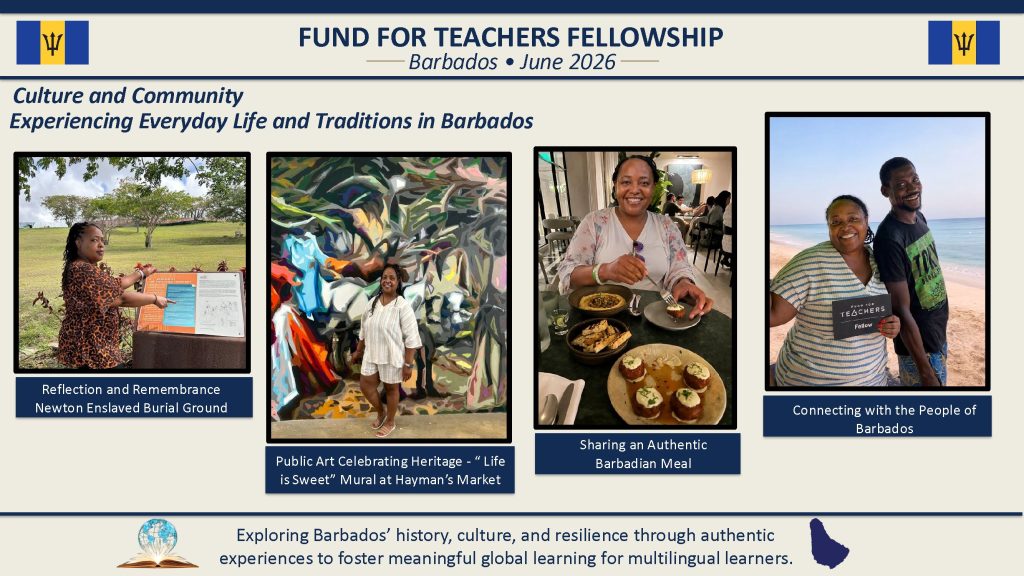
This week, we’re highlighting 2026 Fund for Teachers Fellow Kim Shockley, who traveled to Bridgetown, Barbados, to research African Diaspora history at significant heritage sites. Her fellowship centered on themes of resilience, freedom, and cultural identity—knowledge she will transform into meaningful learning experiences for her multilingual students.

Kim’s journey took her beyond textbooks and into the places where history unfolded. At sites including the George Washington House, she examined historical evidence, interpreted exhibits, and reflected on Barbados’ unique connections to colonial history and the African Diaspora. By experiencing these places firsthand, she gained a richer understanding of how place-based learning can help students make meaningful connections between the past and the present.
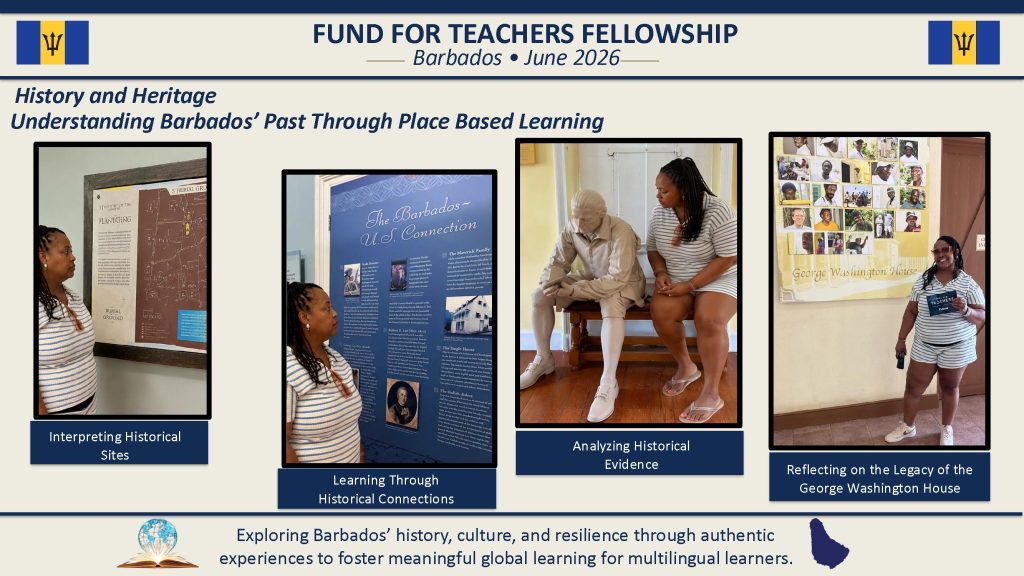
Her fellowship also focused on the people and traditions that continue to shape Barbadian identity today. Kim explored local culture by sharing authentic meals, engaging with community members, viewing public art such as the “Life is Sweet” mural at Hayman’s Market, and visiting the Newton Enslaved Burial Ground, where she reflected on the enduring legacy of those whose lives and stories continue to influence the island’s identity. These experiences deepened her understanding of resilience, remembrance, and community—perspectives she hopes to bring into her classroom.
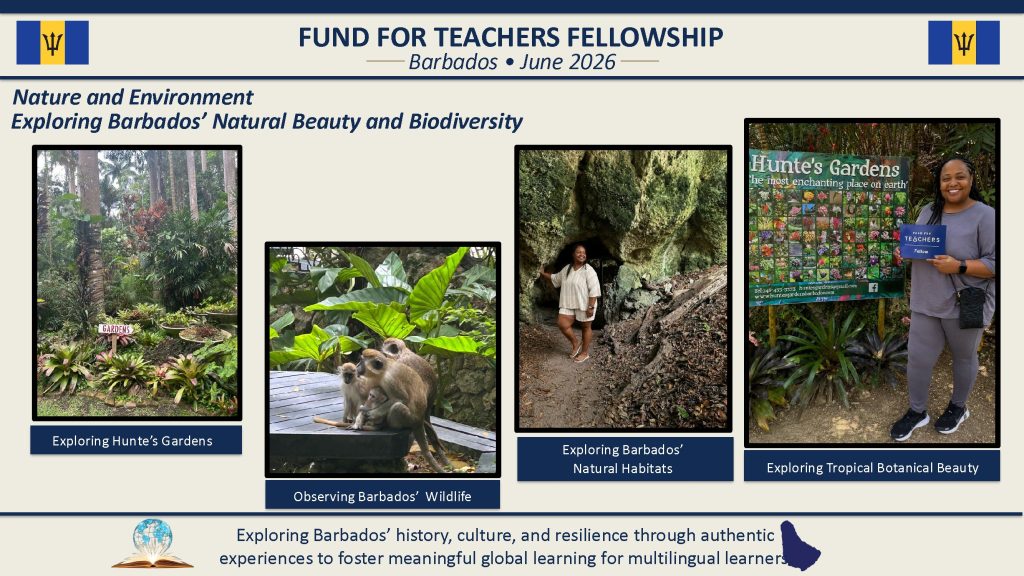
Beyond history and culture, Kim also explored Barbados’ remarkable natural environment. Visits to tropical gardens and natural habitats provided opportunities to learn about the island’s biodiversity and the relationship between people and place. Together, these experiences paint a more complete picture of Barbados—one that extends beyond historical landmarks to include the landscapes and ecosystems that continue to shape life on the island.

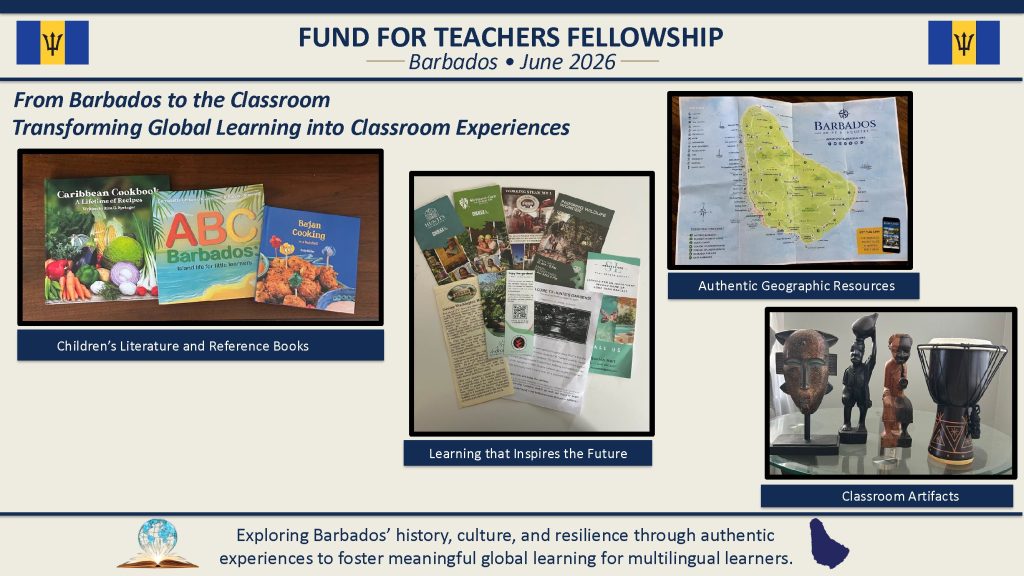
As with every Fund for Teachers fellowship, the journey doesn’t end when the plane lands back home. Kim returned with children’s literature, authentic classroom artifacts, geographic resources, and countless stories that will help bring Barbados into her classroom. More importantly, she returned with fresh perspectives and firsthand experiences that will empower her multilingual learners to celebrate their own heritage, think critically about justice and equality, and recognize the power of their own voices to make a difference.
Kim’s fellowship is a powerful reminder that professional learning is most transformative when it is authentic, immersive, and teacher-driven. By investing in educators’ curiosity, Fund for Teachers helps create classrooms where students don’t just learn about the world—they develop the knowledge, empathy, and confidence to help shape it.
Finding Her Roots

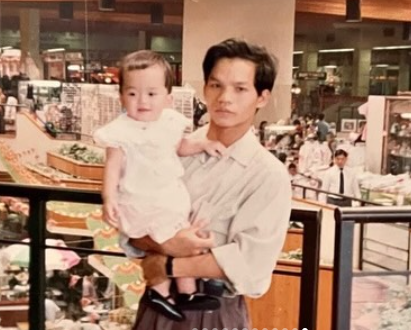
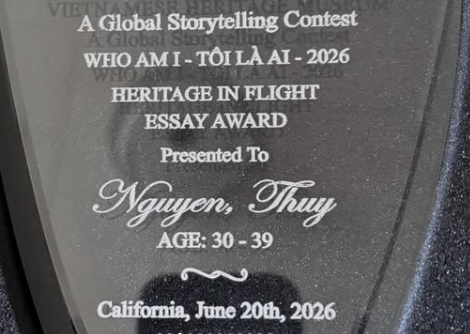
Last summer, Thuy Nguyen and teammate Thu-Hang Tran-Peou (Mather Elementary School – Dorchester, MA) used a $10,000 Fund for Teachers grant to navigate across Vietnam’s three regions—Ha Noi in the North, Hoi An and Hue in the Central, and Ho Chi Minh City in the South — to commemorate the 50th Anniversary of Saigon’s fall. The inspiration behind this fellowship was to enrich Boston Public School’s only Vietnamese Dual Language Program by bridging generational gaps, celebrating linguistic diversity, and empowering students to honor their heritage while excelling in a multilingual academic community. Along the way, Thuy was inspired to reflect on her learning (and life) and enter the “Who Am I” essay contest for the Vietnamese Heritage Museum. We were so honored that Thuy chose to reach out and share both her accomplishment, and her winning essay:

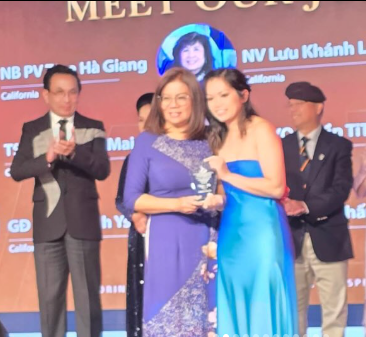
“When I embarked and settled home from the amazing trip to Vietnam this past summer, I felt immense gratitude and indebtedness to pay this forward to benefit students and community stakeholders. The trip for me was about discovering and learning more about my family’s heritage and so much more. During a break, I took some time to write and enter myself into the “Who Am I” essay contest for the Vietnamese Heritage Museum. To my surprise, my essay was one chosen out of many entries. 

The award ceremony coincided with World Refugee Day this past weekend. This essay will be archived in the Vietnamese Heritage Museum. I am looking forward to sharing with my students about my trip and connecting with their own families’ stories of diaspora.  Attached is the essay, some photos from the event, and student work that inspired me to put myself out there and go for it. 

Again, I still feel incredibly lucky and honored to have been a Fund for Teachers recipient.”

Ramadan Mubarak

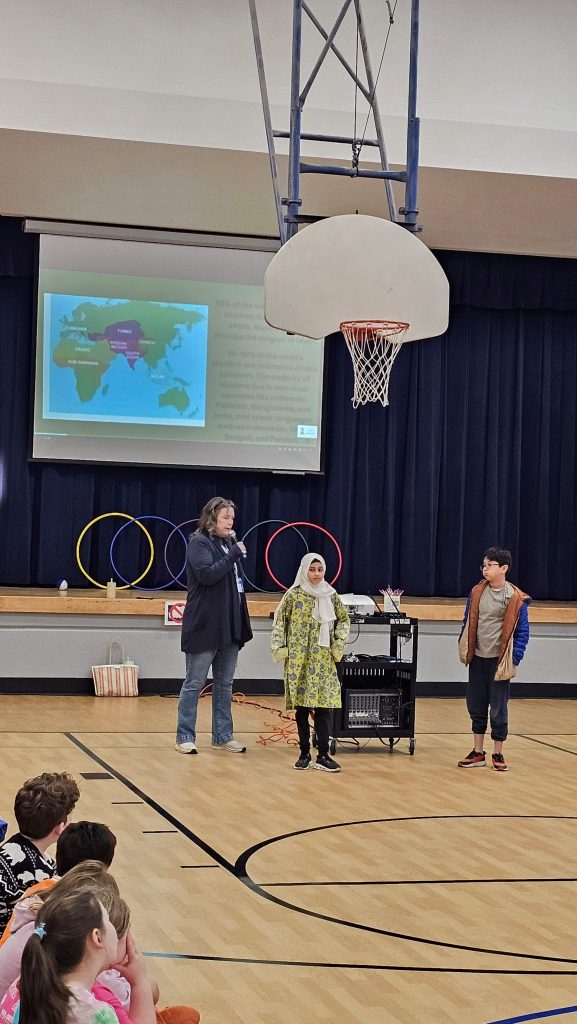
As 1.8 billion people across the globe are celebrating Ramadan, students at Lincoln Elementary in Norman, OK recently learned about the celebration from their fellow students who also are Muslim. Their teacher, Diane Wood, informed and inspired their presentation using experiences from her Fund for Teachers fellowship last summer.  

“My fellowship to Spain and Morocco helped me to develop an approach to education that recognizes, respects, and uses students’ backgrounds as meaningful sources for learning,” said Diane. “Culturally responsive teaching fosters a sense of belonging, strengthens confidence, and honors different perspectives. I believe it is essential for creating equitable and effective classrooms and ensuring that every student has the opportunity to thrive.” 

Diane serves as the Gifted Resource Coordinator for school with 270 students – six percent of whom are from North African or Middle Eastern countries. Because one of her responsibilities is enhancing the mandated curriculum with multi-disciplinary content, Diane seized the opportunity to design a fellowship that helped students affirm and appreciate their culture of origin while also developing fluency in other cultures. 

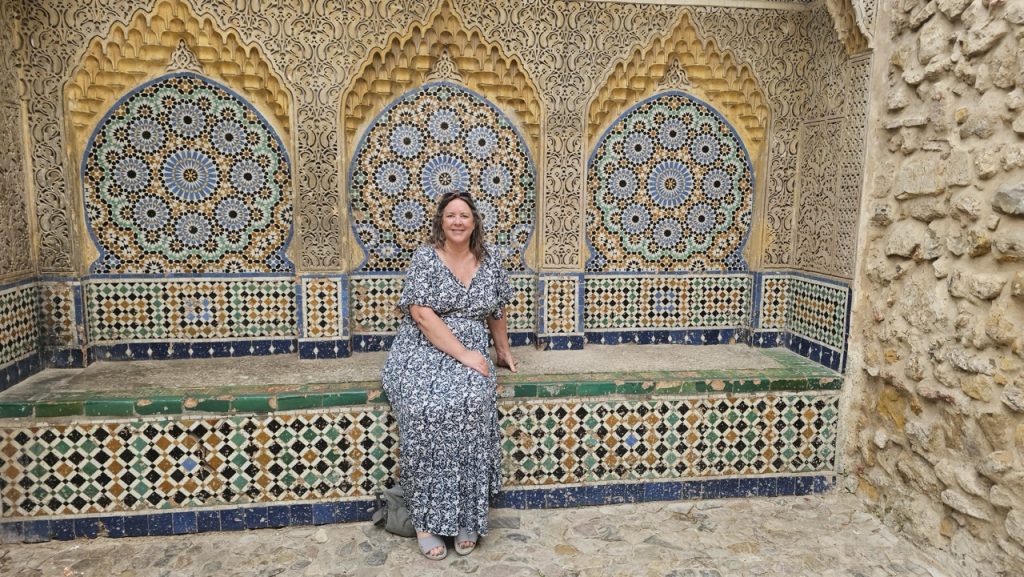
“This fellowship has helped me develop a deeper understanding of how art and architecture are not just aesthetic choices, but also powerful expressions of identity, religion, and social values,” Diane said. “Understanding this shared history of cultural synthesis has been transformative, helping me appreciate the importance of cross-cultural collaboration and the ways in which traditions can enrich one another. I’ve learned to think more critically about cultural appropriation and heritage conservation.” 

So have her students. 

Diane is using Islamic patterns she studied in Spain and Morocco to teach symmetry and tessellations to fifth graders during a geometry unit. Students are analyzing Diane’s photographs of the intricate designs of historic sites such as the Alhambra in Granada to identify lines of symmetry, rotational symmetry, and repeating shapes that form tessellations. They are using rulers, compasses, and grid paper to design their own tessellating geometric tiles. By connecting geometry to real-world art rooted in Islamic tradition, she’s striving to make abstract concepts more concrete and visual, while honoring the mathematical contributions of diverse cultures. 

“Ultimately, my experiences in Spain and Morocco transformed cultural responsiveness from an abstract educational concept into a lived commitment, said Diane. “By immersing myself in different cultural contexts, I developed greater empathy, curiosity, and humility. My classroom is stronger because I have seen the world more broadly, and I strive each day to ensure that my students feel seen, valued, and understood.” 

In the Ramadan presentation to their peers, a student explained, “One of the things I love most about being Muslim is that God says in the Quran, I honor all children of Adam. That makes all humans my brothers and sisters who deserve respect, love, and kindness. That makes me want to be the kindest friend to everyone.”  

Experiencing History to Expand Knowledge

Three years ago, Ariana Sanders (Cincinnati) used a $5,000 Fund for Teachers grant to participate in the Witness Tree Institute’s immersive educator experience in Ghana, where she explored the impact of colonization, as well as how Africans protect their natural resources. Her goal was to inform the development of learning objectives and course modules for Ethnic Studies to be offered not just at her school, Wyoming High School, but to ALL of Ohio’s high school teachers. 

“I cannot count the ways in which this fellowship was an influential time for me,” said Ariana. “It felt like an inspired experience literally from the second the plane landed — I felt more connected to my roots as a biracial person. The Witness Tree Program really allowed me to go into areas where it is NOT touristy, talk to many professors, participate in cultural activities (food, dancing, games, etc.) It is hard to put into words what that means or how much I see that impacting my soft skills — understanding others, appreciating differences…we all clearly need more of that!” 

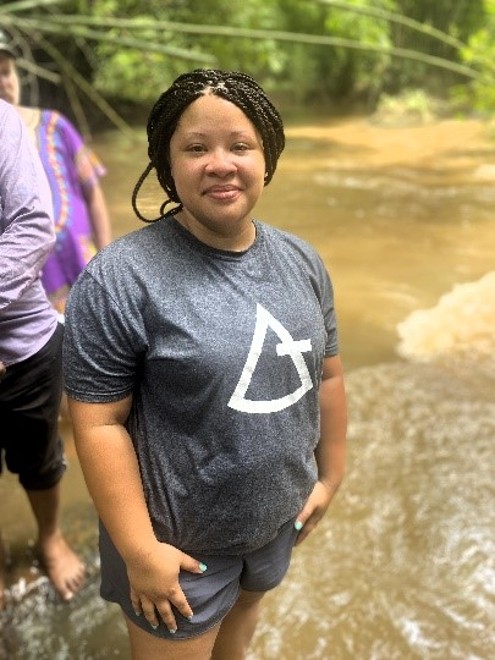
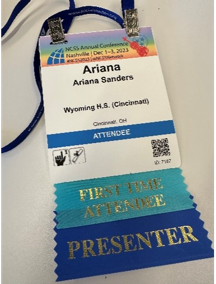
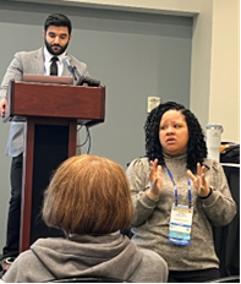
Caption: Standing in Slave River, where captured men, women and children slaves bathed for the last time before they went to the auction; Ariana’s conference nametag and presentation session.

That connection and cultural immersion informed learning standards and curriculum for a new official course offering in the Ohio Social Studies program called Religion, Gender, and Ethnic Studies, which Ariana presented at the National Council of Social Studies’ national conference. 

Additionally, Ariana sits on the advisory board for Boston University’s Teaching Africa Teacher (TAT) Certificate Program, which supports pre-service and in-service K-12 teachers and higher education instructors interested in engaging with Africa in their classrooms. As part of this opportunity, Ariana crafted an additional curriculum titled W.E.B. DuBois & Ghana: As told through 3 primary sources – which you can access here. 

“I’ve kept up with colleagues from my fellowship in Ghana, so those relationships, as well as peers through the TAT board, give me a space to advance higher education African studies and be in touch with people who are also working to ensure Africa is represented in more social studies classes. I feel like I am the biggest cheerleader for Fund for Teachers.” 

W.E.B. DuBois said, “It is the trained, living human soul, cultivated and strengthened by long study and thought, that breathes the real breath of life into boys and girls and makes them human, whether they be black or white, Greek, Russian or American.” He would be proud of the impact Ariana is making, as are we.