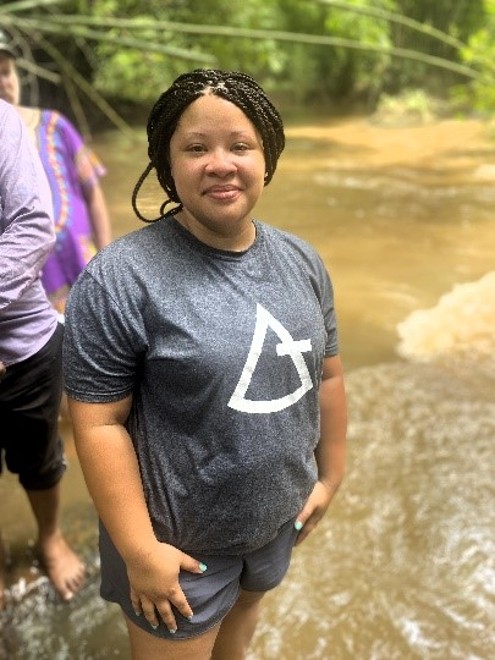
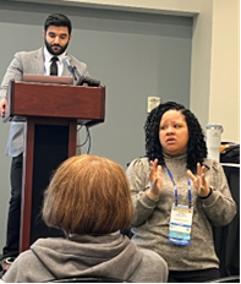
Each summer, during what we affectionately call “Fellow Season,” we have the privilege of following Fund for Teachers Fellows as they immerse themselves in self-designed learning experiences around the world. Their journeys are rooted in a simple belief: when teachers are trusted to pursue the learning they need most, students reap the benefits.
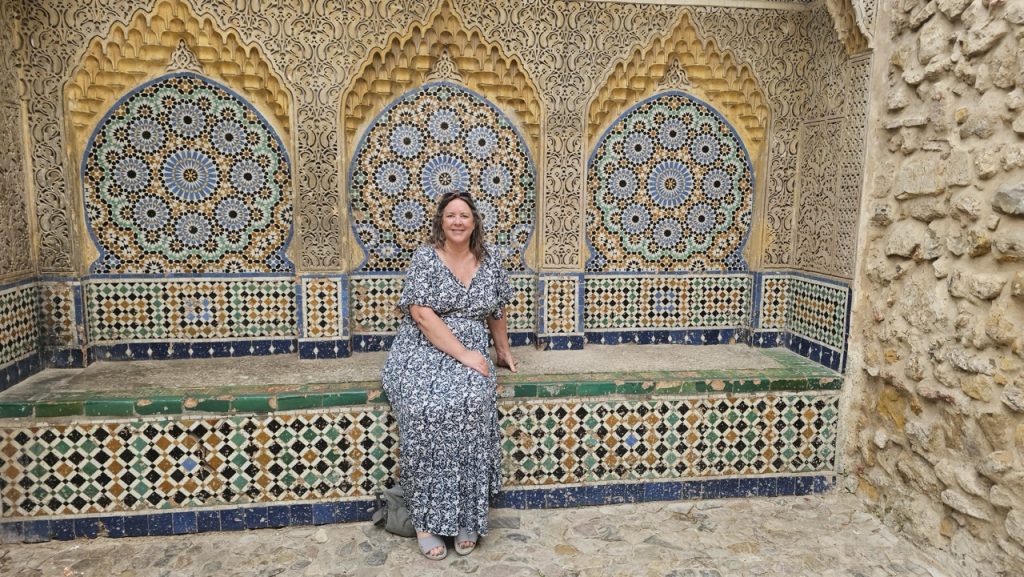
This week, we’re highlighting 2026 Fund for Teachers Fellow Kim Shockley, who traveled to Bridgetown, Barbados, to research African Diaspora history at significant heritage sites. Her fellowship centered on themes of resilience, freedom, and cultural identity—knowledge she will transform into meaningful learning experiences for her multilingual students.
Kim’s journey took her beyond textbooks and into the places where history unfolded. At sites including the George Washington House, she examined historical evidence, interpreted exhibits, and reflected on Barbados’ unique connections to colonial history and the African Diaspora. By experiencing these places firsthand, she gained a richer understanding of how place-based learning can help students make meaningful connections between the past and the present.
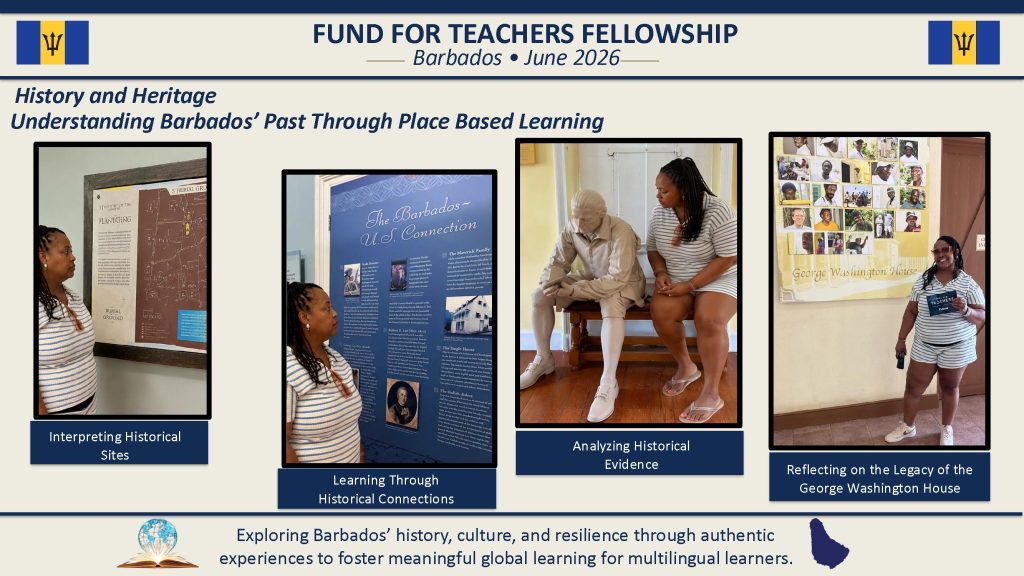
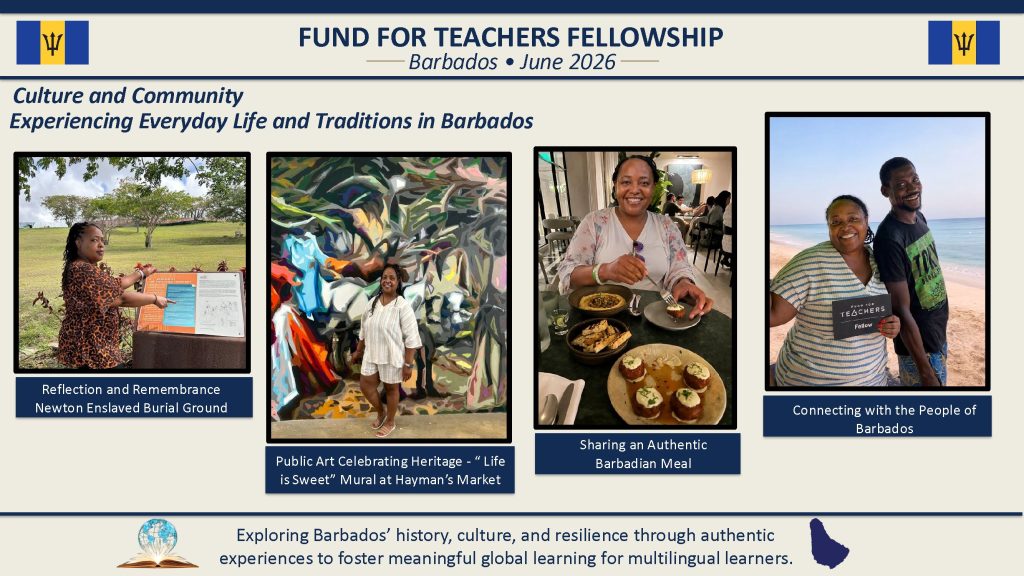
Her fellowship also focused on the people and traditions that continue to shape Barbadian identity today. Kim explored local culture by sharing authentic meals, engaging with community members, viewing public art such as the “Life is Sweet” mural at Hayman’s Market, and visiting the Newton Enslaved Burial Ground, where she reflected on the enduring legacy of those whose lives and stories continue to influence the island’s identity. These experiences deepened her understanding of resilience, remembrance, and community—perspectives she hopes to bring into her classroom.
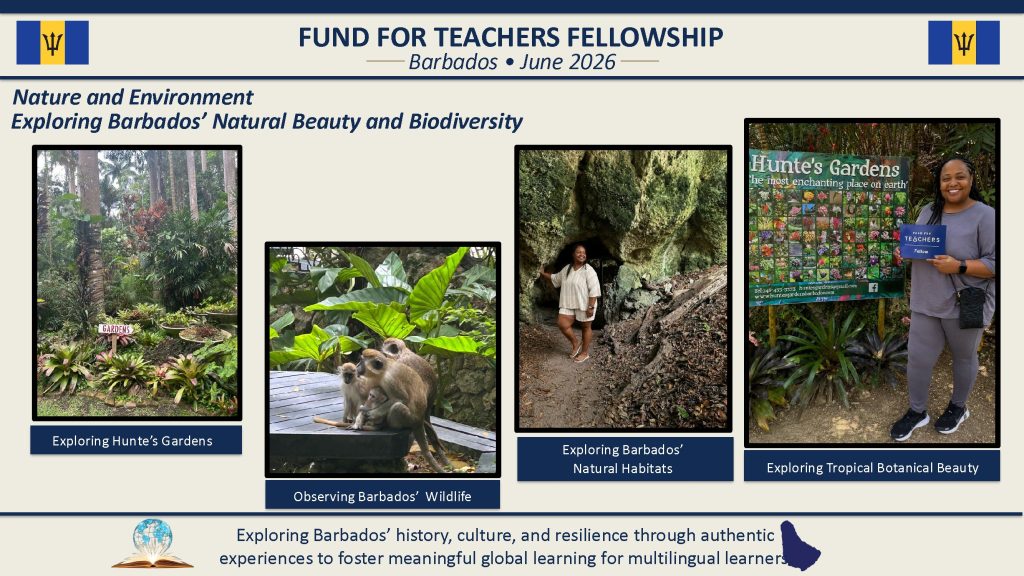
Beyond history and culture, Kim also explored Barbados’ remarkable natural environment. Visits to tropical gardens and natural habitats provided opportunities to learn about the island’s biodiversity and the relationship between people and place. Together, these experiences paint a more complete picture of Barbados—one that extends beyond historical landmarks to include the landscapes and ecosystems that continue to shape life on the island.
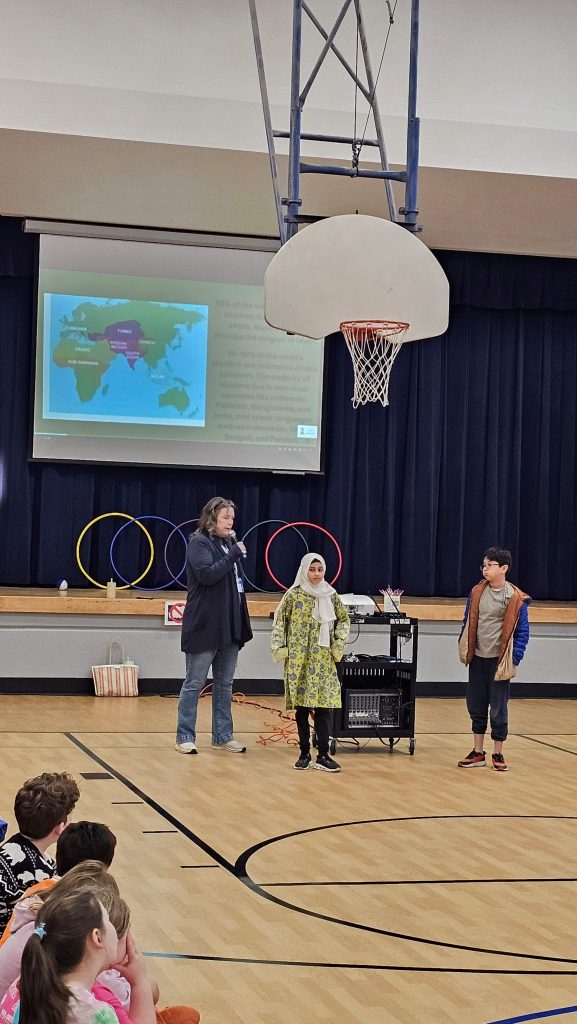
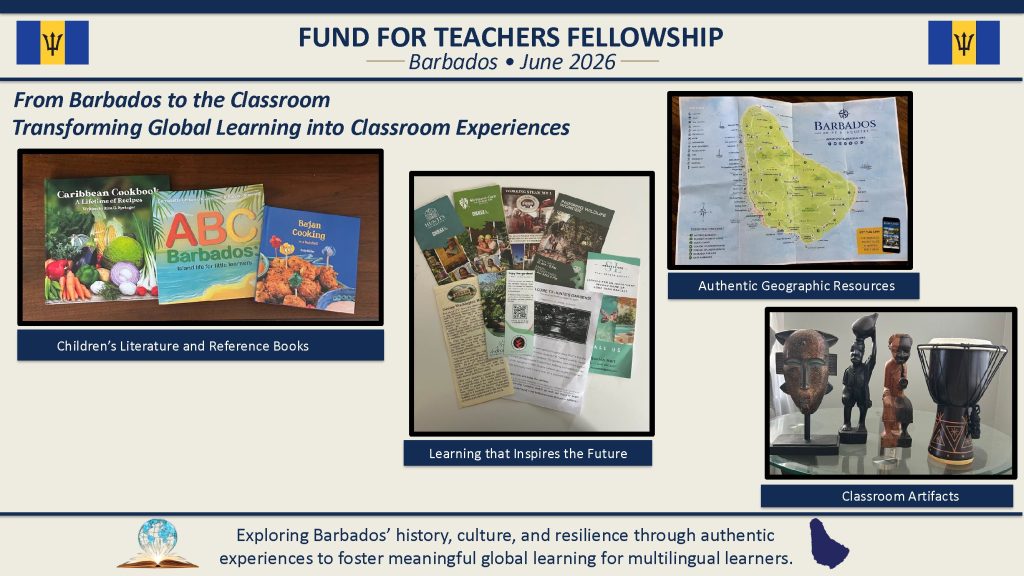
As with every Fund for Teachers fellowship, the journey doesn’t end when the plane lands back home. Kim returned with children’s literature, authentic classroom artifacts, geographic resources, and countless stories that will help bring Barbados into her classroom. More importantly, she returned with fresh perspectives and firsthand experiences that will empower her multilingual learners to celebrate their own heritage, think critically about justice and equality, and recognize the power of their own voices to make a difference.
Kim’s fellowship is a powerful reminder that professional learning is most transformative when it is authentic, immersive, and teacher-driven. By investing in educators’ curiosity, Fund for Teachers helps create classrooms where students don’t just learn about the world—they develop the knowledge, empathy, and confidence to help shape it.